Bible Stories Chronological Order: A Complete Timeline
Reading the Bible in chronological order is a powerful approach that helps illuminate how one event leads to another, how promises unfold across generations, and how different voices speak into a single unfolding plan. This article offers a comprehensive timeline that traces major biblical narratives from the Creation to the Revelation, while highlighting the connections between stories, covenants, and characters. While the canonical order of the books varies among traditions, a well-constructed chronology can serve as a thematic map, guiding readers through the arc of biblical history and theology.
Foundational Frame: from Creation to the Patriarchs
To begin any bible stories chronological order, it helps to anchor the timeline at the very start of Scripture. The opening chapters of Genesis lay the groundwork for everything that follows by presenting God’s creative, relational, and covenantal purposes. The era from Creation through the lives of the patriarchs establishes the theological patterns that recur throughout the Bible: blessing, testing, covenant promises, and the shaping of a people chosen to be a light to the nations.
Creation and the Fall: God creates a world that is good, and humanity is invited into intimate relationship with the Creator. But human beings disobey, ushering in sin, suffering, and mortality. This sets the stage for redemption to become the central plotline of Scripture.
Pre-Flood generations and the spread of nations: The stories of Adam, Eve, Cain, Abel, and Seth raise profound questions about faith, obedience, and the origins of humanity’s moral conflicts.
Noah and the Flood: God preserves a remnant through judgment, signaling both justice and mercy, and establishing the sign of the covenant with the rainbow—an enduring reminder that God’s purposes include restoration for creation.
Genesis narratives about the patriarchs—Abram (Abraham), Isaac, and Jacob (Israel): God calls a single family, promising nations and a blessing that will extend to all peoples through faith and obedience. These stories introduce the concepts of inheritance, land, seed, and Covenant.
Joseph in Egypt: A narrative of providence and reconciliation shows how God preserves a family during famine, foreshadowing the way God’s people will be sustained through trials and guided by wise leadership.
Key patterns to notice in this early period
The covenant motif unfolds in stages: God’s promise to Abraham expands to a family, a nation, and a mission to bless all nations.
Faith and obedience are repeatedly tested, yet God remains faithful to his promises.
Grace and judgment appear in tandem, preparing the reader for a deeper understanding of salvation history.
From Egypt to the Promised Land: Exodus, Wilderness, and Sinai
Continuing the chronological Bible order, the narrative shifts from origins to a defining moment in Israel’s identity: their deliverance from slavery in Egypt, their journey through the wilderness, and the reception of the Law at Sinai. This period centers on formation—of a people, a culture, and a covenantal relationship with God.
Exodus: God raises up Moses to deliver the Israelites from oppression, culminating in the crossing of the Red Sea and the birth of national consciousness as God’s chosen people.
Giving of the Law at Sinai: The Law provides moral, ceremonial, and civil codes that shape worship, ethics, and community life. The tabernacle and priestly system begin here, pointing forward to a central place of worship and God’s holy presence among his people.
Wilderness wanderings: The generations that leave Egypt learn dependence on God, wrestle with doubt, and demonstrate enduring faith. The era crystallizes into a mission: to enter the land promised to their ancestors.
Conquest and Settlement begins as later books recount the campaigns and divisions of the land into tribal allotments, laying the foundation for the later monarchy.
Judges to United Monarchy: A Nation under God and the Transition to a Kingdom
After the return from Egypt and the conquest of the land, Israel experiences a cycle of cycle of apostasy, oppression, repentance, and deliverance under leaders known as judges. This era sets the stage for a centralized monarchy and a more unified national identity.
Judges: A series of leaders emerges during crises; their stories reveal how faithfulness to God both inspires deliverance and stumbles into failure.
Prophetic voices emerge alongside the judges, calling the people back to covenant faithfulness and foretelling a future that involves a righteous king and a restored people.
Transition to a monarchy: The people request a king to unify tribes, leading to the anointing of Saul, followed by David and Solomon, whose reigns mark the political and spiritual peak of the united monarchy.
David and Bethlehem: The life of David centers on leadership, worship, and covenant faithfulness, including the promise that his throne will be established forever, which becomes a cornerstone for later messianic expectation.
The need for leadership rooted in fidelity to God becomes a recurrent theme, shaping later prophetic expectations.
The temple project with Solomon demonstrates how worship and governance intertwine, foreshadowing the significance of a future temple in prophetic imagery.
Divided Kingdom, Exile, and Return: Covenant Faithfulness under Trial
After Solomon’s reign, the kingdom bifurcates into a northern kingdom (Israel) and a southern kingdom (Judah). This section captures a long arc of neglect, discipline, hope, and restoration, where prophets speak into exile and exile chances a renewed relationship with God.
Division of the kingdom: Israel and Judah reflect political, religious, and moral fractures, with alternating cycles of reform and apostasy.
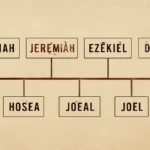
Prophetic literature: Voices like Isaiah, Jeremiah, Ezekiel, and the minor prophets call for repentance, announce judgments, and offer visions of restoration and a future hope.
Babylonian exile: The destruction of Jerusalem and the temple marks a dramatic turning point; the people endure captivity, question identity, and long for return.
Return under Ezra and Nehemiah: After decades of exile, a remnant returns, rebuilds the temple, and renews religious life, signaling a reconstitution of community and worship.
In this era, the idea of a future Messiah and a renewed, faithful people becomes more concrete, setting the stage for New Testament events while remaining deeply rooted in the Hebrew prophetic tradition.
Intertestamental Period and the Context for Jesus
The centuries between the Old and New Testaments—often called the Intertestamental Period—are crucial for understanding the historical backdrop of Jesus’ life. Although not a distinct biblical narrative, this era shapes the expectations, language, and religious dynamics that appear in the Gospels.
Persian, Greek, and Roman influence shape political boundaries, language (Aramaic and Greek are widely used), and religious life.
Hellenistic culture and the Maccabean revolt contribute to a vibrant and sometimes contested landscape of Jewish identity, piety, and political yearning.
Expectations of a Messiah intensify as prophecy becomes a living conversation among communities longing for deliverance, justice, and covenant restoration.
Amid these currents, the gospel writers place Jesus’ birth in a specific way—fulfilling prophetic expectation, revealing the presence of God’s kingdom, and inaugurating a new phase in salvation history.
Life and Ministry of Jesus: Birth, proclamation, and passion
Chronological storytelling about Jesus centers on four overlapping streams: his birth and childhood, his public ministry, his death and resurrection, and the immediate aftermath in the early Christian community. While the Gospel accounts differ in emphasis and order, the core sequence remains consistent across them: Jesus is conceived, born, teaches through parables and miracles, faces opposition, suffers, dies on the cross, rises again, and ascends to heaven.
Birth and early life: The nativity narratives announce the coming of the Messiah, while the childhood stories emphasize wisdom, obedience, and divine favor.
Public ministry: Jesus calls disciples, proclaims the kingdom, performs miracles, and engages with religious leaders. The central themes include repentance, faith, and humble servanthood.
Teachings and parables: A hallmark of Jesus’ ministry, parables teach moral truths and reveal truths about the nature of the kingdom of God.
Crucifixion: The crucifixion is the pivotal event where Jesus bears humanity’s guilt, offering redemption through his sacrifice and demonstrating divine love and justice.
Resurrection and appearances: The rising Jesus confirms victory over sin and death and inaugurates a new reality for his followers.
Ascension and Pentecost (in the surrounding narrative): Jesus returns to the Father, and the Holy Spirit is poured out on the early church, empowering mission and witness.
Across the Gospels, the kingdom of God is presented as a present reality breaking into history and as a future hope—the tension that drives the narrative and invites readers to respond in faith and discipleship.
The Early Church and the Spread of the Gospel
Following the resurrection, the church rapidly expands beyond Jerusalem, moving into the heart of the Roman world. The book of Acts provides a chronological framework for how the early Christian movement grew, faced opposition, and organized its mission.
Pentecost and the early church: The Holy Spirit empowers believers to proclaim the gospel boldly, and a diverse community forms around the teaching of the apostles, shared life, and prayer.
Pauline missions and church planting: The apostle Paul (and companions) travels across the Mediterranean world, establishing churches, teaching doctrine, and addressing practical issues in a growing Christian community.
Letters and exhortation: Epistles address theology, ethics, church order, and community life, guiding early Christians in how to live faithfully in pluralistic societies.
Harmonizing faith and practice: The letters and narrative arc in Acts show how early Christians understood salvation, grace, faith, and works within the living body of Christ.
The history of the early church is not merely a record of events; it is a study in how communities interpret Jesus’ life in real time, navigate cultural differences, and discern how to embody love, justice, and hope in a challenging world.
Prophecy, Apocalyptic Writings, and the Revelation
The biblical narrative culminates in a broad set of prophetic and apocalyptic writings that interpret history in light of God’s eternal plan. These texts provide both critique of the present era and assurance of a future consummation.
Isaiah to Daniel and the broader prophetic corpus offer visions of a suffering servant, a righteous king, and a cosmic restoration that transcends political power.
Apocalyptic literature in Daniel and Revelation uses symbolic language to describe spiritual realities, cosmic conflict, and the ultimate triumph of God’s kingdom.
Revelation: The final book of the Bible presents a dramatic, symbolic panorama of history culminating in the renewal of heaven and earth, the defeat of evil, and the establishment of God’s eternal reign.
In a study of chronology, these books are often treated as the completion of the biblical narrative arc: they situate human history within God’s overarching plan, remind readers of moral accountability, and invite hopeful anticipation of God’s turning of all things toward justice and peace.
How to Use a Chronological Approach to Bible Study
Engaging with chronological Bible study requires a few practical methods to help you read with clarity, avoid confusion, and appreciate the interconnections among stories and themes.
Choose a reference framework: Decide whether you want a canonical timeline (as traditionally presented) or a harmonized timeline (integrating the narratives across books). Some timelines begin with creation and end with Revelation; others place emphasis on covenants and key turning points.
Use a visual timeline: A wall chart, a digital timeline, or an annotated book can help you see how events relate to one another across centuries.
Cross-reference parallel passages: Many stories appear in more than one book (e.g., stories of kings in Samuel, Chronicles, and Kings). Comparing accounts illuminates perspectives and emphases of different authors.
Pay attention to covenants and promises: Track how God’s promises to Abraham, Moses, David, and others unfold and how they find fulfillment in Christ in the New Testament.
Read with an eye for themes: Faith, obedience, justice, mercy, exile, restoration, and hope recur in various forms. Noting these themes helps connect disparate narratives into a coherent whole.
Variations in Chronology Across Traditions
While the core storyline remains similar, there are variations in how Christian traditions order certain events and interpret timelines. These differences are rooted in:
Canon differences: The ordering and inclusion of certain books vary between Protestant, Catholic, and Orthodox canons, which can influence the perceived sequence of events, especially in the intertestamental period and prophetic literature.
Harmonization choices: Some study Bibles and timelines attempt to merge parallel accounts (for example, synchronizing kings’ reigns with prophetic activity), which can shift the perceived dates of events.
Messianic expectations: Different traditions emphasize various messianic prophecies; this shapes how readers anticipate the arrival of Jesus and how they interpret his ministry in light of prophecy.
Literary emphasis: The way a tradition emphasizes poetry, prophets, wisdom literature, or apocalyptic writing can influence how the chronology feels to a reader, even if the historical sequence remains the same.
Despite these differences, a careful, well-researched chronology can accommodate varied readings and still present a cohesive narrative arc from creation to consummation.
Practical Tools and Resources for a Complete Timeline
To deepen your study, several resources can help you assemble a robust and usable bible stories chronological order in your personal library or online research.
Chronological Bibles: These editions arrange the biblical text in the order of events rather than the canonical order, enabling a narrative flow from creation to Revelation.
Timeline charts: Visual charts and infographics illustrate the major eras, rulers, exiles, and key prophets, providing quick reference and study aids.
Commentaries and introductions: Scholarly introductions explain historical backgrounds, dating considerations, and textual variants that affect chronology.
Cross-referenced study Bibles: These Bibles show parallel passages and events across books, helping readers track how different authors present the same storyline.
Online timelines and courses: Digital platforms offer interactive timelines, maps, and guided reading plans that synchronize with the usual biblical divisions.
When using any resource, assess the date ranges offered for events carefully. Some dates are approximate, and scholars sometimes debate specific years. The goal of a chronological approach is not perfect precision but a clear, historically informed sense of how the scriptural narrative unfolds across time.
A Condensed, Practical Timeline (High-Level Rollup)
For readers who want a succinct, practical snapshot—without losing the essential sequence—here is a compact rollup that traces the macro-arc. This outline is ideal for study guides, classroom handouts, or personal study aides.
Creation → Fall → Flood → Nations
Patriarchs (Abraham, Isaac, Jacob) → Joseph in Egypt → Israel’s move toward bondage → Moses and the Exodus
Sinai Covenant → Wilderness wanderings → Conquest and settlement in Canaan
Judges → Rise of the monarchy → Saul is anointed → David unites the kingdom → Solomon builds the temple
Divided Kingdom → Prophetic voices call for repentance → Exile (Israel by Assyria, Judah by Babylon) → Return under Ezra/Nehemiah → Rebuilding of the temple
Intertestamental period → Roman rule, Hellenistic influence, and messianic expectations
Life of Jesus → Ministry, crucifixion, resurrection, ascension
Early Church in Acts → Missionary journeys → Formation of Christian theology in letters
Prophecy and Revelation → Hopeful anticipation of God’s final victory
While this outline is intentionally streamlined, it preserves the essential chronological order of biblical history and helps readers see the forward motion of God’s redemptive plan.
Approaching the Bible in a chronological order invites a holistic understanding that goes beyond individual stories to reveal a coherent narrative arc. It helps readers:
See how covenants and promises unfold through generations and find their fulfillment in the New Testament.
Understand how themes like faith, obedience, justice, mercy, exile, and restoration recur and gain deeper meaning when tracked across time.
Appreciate the historical context that shapes each book’s message, audience, and purpose.
Recognize how the biblical authors use various genres—narrative, poetry, prophecy, wisdom, and epistolary writing—to convey a unified story.
Whether you are studying for personal devotional life, teaching, or scholarship, a careful approach to chronology can illuminate the Bible’s unity amid its diverse voices. It invites readers to witness how God’s purposes unfold through people—sometimes faithful, sometimes faltering—and how grace operates across time to bring about redemption for humanity and the cosmos.
If you want to embark on a structured study of the Bible in chronological order, here is a practical plan that balances depth with manageability. You can adjust the pace to fit your schedule, but the goal is to touch each major epoch with focused reading and reflection.
Phase 1: Creation to Joseph (Genesis 1–50) – Read with attention to themes of creation, fall, judgment, and providence.
Phase 2: Exodus to Conquest (Exodus–Joshua) – Focus on deliverance, covenant formation, and the land as a theological stage.
Phase 3: Judges and the United Monarchy (Judges, 1 Samuel, 2 Samuel, 1 Chronicles) – Watch the interplay of faithfulness, leadership, and temple worship.
Phase 4: Divided Kingdom, Exile, and Return (1–2 Kings, 1–2 Chronicles, Ezra, Nehemiah, Esther, prophetic books) – Track the prophetic voices and the restoration movement.
Phase 5: Intertestamental Context – Read about cultural and political shifts to better understand the setting of Jesus’ life.
Phase 6: Life of Jesus and the Gospels – Explore the birth, teachings, miracles, crucifixion, resurrection, and ascension from multiple perspectives.
Phase 7: Early Church and Paul’s Letters – Read Acts alongside selected Pauline and general epistles to trace how the church forms doctrine and practice.
Phase 8: Revelation and Prophecy – Engage with apocalyptic literature and its message of hope and final truth.
As you progress, consider integrating a map or timeline visuals, and pause to reflect on how each phase informs the next. A reflective approach will deepen your understanding of biblical narrative and its relevance to contemporary faith and life.
Ultimately, the goal of compiling a bible stories chronological order is not to reduce the Bible to a timeline alone but to help readers inhabit the unfolding story of God’s redemptive plan. From the creation of the world to the promised new creation, the biblical narrative invites readers to join a journey of discovery—one that calls for faith, courage, justice, and worship. When you read with chronology in view, you can better perceive the continuity between ancient events and the Christian understanding of Jesus as the fulfillment of God’s promises, and you can more clearly see the transformation that God intends for the world through the Spirit-filled church and the coming kingdom.