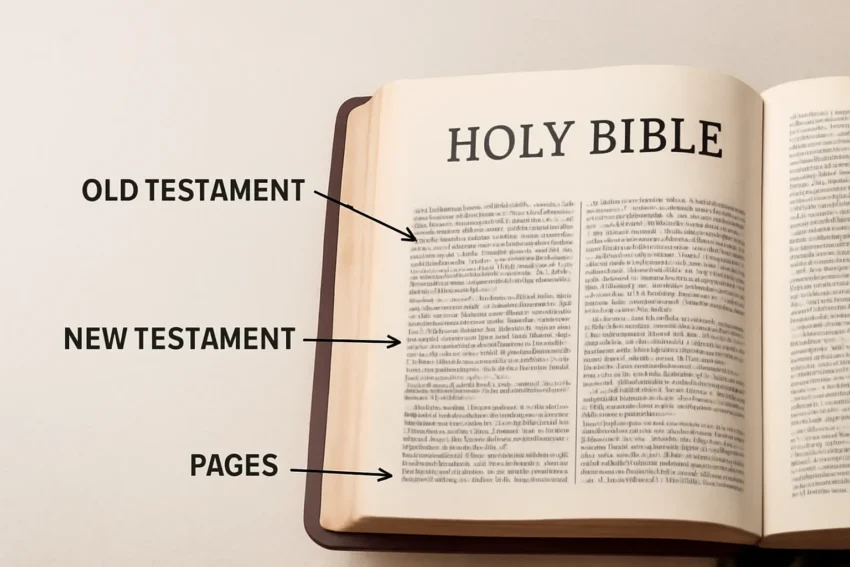
The Bible is not a single continuous narrative but a library of sacred writings gathered into a coherent structure. Understanding its parts helps readers navigate its stories, laws, poems, prophecies, and letters with greater clarity. In this guide, you’ll find a thorough tour of the Bible’s structure, exploring how the Old Testament and New Testament are organized, the terminology that scholars use to describe its portions, and the variations that appear across different Christian traditions. Whether you are new to the Bible or returning to it after a long time, recognizing the divisions, genres, and canonical orders will deepen your reading and study.
At a high level, the Bible can be seen as two main divisions—the Old Testament (also called the Hebrew Scriptures in Jewish tradition) and the New Testament (the Christian writings about Jesus and the early church). These two testaments together compose what many traditions simply call the canon or the scriptures. Within each testament, the books are grouped into subsections that reflect different literary genres, historical aims, and theological purposes. Though the language and order vary by tradition, the broad idea remains the same: a collection of inspired writings that tell God’s story with humanity, from creation and covenant to fulfillment in Christ and the church.
Canonical Divisions: Old and New Testaments
The Old Testament: The Hebrew Bible’s divisions and common Christian groupings
The Old Testament, often called the Hebrew Bible in Jewish circles, is traditionally divided into three or four main sections, depending on the tradition. Each division contains several books (also called writings or scriptures). Here are the typical arrangements you will encounter:
Law or Torah (also known as the Pentateuch): Genesis, Exodus, Leviticus, Numbers, Deuteronomy. This block contains creation narratives, the patriarchs, the giving of the Law at Sinai, and the scriptural core of Israel’s covenantal life.
Historical Books: A sequence of narratives recounting Israel’s conquest, settlement, and political history. In many Christian orders, this includes Joshua, Judges, Ruth, 1–2 Samuel, 1–2 Kings, 1–2 Chronicles, Ezra, Nehemiah, and Esther.
Wisdom and Poetry (also called Writings): A varied collection that includes Job, Psalms, Proverbs, Ecclesiastes, Song of Songs, and often Lamentations and some of the later poetic or wisdom literature.
Prophetic Books: A large group divided into Major Prophets (Isaiah, Jeremiah, Lamentations of Jeremiah, Ezekiel, Daniel) and Minor Prophets (the Twelve: Hosea through Malachi). These books contain prophecy, visions, oracles, and moral exhortation addressing Israel’s failures and God’s future restoration.
Note that the canon varies by tradition. Some Christian canons place a greater emphasis on the prophetic or wisdom portions, while Jewish canons group these books differently and exclude certain additions that appear in Christian Bibles. The key Bible parts in the Old Testament, however, are consistently the Pentateuch, the Historical Books, the Wisdom/Writings, and the Prophets.
The New Testament: Gospels, Acts, Epistles, and Apocalypse
The New Testament centers on the life, teaching, death, and resurrection of Jesus and the early Christian movement. Its books are generally grouped into four major categories:
Gospels: Matthew, Mark, Luke, and John. Each gospel presents the life and work of Jesus from a slightly different angle—some emphasize his teachings, others focus on his signs and miracles, and all affirm his significance within God’s redemptive plan.
Historical Narrative: Acts of the Apostles, which continues the story after Jesus’ resurrection, describing the spread of the early church, the missionary journeys of the apostles, and the emergence of Christian communities.
Epistles (Letters): A broad collection of writings from early Christian leaders such as Paul, Peter, James, John, and others. These letters address church doctrine, ethical living, community disputes, pastoral guidance, and the meaning of Jesus’ death and resurrection for daily faith.
Apocalyptic/Writing: The Book of Revelation, a highly symbolic prophecy about the ultimate victory of God, the final judgment, and the establishment of God’s kingdom in fullness.
Within the New Testament, the Epistles are often subdivided further into Pauline Epistles (letters attributed to the Apostle Paul) and Catholic oder General Epistles (letters attributed to other church leaders). The Gospels form the core narrative about Jesus, but together with Acts they provide a narrative bridge between Jesus’ earthly ministry and the life of the early Christian communities.
Scholars and readers use a variety of terms to refer to the parts of the Bible. Knowing these can prevent confusion and improve study. Here are some common terms you will encounter, along with their meanings:
Book or Scripture: A single of the individual writings that make up the canon.
Canon: The officially accepted collection of sacred books. Different Christian traditions define the canon differently, especially for the Old Testament.
Testament: A section or division of the Bible; Old Testament and New Testament refer to two covenants or testaments in Christian theology.
Torah: The Hebrew term for the law or instruction, commonly associated with the first five books of the Bible (the Pentateuch).
Pentateuch: The first five books of the Bible, synonymous with the Torah in many Christian and Jewish traditions.
Deuterocanonical and Apocrypha: Terms used to describe certain books included in the Catholic and Orthodox canons but not in the Protestant canon; some traditions distinguish between deuterocanonical (acknowledged as canonical by some traditions) and apocryphal (often non-canonical in others).
Septuagint: The ancient Greek translation of the Hebrew Bible, often cited in early Christian usage and referenced in discussions about canon formation.
Variations Across Traditions: Catholic, Protestant, and Orthodox Canons
Overview of Canonical Variants
The way the Bible is organized and which books it contains varies among major Christian traditions. Here is a concise guide to the most common variants you will encounter:
Protestant Bible: The Old Testament typically contains 39 books, grouped as Law, History, Wisdom, and Prophecy. The New Testament includes 27 books. This makes a total of 66 books in most Protestant Bibles.
Catholic Bible: The Old Testament includes the deuterocanonical books (such as Tobit, Judith, Wisdom, Sirach, Baruch, 1 and 2 Maccabees, and additions to Esther and Daniel). Some canons also include 3 and 4 Maccabees in particular traditions. The Catholic New Testament has 27 books, for a total of 73 (in most editions).
Orthodox Bible: The Orthodox churches often include additional deuterocanonical or anagignoskomena books beyond the Catholic list, and sometimes even other ancient writings. The exact set can vary by Orthodox jurisdiction, leading to slight differences in the total number of books.
These variances reflect differences in historical, liturgical, and theological priorities. The arrangement of these books within the canons can also differ; for example, some traditions place the Book of Psalms and the Prophets in slightly different orders, and some include prophetic or wisdom writings in distinct blocks.
How the Variations Affect Readers
For students and readers, canon differences mean that some familiar stories appear in different contexts or orders depending on the edition you pick. New readers should be aware that the same Bible verse can be found in different books or sections in various translations, or that a deuterocanonical book is present in Catholic and Orthodox Bibles but absent in Protestant editions. Understanding the tradition behind the edition you use helps in interpreting notes, cross-references, and study aids.
Two innovations in Bible publishing—the chapter divisions and verse numbers—help readers locate passages quickly. The chapter system was developed in the 13th century by Stephen Langton, and the verse system was refined in the 16th century by printers like Robert Estienne (also known as Stephanus). These navigational aids are not part of the original texts, but they are invaluable for study, cross-referencing, and public reading.
Order of Books
Even within the same tradition, the order of the books can differ. In most Protestant Bibles, the Old Testament ends with Malachi, and the New Testament begins with the Gospel of Matthew. Catholic and Orthodox editions often place the “historical books” in a different sequence and may insert the deuterocanonical books between certain sections. The ordering is designed to support liturgical use and thematic progression in each tradition.
Study Aids and Apparatus
Modern editions frequently include a range of study aids to help readers understand the structure, authorial intention, historical context, and theological themes. Common features include:
Introductions to each book that summarize authorship, dating, audience, and purpose.
Outlines and section headings that highlight the main divisions within the book.
Cross-references to related passages in other parts of the Bible.
Footnotes or endnotes explaining textual variants, unusual terms, or significant allusions.
Maps and timelines to visualize geographic movements and historical periods.
The Bible’s genres are not merely literary devices; they are the means by which the text communicates different kinds of truth. Readers benefit from distinguishing among these genres to interpret the material accurately. Some primary genres include:
Law/Legal Codes: Found especially in the Pentateuch (exemplified by the Code in Leviticus and Deuteronomy). These passages lay out moral, ceremonial, and civil expectations for the community.
Narrative History: Books like Joshua, Judges, Ruth, Samuel, Kings, Chronicles, Ezra, and Nehemiah tell stories of people, kings, exiles, and reforms. They illustrate faith in action within real historical frameworks.
Poetry and Wisdom: Psalms, Proverbs, Job, Ecclesiastes, and Song of Songs convey emotion, prayer, ethical reflections, and philosophical meditation. They often use metaphor and parallelism to convey meaning.
Prophecy: The Prophets communicate God’s judgments, promises, and visions for restoration. The prophetic literature is both about immediate circumstances and broader cosmic horizons.
Gospel Narrative: The four Gospels narrate the life and ministry of Jesus with distinct emphases—arousing faith, presenting credentials, and inviting discipleship.
Epistolary Literature: Letters written to early Christian communities address theology, ethics, and community life in concrete, lived situations.
Apocalyptic Literature: The Book of Revelation uses symbolic imagery to express ultimate triumph over oppression and the consummation of God’s kingdom.
Liturgical and Theological Roles
Beyond their literary forms, biblical parts serve various liturgical and theological functions. Some parts are used in worship, others in catechesis and teaching, and others still in personal devotion or scholarly study. For example, the Psalms have long served as prayers and songs in communal worship, while the letters (Epistles) provide doctrinal scaffolding for belief and instructions for church life. Recognizing each part’s role helps readers appreciate how early communities engaged with the text and why certain sections were preserved and revered.
The Pentateuch: Core foundation of biblical law and origin stories
The first five books establish the covenant framework for God’s people. They contain creation narratives, the calling of the patriarchs, the liberation from Egypt, the reception of the Law, and the wanderings in the desert. Within the Pentateuch you’ll find patterns of promise, calling, testing, and faithfulness that recur in later books. Reading these as a single unit helps the reader see how identity and calling are formed for Israel as a community under God’s instruction.
Historical Books: Israel’s journey in two modes
The historical narratives recount the rise and fall of the nation under different leadership and circumstances. They teach about governance, diplomacy, faithfulness, repentance, and restoration. In many ways, these books function as a long case study in how a people respond to God’s guidance across generations. They also provide crucial context for prophetic messages and for understanding covenantal blessings and curses in the broader biblical storyline.
Wisdom and Poetry: The heart of human experience and divine meditation
Poetry and wisdom literature provide lens through which readers can interpret daily life, ethics, and the mysteries of human emotion. The Psalms capture prayerful longing, praise, lament, and thanksgiving. Proverbs offers practical and moral instruction, while Job challenges easy assumptions about suffering. Song of Songs treats love and beauty in a way that invites contemplation about human relationships and divine love. Together, these books explore the human condition in relation to the divine.
Prophets: Voices of critique and hope
The prophetic books press God’s people to turn from injustice and idolatry and toward righteousness and covenant fidelity. They announce judgment and salvation, often combining stern warning with promises of restoration. The larger prophetic arc points toward a future in which God’s purposes for justice, mercy, and peace are fulfilled. The prophets’ language—visions, allegory, and symbolic acts—continues to influence Christian imagination and theological reflection.
Gospels: Four portraits of the same central figure
The gospels present Jesus from four distinct vantage points. Each author situates Jesus within a particular audience, framework, and set of concerns. Taken together, they offer a more rounded picture of Jesus’ identity, teachings, miracles, death, and resurrection. Reading the Gospels side by side can illuminate the differences in emphasis—eternal life, kingdom, salvation, mercy, and justice—while preserving a unified message about who Jesus is and what his life means for readers today.
Acts and Epistles: The church’s story and its guidance
Acts traces the spread of the gospel after Jesus’ ascension, highlighting key events, decisions, and journeys that shaped early Christian communities. The Epistles provide pastoral counsel, theological clarification, and practical wisdom for churches facing real-life challenges. Paul’s letters, in particular, explore issues such as faith, works, grace, justification, and the unity of Jew and Gentile in Christ. General letters cover broad topics like perseverance, virtue, and the authority of Scripture.
Revelation: A beginning and end—hope in the midst of struggle
The final book of the Bible uses dramatic imagery to communicate its message. It looks forward to God’s ultimate victory over evil, the final judgment, and the creation of a new heaven and a new earth. Its symbolic language invites readers to discern deeper spiritual truths about what God is doing in history and how believers should navigate trials with hope and faithfulness.
Practical Approaches: Reading Bible Parts with Purpose
Start with the big picture
Before delving into individual verses, map the broader structure of the text you are reading. Identify whether you are in a narrative, law, poetry, prophecy, or epistolary section. Understanding the genre sets expectations for tone, purpose, and interpretation.
Use introductions and study notes
Most study Bibles and scholarly editions include book introductions that summarize authorship, audience, date, and purpose, plus notes on historical context, language nuances, and key terms. These aids help you read with awareness of how and why a passage was written.
Cross-reference and compare
The Bible’s parts often illuminate one another. A verse in the prophetic books might echo language from the Pentateuch or Psalms, while an epistle’s argument may rely on earlier gospel themes. Use cross-references to see these connections and enrich understanding.
Take note of historical and literary context
Knowing when and where a text was written, the audience’s situation, and the author’s aims helps prevent misinterpretation. Context includes cultural practices, political circumstances, and theological concerns of the time.
Apply different reading angles
Different readers profit from different approaches. Some study the theological themes (such as covenant, law, grace, kingdom), others focus on character development and moral lessons, while others still analyze the rhetorical strategies and literary devices used by each author.
Glossary of Key concepts for Bible Parts
Covenant: A formal agreement, often underlying the relationship between God and humanity in biblical narratives.
Dispensation: A historical period in which God relates to creation in a particular way; used in some theological frameworks to interpret the Bible’s structure.
Lens: A interpretive approach or perspective (e.g., ethical, pastoral, prophetic) used to read a given portion.
Canon formation: The historical process by which church communities recognized certain writings as authoritative.
Textual variants: Differences among manuscripts or translations that can affect phrasing or interpretation.
How to Use This Guide in Practice
If you are preparing for personal study, a class, or sermon preparation, you can use this guide as a framework:
Identify the section you are reading (e.g., Pentateuch, Gospels, Epistles).
Determine the genre (law, history, poetry, prophecy, gospel, epistle, apocalypse).
Read with attention to context—historical, cultural, and theological.
Note any connections to other parts of the Bible and to broader biblical themes.
Consult study aids for further insight and clarification.
By approaching the Bible through its parts, readers can avoid reading as if every verse exists in isolation. The parts of the Bible were written in conversation with one another, shaping a cohesive story about God’s engagement with the world.
Conclusion: Why Understanding Bible Parts Matters
Recognizing the structure of the Bible—its divisions, genres, and canonical orders—transforms reading from a random collection of passages into a guided journey. The Old Testament and the New Testament together present a unified narrative about creation, fall, promise, redemption, and restoration. Variations across traditions reflect rich histories of interpretation, devotion, and community memory. Whether you are exploring the Pentateuch, the Prophets, the Gospels, the Epistles, or the Apocalypse, the same basic structure can help you locate, understand, and reflect on the Bible’s profound claims and enduring impact.
In short, the Bible’s parts are more than a catalog of writings; they are a map for faith. By paying attention to how the parts are arranged—and by learning the vocabulary that scholars use to describe them—you can read more deeply, discuss more insightfully, and grow more confident in your understanding of this ancient library that continues to shape lives around the world.