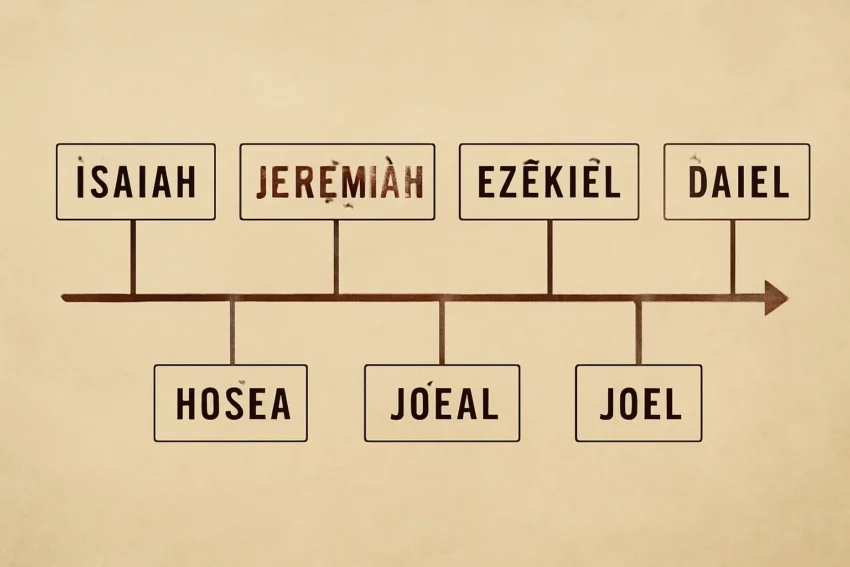
Biblical Prophets Timeline presents a comprehensive chronology of the men and women who, within the biblical narrative, are described as messengers of God, revealing divine will, calling people to repentance, and guiding communities through perilous eras. This article traces the arc from the earliest prophetic voices rooted in the Hebrew Bible to the prophetic shapes that emerge in the New Testament era, emphasizing not only dates but the shifting contexts, audiences, and core messages that mark each period. The result is a layered, chronological map that helps readers understand how prophecy develops across centuries and how these voices intersect with political power, exile, restoration, and the emergence of a new theological horizon.
A Chronological framework: key eras in biblical prophecy
The prophetic story in Scripture does not begin and end in a single century. It unfolds through distinct epochs—each with its own challenges, audiences, and expectations. Broadly, scholars divide the timeline into several overlapping chapters: the early prophetic voices in the late Bronze and early Iron Age; the era of the united and later divided kingdoms; the Babylonian exile and the return and restoration; and, in the New Testament period, the emergence of prophetic activities within the early Christian movement. Within this framework, we encounter figures whose names have become emblematic of prophetic vocation—some as court prophets, others as social reformers, and still others as apocalyptically oriented visionaries.
Below, the timeline is arranged in major epochs, with representative prophets and the approximate timeframes commonly assigned by scholars. We intersperse short notes about the historical backdrop and the primary concerns of each era to help readers grasp why prophecy took the shape it did in different centuries.
Moses and the earliest prophetic voices — ca. 1400–1250 BCE
Moses as prophet and lawgiver, mediator of the covenant, and recipient of the Decalogue. The episode spans the Exodus era and the formation of the people of Israel in the wilderness, setting a template for prophetic leadership: covenant fidelity, divine revelation, and instruction to the people.
Deborah, the judge-prophetess, who speaks to Barak and leads in battle (ca. 13th–12th centuries BCE in some traditions). Her story highlights prophecy as a form of civic leadership and spiritual discernment.
Samuel as a transitional figure, a priest and prophet who inaugurates a more centralized prophetic school during the late Judges and the early monarchy (ca. 11th–10th centuries BCE).
The era of the united monarchy and early prophetic literature — ca. 1000–750 BCE
Nathan and Gad function as royal advisors and prophetic voices during the reigns of David and Solomon, underscoring prophecy as both religious and political counsel.
Elijah and Elisha operate in the northern kingdom in the 9th century BCE, challenging Baal worship and performing dramatic signs that validate prophetic authority.
Isaiah, Micah, and other prophets speak to the theology, politics, and social outcry of the late 8th and early 7th centuries BCE, addressing Assyrian pressure, the crisis of kingship, and the call to social righteousness.
The prophetic voices of the divided kingdoms — ca. 750–586 BCE
Hosea and Amos challenge social injustice and religious hypocrisy in the northern kingdom, with messages targeted to τόσο rural and urban communities alike.
Isaiah experiences a multi-layered voice—often categorized into First Isaiah (proto-Isaiah, pre-Assyrian crisis), Deutero-Isaiah (during and after the Babylonian exile), and Trite Isaian material—reflecting shifting circumstances and expectations about judgment and hope.
Micah critiques corruption among leaders while looking toward a future righteous ruler from Bethlehem.
Jeremiah proclaims judgment and repentance during the late 7th and 6th centuries BCE, including the looming Babylonian threat and the eventual exile.
Nahum, Habakkuk, and Zephaniah contribute to a spectrum of responses to Assyria’s decline and Judah’s political distress in the late 7th and early 6th centuries BCE.
The Babylonian exile and the return — ca. 586–500 BCE
Ezekiel speaks to exiled communities in Babylon with dramatic visions and a renewed sense of national identity and individual responsibility.
Daniel embodies a literature of exile and apocalyptic expectation, shaping how generations would read present suffering through heavenly sovereignty.
Haggai and Zechariah spur the rebuilding of the temple after the return from exile (520–518 BCE), shaping post-exilic Israelite society and religious practice.
Malachi and the closing phase of prophetic writing in the Hebrew Bible address the people’s complacency, urging renewed piety and fidelity to the covenant in the post-exilic community.
The Minor Prophets: a compact, influential batch — ca. 8th–5th centuries BCE
Hosea and Amos (already touched above) set a robust social-ethical frame; their contemporaries hold a mirror to the social and religious life of Israel and Judah.
Joel offers a framework of cosmic judgment and future restoration; its precise historical setting is debated, but its themes of repentance and the outpouring of the Spirit resonate across ages.
Obadiah addresses Esau’s descendants in a post-exilic context, emphasizing divine judgment on pride and justice for Israel.
Jonah presents a paradoxical mission narrative—prophecy as a vehicle of mercy, not simply doom—set in a broad Assyrian context.
Micah (already noted) reinforces the ethical demands of leadership and the hope tied to a future ruler from Bethlehem.
Nahum, Habakkuk, and Zephaniah add layered voices on divine justice, faithfulness, and the anticipation of restoration as political order shifts.
Haggai, Zechariah (continuing post-exile), and Malachi close the prophetic corpus with calls to rebuild, renew worship, and anticipate a future messenger.
The canonical books of the Major Prophets—Isaiah, Jeremiah, and Ezekiel—together with Daniel (often read as a prophetic-apocalyptic text) span centuries of history and doctrinal development. These books are not purely biographical narratives about a single figure; they are interpretive documents that relate historical events to the people’s relationship with the divine. They address judgment for unfaithfulness, calls to repentance, and proclamations of future hope, including promises of restoration and, in some strands, the coming of a messianic figure.
Isaiah: ministry in a time of crisis
The prophetic career of Isaiah unfolds across a turbulent period when Assyrian power looms and threatens the northern kingdom. The prophet’s message oscillates between warnings about social injustice and warnings to foreign powers, and it also contains some of the Bible’s most notable expressions of hope, including the envisioned arrival of a righteous ruler from the house of David. Isaiah’s prophecies eventually expand into layers—proto-Isaiah, deuteron- (second) Isaiah, and trito-Isaiah—the result of a complex historical layering but unified by a persistent call to faithfulness to the covenant and trust in God’s ultimate sovereignty.
Jeremiah: judgment, repentance, and a future promise
Jeremiah is the voice of judgment to a nation in crisis, warning of imminent exile while also placing forward a framework for future restoration. His oracles speak to leaders, priests, and the people at large, urging a transformed relationship with God that would outlast political upheaval. The prophetic tradition in Jeremiah emphasizes a covenantful obedience and a new kind of relationship with God that would become central to later prophetic and theological imagination.
Ezekiel and Daniel: exile, vision, and the shaping of hope
In exile, Ezekiel offers vivid visions and symbolic acts that disclose God’s presence among the displaced people and announce a future in which a renewed temple and a restored people would become central motifs. Daniel complements this by presenting narratives and apocalyptic visions that interpret exile through the lens of divine sovereignty, encouraging faithfulness under foreign rule and a confidence that history remains in God’s hands.
The post-exilic prophets and the return to Zion
After the return from Babylon, prophetic voices concentrate on the practical tasks of rebuilding the temple, re-establishing proper worship, and renewing the moral and spiritual life of the community. This period is marked by the ministries of Haggai and Zechariah, who urge zeal for temple restoration, and by Malachi, who addresses questions about fidelity and priestly duty as the community seeks to reorient itself around covenantal worship.
Haggai exhorts the returned exiles to rebuild the temple, connecting the rebuilding project to divine blessing and national restoration. Zechariah amplifies that message with symbolic visions that emphasize God’s presence among the people and a broader eschatological hope.
Malachi: a tempered call to faithfulness
Malachi speaks to a community dealing with questions about covenant fidelity, the proper offering, and the integrity of the priesthood. The book ends the prophetic corpus with a renewed demand for sincere worship and social justice, setting the stage for New Testament expectations about renewal and promise.
The Twelve Minor Prophets: a concise chronology
The so-called Minor Prophets—not minor in importance, but shorter in size—compose a diverse collection that covers a broad swath of historical settings. Their voices contribute essential thematic strands: social justice, divine judgment, hope amid collapse, and a forward gaze toward restoration.
Hosea (ca. 755–725 BCE): paints a deep picture of covenant faithfulness and marital imagery to describe Israel’s unfaithfulness and God’s steadfast love.
Joel (date debated; possibly 9th–4th centuries BCE): emphasizes the day of the Lord and the outpouring of the Spirit, laying groundwork for later New Testament expectations.
Amos (ca. 760–750 BCE): a rural prophet who indicts social injustice and ceremonial religion that lacks ethical substance.
Obadiah (likely post-exilic, 6th–5th c. BCE): pronounces judgment on Edom and underscores divine justice for Israel.
Jonah (ca. 8th century BCE, though literary dating varies): a paradoxical mission narrative about mercy extending beyond Israel’s borders.
Micah (ca. 742–687 BCE): calls for righteousness among leaders and anticipates a ruler from Bethlehem who will shepherd God’s people.
Nahum (ca. 663–612 BCE): announces the fall of Nineveh and contemplates divine justice on corrupt powers.
Habakkuk (ca. 635–605 BCE): dialogues about faith under the pressure of injustice and the problem of theodicy.
Zephaniah (ca. 640–609 BCE): warns of the coming day of the Lord and calls for urgent repentance.
Haggai (520 BCE): sees temple reconstruction as a sign of renewed divine favor.
Zechariah (520–518 BCE): provides a series of visions that point toward restoration and a messianic horizon.
Malachi (5th century BCE): a bridge to the post-exilic period’s concerns, stressing fidelity, integrity, and proper worship.
For readers, the Minor Prophets collectively illustrate how prophecy adapts to shifting centers of power and spiritual need. Their dates are approximate, and scholars debate exact placement, but their impact on biblical theology—particularly on justice, repentance, and hope—remains enduring.
Prophetic voices in the Second Temple period and the New Testament
The prophetic mood did not end with Malachi. Within Judaism after the exile, a continuing stream of prophetic interpretation helped shape liturgy, ethics, and communal expectations. In the New Testament era, prophecy takes on new forms, moving from covenantal judgment to the declaration of the kingdom, the work of Jesus, and the life of the early church.
John the Baptist and Jesus as prophetic figures
John the Baptist is described in the Gospels as the one who prepares the way for the Lord, calling people to repentance and baptism. He embodies a prophetic role that bridges the old prophetic tradition with the advent of Jesus. Jesus himself is frequently recognized as a prophetic figure—one who proclaims good news to the poor, announces God’s kingdom, and fulfills messianic expectations in a novel, transformative way.
Prophets in the early church
In the Acts of the Apostles and the Pauline letters, prophetic gifts are described as part of the life of the early Christian communities. Figures such as Agabus perform foretelling in Acts, while Paul speaks about the exercise of spiritual gifts, including prophecy, within congregations. The apostolic age also includes the expectation that the Spirit will empower believers to declare God’s purposes in a time of mission expansion.
The final book of the canon, Revelation, uses visionary and prophetic language to present a cosmic drama in which God’s justice and sovereignty prevail. The prophetic imagination in Revelation is less about predicting specific dates and more about presenting a symbolic roadmap of ultimate victory, judgment, and renewal in the age to come.
How to read the prophetic timeline: guiding principles
Interpreting the biblical prophets requires attention to literary genre, historical context, and theological purpose. Here are some guiding principles that help readers navigate the timeline with clarity:
Historical context matters: Prophetic oracles are inseparable from the political and social circumstances of their day.
Multiple layers in the books: Books like Isaiah blend several prophetic periods and voices; dates are often debated among scholars.
Prophecy is not only prediction: Many prophecies are conditional calls to repentance or statements about covenantal faithfulness and justice.
Messianic expectation evolves: From a royal deliverer in some traditions to a broader, more universal hope in later circles, the concept of the Messiah shifts across epochs.
Canonical vs. non-canonical voices: The Bible contains a spectrum of prophetic voices, with some later interpretations reflecting post-exilic or post-biblical understandings.
For students of biblical history, a timeline is a helpful anchor, but it should be read in light of the broader theological currents: covenant, judgment, mercy, righteousness, and the longing for restoration that threads through both Testaments.
Practical ways to engage with the timeline
Create a visual timeline: A chronological chart or timeline poster helps situate major prophets in relation to kings, exiles, and returns. Color-code by era (patriarchal, monarchy, exile, post-exilic, and NT period).
Read in clusters: Group prophets by culture (northern kingdom vs. southern kingdom) and by literary form (narrative, oracles, and apocalyptic material) to see how their messages respond to distinct pressures.
Compare messages: Notice overlaps and tensions—calls for social justice, warnings against idolatry, and promises of restoration—across different prophets and eras.
Study intertextual connections: Many prophets quote or allude to earlier or later books. Tracing these echoes helps illuminate the unfolding prophetic theology.
Frequently highlighted themes across the prophetic timeline
Conclusion: why the biblical prophets matter as a timeline
Understanding the timeline of biblical prophets is not only an exercise in dating. It is an invitation to read the Bible as a conversation across centuries—a conversation about faithfulness, justice, and the character of God in history. From the earliest covenantal voices to the New Testament’s proclamation of the kingdom, prophecy provides a thread that ties together discipline, hope, and renewal. The chronology of prophets helps readers see how a community interprets its past, navigates present challenges, and imagines a future shaped by divine purposes.
Whether approached as a reference tool or a narrative journey, the prophecy timeline invites readers to ask: What calls to repentance emerge in my own context? How do the messages of the prophets illuminate the moral shape of our communities today? In what ways does anticipation for the future influence faithful living in the present?
In short, the prophetic timeline—spanning from the Exodus era to the early church—continues to invite readers into a dynamic engagement with Scripture: to listen, respond, and participate in the ongoing conversation about justice, mercy, and the coming of God’s kingdom.