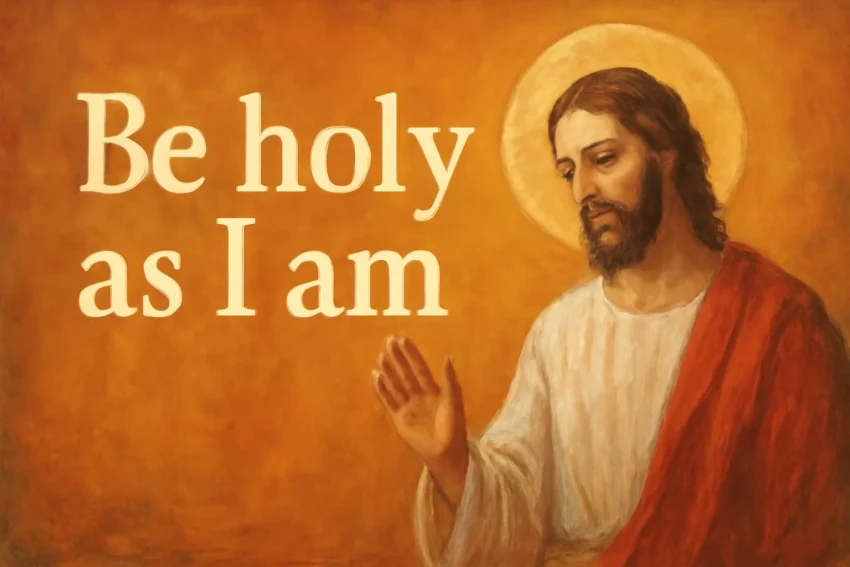
Be Holy as I Am: The Call to Holiness in Everyday Life
Holiness is more than a distant attribute reserved for saints of old. It is a living invitation for every believer to align
their heart, mind, and actions with the nature of God. When Scripture invites us to “Be holy, as I am holy”, it signals a partnership: God provides the transformation through grace, and we respond with everyday choices that reflect that grace in concrete ways. This article explores what holiness means in practical terms and offers actionable steps to
live out Be holy as I am in ordinary moments—at home, at work, in community, and online.
Throughout this discussion, you will encounter variations of the call to holiness—phrases such as becoming holy as I am, living in holiness as I live, imitating holiness as I am, and pursuing holiness as I am.
While the wording shifts, the underlying vision remains the same: a transformed life that mirrors God’s character, powered by grace and lived out through discipline.
What Holiness Means: A Clearer Picture
Holiness has both an identity component and a practice component. It is first a gift and a relationship with God—an identity
that Christians receive by faith in Christ, made possible by His atoning work. It is then a daily pattern of conduct that grows out of that relationship.
Holiness as Identity and as Action
Positional holiness refers to who you are in Christ: you are set apart for God, rescued from sin, and welcomed into God’s family.
Practical holiness describes how you live this identity: thoughts, words, and deeds that increasingly reflect God’s character.
Key Scriptural Themes
God’s holy nature is the standard by which humans are measured.
Holiness arises through sanctification—the Spirit’s work in the believer and the believer’s responsive discipline.
Holiness is not isolation from the world but a transformative power that makes love, justice, and mercy more visible in daily life.
Practical Ways to Embrace Holiness in Everyday Life
Devotional Habits: Aligning the Heart
Formation toward holiness begins with daily habits that center the heart on God. Consistent spiritual practices shape desires and reinforce a life oriented toward God’s purposes.
Daily Scripture and contemplation: Set aside time to read, observe, and reflect on a passage, asking, “What does this reveal about God, and how should I respond?”
Prayer that listens as well as speaks: Create space to listen for God’s guidance, confess known sins, and thank Him for daily mercies.
Scripture memorization: Learn verses that anchor your identity in Christ and remind you to act with integrity.
Worship as a posture: Integrate music, liturgy, or devotional readings that redirect attention from self to God’s glory.
Words, Silence, and Speech
Our speech is a powerful arena for holiness. What we say and what we withhold reveal the state of our hearts and our devotion to imitate Christ in all interactions.
Guarding against harmful speech: Avoid gossip, slander, and cynical remarks that harm others or erode trust.
Speaking truth in love: When needed, speak honestly and with grace, aiming to build up rather than tear down.
Be intentional with media choices: Filter content that cultivates bitterness or anger, and choose media that fosters encouragement and virtue.
Actions and Choices: Integrity in Daily Life
Holiness is tested in the ordinary moments of decision—how we treat others, how we manage resources, and how we respond when no one is looking.
Work with excellence: Do your tasks with diligence, honesty, and a spirit of service, recognizing your workplace as a sphere of ministry.
Financial stewardship: Spend and give with integrity, avoiding greed and envy, and prioritizing generosity as a virtue.
Consistency in character: Let your actions align with your professed beliefs, even in small, mundane choices.
Relationships and Community
Holiness flourishes in community when believers encourage one another toward Godliness, accountability, and mutual love.
Accountability partnerships: Pair with a trusted friend or mentor to discuss areas where holiness is being tested and to celebrate growth.
Hospitality and mercy: Welcome others with generosity, acknowledging their dignity and offering practical support.
Conflict resolution: Address disagreements with humility, forgiveness, and a commitment to restore reconciliation.
Technology, Media, and Boundaries
Digital life is a major arena for holiness today. The way we engage with technology reveals what we worship and where our hearts lean.
Digital boundaries: Set limits on screen time, notifications, and quality of content to protect time for prayer and reflection.
Content discernment: Evaluate online content by truthfulness, virtue, and potential impact on others.
Online conduct: Practice kindness, patience, and restraint in all online interactions, recognizing that behavior online reflects character.
Work, School, and Service
Every sphere of life can become a place to embody Be holy as I am, offering the love of Christ through diligent work and service to others.
Ethical decision-making: Prioritize fairness, honesty, and respect for colleagues and classmates, even when it’s inconvenient or costly.
Service mindset: Look for opportunities to serve with humility, recognizing that greatness in God’s kingdom is measured by sacrificial love.
Stewardship of gifts: Use your abilities to bless others, mentor younger believers, and contribute to the common good.
Holiness in the Home
Home is a primary site for practicing holiness, where habits, rhythms, and relationships form the backbone of character.
Prayer routines in families: Establish shared moments of prayer, Scripture reading, and worship to shape family life around God’s presence.
Hospitality and hospitality: Welcome guests and neighbors with warmth, generosity, and kindness, reflecting God’s open posture toward humanity.
Grace and discipline: Balance encouragement and correction within family dynamics, guiding with love and patience.
Challenges on the Path to Holiness and How to Overcome Them
Translating the call to Be holy as I am into daily life encounters obstacles—fatigue, fear, distraction, and social pressure. The goal is not perfection in our own strength but ongoing reliance on God’s grace and the Spirit’s work within us.
Dealing with temptation: Develop practical safeguards (accountability, accountability partners, and Scripture-driven shields) and learn to flee from circumstances that consistently trigger sin.
Overcoming spiritual weariness: Revisit foundational practices—scripture, prayer, and worship—and invite community to accompany you in renewal.
Balancing grace and discipline: Embrace grace that restores and discipline that protects, avoiding both laxness and harsh legalism.
Maintaining hope in growth: Remember that sanctification is a lifelong journey; celebrate small shifts toward holiness and stay committed to the long view.
Measuring Progress: How to Know You Are Growing in Holiness
Holiness is not a single pinnacle moment but a trajectory. While God alone judges the heart, there are observable markers in our lives and communities that indicate growth in the direction of Be holy as I am.
Consistency of character: Your conduct aligns more closely with biblical virtues over time, even under pressure.
Love that endures: Greater patience, kindness, and willingness to forgive emerge in relationships.
Freedom from destructive patterns: Sin struggles lose their grip as you lean into grace and accountability.
Fruit of the Spirit: Peace, joy, gentleness, and self-control become more evident in daily life.
Putting It Into Practice: A Practical Plan for the Next 30 Days
Even the most comprehensive theology needs to translate into routines. Below is a pragmatic, adaptable plan designed to help you begin or deepen a life oriented toward holiness.
Week 1: Grounding the Heart
Daily time with God: 15–20 minutes of reading, reflection, and prayer each morning.
Memory verse: Commit one verse to memory that centers your identity in Christ.
Quiet daily practice: A 5-minute pause mid-day to reset your heart toward God.
Week 2: Shaping speech and conduct
Speak with intention: Practice one week of speaking less in order to listen more to others.
Scripture-guided responses: When tempted to react, pause, then respond with truth and grace.
Ethical choices: Review one recurring decision you make (spending, time use, or relationships) and adjust toward integrity.
Week 3: Deepening community
Accountability partner: Meet once or twice to discuss progress and obstacles.
Servant-hearted service: Intentionally serve someone in need (neighbor, coworker, or family).
Encouragement exercise: Regularly affirm a friend or family member in a Spirit-led way.
Week 4: Sustaining holiness in technology and daily life
Digital boundary experiment: Limit one area of digital life (social media, streaming, or news) to reduce distraction and indignation.
Content audit: Purge or mute sources that consistently undermine hopeful or virtuous living.
Vision casting: Write a short personal statement of how you want to grow in holiness in the coming months.
The aim of this plan is not mere rule-keeping but a cultivation of virtuous affections: to treasure God above other loves, to shape habits that
reflect Christ, and to invite others into the transforming power of the gospel.
Variations on the Theme: Different Ways to Express the Call to Holiness
In preaching, teaching, and conversation, people often phrase the exhortation in different ways. Each variation emphasizes a different facet of the same core truth:
Be holy as I am — the classic biblical summons to imitate God’s character.
Becoming holy as I am — the sense that holiness is a process of growth and maturation.
Live in holiness as I live — holiness as a lifestyle aligned with Jesus’s pattern of life.
Imitate holiness as I am — the apostolic model of following Christ’s example.
Pursue holiness as I am — a proactive, intentional pursuit rather than passive acceptance.
Strive for holiness as I am — recognizing spiritual combat against sin and distraction.
Walk in holiness as I am — a steady, ongoing journey rather than a quick leap.
Follow holiness as I am — education in virtue as a discipleship pathway.
Common Misconceptions and How to Address Them
Holiness is frequently misunderstood. Clarifying these points helps keep the pursuit healthy and grounded in Scripture.
Holiness is about rules, not relationship: The goal is a transformed relationship with God that leads to virtuous living.
Holiness equals perfection: Holiness is ongoing growth; grace remains foundational for when we stumble.
Holiness excludes joy: True holiness deepens joy in God, not suppression of life’s delights, when rightly ordered.
Holiness is for a select few: Every believer is called to be holy as a response to the gospel, empowered by the Spirit.
In Summary: The Ongoing Journey of Be Holy as I Am
The invitation to be holy is not a one-time decision but a life-long apprenticeship under the holy God. It begins with
acknowledging your identity in Christ and grows through routine practices, intentional choices, and a community that sharpens faith and love. Be holy as I am is therefore both a confession and a calling: confessing that God alone is perfectly holy and answering by living in a way that reflects His nature.
As you pursue holiness, remember that it is the work of the Spirit in partnership with your daily discipleship. The aim is not to
perform for God but to become like God—to be transformed so that your life radiates kindness, truth, justice, and
mercy to a watching world. In that sense, Be holy as I am becomes not only a personal renewal but a public witness.
May this guide serve as a practical companion on your path toward holiness. May your days be shaped by purposeful rhythms,
your relationships marked by grace, and your life displaying the beauty of a heart that seeks to mirror the holy character of God.
And may you discover afresh that holiness is not a burden but a blessing—the very thing that makes life meaningful, hopeful, and holy.