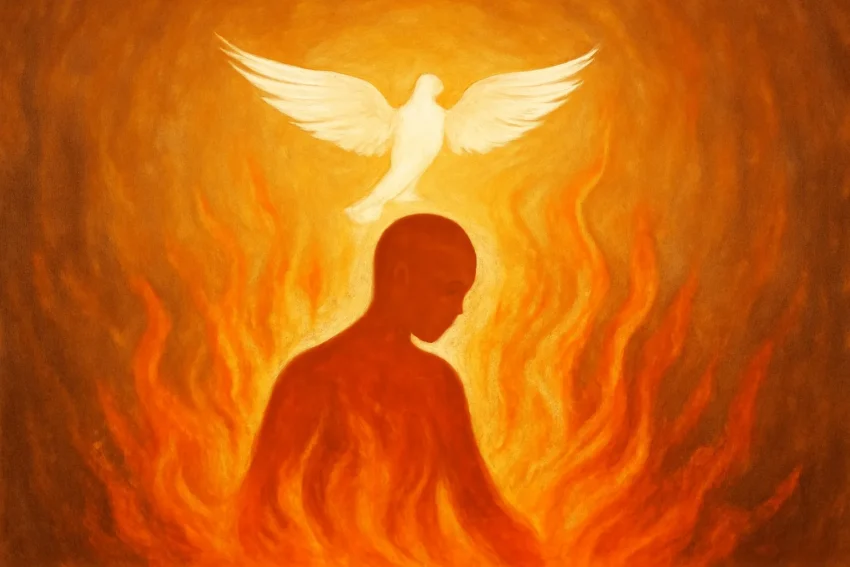
Introduction: What does it mean to be baptized by the Holy Spirit and fire?
Across Christian traditions, few phrases carry as much mystery and practical implication as baptized by the Holy Spirit and fire. This expression, appearing in two Gospel accounts in slightly different wording, points to a powerful, transformative work of God in a person’s life. It connotes both divine empowerment and moral purification, a combination that helps explain how believers are Christianized in faith and empowered for service. In this article, we will explore what it means to be baptized by the Holy Spirit and fire, examine its biblical foundations, examine the theological readings that have grown up around it, and consider what this phrase means for Christians today. We will use varied formulations—baptized with the Holy Spirit and fire, Spirit-baptized, baptism in the Spirit, refined by fire—to show how the idea appears in Scripture and how it can be understood in practice.
Biblical foundations: where the phrase appears and what it implies
Two key biblical statements: Matthew 3:11 and Luke 3:16
In Matthew 3:11, John the Baptist speaks of a coming one who will baptize you with the Holy Spirit and with fire. The language highlights two simultaneous aspects of the coming work: empowerment through the Spirit and discernment or judgment symbolized by fire. In Luke 3:16, John again uses parallel language, stating that the one to come will baptize with the Holy Spirit and with fire, clarifying that the Spirit’s presence brings not only blessing but a refining process.
The Pentecost experience: Acts 2 and the visible sign of fire
When the early church received the Spirit at Pentecost, the observable sign was tongues of fire resting on the disciples (Acts 2:3-4). This vivid image illustrates the Spirit-anointed exchange of bold witness, language gifts for proclamation, and a community empowered for mission. Although the Pentecostal scene emphasizes public displays of spiritual gifts, the underlying theme is the Spirit’s active presence in believers, enabling them to live out the resurrected life.
Related biblical motifs: purification, judgment, and sanctification
The metaphor of fire also carries the sense of purification. In biblical thought, fire purifies, refines, and separates genuine faith from counterfeit appearances. Thus, to be baptized by the Spirit and fire can be understood as a dual work: God’s Spirit fills and empowers a believer for ministry, while the fire refines the heart, exposing idols and forming holiness. Other passages speak of the Spirit’s role in conviction, producing fruit, and transforming character, all within the framework of a faith that endures trials.
What the phrase communicates: the dynamic of Spirit and fire
The expression baptized by the Holy Spirit and fire communicates several intertwined dynamics. Below are core themes that consistently appear across biblical interpretations.
Empowerment for witness: The Holy Spirit supplies power for bold proclamation, supernatural enablement for service, and courage to endure persecution. This is the Spirit’s primary enabling work for mission.
Sanctification and purification: Fire signifies purification. It tests motives, purges sin, and refines character so that love for God and neighbor becomes more real.
Judgment and discernment: Fire also implies discernment—separating genuine faith from counterfeit faith—so that the church remains true to its calling.
Transformation of identity: Being immersed in the Spirit and refined by fire reshapes a person’s inner life, shaping priorities, desires, and actions toward God’s purposes.
Hope and renewal: While fire can be challenging, it also points toward renewal—God’s own initiative to restore and refresh His people for even greater usefulness in His kingdom.
Variations in wording and nuance
Across Bible translations and Christian traditions, you will encounter several forms of the same core idea:
baptized in/with the Holy Spirit and fire (the canonical phrasing in Matthew and Luke)
spirit-baptized or baptism in the Spirit (emphasis on the Spirit’s work in the believer’s life)
refined by fire or purified by fire (emphasis on purification and transformation)
filled with the Spirit and purified by the Spirit (emphasis on ongoing Spirit-empowered life)
Historical and theological interpretations
Pentecostal and Charismatic perspectives
In many Pentecostal and Charismatic communities, the phrase baptized by the Holy Spirit and fire is understood as a distinct, often initial, experience of grace accompanying salvation or immediately following it. In this view, the baptism of the Spirit is a powerful moment that equips believers for ministry, including manifestations such as speaking in tongues, prophecy, and healings. The presence of fire is associated with zeal, holy passion, and the courage to stand for truth in a hostile world.
Reformed and evangelical perspectives
Many evangelical and Reformed theologians emphasize the unity of conversion, Spirit-work, and sanctification. For them, the baptism of the Spirit is not a second, separate experience but a continuous, ongoing work enabling Christians to live faithfully. In this view, baptism with the Holy Spirit is tied to baptism into Christ and to the Spirit’s present ministry in the life of the church. Fire is still a meaningful metaphor for purification and trials that refine a believer, but it is not always read as signaling a dramatic, second baptism.
Sanctification-focused interpretations
A third stream centers on sanctification: the Spirit comes to sanctify believers, and fire represents the necessary purification from sin. In this reading, the emphasis is less on experiential signs and more on the inner transformation that produces holiness, love, and obedience. The “fire” becomes a symbol of God’s corrective discipline that, though challenging, aims at deep conformity to Christ.
What it means for believers today: practical implications
For those seeking to understand how this phrase translates into daily life, several practical implications emerge. The combination of Spirit and fire suggests a dynamic Christian life that is both empowered for service and refined for godliness.
Seeking empowerment for service: Prayerful dependence on the Holy Spirit is essential for effective witness, discernment in decision-making, and the pursuit of spiritual gifts for ministry.
Pursuing holiness: The refining aspect of fire calls believers to repentance, deeper contrition for sin, and a progressive conformity to Christ’s character.
Embracing trials as refinement: Difficulties, rather than being merely negative experiences, can be opportunities for God to refine faith and deepen trust in Him.
Maintaining humility and vigilance: The Spirit’s power is given for service, but it must be exercised with humility, faith, and obedience to Scripture.
In practical terms, Christians who embrace Spirit-led living and refinement by divine fire often prioritize a few disciplines: daily Scripture engagement, prayerful listening for the Spirit’s guidance, participation in a faith-community for accountability, and a willingness to allow God to expose and remove idols—whether they be control, fear, or cynicism.
How different traditions shape expectations
The expectation attached to being baptized by the Holy Spirit and fire can vary widely depending on church tradition, culture, and personal experience. Here are some nuanced observations about how various communities understand and respond to this language.
In worship and mission-minded churches, Spirit-empowered living translates into courageous evangelism, compassionate service, and vibrant worship that seeks a tangible sense of God’s presence.
In catechetical settings, the focus is on teaching the Christian life as a Spirit-enabled journey: conversion, ongoing sanctification, and the pursuit of godliness as a response to God’s grace.
In revival-focused contexts, “fire” is often talked about as revival intensity—an awakening of passion, repentance, and renewed zeal for God’s mission.
In quieter, contemplative circles, emphasis tends to be on inner purification, discernment, and the Spirit’s gentle, transformative work that produces peace, patience, and steadfastness.
How to respond to the invitation of Spirit and fire
If you are exploring what it means to be baptized with the Holy Spirit and fire, consider these practical steps that many Christians have found helpful.
Seek the Spirit in humility: Approach God with honesty about your needs, confessing sin, and asking for the Spirit’s fullness to live a Christ-centered life.
Ask for empowerment for service: Request the Spirit’s gifting and courage to bear witness to Jesus in everyday life, whether at work, school, or family life.
Invite purification: Invite God to purify your motives and loves. This may involve repenting of competing desires and embracing the discipline of holiness.
Join a faith community: A local church or study group provides accountability, teaching, and opportunities to exercise spiritual gifts in love and truth.
Discern and test: Learn to test the Spirit’s work against Scripture, ensuring that experiences align with the character of Christ and the gospel message.
Common questions and thoughtful answers
The topic often raises questions that deserve careful, biblically grounded responses. Here are a few that commonly arise:
Is this experience universal for all Christians? Not all traditions teach that baptism with the Spirit and fire is a separate, repeated experience. Many affirm that every believer has the Spirit, but the intensity and visibility of the Spirit’s empowering a may vary over time and context.
Can one be a Christian without this experience? Yes, according to many traditions. The central marker of our faith is union with Christ, receipted by faith and confirmed by the Spirit’s work in sanctification rather than a single dramatic event.
What if I’m skeptical about “fire” imagery? The imagery is symbolic for purification and zeal. It’s the idea of a purifying, life-changing force rather than a mere emotional surge.
Scriptural cautions and balanced expectations
While the imagery of being baptized by the Holy Spirit and fire is powerful, it is essential to approach it with balance. Scripture invites us to seek the Spirit’s fullness in a way that produces the fruit of the Spirit—love, joy, peace, patience, kindness, goodness, faithfulness, gentleness, and self-control (Galatians 5:22-23). Fire, in biblical use, often tests and purifies; therefore, the desired outcome is a life increasingly aligned with Christ’s character, not merely emotional highs or spectacular signs.
Common misconceptions clarified
Misunderstandings about being baptized by the Holy Spirit and fire can blur spiritual perception. Here are a few clarifications:
Not everyone experiences the same signs: Some believers experience outward signs like bold preaching or spiritual gifts; others experience inner transformation and steadier obedience.
It is not a formula for superiority: The Spirit works in diverse ways; no person can claim superiority based on how they experience God’s presence or fire.
It should produce love in action: The ultimate test is whether the experience makes the believer more loving toward God and neighbor and more committed to righteousness.
Historical reflections: how the church has understood this over the centuries
Across church history, Christians have wrestled with the same tension: the Spirit’s power and the Spirit’s refining presence. The early church celebrated the Spirit’s empowering at Pentecost as decisive for mission. Later reformers emphasized the Spirit’s role in faith, repentance, and growth in grace. In the modern era, Pentecostal and Charismatic movements revived the emphasis on experiential signs and dynamic gifts, while many evangelical and mainline traditions continued to stress the Spirit’s ongoing sanctifying work within a faith community. In every era, the core aim has remained the same: to live in fidelity to Christ empowered by the Holy Spirit, while being transformed by the Spirit’s refinement that purifies and renews.
Conclusion: embracing the mystery with faith and responsibility
The phrase baptized by the Holy Spirit and fire invites believers to live in the tension between power and purity. It points to a God who equips His people for service and who also sanctifies them for holiness. Whether you resonate more with the language of Spirit-baptism, baptism in the Spirit, or refinement by fire, the essential invitation remains: draw near to God, rely on the Spirit’s presence, and submit to the ongoing work of transformation that makes faith more than a creed—an actual way of life.
If you would like to explore this topic further, consider studying the key passages in their immediate context, discussing with a trusted teacher or pastor, and observing how the Spirit’s work unfolds in your church community. The journey toward being baptized by the Holy Spirit and fire is less about chasing after a single moment and more about growing into a life that embodies the Spirit’s power for witness and the Spirit’s fire for purification—both leading you closer to Christ and enabling you to participate more fully in God’s mission in the world.