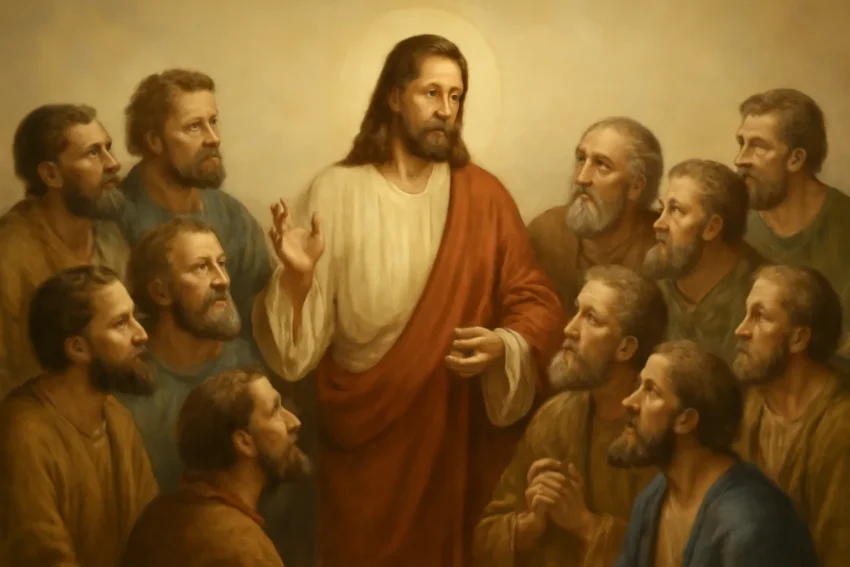
Are the Twelve Disciples the Same as the Twelve Apostles? Biblical Distinctions
In biblical study, a question that often sparks careful reading is whether the twelve disciples are the same as the twelve apostles. The short answer is nuanced: the terms describe overlapping groups, but they carry different shades of meaning and function within the New Testament narrative. This article explores the distinction, traces how the language develops in the biblical text, and offers practical guidance for readers who want to understand how disciples, apostles, and “the Twelve” fit together in the story of Jesus and the early church.
Introduction to the Terms: Disciple, Apostle, and the Circle Known as “the Twelve”
From the outset, it helps to recognize that disciple is a general term. In ancient Greek, the word mathētēs describes a learner, a student, or a follower who appropriates a teacher’s teaching. In Jesus’s ministry, there were many such learners and followers—both men and women—who walked with Jesus, listened to his teaching, and witnessed his deeds. By contrast, apostle (Greek apostolos) designates a specific missionary or envoy—someone sent with authority to proclaim the message, teach, and represent the one who sent them.
In the Gospels and Acts, the phrase the Twelve or the Twelve Apostles is used to name a particular group chosen by Jesus. Sometimes you will read the Twelve Disciples and the Twelve Apostles as if they refer to the same people, and sometimes the text treats them as distinct in scope. The critical point is that the apostles constitute a specialized subset of Jesus’s broader circle of followers. Every apostle is a disciple, but not every disciple is an apostle.
Who are the Disciples? The Broad Circle of Followers
The term disciples includes a wide range of followers who were taught by Jesus. This group is not limited to the closest associates; it includes those who embraced Jesus’s teaching but did not necessarily carry the same commissioning role as the apostles. Some key points about the broader circle include:
Many women are described as disciples of Jesus in the Gospels, such as Mary Magdalene and others who supported Jesus’s ministry (Luke 8:1–3).
Beyond the core Twelve, Jesus sent out a larger group of disciples to preach and heal in Luke 10:1–24—the sending of the seventy-two is often cited as a broader mission for followers.
The term disciple emphasizes learning, apprenticeship, and following Jesus’s teachings, rather than a formal delegation of authority.
In this sense, the statement “are the 12 disciples the same as the 12 apostles?” invites the answer that the discipleship group is larger, while the apostolic group is smaller and specialized.
Who Are the Apostles? The Special Missionaries
In contrast to the broader circle of disciples, the apostles are individuals chosen by Jesus to be his primary messengers. The New Testament presents the Twelve as a distinct group with a unique commission: to be witnesses to Jesus’s life, death, and resurrection, to preach the gospel, and to lay the foundation of the church. Some salient points about the apostles include:
Chosen by Jesus from among the disciples to receive direct commissioning (Mark 3:13–19; Luke 6:12–16).
Given authority to preach, heal, cast out demons, and to be witnesses concerning Jesus (Luke 9:1–2; Matthew 10:1–8).
They play a foundational role in the early church, especially in Acts as leaders who organize the church’s mission and governance (Acts 1–5).
When we ask “are the twelve apostles the same as the twelve disciples?”, the precise answer is that the apostles constitute a specific group within the broader set of disciples. The phrase “the Twelve” is often used in the Gospels to refer to those twelve men who were given this special status.
The Twelve Apostles: Identity, Names, and How They Are Named in the New Testament
Traditionally, the group known as the Twelve Apostles consists of these men:
Peter (also called Simon Peter)
James, son of Zebedee
John, brother of James
Andrew
Philip
Bartholomew
Matthew
Thomas
James, son of Alphaeus
Simon the Zealot
Judas Iscariot
Matthias (replacing Judas after the betrayer’s death, Acts 1:26)
In some passages, the list names the Twelve in slightly different orders, but the core group remains the same: these are the leaders entrusted with the mission after Jesus’s ascension. After Judas’s betrayal and death, the community sought to fill his place so that the Twelve would be preserved as a symbolic and functional number for the apostolic witness. The selection of Matthias in Acts 1:23–26 is the canonical illustration of this continuity.
It is also important to note that Paul the Apostle is sometimes counted as an apostle, though he was not part of the original Twelve. Paul’s apostolic ministry is described in terms of calling and commissioning by the risen Jesus (e.g., Galatians 1:15–16; 1 Corinthians 9:1–2). This broader application of the term apostle helps explain why some Christian traditions refer to “the apostles” in a universal sense beyond the Twelve. Thus, the precise membership of “the twelve apostles” can vary in church history, but the biblical core remains the same: a distinctive, sent mission with authority.
Are the Disciples the Same as the Apostles? Distinctions in the Text
To answer the central question with clarity, consider these textual distinctions commonly discussed in biblical scholarship:
Scope of the term: Disciples is broad; Apostles is narrower and role-based.
Functional design: Disciples learn and follow Jesus; Apostles are sent to preach and lead the church.
Group dynamics: The Twelve refers to a specific collective identity; the broader disciple group includes many others beyond the Twelve.
In many gospel scenes, the terms are used interchangeably, underscoring that the Twelve were indeed disciples, but the reverse statement would be true only in the sense of their shared identity as followers of Jesus. When Jesus calls the first disciples along the Sea of Galilee, he invites them to “follow me” and, in effect, becomes their teacher. When he later commissions them, they become apostles in the sense of being sent with authority to carry on the mission.
A Close Look at the Greek Background: Mathētēs vs Apostolos
Understanding the linguistic nuance helps illuminate the distinction. In the New Testament Greek, two words stand out:
Mathētēs (disciple): a learner, pupil, follower who agrees to adopt the teacher’s way of life. This term appears frequently for Jesus’s followers, including women and men who accompanied him.
Apostolos (apostle): a sent one, an envoy, a messenger who carries authority from the sender. While some apostles are part of the Twelve, the term can also apply to others commissioned later in the story, such as Paul.
The shift from disciple to apostle marks a change from a student-teacher relationship to an official mission and authority bestowed by Jesus. This lexical nuance helps explain why the question about “are the twelve disciples the same as the twelve apostles” often invites a careful parsing of context: in some passages, the terms are synonyms; in others, they signal different roles within the same community.
Judas, Matthias, and the Continuity of “The Twelve”
A notable episode in the New Testament is the replacement of Judas Iscariot. The question “did Judas stay part of the Twelve?” is answered by the account in Acts 1:15–26: after Judas’s betrayal and death, the remaining disciples sought to maintain the integrity of the number, proposing that another be added to take his place. They cast lots, and Matthias was chosen to join the Eleven in order to restore the group to twelve. This event underscores an important principle:
The designation the Twelve was a formal symbol of the intimate circle entrusted with the foundational mission.
Replacement of a member demonstrates the dynamics of continuity in the apostolic circle.
Even with Judas replaced, the role of the Twelve Apostles remains tied to their shared mission and witness to the Crucified and Risen One.
For readers, this episode helps answer another common question: “Are the Twelve Apostles the same as the original Twelve Disciples who followed Jesus?” The answer is nuanced: the original Twelve were a subset of the larger body of disciples; after Judas’s exit, the group continued as the Twelve with a renewed composition, still fulfilling the apostolic mission.
Paul, Other Apostles, and the Expanding Circle
Beyond the canonical Twelve, the New Testament speaks of other apostles, notably Paul. Paul’s self-designation as an apostle (though not one of the original Twelve) reflects a broader early Christian pattern: to recognize messengers who carry the gospel with authority. A few points to note:
Paul’s apostleship arises from his encounter with the risen Christ on the road to Damascus (Acts 9; Galatians 1–2).
Other individuals are described as apostles in a broad sense, often associated with Christian communities and mission work rather than with the Twelve’s inner circle (e.g., James the brother of Jesus as a leader in Jerusalem, or others in Paul’s lists in 1 Corinthians 12:28–29).
This broader usage helps explain why some Christian traditions refer to the “apostolic era” as a broader movement of sending messengers, teachers, and church planters beyond the original Twelve.
Despite this expansion, the biblical core remains: the Twelve Apostles formed the foundational group charged with witnessing Jesus’s life and the Resurrection, and they provide the early church with authoritative teaching and leadership. The existence of Paul as an apostle highlights the continuity of the mission beyond the original group, not a replacement of it.
Common Misconceptions: Clearing Up Confusion
Among readers, several misconceptions recur. Here are common clarifications that help when you encounter this topic in Scripture, commentaries, or sermons:
Misconception: “There were only ever twelve disciples, and they were the same as the twelve apostles.” Clarification: The broader circle of disciples was larger than the Twelve; the Twelve were a special subset recognized as apostles with a unique mission.
Misconception: “All disciples were apostles, and all apostles were disciples.” Clarification: While all apostles are disciples, not all disciples held the formal apostleship with its specific mandate and authority.
Misconception: “Judas Iscariot was replaced to preserve the number twelve in every sense.” Clarification: The replacement ensured the symbolic and functional stability of the apostolic circle; it did not imply that every later generation would reuse the exact composition, but it did preserve the number and its spiritual meaning.
Misconception: “The Twelve are a unit with a single, static role.” Clarification: The roles within the Twelve involved both intimate companionship with Jesus and ongoing leadership responsibilities after the Resurrection.
Understanding these nuances helps readers avoid oversimplified conclusions and encourages careful reading of passages where terms shift in meaning depending on context.
What This Means for Reading the New Testament
For modern readers, recognizing the distinction between disciples and apostles provides practical benefits when interpreting the New Testament. Consider these takeaways:
Context matters: When you read about people following Jesus, the term usually points to discipleship; when you read about sending messages, teaching authority, or founding churches, the term apostle is more likely in view.
Character and role: The Twelve Apostles have a shared core mission, but individual members carry unique stories, strengths, and experiences in the Gospel narratives and Acts.
Continuity of mission: The book of Acts demonstrates how the apostolic mission expands beyond the Twelve, while preserving the authority and witness they embodied.
Historical development: The church’s early practice of identifying “apostles” beyond the Twelve reveals how early Christian communities understood leadership, authority, and succession.
Practical Guides for Study: Distinguishing Terms in Texts
When approaching a Bible study or sermon, these practical steps can help you parse the terms correctly:
Ask, Who is being described as a disciple? Look for mathētēs and understand whether the text emphasizes learning, following, or belonging to a broader group.
Ask, Who is named as an apostle? Look for apostolos and examine whether the passage emphasizes mission, authority, or sending.
Look for phrases “the Twelve” or “the Twelve Apostles” to see if the passage refers to this specific, foundational group.
Check the context of a passage about sending or witnessing. If an instruction or blessing accompanies the youngest or newest messenger, it may indicate apostolic authority.
Note cross-references between the Gospels and Acts to observe how the terminology shifts as the story moves from Jesus’s ministry to the early church.
Summary: Are the 12 Disciples the Same as the 12 Apostles?
To summarize succinctly: the twelve disciples and the twelve apostles overlap significantly, but they are not identical concepts. The phrase the twelve typically refers to a specific group of men chosen by Jesus with a unique mission. The term disciple is broader and encompasses all followers of Jesus who learned from him. The term apostle identifies those who are sent with authority to proclaim and establish the church, and not all disciples were given that formal apostolic mandate or the same level of authority. The narrative also shows that after the betrayal of Judas Iscariot, Matthias joined to preserve the symbolic and practical number of the Twelve, while the broader concept of apostles continued to expand with figures like Paul as additional witnesses and messengers of the gospel.
Additional Resources for Deeper Study
For readers who want to explore this topic further, here are suggested avenues:
Cross-reference study: Compare Gospel accounts (Matthew, Mark, Luke, John) with the book of Acts to observe how terms shift across contexts.
Language notes: Explore a concordance or a lexical study of mathētēs and apostolos in the Greek New Testament to appreciate nuances.
Historical context: Read about early Christian leadership structures and the concept of apostolic succession in different traditions.
Commentaries: Consult varied commentaries that discuss the Twelve, the replacement by Matthias, and Paul’s apostleship to see how scholars treat these terms.
In conclusion, the question “are the 12 disciples the same as the 12 apostles?” invites a nuanced answer: the disciples and apostles share a core identity in the sense of following Jesus, but the apostles are a distinct group with a specific mission. The Twelve, as the innermost circle of this mission, are both disciples and apostles in their role, but in the wider Christian story, the categories do not collapse into a single uniform designation. Understanding this distinction helps readers interpret the New Testament with greater accuracy and appreciation for its historical and theological layers.