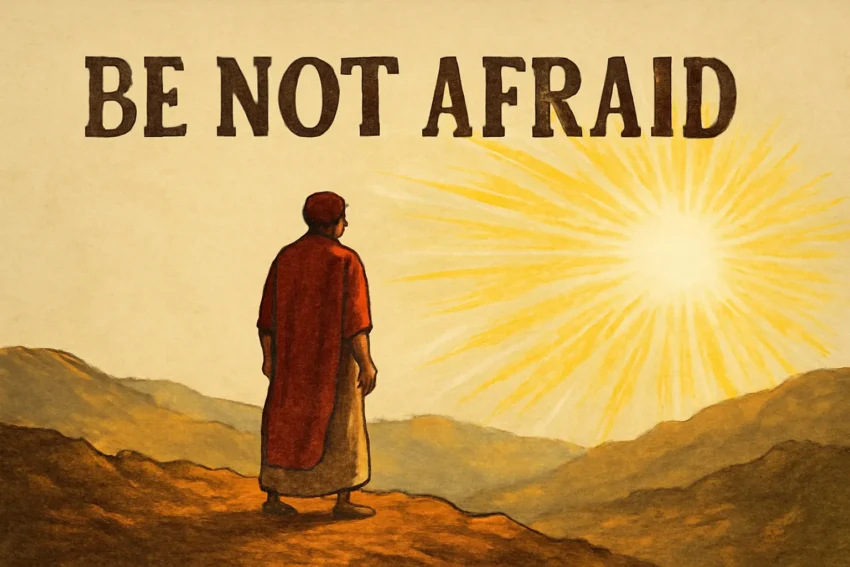
Throughout the Judeo-Christian tradition, the simple command to “Be not afraid” and its many variants appears at moments of danger, uncertainty, or transition. It is not merely a shout of bravado; it is a call to trust, to remember that courage grows from faith, prayer, and the awareness that God is present. In this article, we explore the Be Not Afraid Bible Verse as a teaching thread that weaves through scripture, offering comfort, courage, and a path to faithful response in everyday life. Whether you are facing personal fear, collective anxiety, or the unknown of a new season, these verses invite you into a posture of hope, resilience, and graceful dependence on God.
Why the biblical exhortation to fear not matters today
The repeated refrain to not fear is more than a sentiment; it is a spiritual discipline. Fear can distort perception, cause paralysis, or push us toward destructive choices. Scripture presents fear as a natural human feeling, but it pairs fear with a divine invitation: to turn toward God, to trust in His promises, and to act with courage grounded in love and truth. The phrase appears in different forms—Fear not, Do not fear, Be not afraid, andBe strong and courageous—each emphasizing a different facet of the same core message. This diversity in expression helps believers hear a timeless reassurance in a variety of life contexts.
Contextual comfort: The commands appear during moments of exile, wilderness, battle, and personal crisis, indicating that fear is not shameful but amenable to divine aid.
Relational orientation: The calls are often paired with a promise of God’s presence, guidance, or redemption, shifting the focus from fear to relationship.
Practical counsel: Along with reassurance, scripture often gives concrete direction—trust God, obey, remember, pray, or act with courage.
Key Be Not Afraid Verses: a survey of encouraging scriptures
The following verses are some of the most frequently cited encouragements in the Bible. Each entry includes the core words, a brief note on context, and ideas for personal reflection. For broader study, you may compare translations (KJV, NIV, ESV, NASB, NRSV) to see how different wordings illuminate nuances of fear, trust, and divine presence.
Verses with the core message: Be not afraid, fear not, do not fear
“Fear not, for I am with you” is a foundational guarantee in this chapter. In the face of political upheaval and personal vulnerability, God speaks a promise of companionship and strength. The verse continues with a pledge to strengthen, help, and uphold the believer by God’s righteous right hand.
Reflection: When fear rises, repeat the assurance of God’s nearness. Consider journaling a short prayer that begins with “Do not fear, for You are with me, O God…” and note the circumstances that prompt anxiety.
Joshua 1:9 — Be strong and courageous. Do not be afraid; do not be discouraged
This verse sits at a turning point in Israel’s story, as Joshua prepares to lead after Moses. The exhortation combines bold action with a plea against cowardice, anchored in the companionship of the Lord.
Practice tip: In moments of transition, list practical steps you can take—prayer, counsel, planning, and trusted accountability—while anchoring your strength in God’s presence.
Psalm 27:1 — The Lord is my light and my salvation; whom shall I fear?
The psalmist frames fear by elevating the source of security: God as light and salvation. The rhetorical query highlights the paradox that fear loses its grip when truth about God’s character is held firmly.
Application: Create a verse card with “The Lord is my light and my salvation” and carry it in your wallet or phone for quick recitation during anxious moments.
Psalm 56:3–4 — When I am afraid, I will put my trust in you
Fear is acknowledged honestly, and trust is chosen in response. The psalmist’s shift from fear to trust illustrates a process—name the fear, bring it to God, and anchor your hope in His word and faithfulness.
Practice idea: Create a brief ritual for anxiety: name the fear, recite a trusted verse, and recall evidence of God’s faithfulness in your life.
Luke 12:32 — Fear not, little flock
Jesus frames discipleship as a family matter—the Father’s tender care for his own. The phrase “little flock” conveys intimate care, while the imperative to fear not grounds hope in divine provision.
Takeaway: When you feel small or overwhelmed, remember that you are under the Father’s watchful eye and generous intent for your good.
Matthew 6:25–34 — Do not worry about tomorrow
In the Sermon on the Mount, Jesus teaches that anxiety about future needs distracts from seeking God’s kingdom. The command to refrain from worry is linked to a trust-filled focus on daily grace and provision.
Daily practice: Use the practice of “worry time” to name concerns, then lay them before God in prayer, choosing to live one day at a time under his mercy.
Deuteronomy 31:6 — Be strong and courageous; do not fear or be in dread
A covenantal promise is reinforced in this verse: God goes with his people, a source of courage in the midst of formidable challenges.
Action step: Make a courage plan: identify a fear, articulate a step you can take in faith, and invite a trusted companion to join you in prayer and accountability.
Isaiah 43:1 — Do not fear, for I have redeemed you
God’s name speaks of deliberate, personal intention: redemption. The command to “do not fear” is paired with a declaration of belonging—“you are mine.”
Takeaway: Your identity in God’s redeemed people is a shield against fear. Rest in the reality of God’s ownership and care.
2 Timothy 1:7 — For God gave us a spirit not of fear but of power and love and self-control
The New Testament expands the scope from fear’s absence to the presence of positive, God-given qualities. Fear is not only defeated; it is replaced by power, love, and discipline.
Personal growth: Identify ways to cultivate these three gifts in daily life: use your God-given power for brave, compassionate action; express love in concrete acts; exercise self-control in moments of impulse.
1 John 4:18 — There is no fear in love
Love is presented as the antidote to fear. A mature love, lived out in fear’s absence, casts out fear because fear’s concern with punishment loses its power in the presence of love.
Love-centered practice: Practice loving-kindness in difficult conversations, extending grace to others and yourself, especially when fear surfaces.
2 Kings 6:16 — Do not be afraid. Those who are with us are more than those with them
The prophet Elisha’s servant faces a terrifying situation. A reminder of spiritual companionship—“those with us”—offers perspective when fear magnifies threats.
Perspective shift: When fear swells, list the sources of aid you can name—people, community, grace, and the unseen presence of God.
Psalm 23:4 — I will fear no evil, for you are with me
The beloved Psalm anchors fear not in God’s abiding presence: even in the darkest valleys, the shepherd’s guidance provides safety and comfort.
Comforting image: Imagine walking with a shepherd’s staff and rod. Let that image ground your sense of protection in God’s care.
Psalm 34:4 — I sought the Lord, and he answered me; he delivered me from all my fears
A personal testimony narrative: seeking God leads to answered prayer and release from fear. This verse invites believers to pursue God proactively and claim his deliverance.
Practice: Keep a “fear journal” of times when prayer brought relief, adding dates, people you prayed with, and outcomes you observed.
Jeremiah 1:8 — Do not be afraid of them, for I am with you to deliver you
A prophet’s commission is accompanied by divine presence and protection. The fear addressed here is both personal and communal, pointing to God’s empowering call.
Contextual note: For those stepping into new roles or speaking truth in challenging spaces, this verse offers a model of divine accompaniment in mission.
Thematic insights: how these verses shape faith, courage, and practice
Across the scriptures, several recurring themes connect Be Not Afraid statements to practical faith:
Divine presence as a primary antidote to fear: God promises to be with us, to guide, strengthen, and uphold.
Covenantal love that redefines fear’s meaning: fear often unsettles us when we forget that we are known and valued by God.
Hope that outlasts danger: fear is real, but hope rooted in God’s faithfulness offers a horizon beyond the immediate threat.
Action within faith: courage is not the absence of fear but the willingness to act rightly in spite of fear, empowered by God’s gifts.
Practical ways to use the be not afraid verses in daily life
Memorization and recitation: Choose a verse or two to memorize for moments of anxiety. Recite aloud slowly, letting the words anchor your breath and heart.
Prayerful reflection: Use a short prayer format: acknowledge fear, remind yourself of God’s presence, claim a specific promise (e.g., “You are with me; strengthen me”), and end with a request for courage.
Journaling: Keep a fear journal. Record what you fear, when it surfaces, what triggers it, and how God’s promises address it. Track patterns and growth over time.
Community support: Share verses with trusted friends or family. Pray together. There is strength in communal faith and accountability.
Scriptural study: Compare translations to notice nuances (e.g., “fear not,” “do not fear,” “be not afraid”). Create a mini-handout or bookmark that lists several variations for quick reference.
Mindful in the moment: When anxiety spikes, perform a brief pause—inhale, exhale, and speak a chosen phrase like “God is with me” or “Do not fear”—to reset your nervous system through breath and faith language.
Artistic and creative expression: Write a poem, draw an image, or compose a song inspired by a chosen verse. Creative expression can deepen trust and resilience.
Historical and literary context: understanding how “fear not” functions in the scriptures
The commands to fear not emerge in diverse literary genres—such as prophetic oracles (Isaiah), historical narrative (Joshua, Deuteronomy), wisdom poetry (Psalms), and apostolic letters (Timothy, John). This diversity signals that fear is a universal human experience, and the response—trust, obedience, and reliance on divine accompaniment—transcends individual life stages. From a literary perspective, the phrases often appear alongside promises, instructions, or salvific acts. Interpreters note that these commands are not a denial of danger but a repositioning of the believer’s focus toward God’s sovereignty and goodness.
The biblical pattern, in short, is this: fear arises; God speaks comfort; a corresponding command is given (to not fear), followed by a reaffirmation of God’s presence or promises. When studied together, these verses invite readers to see fear not as the final word but as a bridge to faith, courage, and action that reflects God’s life in us.
Frequently asked questions about Be Not Afraid verses
Why does the Bible address fear so often?
Because fear is a common human experience, and faith offers a framework for navigating it. The Bible presents fear as a signal to turn toward God, not as a verdict about one’s worth or potential.
How can I apply these verses if I struggle with chronic anxiety?
Begin with small, doable steps: memorize a verse, practice brief daily prayers, and seek supportive community or professional guidance when needed. The goal is steady trust and practical resilience, not a denial of pain.
What is the difference between fear and caution in biblical teaching?
Fear is an emotional response that can paralyze or distort perception; biblical caution is a prudent, God-informed awareness that invites wise action, rooted in trust.
Are these verses asking me to ignore reality?
No. They invite a reordering of priorities—placing trust in God’s presence and promises even as one faces real challenges, rather than surrendering to fear alone.
Can these verses be comforting in non-religious contexts?
Yes. The language of courage, trust, and presence has resonance beyond specific faith commitments. People often find value in the universal themes of resilience, hope, and moral courage.
Conclusion: cultivating courage and faith through the Be Not Afraid tradition
The Be Not Afraid Bible Verse tradition offers more than comforting words—it provides a framework for facing life’s uncertainties with integrity and trust. By recognizing fear as a natural texture of the human experience and responding with God-centered courage, readers can cultivate a resilience that is sustained by divine presence, community, and practiced faith. Whether you are revisiting familiar verses or encountering them for the first time, the calls to fear not, do not fear, be not afraid, or be strong and courageous invite you to a life oriented toward hope, love, and purposeful action.
If you would like, you can start a simple routine today: select one verse, write a short personal reflection, memorize the line, and commit to a one-week practice of recitation and prayer. You may find that fear does not disappear instantly, but it becomes more navigable as you move through the day with the awareness that you are not alone—God is with you, and those who love you stand with you as well.