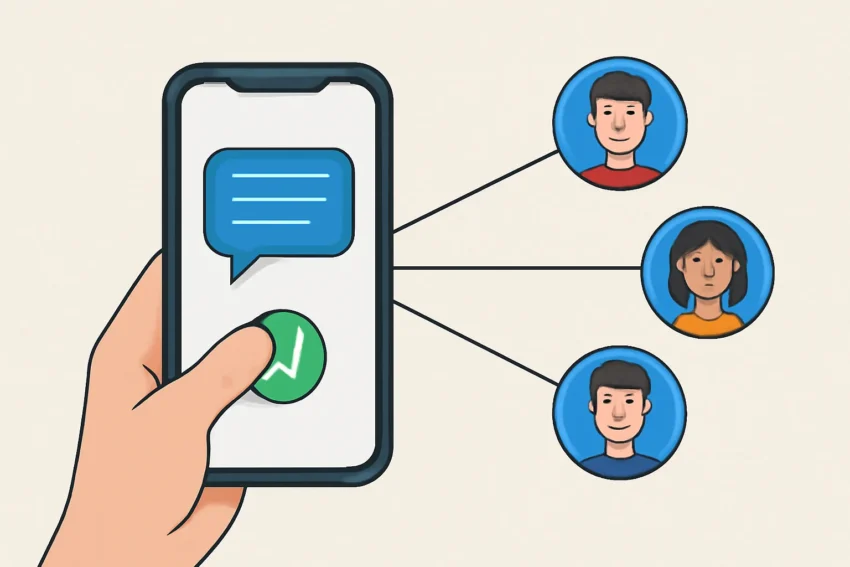
In a world saturated with notifications, mass text campaigns stand out because they reach people where they are: their pockets. SMS has one of the highest open rates of any marketing channel, and when done correctly, it can drive rapid response, higher engagement, and measurable ROI. This article is a practical guide to the best way to send mass text messages—covering strategy, compliance, technology choices, content design, and performance measurement. You’ll learn how to run bulk SMS campaigns that respect recipients, avoid friction, and deliver real business value.
Foundations of an effective bulk SMS strategy
Before you press send, there are core pillars that separate successful campaigns from noisy, ineffective ones. The best way to send mass text starts with a solid foundation built on consent, relevance, and clear outcomes.
Permission and compliance
The most important step is ensuring every recipient has opted in and can opt out at any time. Compliance isn’t just a legal box to check—it’s a trust signal that protects your brand reputation. Key considerations include:
Clear consent: subscribers should know what they’re signing up for and what messages to expect.
Opt-out options: provide easy unsubscribe methods in every message.
Respecting frequency: avoid spamming by setting sensible cadence and honoring preferences.
Data protection: secure storage and handling of personal information in line with local laws (e.g., GDPR, TCPA, CAN-SPAM as applicable).
Deliverability and sender identity
Deliverability dictates whether your messages actually land in inboxes or get blocked. The best way to send mass text emphasizes reliable sender identification and message optimization:
Sender ID: familiar names or short codes can improve recognition, but vary by region and carrier.
Short codes vs. long codes: short codes often deliver higher throughput and trust for campaigns, but long codes may be sufficient for personalized, one-to-one style messaging.
Content and formatting: messages should be concise, legible, and compliant with carrier guidelines to avoid triggers that flag spam.
Data quality and segmentation
The power of a bulk SMS program is amplified when you send the right message to the right people at the right time. Focus on clean data to enable precise segmentation and personalization:
Quality data includes accurate phone numbers, consent timestamps, preferences, and historical interactions.
Segmentation by behavior, location, lifecycle stage, and preferences improves relevance.
Data hygiene: regular cleansing, deduplication, and updates to keep contacts fresh.
Defining goals and planning your bulk SMS campaign
Clear objectives guide every decision—from message length to send cadence. If you can’t quantify impact, you can’t optimize effectively. Consider these elements when planning the best way to send mass text.
Set concrete goals
Increase conversions or registrations through time-limited offers.
Drive attendance at events or reminders for appointments.
Improve customer retention with post-purchase updates or loyalty messages.
Test product announcements or new feature launches with opt-in audiences.
Define primary audience segments and a respectful cadence. Over-messaging leads to opt-outs; under-messaging reduces impact. A practical approach:
Segment by lifecycle stage (new subscribers, active customers, lapsed customers).
Match cadence to user expectations (e.g., transactional alerts vs. promotional offers).
Set a maximum weekly or monthly message count per segment.
Content strategy: crafting messages that convert
The content you send determines whether your bulk SMS campaigns are read, acted on, or ignored. Short, actionable, and compliant messages perform best.
Message design principles
Clarity: say one thing clearly; avoid ambiguity.
Urgency when appropriate: limited-time offers or deadlines can drive action, but use sparingly.
Value proposition: highlight the benefit for the recipient (savings, convenience, timely information).
Clear call to action: tell recipients exactly what to do next (tap a link, reply with a keyword, call a number).
Brand voice: maintain consistency with your brand in tone and terminology.
Character limits and optimization
Even though many channels now support longer messages, SMS length conventions still matter for readability and engagement. Tips:
Keep messages around 160 characters when possible, or use concise multi-part messages sparingly.
Place the most important information in the first sentence.
Use URL shorteners carefully; track clicks to measure performance.
Avoid heavy punctuation that can trigger spam filters in some regions.
Personalization and dynamic content
A personalized mass text can outperform generic messages by addressing recipients with names, preferences, or past behavior. Personalization strategies include:
Technology options: how to send mass text efficiently
Choosing the right technology stack is essential for scale, reliability, and cost control. The best way to send mass text depends on your volume, compliance needs, and integration requirements.
Sending channels: short code, long code, and more
Understanding the options helps you select the right channel mix for your goals:
Short codes: high throughput, trusted, ideal for high-volume campaigns and opt-in programs with regional availability.
Long codes: standard mobile numbers suitable for person-to-person style messages or lower-volume campaigns; easier to implement globally but with lower throughput.
Alphanumeric sender IDs: display names rather than numbers in some regions; useful for brand recognition but not universally supported for outbound messaging or inbound responses.
Hybrid approaches combining short and long codes to balance reach and cost.
Platform options: choosing a bulk SMS provider
Partnering with a reputable provider is a cornerstone of the best practice for bulk messaging. When evaluating platforms, consider:
Throughput and uptime: reliable delivery even during peak times.
API capabilities: RESTful APIs, webhooks, and robust SDKs for developers.
Compliance tooling: opt-in/out tracking, consent logs, and regional compliance support.
Templates and workflow automation: message templates, scheduling, and automated campaigns.
Analytics and dashboards: delivery reports, opt-out rates, link tracking, and ROI metrics.
API, automation, and workflow design
Automation helps you scale without sacrificing relevance. Practical approaches include:
Event-driven triggers: send messages based on user actions (purchase, cart abandonment, appointment reminders).
Scheduled campaigns: seasonal promotions or reminders aligned with calendars.
Transactional vs promotional: separate channels or flows to comply with rules and ensure timely delivery.
Opt-in verification and consent tracking: keep an auditable trail for compliance.
Delivery optimization: timing, frequency, and regional considerations
Deliverability hinges on timing, geography, and user expectations. The optimal bulk SMS approach uses data-driven timing and respectful frequency.
Time-of-day signals: send when recipients are most likely to engage (varies by audience and region).
Day-of-week patterns: test weekdays vs weekends to determine optimal windows.
Event-driven timing: align messages with moments that increase relevance (sale start, checkout window).
Frequency and cadence
A well-tuned cadence respects recipients and maintains engagement. Guidelines:
Start with a modest baseline and adjust based on opt-out rates and engagement.
Avoid daily promotional blasts; consider alternate days or weeks for campaigns.
Use behavioral triggers to message only when it adds value.
Regional and carrier considerations
SMS rules and carrier behavior vary by region. Factors to account for include:
Regulatory nuances: opt-in requirements, consent records, and opt-out rules differ country to country.
Carrier filtering: certain words, punctuation, or URLs can trigger filtering in some markets.
Language and localization: messages should be localized for language, date formats, and cultural norms.
Measurement and optimization: metrics that matter
What you measure determines what you improve. The best way to send mass text is iterative: test, learn, and optimize based on data.
Key performance indicators
Delivery rate: percentage of messages successfully delivered to the carrier.
Open/read rate: proportion of messages opened or engaged with; high for SMS, typically inferred via responses or clicks.
Click-through rate: percentage of recipients who click on a link in the message.
Response rate: how often recipients reply or take action (opt-in, redeem, register).
Conversion rate: completed desired actions (purchases, sign-ups) attributed to the SMS flow.
Opt-out rate: percentage of recipients who unsubscribe, a critical compliance and quality signal.
ROI: revenue or value generated per campaign relative to cost.
A/B testing and experimentation
Structured testing drives better outcomes. Consider these approaches:
Subject-like variables: first sentence, CTA wording, offer type, and discount level.
Timing tests: different send times and days.
Content variations: short vs longer messages, with vs without links, different branding.
Channel mix tests: when to use short code vs long code vs IDs to optimize throughput and recognition.
Governance: best practices for governance and brand safety
Sustained success with bulk SMS campaigns depends on ethical practices and brand safety. The best practice is to protect recipients and your brand from damage.
Privacy and data stewardship
Limit data collection to what is necessary for the campaign.
Store consent proofs and permission histories securely.
Implement role-based access and audit trails for SMS campaigns.
Brand safety and trust
Be transparent about who messages come from and why recipients are contacted.
Maintain consistent sender identity to reduce confusion and build recognition.
Offer easy opt-out and honor preferences promptly to preserve trust.
Case studies and practical examples
Real-world examples illustrate how the best way to send mass text unfolds in practice. Below are hypothetical scenarios designed to highlight practical decisions and outcomes.
Example 1: Retail promotion with high engagement
A regional retailer uses a short code and personalized offers. They segment by loyalty tier and location, sending time-limited offers during peak shopping hours. Results show a higher click-through rate and a measurable lift in in-store visits. Key takeaways:
Short code improves throughput and recognition during promotions.
Personalized offers by loyalty tier increase redemption rates.
Clear CTA and a strong sense of urgency drive action.
Example 2: Appointment reminders with low opt-out
A healthcare provider deploys automated appointment reminders with opt-out instructions. Messages are concise, include the date/time, and offer an easy reschedule link. Outcomes:
Delivered reminders lead to reduced no-show rates.
Transparent opt-out options keep opt-out rates minimal and compliant.
Automation saves staff time while maintaining patient engagement.
Executing bulk SMS campaigns efficiently requires the right tools and processes. The best way to send mass text emphasizes automation, governance, and scalable workflows.
Templates and message libraries
Maintain a library of approved templates for transactional, promotional, and reminder messages.
Use placeholders for personalization (e.g., {{first_name}}, {{offer_code}}).
Implement a review process to ensure all templates comply with branding and regulatory standards.
Automation workflows
Set up welcome onboarding flows for new subscribers with a confirmation step.
Automate re-engagement campaigns for dormant contacts.
Integrate SMS with other channels (email, push notifications) to create a cohesive customer journey.
Data integration and privacy controls
Ensure bi-directional data flows between your CRM, marketing automation, and SMS platform.
Keep opt-in records in sync with segmentation and campaign logic.
Audit data access and retention policies to stay compliant and secure.
Common pitfalls and how to avoid them
Even seasoned teams make mistakes. Here are frequent pitfalls in bulk SMS campaigns and practical strategies to avoid them.
Implement a structured testing plan with hypotheses and success criteria.
Run small tests before large-scale deployments.
Document results and apply learnings to future campaigns.
Future trends in bulk SMS campaigns
The landscape of mass texting is evolving with technology and consumer expectations. The best way to send mass text will increasingly integrate personalization, automation, and privacy protections to deliver even greater value.
AI-assisted content and optimization
Artificial intelligence can help generate concise, persuasive SMS content, personalize messages at scale, and predict optimal send times based on historical data.
Cross-channel orchestration
SMS will function as part of an omnichannel strategy, coordinating with email, push notifications, and in-app messaging to provide a seamless customer experience.
Enhanced consent management
Regulatory focus will push more robust consent capture, granular preferences, and auditable consent logs to shield brands and empower users.
Privacy-by-design considerations
Privacy and security will be embedded into templates, workflows, and data handling practices, ensuring compliance as rules evolve.
Conclusion: executing the best way to send mass text with confidence
Bulk SMS campaigns offer remarkable potential when built on a foundation of consent, relevance, and responsible delivery. By combining thoughtful strategy, compliant practices, robust technology, and continuous optimization, you can achieve meaningful results and sustain a healthy relationship with your audience. The best way to send mass text is not a single tactic but an ongoing discipline—a cycle of planning, execution, measurement, and refinement. Embrace segmented targeting, clear content, and respectful cadence, and you’ll unlock the full power of SMS as a direct, timely, and measurable communication channel.