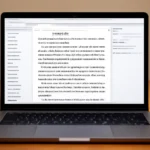
In the landscape of bible study tools, Blue Letter Bible stands out as a robust resource that blends ancient languages, reliable commentaries, and practical study aids into one accessible platform. This article, titled Bible Commentary Blue Letter: A Comprehensive Guide to Blue Letter Bible Study, offers an in-depth tour of what you can do with Blue Letter Bible, how to navigate its features, and how to leverage its commentaries and lexicons for a more informed, reverent, and productive study of Scripture. Whether you are a pastor preparing a sermon, a student drafting a paper, or a lay reader seeking clearer understanding, this guide aims to equip you with practical knowledge and thoughtful considerations for using the Blue Letter Bible ecosystem.
Understanding the platform: what makes Blue Letter Bible special
When people search for Bible commentary resources, they often encounter a wide range of formats and sources. Blue Letter Bible combines several essential elements into a single, navigable interface. The result is a comprehensive environment for bible study that emphasizes original languages, textual variants, and interpretive notes without requiring expensive software or complex subscriptions.
At its core, the platform offers interlinear texts, Strong’s concordance numbers, and an extensive library of commentaries. It also provides dictionaries and encyclopedic entries, as well as maps and timelines that help situate biblical events in their historical context. The overall goal is to help users move beyond a single translation toward a fuller understanding of how a passage communicates in its original languages and how interpreters through the centuries have explained it.
Core features: what you can expect from a Bible commentary blue letter suite
Interlinear and original-language tools
A defining strength of this approach is the ability to view the original Hebrew, Aramaic, and Greek words alongside a faithful translation. The platform often displays the lexical forms and parsing information, enabling you to ask questions such as: What is the root meaning of a word? How does a particular term function grammatically in this context? How do semantic fields shift across related verses?
Commentaries library
One of the primary draws is the collection of biblical commentaries. These works range from classic, older period commentaries to more contemporary expository notes. In the Blue Letter Bible environment, you can typically access:
Classic commentaries—well-established voices that have guided readers for generations (for example, authors who offered verse-by-verse exposition).
Expository notes—practical explanations aimed at explaining meaning and application in today’s context.
Concise summaries—quick overviews that help you gauge a passage before diving deeper.
By exploring multiple bible commentary resources, you can compare how various thinkers, traditions, and eras have understood a passage, which is a valuable exercise for any serious student of Scripture.
Beyond commentary notes, the platform includes dictionary tools and encyclopedic entries that illuminate the meanings of key terms, cultural practices, and historical backgrounds. These resources help you interpret metaphors, idioms, and ceremonial references that might be opaque in a modern English translation. The integration of lexicons with concordances allows you to trace how terms recur across books and testaments, offering a more cohesive sense of biblical vocabulary.
Maps, timelines, and cultural background
Geography and chronology matter for biblical interpretation. The included maps and timelines help you situate a passage within the world of its audience. When a scene unfolds in a particular city, region, or route, the ability to cross-check with a map can transform a surface reading into a deeper, more credible understanding.
How to access and navigate Blue Letter Bible on different devices
Blue Letter Bible is designed to accommodate diverse study contexts. You can access its resources via:
Web interface on a desktop or laptop, suitable for extended study sessions and sermon preparation.
Mobile app on smartphones and tablets, offering flexibility for on-the-go study, reading plans, and quick cross-references.
Secondary platforms or partner apps that may present excerpts, search results, or integrated references from the Blue Letter Bible library.
In all cases, you’ll typically find an intuitive search bar, a side panel or bottom tab with access to lexicons and commentaries, and a verse navigator that helps you jump to specific chapters and verses quickly. If you are new to the platform, you might start with a well-known verse, then open the interlinear view to observe the original-language equivalents and their morphological tags.
A practical guide to using Bible commentary blue letter for study
Using a bible commentary blue letter resource effectively involves a blend of exploration, comparison, and disciplined study habits. Below is a practical workflow designed to be adaptable to personal study goals, sermon prep, or academic inquiry.
Step-by-step study workflow
Choose a passage and read it in at least two English translations to notice differences in nuance and phrasing.
Open the interlinear view to see the original words associated with key terms, along with the parsing information.
Consult the Strong’s numbers linked to each word to explore semantic ranges and related occurrences across the Bible.
Scan a few commentaries to compare how different authors interpret the same passage. Take note of doctrinal emphases, historical contexts, and methodological approaches (expository, devotional, critical, etc.).
Check the dictionary and lexicon entries for word-by-word meanings, cultural background, and linguistic nuances.
Review cross-references within the platform to see how the passage relates to parallel themes elsewhere in Scripture.
Position your own interpretation with a balanced view by weighing explanatory notes against the text’s direct meaning and original language.
Summarize your findings in a study note, highlighting key insights, questions, and applications for life, ministry, or scholarship.
Using the tool for sermon preparation or classroom teaching
When preparing a message or lesson, you can leverage Blue Letter Bible to build an outline, extract key verses, and attach commentary insights to talking points. Consider creating a set of talking points that reflects different voices on the same passage, then address potential questions your audience might raise. The combination of exegesis notes and practical application helps keep preaching faithful to the text while relevant to listeners.
One of the most important skills in biblical interpretation is evaluating the credibility and perspective of the bible commentaries you consult. On Blue Letter Bible, you may encounter a spectrum of authors whose backgrounds, denominational leanings, and scholarly training differ. Here are some guiding principles to keep in mind:
Context matters: note the historical period and theological context of the commentator. A note from a Reformer-era theologian will carry different concerns than a modern critical scholar, and both can be valuable when read thoughtfully.
Original language practice: prefer commentaries that engage with the original languages where relevant and transparent about their linguistic claims.
Doctrinal clarity: identify the doctrinal framework of a commentary. If you share a tradition or denomination, you may wish to compare with voices from outside that frame to broaden understanding.
Cross-referencing: look for how a commentator links passages across Scripture, rather than drawing conclusions from a single verse in isolation.
Common categories of commentaries you’ll encounter
On platforms like Blue Letter Bible, you may encounter several categories that reflect different aims, including:
Expositional commentaries—focus on explaining the text in its immediate context and offering verse-by-verse insights.
Doctrinal commentaries—emphasize theological interpretation in light of a particular tradition or confession.
devotional notes—prioritize personal application and spiritual reflection, sometimes at the expense of rigorous exegesis.
historical-critical—address textual history, source criticism, and historical background to illuminate how passages may have developed over time.
Best practices for a fruitful Blue Letter Bible study session
To make the most of the bible study with Blue Letter Bible, consider adopting some pragmatic habits that promote accuracy, depth, and meaningful application:
Start with the text: let the reading of the passage guide your questions, rather than starting with a preferred interpretation.
Balance sources: cross-check several commentaries and lexicons to capture a range of angles while preserving the text’s integrity.
Annotate thoughtfully: use the note-taking features to capture observations, questions, and cross-references, but avoid over-interpreting a verse on first read.
Track original-language insights: when a word or phrase is central to your study, take time to explore its root meaning, semantic field, and usage elsewhere.
Apply with care: translate insights from the text into practical, faithful applications that align with the broader biblical witness.
Advanced tips: getting the most out of the Blue Letter Bible interface
For readers who want to push their study further, the Blue Letter Bible platform offers several advanced features and workflows. Below are some practical tips you can try as you gain familiarity:
Utilize side-by-side views to compare multiple translations and the interlinear simultaneously, which can illuminate subtle shifts in meaning.
Search by Strong’s numbers to trace a term across verses and discover its broader semantic field in both the Old and New Testaments.
Leverage cross-references to map related passages and build a cohesive theme across books.
Filter commentaries by era or tradition when you want to study a passage through a particular interpretive lens.
Accessibility and convenience: mobile study and offline considerations
The Blue Letter Bible ecosystem is designed to be accessible on multiple devices, which makes daily study more convenient. The mobile experience is particularly helpful for diary-like reading, sermon prep sessions away from a desk, or quick checks during quiet times. While some features rely on active internet access, the mobile app and the web platform both aim to provide substantial functionality in offline-friendly ways when available. Always check the current app version and platform documentation for specifics about offline access, downloads, and syncing across devices.
As you consult the bible commentaries and scholarly notes available through Blue Letter Bible, it is important to respect copyright and licensing terms. Use the materials for personal study, teaching, and research in ways that align with fair-use guidelines and the permissions provided by the platform. If you plan to reproduce large portions of commentary in a published work or a classroom handout, review the licensing terms or seek permission when required. Approaching sources with integrity not only honors the authors but also preserves the trustworthiness of your own study.
Practical use cases: who benefits most from Blue Letter Bible?
Many different readers can find value in the Blue Letter Bible commentary suite. Some common use cases include:
Pastors and teachers preparing sermons or lessons who need a concise, reliable set of commentary notes and lexical references.
Seminary or Bible college students conducting exegesis papers or analyzing passage structures and lexical significance.
Individual readers seeking deeper personal Bible study and a more nuanced understanding of biblical terms and themes.
Family devotion leaders looking for accessible explanations and cross-references to illuminate discussion questions.
Glossary: key terms you’ll encounter in Bible commentary blue letter study
To help you navigate the vocabulary that often accompanies bible commentary resources, here is a brief glossary of terms frequently encountered in Blue Letter Bible studies:
Interlinear — a text that presents the original language with a direct translation aligned under each word or phrase.
Strong’s Concordance — a numbering system that maps Hebrew and Greek words to their occurrences across Scripture.
Lexicon — a dictionary of the original languages, explaining meanings, cognates, and semantic fields.
Parse — analysis of a word’s grammatical features in a given passage (tense, voice, mood, etc.).
Exegetical — relating to critical explanation or interpretation of a text, especially Scripture.
Hermeneutics — the theory and methodology of interpretation, particularly of biblical texts.
Conclusion: maximizing the value of Bible Commentary Blue Letter for ongoing growth
In a field as rich and complex as biblical study, the Blue Letter Bible platform offers a compelling blend of primary tools and interpretive voices. By combining original-language resources, a broad commentaries library, and accessible dictionaries and maps, it provides a practical, scalable path for readers at many stages of expertise. The true value comes not from a single source, but from a disciplined practice of engaging the text with multiple lenses—textual, historical, theological, and applicational—and then listening carefully to how the text speaks today. When used thoughtfully, this bible study tool can deepen understanding, sharpen discernment, and nurture faithful application in everyday life.
As you continue your journey with Bible commentary blue letter resources, remember to:
Maintain a close reading of the text itself, letting the passage speak before forming conclusions.
Cross-check insights across multiple commentaries and language tools to avoid over-reliance on a single voice.
Apply insights in ways that honor the text and reflect responsible interpretation.
Whether you are exploring a familiar verse or wrestling with a difficult passage, the combination of commentaries, lexicons, and study aids found in the Blue Letter Bible ecosystem can be a steady companion on your path toward greater biblical literacy and spiritual formation.
Finally, if you are new to this bible commentary ecosystem, consider starting with a short passage you know well, and gradually expand to other books. Observe how different commentators frame the same verse, then note the questions that arise. Over time, you’ll build not only knowledge but also the discernment to interpret with humility, accuracy, and reverence for the sacred text.