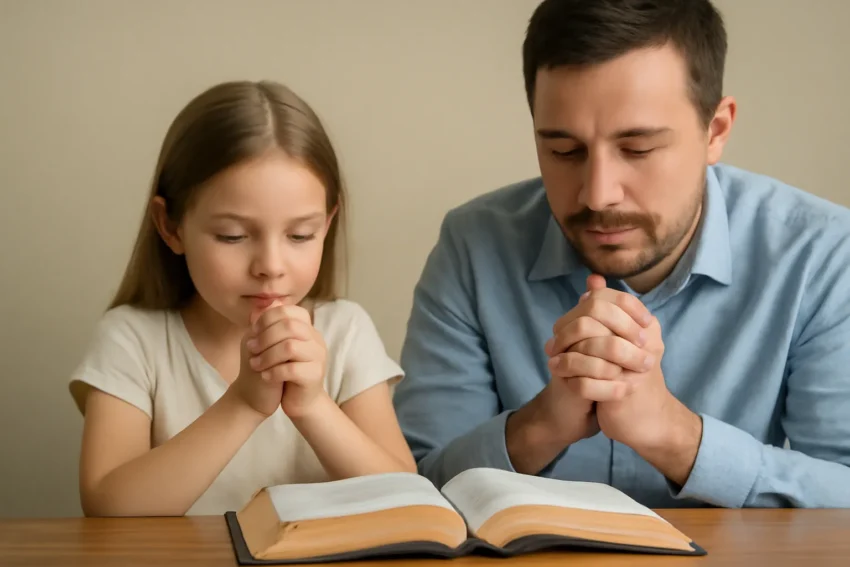
The topic of Christian Parenting Course — sometimes called a faith-based parenting program or a biblical parenting course — centers on equipping families with practical, scripture-grounded tools for raising children in a way that honors God and strengthens family life. This type of course seeks to blend timeless biblical principles with real-world strategies that work in busy households, between school routines, work commitments, and spiritual formation. In this article, you will find a thorough exploration of what a Christian parenting class looks like, the core foundations it rests upon, the concrete techniques it teaches, and how to make the most of such a program. Whether you are new to parenting or navigating the teen years, the aim of a godly parenting class is to help you cultivate character, peace, and purpose inside your home.
A Christian parenting course is an organized curriculum designed to help families integrate spiritual formation with everyday parenting tasks. It often combines short Scripture-based teaching segments with practical exercises, discussion prompts, and habit-building activities. The emphasis is not only on reforming behavior but on shaping hearts, attitudes, and daily routines so that faith becomes visible in how parents relate to their children and how children experience the home as a place where grace and truth meet.
In many contexts, the course is offered by a local church, parachurch ministry, or a Christian counseling center. It may be delivered as a weekly class, an online program, a retreat weekend, or an ongoing small-group discussion format. No matter the delivery method, the core aim remains the same: to provide families with actionable tools that reinforce scripture-based parenting, cultivate healthy family rhythms, and prepare children to navigate life with faith, resilience, and responsibility.
The Core Principles of a Faith-Based Parenting Program
A well-designed biblical parenting course begins with a robust framework grounded in Scripture and evangelical parenting wisdom. Below are the foundational pillars you will typically encounter in a modern Christian parenting program.
Biblical Foundation
Scripture as authority: Parenting guidance is derived from biblical truths about God, humans, sin, grace, and redemption.
God-centered worldview: The home is viewed as a mission field and a classroom where faith and daily life intersect.
Christlike modeling: Parents model character traits such as honesty, patience, gentleness, and self-control as the primary form of instruction.
Grace and truth: Discipline and correction are balanced with forgiveness, restoration, and emotional safety.
Practical Skills
Communication techniques: Active listening, reflective paraphrasing, age-appropriate dialogue, and nonviolent communication strategies.
Discipline with love: Boundaries, consistent routines, natural consequences, and restorative approaches that preserve relationship.
Emotional literacy: Helping children name, manage, and express feelings in healthy ways.
Spiritual formation: Prayer routines, family devotions, and Scripture engagement that grow faith at home.
Problem-solving frameworks: Structured approaches to conflicts, decision-making, and crisis management within the family context.
How a Christian Parenting Class is Structured
The structure of a Christian parenting course varies by provider, but most programs share a recognizable pattern designed to maximize learning, accountability, and practical application.
Module Layout and Schedule
Intro and assessment: Clarify goals, review family dynamics, and identify growth areas.
Core concepts: A focused module on a specific principle (for example, discipline, communication, prayer life) with teaching and discussion.
Skills practice: Guided exercises, role-plays, or home-practice assignments to try between sessions.
Reflection and adjustments: Debriefing, journaling, and plans to adapt the approach to your family’s temperament.
Community and accountability: Small groups, peer support, and optional accountability partnerships to sustain momentum.
Interactive Elements
Group discussions: Sharing experiences, challenges, and breakthroughs in a supportive environment.
Role-play scenarios: Practicing conversations with children at different developmental stages.
Video teaching: Short, focused presentations from experts in parenting, theology, and family ministry.
Home challenges: Concrete tasks assigned to be implemented in daily life, with feedback loops.
Resource recommendations: Books, blogs, devotionals, and printable tools for ongoing growth.
One of the central promises of a faith-based parenting program is that it provides a toolbox of strategies you can apply as soon as you return home. Below are several domains where you will typically gain concrete, usable tools.
Communication Techniques
Active listening: Demonstrating attention and empathy by reflecting back what your child is saying and validating feelings without immediate judgment.
Positivity and clarity in language: Using simple, precise phrases that set expectations and reduce misunderstandings.
I-statements: Framing feedback from your own perspective to reduce defensiveness (for example, “I feel worried when chores aren’t done because it affects the whole family.”).
Family meetings: Regular, structured times to discuss decisions, schedules, and family rhythms in a collaborative way.
Discipline with Grace
Boundaries and consistency: Establishing predictable rules and predictable follow-through so children know what to expect.
Natural consequences: Allowing outcomes that align with a child’s choices to teach responsibility, while maintaining safety and dignity.
Restorative approaches: Focusing on repair and reconciliation after harm, rather than punitive punishment alone.
Time-ins and cooling-off periods: Techniques to help children regain self-control without shaming or embarrassment.
Developing Spiritual Habits at Home
Family worship routines: Short, accessible practices that connect daily life with faith (prayer, song, gratitude).
Scripture engagement: Age-appropriate Scripture reading, memory verses, and reflection questions that invite participation from children of different ages.
Prayer as a family language: Encouraging children to pray for others, express their concerns, and articulate thanks.
Faith in action: Small acts of service, generosity, and compassion modeled and practiced together.
Adapting Principles Across Stages
Infancy and toddler years: Boundaries, attachment, play as a vehicle for learning, and routines that promote security.
Preschool and early elementary: Language development, emotional labeling, and cooperative play as learning tools.
Middle childhood: Responsibility, accountability, and peer relationship skills.
Pre-adolescence and adolescence: Identity formation, autonomy within safety nets, and faith conversations that respect growing independence.
Variations of the Course Names for Semantic Breadth
To reach a wider audience and acknowledge different emphases, educators and ministries often describe the same core program using diverse terms. Here are common variations of the Christian parenting course you may encounter:
Christian parenting class
Biblical parenting course
Faith-based parenting program
God-centered parenting workshop
Christian parenting training
Scripture-based parenting curriculum
Family faith formation course
Church-affiliated parenting seminar
Each variation tends to highlight a slightly different facet: a “class” may emphasize regular sessions; a “workshop” may imply a shorter, intensive format; a “curriculum” might indicate a structured sequence of modules. Regardless of the label, the underlying objective remains the same: to equip families with tools that harmonize daily parenting with Christian faith.
Benefits of Enrolling in a Christian Parenting Course
Families who participate in a godly parenting class routinely report benefits that extend beyond immediate behavior changes. While results vary by family, here are some of the most commonly observed outcomes.
Clear framework: A coherent approach to parenting that integrates faith, character development, and practical routines.
Improved communication: Techniques that reduce conflict and increase mutual understanding between parents and children.
Consistency across caregivers: Shared language and expectations among both parents and other caregivers or stepparents.
Emotional safety: A home atmosphere where children feel heard, valued, and supported in expressing themselves.
Character formation: Emphasis on virtues such as kindness, self-control, generosity, and responsibility rooted in spiritual values.
Spiritual continuity: Regular opportunities for faith practice that become a natural part of everyday life.
Resilience in family life: Skills to navigate stress, transitions, and disagreements with grace and practicality.
Support network: Access to mentors, peers, and resources that offer encouragement and accountability.
Who Should Consider This Kind of Program
While a Christian parenting course is valuable for many families, certain situations particularly benefit from this kind of program. Consider the following scenarios:
New parents seeking a faith-centered approach to the early years
Expecting parents wanting to establish a spiritual rhythm before birth
Families experiencing ongoing conflicts and looking for practical conflict-resolution strategies
Parents who want to pass on core beliefs and values consistently across generations
Blended families needing common ground for discipline, communication, and spiritual life
Families in which one or both parents are newer to the Christian faith and want a solid learning path
Parents of adolescents who desire healthy boundaries, trust, and open faith conversations
Caregivers such as grandparents or foster parents who want guidance aligned with biblical principles
Evidence and Outcomes: What Research and Experience Suggest
Programs that weave faith integration with parenting education often report positive trends in family functioning. While it is important to approach outcomes with realistic expectations, several common themes recur:
Behavioral improvements in areas like cooperation, listening, and following routines when parents apply consistent, biblically-informed strategies.
Increased parental confidence as families gain practical techniques and a clearer sense of purpose in parenting decisions.
Deeper family attachment through shared prayer, devotionals, and meaningful conversations about faith and life.
Grace-filled discipline that emphasizes restoration rather than punishment, strengthening trust between parents and children.
Spiritual growth within the home as faith becomes a shared practice rather than an occasional event.
It is important to note that the impact of any parenting course is influenced by factors such as the family’s prior experiences, the consistency of practice after sessions, and the level of support at home. Some families may benefit from additional counseling, mentorship, or family ministry resources to complement the course material.
Getting the Most from a Faith-Based Parenting Class
To maximize the benefits of a Christian parenting course, consider the following practical strategies. These recommendations help convert learning into lasting change:
Set clear goals: Before starting, identify 2–4 parenting areas you want to improve and track progress over the course.
Commit to practice: Try the suggested home challenges, keep a brief journal, and review outcomes at each session.
Engage with the community: Attend consistently, participate in small groups, and lean on peers for accountability and encouragement.
Personalize the material: Adapt tools to fit your family’s unique temperament, culture, and values while staying grounded in biblical principles.
Practice grace with yourself: Understand that growth takes time, and forgiveness of mistakes is part of a healthy parenting journey.
Integrate prayer and Scripture: Make faith practices a natural part of daily routines, not a separate activity.
Collaborate with co-parents: Align expectations, share responsibilities, and communicate openly about challenges and wins.
Additional Resources and Support
A robust Christian parenting program often includes access to a network of resources that extend beyond the classroom. Here are some categories you may encounter:
Books and devotionals: Recommended readings that expand on course themes and provide ongoing guidance.
Printable tools: Family chore charts, behavior charts, conversation prompts, and faith-based activity ideas.
Online communities: Discussion forums, video libraries, and Q&A sessions with mentors or instructors.
Pastoral or counseling support: Access to church-based counseling or mentorship for deeper family work.
Family service opportunities: Practical ways to serve others together and live out faith in daily life.
Whether you are exploring a biblical parenting curriculum in a local setting or evaluating an online Christian parenting course, look for programs that emphasize practical application, spiritual formation, and compassionate leadership.
Is This Right for Your Family? A Quick Consideration Guide
Before enrolling, you may want to reflect on a few questions to determine fit and readiness:
Do you want a structured approach that combines faith and parenting skills?
Are you looking for a community of families with similar values and goals?
Is there a desire to improve communication, boundaries, and discipline in a way that honors both parent and child?
Do you want to cultivate spiritual practices in the home that are sustainable long-term?
Are you prepared to apply what you learn consistently, both at home and in the larger church or community context?
Common Formats and Where to Find a Program
You can typically find Christian parenting education in several familiar formats, each with its own advantages:
In-person church classes: Face-to-face instruction with mentors, peers, and real-time feedback.
Online courses: Flexible access, video modules, and digital resources that suit busy schedules.
Hybrid programs: A mix of online learning and scheduled in-person gatherings for community building.
Weekend workshops: Intensive, focused sessions that cover key topics in a short time frame.
Small-group studies: Ongoing groups that meet regularly to discuss modules and practice strategies.
When choosing a program, consider the alignment with your family’s values, the credentials of the instructors, the depth of material, and the level of ongoing support after the course ends.
Putting It All Together: A Model Path Through a Christian Parenting Course
To illustrate how a typical journey through a faith-based parenting course might unfold, here is a suggested model path that you can adapt to your local context or online option.
Orientation and goal-setting: Clarify priorities and discuss expectations with your spouse or co-parent.
Foundational module: Engage with the primary biblical principles, focusing on God’s design for family life.
Skill-building module: Practice communications, conflict resolution, and discipline with grace.
Spiritual formation module: Build routines for prayer, Scripture, and worship as a family.
Application phase: Implement home challenges and reflect on what works in your home context.
Evaluation and ongoing plan: Review progress, adjust goals, and identify continued resources or next steps.
Throughout this journey, you will encounter a recurring theme: intentionality. Parents who are deliberate about their growth, who seek wisdom from Scripture, and who support one another in accountability tend to see the most enduring transformation in family life.
Creating a Culture of Faith at Home: Long-Term Outcomes
One of the most lasting aims of a Christian parenting program is to help families cultivate a culture where faith is lived out in ordinary moments. This often produces distinctive, durable outcomes such as:
Lasting moral formation: Children internalize values that guide their choices in school, work, and relationships.
Healthy identity: Youth develop a sense of self anchored in belonging to God and to the Christian community.
Respect for authority and others: Children learn to navigate authority with discernment, empathy, and humility.
Service and generosity: A habit of helping others grows from a home that prioritizes compassion.
Resilience and hope: Faith-informed coping strategies help families endure challenges with trust in God’s plan.
Common Myths About Christian Parenting Courses
As with any educational endeavor, there are misconceptions that can cloud judgment. Here are a few common myths, followed by clarifications:
Myth: A faith-based course guarantees perfect behavior. Reality: It equips you with tools; lasting change still requires effort, consistency, and grace.
Myth: It’s only for “problem families.” Reality: It is beneficial for a wide range of families seeking to strengthen relationships and spiritual formation.
Myth: It replaces parental wisdom. Reality: It supplements wisdom with biblically-grounded strategies and a supportive community.
Myth: It’s only about rules. Reality: It emphasizes relationship, mercy, and communication alongside boundaries.
Key Considerations for Implementation
If you decide to pursue a Christian parenting course, here are practical considerations to ensure the ideas you learn are effectively implemented:
Schedule compatibility: Choose a format that fits your family’s calendar and energy levels.
Partner alignment: Ensure both parents (and any significant caregivers) share a common vision for the program’s goals.
Age-appropriate adaptation: Tailor conversations and activities to match the child’s developmental stage.
Consistency at home: Pair learning with daily routines and family rituals to reinforce concepts.
Measurement of impact: Track small wins, observe changes in behavior and communication, and adjust approaches as needed.
Frequently Asked Questions
The following questions address typical inquiries families have about Christian parenting courses and faith-based parenting programs.
Q: What differentiates a biblical parenting course from secular parenting courses?
A: A biblical parenting course places Scripture, prayer, and spiritual formation at the center of its framework, while secular courses focus primarily on psychology and practical outcomes without a faith orientation.
Q: Can this course be helpful for adoptive, foster, or blended families?
A: Yes. Many programs adapt to diverse family structures and emphasize communication, boundaries, and grace across different caregiving scenarios.
Q: How long does a typical program last?
A: Most programs run 6–12 weeks, with ongoing options such as quarterly refreshers or monthly small groups for continued growth.
Q: Do I need to be a church member to participate?
A: Not necessarily. While many programs are church-affiliated, many communities welcome non-members, especially if they are seeking faith-based resources for family life.
A well-crafted Christian parenting course offers more than techniques for behavior modification. It provides a holistic approach that blends biblical wisdom with practical parenting skills, forms a supportive community, and helps families live out their faith in tangible ways. By focusing on relationship-first strategies, consistent routines, and spiritual formation, a godly parenting class can equip parents to shepherd their children through life with confidence, compassion, and conviction.
If you are exploring options for your family, consider the breadth of available formats, from in-person church classes to online curricula. Remember that the most impactful programs are those that you actually apply at home, persistently practice, and adapt to your family’s evolving needs. By committing to a journey of growth together, you will likely discover not only better parenting outcomes but also a deeper, more resilient faith life for your entire household.