What Is a Christmas Card Church? Understanding the Concept
The idea of a Christmas Card Church goes beyond simple holiday greetings. It is a structured approach to using Christmas cards—whether physical or digital—as a channel for ministry, community connection, and outreach. In many congregations, the Christmas card program serves multiple purposes: it reinforces the church’s mission, invites visitors to special services, thanks volunteers and donors, and communicates important seasonal events. When you refer to the broader term church Christmas card strategy, you begin to see it as a small but powerful piece of church communications that blends theology, design, language, and logistics.
For some communities, the shorthand Christmast card church (an intentionally broad phrasing to capture semantic variety) signals an emphasis on aesthetic, spiritual storytelling, and practical planning. In practice, a Christmas card program for the congregation might include traditional greetings, scripture-based messages, gratitude notes to partners, and invitations to the Christmas Eve service. The goal is not merely to send cards, but to convey a cohesive message that reflects the church’s identity during the Advent season and beyond.
Creative Ideas for Designing a Christmas Card Church
Creative ideas help a church holiday card stand out while staying true to its mission. Below are design directions that range from timeless to contemporary, each customizable to fit a church’s personality and budget.
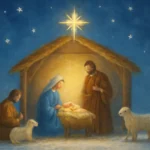
Traditional Nativity and Classic Imagery
A classic approach can be deeply meaningful for many congregations. A well-composed scene of the Nativity, shepherds in a quiet countryside, or the Wise Men bearing gifts can evoke reverence and wonder. When using such imagery:
Faithful symbolism should be clear and unobtrusive, avoiding sentimental clichés that may dilute the message.
Choose rich but restrained color palettes, such as deep blues, golds, and creams, to convey dignity without overpowering the scripture or message.
Pair the imagery with a short, scriptural verse to anchor the card in Biblical witness.
Modern Minimalist and Abstract Styles
For congregations that want a fresh look, a minimalist approach can be equally powerful. Minimalist cards emphasize negative space, simple lines, and bold typography. Tips for this style:
Use a single striking motif—an empty manger silhouette, a single star, or a simple tree outline—paired with a concise message.
Limit the color palette to two or three tones to maintain clarity and visual impact.
Employ high-contrast typography to ensure readability across ages and accessibility needs.
Photographic and Congregational Cards
A photographic church card can celebrate your community while highlighting your local context. Options include:
A posed photo of the church family in worship or service projects, with consent and privacy considerations.
Architectural shots of the building, stained glass windows, or meaningful interior details.
Seasonal action shots: carolers, bell choir, or worship team rehearsals, reflecting vitality and hospitality.
When using photos, always ensure you have consent for every person depicted, especially children, and provide alt-text descriptions for accessibility. A well-designed photo card can communicate warmth and belonging in a way that words alone cannot.
Hand-Lettered and Typography-Focused Cards
A hand-lettered card, whether drawn by volunteers or commissioned from a local artist, can convey authenticity and care. Typography-driven designs work especially well for scriptural verse cards or invitation cards. Consider:
Custom lettering or brush script that evokes warmth without sacrificing legibility.
Integrating a short verse or a church hashtag to encourage social sharing.
Using embossing or foil accents to add texture and a premium feel.
Interactive and 3D Card Concepts
For a memorable experience, explore interactive formats that invite recipients to touch, lift, or discover. Examples include:
Fold-out pages revealing scenes of Advent or Christmas Eve service details.
Pop-up elements such as a tiny church outline or a manger scene that emerge when opened.
Perforated elements that can become reminders (e.g., a small gift tag listing service times).
Sustainable and Handmade Options
Environmental stewardship can inform design choices. Consider sustainable printing and handmade touches that align with a church’s ministry values:
Recycled papers with neutral inks or plant-based inks.
Seed-embedded cards that recipients can plant, aligning with themes of growth and renewal.
Hand-stamped textures, natural fibers, and locally sourced materials for tactile appeal.
Crafting Messages: Wording for a Christmas Card Church
The wording on a Christmas card for a church should be purposeful, theologically sound, and accessible. The goal is to extend seasonal invitation, express gratitude, and offer clear prayerful wishes for the reader. Below are strategies to tailor messages to different audiences while maintaining a consistent voice.
Messages for Members and Regular Attendees
For people who are already connected to the church, messages can reinforce belonging and ongoing participation. Sample approaches include:
A warm expression of thanksgiving for their faithful service and attendance, especially volunteers who helped run Advent programs.
An invitation to celebrate special services, with practical details written in a concise, friendly tone.
A reminder of the church’s mission and how members can respond during the season (prayer, giving, serving).
Messages for Visitors and Guests
For first-time or occasional visitors, the card should communicate hospitality and a welcoming invitation. Points to consider:
Use inclusive language that honors diverse backgrounds and spiritual journeys.
Provide a simple invitation to a Christmas Eve service or a family-friendly event.
Offer a contact method or QR code to learn more about the church and its ministries.
Messages for Donors, Partners, and Volunteers
A card sent to donors and volunteers can acknowledge impact and express sustained gratitude. Ideas for content include:
Specific outcomes from giving or volunteering during the year, tied to Advent themes such as hope, peace, joy, and love.
A short note about how the church plans to use year-end resources to serve the community.
An invitation to participate in upcoming projects or to join a year-end giving campaign.
Messages for Children and Youth
Messages aimed at younger readers should balance clarity and faith formation with playfulness. Suggestions:
Simple summaries of the Christmas story in age-appropriate language.
Encouragement to participate in age-specific programs (children’s choir, manger scenes, youth events).
Bright, friendly visuals and a message that emphasizes safety, care, and community.
Scripture-Driven Templates
If you want to anchor your card in scripture, consider short, contextually meaningful verses. Short templates may include:
“For unto us a child is born, unto us a son is given.” (Isaiah 9:6) — Warm blessings for this season.
“Glory to God in the highest, and on earth peace, good will toward men.” (Luke 2:14) — May peace abound in your home.
“And the Word became flesh and dwelt among us.” (John 1:14) — We rejoice in Emmanuel this Christmas.
Design Elements and Accessibility Considerations
A thoughtful Christmas card for the church prioritizes readability, accessibility, and universal reach. Below are practical design considerations that ensure the message lands clearly with a broad audience.
Legibility: Use high-contrast color combinations (dark text on light backgrounds), large enough font sizes, and clear typefaces. For the elderly reader or those with visual impairments, ensure a minimum font size of 12–14 points for body text and larger for headings.
Contrast and color: Reserve bold colors for emphasis, and ensure that color meaning is not conveyed by color alone (avoid relying solely on color to convey safety or instructions).
Inclusive language: Use gender-inclusive terms and avoid assumptions about religious background, worship style, or family composition.
Imagery with care: Represent diverse experiences within your congregation and community, including families of different shapes, ages, and backgrounds.
Accessibility alternatives: Provide alt text for images in digital versions, and offer a larger-print option or a downloadable PDF with larger typography.
Typography: Pair a readable body font with a more decorative header font in moderation to maintain readability and dignity.
Design Styles and Color Palettes for the Christmas Card Church
The visual language of a church Christmas card should echo the season’s themes while aligning with the church’s identity. Consider these palettes and stylistic cues:
Classic reverence: Deep midnight blue, gold foil, cream or ivory; elegant serif typefaces; restrained ornamentation.
Warm invitation: Rich reds, greens, and warm neutrals; friendly sans-serif or humanist typefaces; soft textures to convey hospitality.
Modern sacred: Black and white or grayscale with a single accent color; bold geometry; minimal typography-driven layout.
Heritage and culture: Earth tones with cultural motifs respectfully integrated; hand-crafted textures or letterpress effects.
Printing Techniques, Materials, and Production Tips
The medium chosen for a church Christmas card affects not only aesthetics but also durability, budget, and the perception of care. Here are common production approaches and practical tips.
Digital printing for efficiency and cost-effectiveness, especially for large lists and rapid turnarounds. Ideal for photo cards and photo-safe coatings.
Letterpress for a tactile, timeless feel, particularly when paired with thick stock and subtle color.
Foil stamping and spot UV accents to add brightness on a few key elements (like a star, church silhouette, or scripture reference).
Embossing and debossing for raised texture that invites touch and exploration.
Stock choices: Sustainably sourced papers with a weight of 100–300 gsm are common; consider a lightly textured or linen finish for a premium look.
Envelope design: Coordinate envelope color with the card; include a return address and a short invitation to visit the church during the Christmas season.
Digital variants: Prepare e-cards and social media-ready designs; ensure file sizes are optimized for email and platforms while preserving legibility and impact.
Digital and Online Outreach: E-Cards, Social Media, and Beyond
The reach of a Christmas card for a parish or church community extends into the digital realm. An integrated digital Christmas card church program can reinforce your message across platforms.
E-cards: Email-friendly designs with compact message blocks and a prominent call to action (CTA) such as “Plan your visit,” “Join our Christmas Eve service,” or “Learn more about our programs.”
Social media cards: Scaled-down versions of the card optimized for Facebook, Instagram, and X (formerly Twitter). Use hashtags like #AdventHope, #ChurchSeason, or your own parish tag to improve discoverability.
QR codes: Include a QR code that links to a landing page with service times, event registrations, and a digital prayer guide. Make sure the code is scannable from a reasonable distance on the card.
Blog and newsletter integration: Use the card design as a visual header for a newsletter feature about Advent explanations, upcoming services, and volunteer opportunities.
Practical Steps: How to Create a Christmas Card Church Project
Turning a concept into a polished card program requires planning, collaboration, and clear milestones. Here is a practical, step-by-step guide to help a church implement a Christmas Card Church project effectively.
Define goals: Decide whether the primary aim is invitation, gratitude, fundraising, or a combination. Translate goals into measurable outcomes (e.g., number of guests invited, amount raised).
Identify audience segments: Members, visitors, donors, volunteers, youth families. Tailor messages and design elements to each group while preserving a cohesive overall look.
Set a budget and timeline: Allocate funds for design, printing, mailing, and digital variants. Build in buffers for unexpected delays, especially around holiday schedules.
Choose formats: Decide on physical cards, digital e-cards, or a hybrid approach. Consider a mailing list and an email distribution plan.
Develop design briefs: Prepare a one-page brief for designers or volunteers, including logo usage, color palette, typographic guidelines, and the tone of voice.
Draft copy and imagery: Produce several text options for different audiences and collect appropriate imagery with consent and privacy considerations.
Review and approvals: Involve church leadership, a communications team, and a pastoral adviser to review content for theological accuracy and sensitivity.
Produce proofs: Obtain print proofs for physical cards and final digital files for e-cards, ensuring accessibility and color accuracy.
Distribution plan: Determine mailing dates, e-card sending windows, and follow-up communications after Christmas events.
Evaluation: After the campaign, review metrics such as invitation responses, attendance at Christmas services, and donor engagement to inform next year’s approach.
Copy, Tone, and Theology: Aligning Messages with Mission
A cohesive church communications strategy for Christmas cards should reflect the church’s theology and mission. Consider these guidelines:
Consistency of voice: Maintain a voice that aligns with your church’s overall communications—whether formal, pastoral, warm, or joyful.
Theological clarity: Ensure sacred statements are accurate and biblically grounded, especially when quoting scripture or communicating about sacraments and services.
Invitational language: Use language that invites participation without coercion. Phrases like “We would love to welcome you” or “You’re invited to join us” convey hospitality.
Gratitude and stewardship: Express thanks for generosity and service, and invite continued involvement in mission-focused activities beyond Christmas.
Inclusivity: Recognize diverse members and guests—families, singles, seniors, youth, interfaith visitors—without compromising core beliefs.
Prayerful tone: Include prayers or blessings that are ecumenical or adaptable to different faith backgrounds while preserving the Christian frame of Christmas.
Case Studies: Real-World Examples of Successful Christmas Card Programs
While every church context is unique, examining real-world practices can spark ideas. Below are generalized case-study-inspired patterns you might adapt.
Case A: Traditional parish with a large senior demographic — A classic Nativity scene card with a gold-foil accent, accessible typography, and a simple invitation to Christmas Eve services. The message centers on gratitude for long-standing support and a gentle invitation to join a newcomer welcome event after services.
Case B: Growing urban church with diverse backgrounds — A photography-forward card featuring congregational volunteers of varied ages and backgrounds, paired with a short, inclusive invitation and a QR code to an online welcome page.
Case C: Rural church prioritizing stewardship — A minimalist design with a seed-embedded card as a giveaway at service, linking to a month-long Advent devotional email series and a year-end giving opportunity.
Case D: Youth-led creative team — A bold typographic card emphasizing joy and hope, with a youth minister’s note and a call to participate in a Christmas outreach project.
Variations of the Term: Expanding Semantic Breadth
Throughout this article, you’ll see references to several variations of the term Christmas Card Church to broaden semantic coverage and help you think about related concepts. Some useful variations include:
Church Christmas card — A straightforward rearrangement emphasizing the sender as a church community.
Christmas card for the church — A natural phrasing that foregrounds the card’s purpose as a church’s outreach tool.
Church holiday card — A broader framing that can encompass Advent and Christmas messaging beyond strictly the Christmas narrative.
Nativity card for the church — A design emphasis on the Nativity story and its theological center.
Congregation Christmas card — Focuses on the community aspect and shared journey of faith during the season.
Christmast card church — Note: a creative, nonstandard spelling used to capture a broader search or branding approach.
Pastoral holiday communications — A broader term that includes cards as part of a wider seasonal outreach strategy.
Using a spectrum of terms can help you plan content that is accessible in search, marketing materials, and internal communications. It also reminds editors and designers to maintain consistent branding across formats while remaining flexible for different contexts.
To sustain a cohesive and effective Christmas Card Church program year after year, keep these guidelines in mind:
Mission alignment: Ensure every card communicates a reflection of the church’s mission and values.
Audience empathy: Design with the reader’s needs, questions, and spiritual hunger in mind.
Brand consistency: Maintain consistent typography, color themes, and imagery across all formats.
Budget reality: Plan within annual budgets and seek in-kind donations for printing or design if possible.
Volunteer engagement: Encourage members to participate in design, writing, and distribution to deepen community ownership.
Measurement: Track outcomes to learn what resonates—visitor responses, service attendance, and online engagement offer actionable signals.
An inclusive Christmas card program fosters belonging for a broad spectrum of readers, including those exploring faith, those returning after a time away, and long-time members. Consider these inclusive practices:
Provide alternative language options where appropriate for multilingual congregations or communities with diverse linguistic backgrounds.
Avoid exclusive phrases that could alienate readers who are not yet part of the church community.
Offer a clear pathway to ongoing involvement, such as a visitor card, service schedule, or volunteer sign-up form.
Respect privacy in imagery, especially when featuring individuals or families in photos.
A well-crafted Christmas Card Church program can do more than deliver a seasonal greeting. It can extend hospitality, articulate a shared faith story, solicit prayer and involvement, and strengthen the bonds within a congregation. Whether you lean into the traditional symbolism of the Nativity or embrace a modern, minimal aesthetic, the most enduring Christmas cards are those that convey warmth, clarity, and a sense of invitation. By paying careful attention to design choices, message tone, accessibility, and a thoughtful distribution plan, a church can turn a simple card into a meaningful bridge between the Advent mystery and ordinary life.
If you are embarking on your own project, consider assembling a small team that includes a pastor or liturgist, a designer, a volunteer writer, and a communications coordinator. Start with a one-page brief that outlines your goals, audience segments, key dates, and a short list of must-have elements. From there, you can iterate in a way that honors your tradition and serves your community. And remember: the heart of a congregation-centered Christmas card program is not the paper or the pixels, but the message of hospitality, hope, and shared joy that reaches across doors and screens this Christmas season.