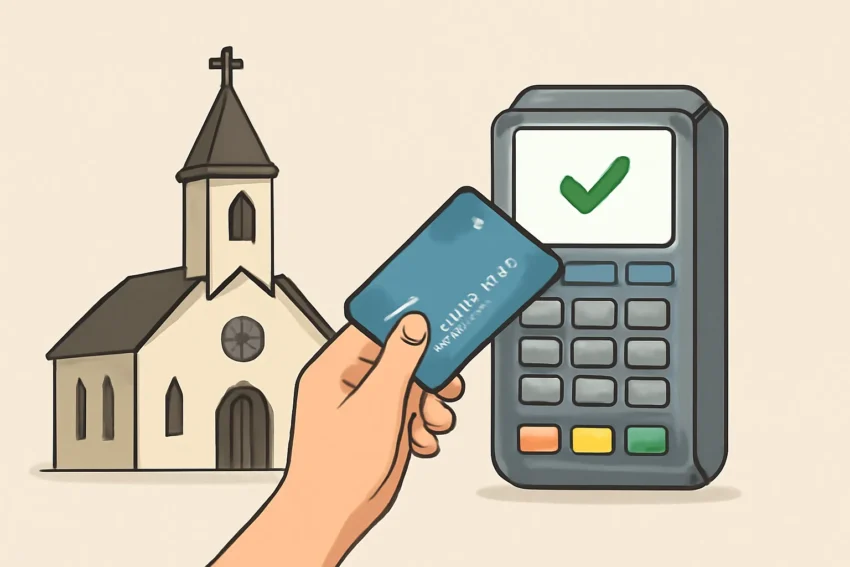
In modern ministry, church payment processing is more than simply collecting offerings. It is a foundational tool for enabling generosity, simplifying administration, and strengthening donor relationships over time. When a church has a robust system for handling gifts—whether online, in person, or via mobile devices—it can improve transparency, speed up reconciliation, and provide meaningful insights into giving trends. Churches of all sizes—from small congregations to multi-site networks—rely on reliable online giving solutions to sustain ministries, fund mission work, and support pastoral care.
A well-designed approach to donor management within the context of church payment processing helps staff and volunteers focus on ministry rather than manual data entry. It also enhances accountability by delivering accurate receipts, tax documentation where applicable, and clear reporting for governance and stewardship. This article examines the components, best practices, and decision criteria that go into implementing secure and effective church giving platforms.
Key components of secure online giving for churches
A comprehensive church payment processing solution typically includes several intertwined components. Understanding these elements helps leaders select tools that fit their size, budget, and mission priorities.
Payment gateways and card processing that securely authorize transactions from donors’ credit and debit cards.
Mobile and remote giving capabilities, including text-to-give, mobile apps, and responsive web forms.
Recurring giving functionality to automate regular gifts, which supports predictable revenue streams.
One-time gifts and special fund allocations (e.g., missions, building projects, benevolence).
In-person giving options (swipe/tap card readers or point-of-sale devices) for offerings during services or events.
Donor database integration with church management software (ChMS) for contact management, membership status, and communication.
Receipting and tax documentation where applicable, including year-end statements for donors.
Security and compliance features such as encryption, tokenization, and fraud protection to safeguard donor data.
Reporting and analytics to monitor giving trends, campaign performance, and budget alignment.
Security and compliance: protecting donors and the church
Security is foundational in any church payment processing system. Donors entrust sensitive financial information to the church, and leaders have a responsibility to safeguard that data. Below are essential best practices and compliance considerations.
PCI DSS and tokenization
The Payment Card Industry Data Security Standard (PCI DSS) sets requirements for handling card data. Reputable payment processors help churches achieve and maintain PCI compliance by not storing full card numbers on church servers. Instead, they use tokenization, which replaces card details with non-sensitive tokens that can be used to authorize future transactions without exposing actual card data.
Encryption and secure transmission
All credentials and payment data should be transmitted over secure channels using TLS (Transport Layer Security) and stored with strong encryption. End-to-end encryption and secure key management reduce the risk of data breaches and unauthorized access.
Fraud prevention and monitoring
A robust system includes fraud detection tools, risk scoring for unfamiliar devices or locations, and alerts for suspicious activity. Churches should also have clear procedures for handling disputed charges and refunds to maintain trust with donors.
Donor data should be collected and stored in compliance with applicable privacy laws and church policies. This typically includes transparent consent, clear data retention rules, and restricted access for staff. Providing donors with easy-to-understand privacy notices and the ability to opt out of certain communications is an important aspect of responsible donor management.
Donor management: turning gifts into lasting relationships
Donor management lies at the heart of sustainable giving. A mature church payment processing ecosystem goes beyond processing transactions; it supports stewardship, accountability, and ongoing engagement with supporters.
Managing donor profiles and history
A central donor CRM (customer relationship management) or a tightly integrated ChMS storehouse is essential. It should securely maintain:
Donor contact information and preferred communication channels
Giving history, including recurring gifts, one-time gifts, and designated funds
Acknowledgment records, receipts, and tax statements
Communication preferences and consent statuses
Campaign participation and pledge status
Receipts, acknowledgments, and tax documentation
Donors appreciate timely receipts and clear documentation for tax purposes where applicable. A reliable system should generate:
Electronic receipts immediately after a gift
Year-end statements summarizing total giving
Designations detailing how funds were allocated
Printable receipts for offline record-keeping
Communication and stewardship
Donor stewardship is about ongoing engagement. Features that support this include:
Automated thank-you messages and personalized notes
Regular progress updates on campaigns and ministry outcomes
Opportunities for donors to update their preferences or adjust recurring gifts
Transparent reporting on how funds are allocated and used
Donor self-service and accessibility
A donor-friendly experience encourages continued giving. Consider offering:
Self-service portals for updating payment methods and contributions
Multiple giving channels (online, mobile, text) with a consistent user experience
Accessible design that works for people with disabilities and supports assistive technologies
Choosing a provider: factors to evaluate for church needs
Selecting the right payment processor for churches is a critical decision. Churches should assess providers not only on pricing but also on how well the solution aligns with ministry goals, security, and donor experience.
Security and compliance posture
Look for:
PCI DSS compliance level and scope
Support for tokenization and secure storage practices
Transparent data handling policies and privacy protections
Fraud monitoring, chargeback management, and dispute resolution processes
Integrations and ecosystem
Evaluate how well the platform integrates with your church management software, accounting tools, and church website. Key considerations include:
Two-way data sync with your ChMS/CRM
Automatic reconciliation with your accounting system
Webhooks or API access for custom workflows
Compatibility with in-person point-of-sale devices and mobile readers
Pricing models and total cost of ownership
Understand not only the per-transaction fees but also:
Monthly minimums or gateway charges
Refund and chargeback costs
Costs for recurring gifts versus one-time gifts
Fees for additional features (advanced reporting, donor analytics, custom forms)
Donor experience and accessibility
Important aspects include:
Mobile-responsive and accessible giving forms
Simple, intuitive design with clear calls to action
Support for multiple languages and currency options if your community is diverse
Multiple channels for giving (website, text, app, in-person)
Support, training, and reliability
Choose a provider with:
Responsive customer support and dedicated church accounts
Comprehensive onboarding resources and training materials
Service level agreements (SLAs) and uptime guarantees
roadmap for feature updates and security enhancements
Implementation best practices for churches
Executing a successful transition to or upgrade of a church payment processing system requires thoughtful planning and collaboration across ministry and operations teams. The following guidelines can help ensure a smooth rollout.
Start by articulating what success looks like. Examples include improved donor retention rates, faster reconciliation, higher recurring gift adoption, or better transparency for ministry leaders.
Set measurable targets (e.g., 15% increase in recurring gifts in 12 months)
Determine which ministries or campaigns require priority support
Identify required data fields and reporting needs
Plan data migration carefully
Migrating donor data from legacy systems or spreadsheets requires careful planning. Key steps include:
Auditing and cleansing donor records to remove duplicates
Mapping fields between the old system and the new one
Defining data retention rules and privacy safeguards
Testing data migration in a sandbox environment before going live
Integrate with church management software
Integration is often the most impactful factor on donor experience and back-end efficiency. Ensure that your ChMS or donor database can:
Sync gifts and designations automatically
Update member contact information from giving portals
Trigger follow-up communications based on giving behavior
Implement controls and governance
Establish internal controls to protect resources and ensure accountability. Consider:
Segregation of duties for collecting, approving, and reconciling gifts
Approval workflows for refunds and adjustments
Regular audits of giving data and processor activity
Train staff and volunteers
A successful deployment relies on confident users. Provide training that covers:
How to set up recurring gifts and manage donor preferences
How to interpret reports and reconcile donations
How to respond to donor inquiries and handle refunds calmly
Test thoroughly before going live
A staged testing approach minimizes surprises. Run tests for:
Recurring gift setup and cancellation
In-person and online gift processing
Receipting and tax statement generation
Data synchronization with the ChMS
Donor experience: optimizing giving across channels
The donor experience is a critical determinant of ongoing generosity. A church that prioritizes ease, transparency, and dignity in giving is more likely to cultivate lasting support.
Multi-channel giving
Donors expect flexibility. A strong donor management approach supports:
Online giving via a mobile-friendly form on the church website
Text-to-give and mobile app options for quick gifts
In-person options using card readers or contactless devices at services
Mail-in or bank transfer options where appropriate
Ease of use and accessibility
A user-friendly interface reduces friction and encourages generosity. Consider:
Plain language form fields and clear instructions
Visible progress indicators and gift designations
Accessibility features such as keyboard navigation, screen reader support, and high-contrast modes
Designing for recurring giving
Recurring gifts provide stability for ministry planning. Best practices include:
Simple setup for monthly, quarterly, or weekly gifts
Clear options to pause, adjust, or cancel recurring gifts
Transparent communication about how ongoing gifts support ministries
Transparency and trust
Donors want to know how their gifts are used. A trustworthy system offers:
Transparent allocation breakdowns for campaigns and funds
Timely, customized receipts that reflect designated gifts
Public reporting on campaign progress and outcomes
Operational considerations: costs, reconciliation, and policy
Implementing church payment processing involves ongoing operational considerations. The goal is to balance cost, efficiency, and donor satisfaction.
Fees, pricing, and budgeting
Pricing models vary across providers. Common structures include per-transaction fees, monthly minimums, and add-on fees for premium features. When budgeting, churches should consider:
Total cost of ownership over the first year and beyond
Costs associated with in-person card readers and setup
Fees for recurring gifts versus ad-hoc gifts
Potential savings from improved reconciliation and reduced manual processing
A seamless reconciliation process saves staff time and reduces errors. Features to look for include:
Automatic posting of gifts to the church’s general ledger
Clear donor and fund designations in the accounting entries
Automated matching of gifts with bank deposits and statements
Policy considerations and governance
Establish clear policies for gift acceptance, refunds, and data handling. Policies might cover:
Guidelines for refund requests and dispute management
Data retention timelines and secure destruction of old records
Communication protocols for donor inquiries and privacy concerns
Contingency planning and disaster recovery
Ensure continuity of giving even during outages or emergencies. Strategies include:
Offline backup gift intake options for events when online systems are unavailable
Regular backups of donor data and robust recovery procedures
Alternate communication channels to inform donors about temporary changes
Future trends in church giving and payment technology
The landscape of church payment processing continues to evolve. Staying informed about emerging trends helps churches plan for sustainable growth and accessibility.
Contactless and mobile-first experiences
The preference for contactless payments is growing. Expect continued emphasis on:
Tap-and-go card readers and mobile wallets
Biometric authentication options for quick, secure giving
Improved mobile web experiences and app interfaces
Alternate giving channels
Beyond traditional cards and checks, churches may explore:
ACH bank transfers for low-cost, recurring gifts
Digital wallets and platform-based giving ecosystems
Cryptocurrency donations as a niche or pilot program
Data-driven stewardship
Analytics will continue to empower better stewardship. Churches can leverage:
Donor segmentation and targeted stewardship campaigns
Campaign ROI tracking and fund utilization dashboards
Predictive analytics to forecast giving trends and ministry needs
Practical checklist: preparing your church for secure online giving
Use this practical checklist to evaluate readiness and plan next steps.
Assess current needs: Identify gaps in online giving, donor management, and reporting.
Define core goals: Clarify which ministries or campaigns will benefit most from improved processing.
Establish a budget: Determine how much you’re willing to invest, including hardware, software, and training.
Evaluate vendors: Compare security, integrations, pricing, and support.
Plan data migration: Map fields, cleanse data, and set retention policies.
Prepare governance: Create or refine policies for refunds, data access, and donor communications.
Train staff: Schedule comprehensive training sessions and provide ongoing support.
Test thoroughly: Run end-to-end tests for online, mobile, and in-person channels.
Communicate with donors: Share information about the new giving options and how it benefits ministry work.
Monitor and iterate: Establish regular reviews of performance and donor feedback.
Conclusion: empowering ministry through secure and uplifting giving experiences
The shift toward secure online giving and sophisticated donor management is more than a technology upgrade—it is a strategic enabler of mission, community, and transparency. When churches implement payment processing systems that are secure, compliant, and donor-centric, they empower volunteers and staff to focus on spiritual leadership, outreach, and service. The combination of robust security, thoughtful design, and seamless integration with church management practices leads to a healthier financial posture and deeper trust with the congregation.
By embracing best practices in online giving, investing in reliable data governance, and prioritizing the donor experience, churches can cultivate lasting generosity and sustainable ministry impact. The journey toward modernization should be approached with careful planning, strong governance, and a clear vision for how the gifts of the community will translate into tangible expressions of ministry—feeding the hungry, sustaining worship, educating the young, and supporting families in times of need.