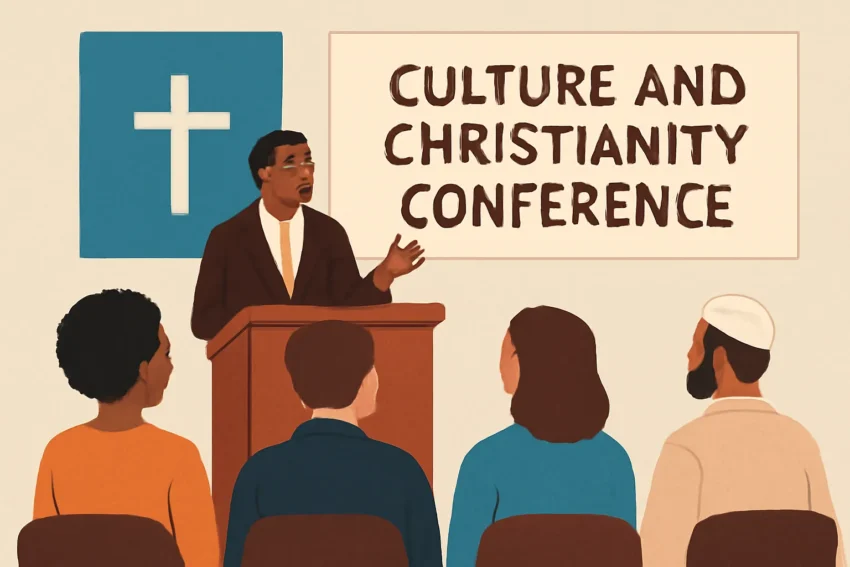
Overview of the Culture and Christianity Conference: a Global Forum on Faith and Culture
The Culture and Christianity Conference, often described in its communications as the Global Forum on Faith and Culture, stands at the crossroads of theology, humanities, social science, and the arts. It is designed to foster dialogue across traditions, to promote intellectual humility, and to examine how religious convictions inform, and are informed by, the wider currents of culture. This conference is not merely a scholarly symposium about doctrine; it is a living, participatory event that invites theologians, philosophers, artists, educators, policymakers, journalists, students, and faith practitioners to learn from one another.
Across all iterations—whether framed as a large international gathering or as a regional edition—the speakers, attendees, and facilitators aim to generate practical insights for churches, universities, communities, and media outlets. The culture and christianity conference ecosystem emphasizes that faith is not exhausted by liturgy alone but is continually expressed, critiqued, and reimagined in music, literature, film, urban design, education, and civic life.
In this article, we explore the Culture and Christianity Conference in depth: its origins, its core aims, its program architecture, recurring themes, notable case studies, and the way it contributes to public understanding of faith in a plural world. We use a variety of terms to describe the event—ranging from “the Culture and Christian Faith conference” to “the Culture–Christianity Forum”—to reflect its broad appeal and its flexible, multidisciplinary approach.
Origins and evolution of the gathering
The Culture and Christianity Conference emerged from a convergence of concerns about how Christianity engages with modern culture. Early conversations centered on questions such as: How does Christian thought relate to secular knowledge? How should the church respond to cultural pluralism without compromising core convictions? How can theology speak to contemporary art, economics, science, and politics without losing its distinctive voice?
Over time, the event grew from a regional seminar into a global platform, attracting scholars and practitioners from diverse religious and cultural backgrounds. This expansion gave rise to the Global Forum on Faith and Culture as an umbrella label, signaling an inclusive framework that welcomes interfaith dialogue while maintaining a robust Christian voice. The history of the culture-and-religion conversation is now characterized by:
Increased attention to cultural hybridity and transnational flows where faith communities intersect with diasporic identities.
Greater emphasis on practical theology—how doctrine translates into social action, public policy, education, and media representation.
Expanded collaboration with cultural studies, ethics, philosophy, and theology departments beyond traditional religious studies.
A commitment to public engagement, including digital media panels, open labs, and community dialogues that extend the conference’s reach beyond the academy.
The evolution of this conference mirrors broader shifts in contemporary religious life: faith communities seeking to articulate credible responses to cultural change, and cultural sectors seeking constructive insights from religious traditions rather than blanket opposition. The Culture and Christianity Conference thus serves as a laboratory for ideas about how faith informs culture and how culture, in turn, shapes religious imagination.
Aims, scope, and guiding principles
At its core, the Culture and Christianity Conference is guided by several interlocking aims:
Scholarly excellence and rigor in examining the interface of faith and cultural expression.
Interdisciplinary dialogue that brings together theology, philosophy, history, anthropology, literary studies, film studies, and musicology.
Practical impact—producing resources, guidelines, and frameworks that churches, universities, and cultural institutions can implement.
Inclusive participation with attention to diverse Christian traditions (Catholic, Protestant, Orthodox, historic and emergent), as well as partners from other faith communities and secular perspectives.
Public-facing communication—accessible summaries, video material, and discussion guides that enable a wider audience to engage with complex ideas.
The scope of the conference often encompasses topics as varied as artistic freedom, moral philosophy, ecclesial leadership, theology of culture, digital culture, and environmental ethics. In each edition, organizers publish a thematic dossier that frames the major conversations for participants and audiences alike.
Important guiding principles include a commitment to credible pluralism, a focus on historical awareness of Christian engagement with culture, and an insistence on ethical reflection that respects the dignity of all people. The Global Forum on Faith and Culture thus serves as a platform where ideas can be tested, challenged, and refined through respectful debate and collaborative production.
Program structure: formats, rhythm, and learning pathways
The Culture and Christianity Conference is renowned for a dynamic mix of formats that encourage active participation rather than passive reception. The program typically combines keynote addresses, plenary discussions, thematic panels, workshops, and cultural events. The aim is to create a comprehensive learning pathway that appeals to scholars, clergy, students, and practitioners alike.
A hallmark of the event is its deliberate pacing: the schedule alternates between reflective sessions and hands-on activities, with ample time for networking and informal exchange. The structure is designed to support both deep dives into particular questions and broad overviews of how faith and culture interact in different contexts.
Keynote addresses and plenaries
The opening keynote at many editions frames the overarching questions: What does Christian faith offer to discussions of culture in the 21st century? How can churches participate constructively in public life without compromising core convictions? Keynote speakers often include prominent theologians, cultural critics, university presidents, and leaders of major faith communities.
Panel discussions and roundtables
Panels bring together diverse voices to debate particular themes such as religion and popular culture, music and liturgy, biblical interpretation and social ethics, and digital media and religious storytelling. Panels are designed to be accessible to non-specialists while rewarding for experts, with moderated Q&A that invites audience participation.
Workshops and experiential sessions
Workshops offer practical, skills-based learning: how to craft a faith-informed cultural critique, how to develop a community-centered arts program, or how to evaluate public policy from a theological perspective. Experiential sessions can include guided museum visits, sacred music demonstrations, or collaborative art-making that invites participants to translate ideas into practice.
Cultural immersion and outreach activities
In some editions, the conference includes field experiences—visits to local churches, campuses, archives, or cultural institutions—designed to connect theory with lived culture. Outreach activities help participants imagine how insights from the conference can be shared with broader audiences beyond the academy.
Public-facing programming
A defining feature of the Global Forum on Faith and Culture is its emphasis on accessibility. Public dialogues, community conversations, film screenings, and art showcases invite members of the broader public to engage with faith and culture in ways that are informative, provocative, and inviting.
Core themes and recurring topics
Each cycle of the Culture and Christianity Conference develops around a set of central questions that reflect current concerns in culture and faith. The themes are deliberately broad to accommodate regional contexts and interdisciplinary participation, yet tightly connected to the overall aim of enriching understanding of Christian faith within culture.
Theology and culture: How do doctrinal commitments shape cultural critique, and how does contemporary culture in turn inform theological reflection?
Art, beauty, and worship: What is the role of beauty in Christian worship, religious expression, and public life?
Ethics and public life: How should Christian ethics engage political debates, public policy, and social justice movements?
History and memory: How do historical encounters between Christianity and culture inform present-day identity and mission?
Media and communication: What are the responsibilities of Christian communicators in an age of rapid information flow and misinformation?
Education and formation: How can churches and institutions form critical thinkers who navigate faith and culture thoughtfully?
Science and religion: Where can dialogue between scientific insights and religious belief be productive and honest?
Global perspectives: How do Christian communities articulate culture in pluralistic societies and across continents?
Migration and diaspora: In what ways do migration patterns reshape religious practice, arts, and community life?
Environmental stewardship: How does Christian teaching inform responses to climate change and care for creation?
The Culture and Christianity Conference also emphasizes case studies from local contexts—cities, universities, churches, and cultural centers—so that participants can learn from concrete experiences as well as theoretical frameworks.
Global reach, participation, and audience
One of the defining strengths of the Culture and Christianity Conference is its international and intercultural reach. The event regularly hosts participants from dozens of countries, representing a spectrum of Christian traditions as well as partners from other faith communities and secular disciplines. The global footprint is reflected in:
A diverse speaker roster that includes theologians, pastors, educators, artists, and public intellectuals.
Participants from universities, seminary programs, faith-based organizations, think tanks, museums, and media houses.
Translations and accessible outreach materials to engage non-English-speaking audiences.
Collaborative projects with local institutions in the host city or region, expanding the conference’s cultural impact beyond a single venue.
The energy of a global forum is visible in the daily rhythm of conversations: formal sessions punctuated by informal conversations in coffee breaks, hallway exchanges, and collaborative sessions that occur in corridors or at social events. The Global Forum on Faith and Culture is therefore not just about ideas on screen or page; it is about people forming networks that endure beyond the closing plenary.
Case studies: notable sessions and outputs
Across editions, several sessions have become anchors for ongoing discourse. These case studies illustrate how the conference translates theory into practice and how participants carry insights back into their communities.
Case study 1: Art as a site of theological reflection
A recurring theme concerns the relationship between artistic practice and theological reflection. A typical session might explore how contemporary visual art, literature, and music can illuminate biblical narratives or ethical questions. The discussion often expands into practical outcomes, such as the development of church-sponsored galleries, artist residencies in congregations, or collaborations with museums to present faith-informed exhibits.
Case study 2: Education, curricula, and formation
In the realm of education, sessions focus on how to build critical thinking and moral imagination within diverse student bodies. Outputs may include curriculum outlines, teacher-training resources, and community-based projects that integrate faith perspectives with humanities curricula.
Case study 3: Media literacy and public conversation
With rising concerns about misinformation and polarization, several panels emphasize media literacy and responsible storytelling. Participants discuss best practices for engaging with press, social media platforms, and cultural institutions in ways that respect truth, compassion, and pluralism.
Case study 4: Environmental ethics and climate action
Climate conversation sessions connect biblical ethics with public action. Outcomes include faith-inspired environmental initiatives, collaboration with conservation groups, and the public articulation of a theology of care for creation that informs local policy debates.
Case study 5: Diaspora and cross-cultural mission
In diasporic contexts, conversations focus on how faith communities negotiate cultural hybridity, language, and belonging. Practical results include leadership development programs for multi-ethnic congregations and cross-cultural partnerships that enrich both host and home communities.
The Culture and Christianity Conference yields multiple kinds of impact. Beyond the immediate exchange of ideas, the event generates tangible outputs that influence curricula, church practice, public discourse, and policy awareness.
Publications: Edited volumes, thematic journals, and summary reports distill key insights for wider audiences.
Resource kits: Toolkits for educators, pastors, and community organizers help translate conference learning into everyday practice.
Network formation: The conference creates networks of scholars, clergy, artists, and civic leaders who collaborate after the event on projects, consortia, and research initiatives.
Public engagement: Recordings, podcasts, and live streams extend reach, enabling schools, churches, and cultural organizations to use the content for study and reflection.
A lasting measure of success is not only the number of participants but the degree to which the event engenders ongoing scholarly exchange and collaborative action that crosses disciplinary and confessional boundaries.
Critiques, challenges, and constructive discussions
No major forum is without its questions and potential blind spots. The Culture and Christianity Conference has faced critiques related to representation, access, and the balance between theological particularity and universal relevance. Some common concerns include:
Ensuring true diversity of voices—geographic, denominational, gender, and minority perspectives.
Maintaining academic rigor while remaining accessible to non-specialists.
Preventing the dialogue from becoming merely performative, and ensuring that sessions yield actionable outcomes.
Addressing political and social tensions in public life without compromising the conference’s integrity or its participants’ safety and dignity.
The responsible response to these critiques often involves deliberate planning: more inclusive speaker selection, transparent publication practices, open-access resources, and structured follow-up with regional partners. The goals are to enhance credibility, widen participation, and ensure that the conference remains a place where challenging ideas can be debated with respect and care.
Participation, access, and how to engage
For individuals and institutions interested in the Culture and Christianity Conference, several pathways exist to participate or learn from the event. These pathways reflect the conference’s aim to be both a professional hub for scholars and a public resource for communities:
Attending in person or via live streams to experience keynote lectures, panels, and workshops firsthand.
Submitting proposals for papers, roundtables, or workshop formats that align with the event’s themes.
Participating in outreach programs that bring conference content to schools, churches, libraries, and cultural centers.
Engaging with published outputs—books, journals, and online articles that synthesize conference findings for broader audiences.
Joining or forming study groups within universities or faith communities to discuss themes from the conference and implement related projects.
The organizers typically provide a transparent schedule, clear submission guidelines, and resources describing how to access recordings and materials after the event. Some editions also feature scholarships or reduced-rate participation for students, clergy, and researchers from underrepresented regions, reinforcing the aspiration for a truly global and inclusive dialogue.
Future prospects: where the Culture and Christianity Conference is headed
Looking ahead, the Culture and Christianity Conference envisions expanding its global footprint, deepening its interdisciplinary collaborations, and increasing its contributions to practical transformation in faith communities and cultural institutions. Several trends are likely to shape the near future:
Continued expansion of digital platforms to reach remote participants and create asynchronous learning communities.
Stronger emphasis on environmental ethics and sustainable practices within conference logistics and programming.
Broader interfaith engagement that pairs Christian insights with perspectives from other major religious traditions and humanist thought.
Community-centered formats that prioritize local contexts and co-creation with partner organizations.
Impact metrics that go beyond attendance numbers to measure changes in attitudes, policy discourse, and cultural production inspired by conference ideas.
The ongoing dialogue between culture and Christianity promises to yield richer understandings of how sacred commitments shape, and are shaped by, the artistic, intellectual, and civic life of communities around the world. The Global Forum on Faith and Culture remains a critical venue for imagining and enacting responsible, imaginative, and compassionate responses to contemporary culture.
Conclusion: an invitation to participate in a living conversation
The Culture and Christianity Conference—also known as the Global Forum on Faith and Culture—is more than a scheduled agenda of talks and workshops. It is a living invitation to engage with how faith meets culture in real time. Whether you are a student seeking to understand how theology informs public life, a pastor looking for fresh ideas to address your congregation, a musician or artist seeking meaningful collaboration with faith communities, or a policy analyst exploring faith-based perspectives on social issues, there is a place for you in this conversation.
By fostering intellectual exchange, nurturing ethical reflection, and promoting public engagement, the Culture and Christianity Conference contributes to a richer, more reflective, and more constructive culture. It invites participants to imagine how Christian convictions can remain vibrant in conversation with diverse cultures, how cultural vitality can be sustained by thoughtful faith, and how the arts, humanities, and public life can be enriched by serious theological and spiritual inquiry. The result is a global forum that not only studies culture and Christianity but also helps shape the direction of culture and Christian witness for years to come.