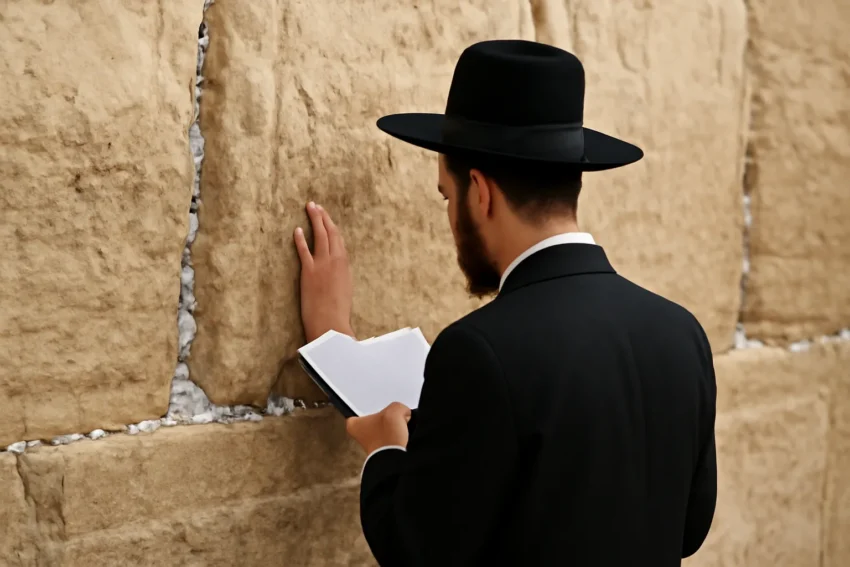
Daily Jewish prayer, often referred to in plural as daily tefilot or simply the davening, is a structured practice shared by communities around the world. It is a set of prayers, biblical passages, and devotional recitations designed to connect the individual with God, sanctify time, and embed religious intention into everyday life. While the exact words and order can vary among communities, the core idea remains the same: to cultivate kavanah (concentration and intention), to praise God, to study sacred texts, and to seek guidance for living a life of meaning and responsibility. This article offers a practical guide to the daily Jewish prayers, highlighting the main components of the service, how the routine is organized, and how a person beginning on this path can adopt a sustainable, spiritually meaningful practice.
In most Rabbinic traditions, the day is punctuated by three formal prayer times: Shacharit (the morning service), Mincha (the afternoon service), and Ma’ariv (the evening service). Together, these three daily services form the backbone of the daily liturgy. The term nefesh of the day—our inner life—meets the outer rhythm of the calendar and the external world through these prayers. The structure is designed to follow a cadence: praise and gratitude, corporate and personal supplication, and a return to reflection after action. For many, daily prayer is not merely a ritual to be performed; it is a framework for ethical reflection, communal belonging, and self-discipline.
The daily liturgical cycle: Shacharit, Mincha, Ma’ariv
The typical daily pattern consists of three distinct services, each with its own character and emphasis. Below is a practical map of what to expect and how to approach each.
Shacharit – the morning service. This service usually includes opening blessings, poetic praises, the reading of the Shema and its accompanying blessings, the Amidah (also called the Shemoneh Esrei), and concluding prayers. It is often the most lengthy of the three daily services and is commonly associated with the start of the day’s spiritual work.
Mincha – the afternoon service. This shorter service centers around the Amidah and a series of psalms and liturgical poems that reflect gratitude for a day in progress and readiness for the evening.
Ma’ariv – the evening service. Traditionally recited after night falls, Ma’ariv emphasizes themes of night, hope, and sanctification of the everyday. It is commonly the most intimate service, sometimes recited privately, though many communities pray it communally in the synagogue or home.
Within each of these services, you will encounter a consistent sequence of brachot (blessings), scriptural passages, and liturgical poems. The exact content may differ between nusach (liturgical tradition) communities—such as Ashkenazi, Sephardi, or Mizrahi—but the structural logic remains similar: praise, proclamation, petition, and praise again.
Shacharit: a closer look at the morning prayers
Shacharit is often considered the prayer that sets the tone for the day. It can be studied and prayed in many ways, but most traditional practice includes several stages:
Birkot Hashachar (morning blessings) – a sequence of blessings upon waking, physical strength, and the duties of the day. These are designed to bring intention to ordinary acts (like seeing, moving, and speaking) and to acknowledge God’s continual gifting of life.
Pesukei Dezimra (verses of praise) – a collection of psalms and poetic canticles, offered to elevate the heart and prepare it for deeper prayer. The language is rich and uplifting, often serving as a bridge between daily concerns and ultimate meaning.
Shema and its blessings – the central declaration of Jewish faith. The blessings before and after the Shema articulate the fundamental idea of God’s unity and the obligation to love God with heart, soul, and might.
Amidah (the silent devotion) – the core of the Shacharit service. In this standing, silent prayer, worshippers petition God for both personal and communal needs, while also acknowledging God’s sovereignty and kindness.
Concluding prayers – including Kaddish (mourners’ and full Kaddish), Uva Letzion (a closing blessing), and often Aleinu (a declaration of God’s sovereignty over the world) and the Orach Chaim closing prayers depending on the liturgy used.
For many, the morning service also includes optional elements like Tallit (prayer shawl) and, in some traditions, Tefillin (phylacteries) worn during the weekday hours. The decision to wear these items depends on community custom and personal observance, but when embraced, they add a tangible sense of sanctity to the routine.
Mincha and Ma’ariv are often prayed in quick succession in traditional settings, especially on weekdays. The primary components typically include the Amidah, the Ashrei (a recitation of Psalm 145), and various blessings customized by season and day. In many communities, night begins with Ma’ariv, a service that emphasizes the transition from day to night, the hope for reframing the daily path, and the remembrance of Redemption with themes of light and night.
Structure and content of the daily siddur
A siddur (prayer book) is more than a flat book of words. It is a curated guide that stitches together scripture, poetry, liturgical law, and devotional intention. The daily siddur reflects a particular nusach (liturgical rhythm) and community tradition, but there are common threads across most editions:
Brachot (blessings) that open each section and frame the prayers with gratitude and humility.
Pesukei Dezimra as a preface that gradually draws the heart toward contemplation.
Shema and its blessings as the centerpiece of belief and commitment.
Amidah/Shemoneh Esrei as the central, standing prayer of petition and thanksgiving.
Concluding prayers (including Psalm-based readings or concluding prayers such as Aleinu) that re-ground the worshipper in daily action.
Among the variations, the nusach Ashkenaz (Central and Eastern European custom) and nusach Sepharad (Spanish and Mediterranean communities) represent the two broad families of practice, each with their own unique wording and musical modes. In addition, modern editions often include translation and commentaries to help readers follow the meaning, especially for those new to the language of prayer. Some siddurim also offer “backup” options for those who want to follow a more streamlined service or to pray alone, at home, or while traveling.
Practical guidance for beginners: starting a daily prayer practice
Starting a daily prayer routine can feel daunting, but with a practical plan, it becomes a sustainable habit. Here are some guidelines to help you begin and maintain your daily prayer practice or daily tefilot routine.
Choose a time and a place. Pick a realistic time window and a quiet location where you won’t be interrupted. Consistency is more important than duration in the early days.
Keep a simple text strategy. Use a printed siddur or a digital version with a reliable translation. If you’re new to Hebrew, you might start with a transliteration or a bilingual edition to learn pronunciation while understanding meaning.
Set a modest target. For example: complete the Birkot Hashachar and Pesukei Dezimra portions on most days, then gradually add the Shema and Amidah.
Learn one section at a time. Rather than attempting the entire service, begin with one segment you can commit to daily, such as the Shema and its blessings or the Amidah.
Use a friend or community. If possible, join a small study group or attend a daily minyan. The presence of others can motivate consistency and deepen the experience.
Personalize your intention. Before you begin each prayer, take a moment to think about what you’re seeking: gratitude, guidance, strength for a challenge, or a wish to repair relationships.
Make room for learning. Consider pairing your prayers with a brief Torah study or a reflection on a verse to deepen understanding and make the practice richer.
Adjust for travel. When you’re away from home, you can still pray: carry a compact siddur, use a prayer app, or rely on a pocket Torah/tefillin kit if your tradition supports it.
Tips for effective practice
Pronunciation matters. If Hebrew is new to you, practice slowly and use transliteration only as a bridge to real Hebrew reading. Most communities encourage accurate pronunciation, especially for the Shema and Amidah.
Keep the kavana in focus. Even a few moments of quiet intention during the Amidah can deepen your experience; if words feel unfamiliar, place your mind on the meaning behind each blessing.
Balance community and private practice. While many benefit from praying with others (a minyan), there are times when personal, home-based prayer is equally meaningful. The key is regularity and sincerity.
Respect variations. In a diverse environment, you may encounter different nusach and customs. Embrace diverse practices as expressions of a shared spiritual aim.
Common practices and considerations in daily prayer
As you begin or continue a journey of daily prayer, you’ll likely encounter a range of practices that reflect community norms and personal choices. Here are some of the most common considerations to keep in mind.
Tallit and tefillin are traditional ritual garments and straps worn during morning weekday services in many communities. They symbolize dedication and focus. While many men wear both, in many contemporary communities, women and non-binary people also wear tallit or tefillin as part of egalitarian practice.
Facing the Torah ark during certain parts of the service is a common practice in many synagogues, aligning with the public nature of communal prayer.
Preparing the heart with intention. The goal is to approach prayer with humility, gratitude, and honesty. This means acknowledging your own limitations and recognizing God’s role in everyday life.
Translations and study. If you’re learning, a translation can help you understand what you say. Some people memorize certain blessings or phrases to facilitate a smoother, more meaningful experience over time.
There is a wide spectrum of practice within rabbinic Judaism, reflecting different historical communities and languages. Two broad families of practice are often described as nusach Ashkenaz and nusach Sepharad, but there are many other variations as well. Some practical considerations you might notice:
Wordings of the Shema and its blessings can differ slightly between Ashkenazi and Sephardi rites.
The order and inclusion of certain psalms or liturgical poems may vary by day and by season (for example, certain passages are added on special days such as holidays).
Musical melodies and cantillation marks differ by tradition, but the textual structure remains widely recognizable.
Translations and commentary can reflect distinct theological emphases within each tradition.
Frequently asked questions about daily prayer
If you’re exploring daily prayer for the first time, you might have questions such as the following. Here are concise answers to common concerns, with guidance for practical application.
Do I need to pray every day? In most traditions, daily prayer is encouraged as a spiritual discipline, but the obligation is not universal for everyone at every age. The intention to connect with God, to study, and to live ethically is often valued regardless of the exact words spoken.
What if I miss a service? Missing a day is not a failure. You can resume the next day, pick up where you left off, or focus on a shorter portion to maintain continuity.
Can I pray alone at home? Yes. Home prayer is a longstanding and meaningful practice, particularly for individuals who cannot attend synagogue or who wish to make prayer a private experience of reflection.
What if I don’t know all the Hebrew? Use a bilingual siddur or a transliteration edition, and gradually increase your Hebrew reading. The goal is understanding and presence, not perfection in language from the outset.
How do I stay motivated? Build a routine that fits your life, involve family or friends, and connect your prayers to daily actions—acts of kindness, study, and ethical conduct.
Practical steps to deepen your daily prayer life
To turn daily tefilot into a living habit, consider the following plan. It emphasizes intention, learning, and practical integration into everyday life.
Set a fixed daily window (for example, Shacharit between 5:30 and 7:00 a.m., Mincha before sunset, Ma’ariv after nightfall). A consistent time helps establish habit formation.
Choose a dependable siddur. A reliable edition with translations and notes can be a precious companion as you learn the structure and language.
Start with a core minimum. For many beginners, the essential elements are the Shema and the Amidah in each service, plus the concluding blessings.
Integrate study. Pair a brief Torah portion or a short meditation with your prayer to reinforce the intellectual and spiritual dimension of the practice.
Join a community when possible. A communal setting provides support, accountability, and a shared sense of purpose that can boost motivation and learning.
Track your progress. Keep a simple log of what you pray each day, noting what you found meaningful and where you encountered difficulty. Reflection helps sustain progress.
Adapt over time. As you grow more comfortable, gradually add more elements of the service or extend the time you allocate to personal contemplation.
Make it accessible on the go. If you travel or encounter a busy day, keep a compact siddur or a reliable app so you can recite a few blessings or the Shema anywhere.
Common obstacles and how to overcome them
Like any long-standing practice, daily prayer comes with challenges. Here are common obstacles and practical ways to address them.
Finding time. Reframe prayer as a non-negotiable daily appointment with yourself and with God. Even a short, consistent window is better than a long but irregular schedule.
Language barriers. Use bilingual editions or audio resources. Slowly learn essential Hebrew phrases, focusing on the most repeated lines.
Maintaining kavana. If your mind wanders, simply acknowledge it and gently return your focus to a central image, such as gratitude or a single line from the Amidah.
Living in a non-traditional home or workplace. Create a small personal ceremonial space, or adopt a mobile practice—standing with a prayer shawl or folding chair, reciting a brief blessing before meals and before sleep as a daily anchor.
Kids, families, and the daily prayer rhythm
Introducing children to the habit of daily prayer can be a powerful family project. Here are approachable strategies that respect both tradition and curiosity.
Make it a family routine. A regular family prayer time, even if brief, helps children understand that prayer is a shared, everyday activity.
Use kid-friendly editions. Some siddurim are designed for younger readers, with larger type, simpler language, and engaging illustrations that explain concepts.
Turn parts of the service into active learning. For example, you can explore one line each day, discuss its meaning, and connect it to a family mitzvah (good deed).
Encourage questions. Let children ask about unfamiliar terms and then seek thoughtful answers together, or use a reputable children’s commentary to guide the conversation.
Traveling with daily prayer: staying connected on the road
When you travel, maintaining the rhythm of daily prayers can be challenging but doable. Suggestions for staying connected while on the move include:
Pack a compact siddur or install a reliable prayer app on your phone for easy access to the text and translation.
Plan around local minyan opportunities. When possible, attend a local synagogue or community center to pray with others, which can deepen the sense of shared meaning.
Adapt your routine sensibly. If you cannot complete every element, prioritize the essential parts—the Shema and the Amidah—and complete the rest when you return home.
Respect local customs. Different places may have different prayer practices and times; you can participate respectfully and observe the local rhythm while maintaining your personal practice.
To help you navigate the language of daily Jewish prayer, here is a concise glossary of frequently encountered terms. Key terms are bolded to emphasize their importance within the practice.
Siddur – the Jewish prayer book used for daily and festive services.
Nusach – the variation in liturgical text and cantillation tied to a community’s tradition.
Shacharit – the morning prayer service.
Mincha – the afternoon prayer service.
Ma’ariv – the evening prayer service.
Shema – a central declaration of faith in God; recited twice as part of the daily service.
Amidah (Shemoneh Esrei) – the core standing prayer of petition and praise.
Brachot – blessings that frame and sanctify the various sections of the service.
Kavanah – intention or focus; the inner mindfulness accompanying prayer.
Tallit – a prayer shawl worn during morning services in many communities.
Tefillin – leather tefillin boxes worn on the arm and head during weekday morning prayers by many men and some others in different communities.
Aleinu – a concluding prayer and proclamation of God’s sovereignty recited at the end of morning and evening services.
Kaddish – a set of prayers celebrating God’s sovereignty and, in many contexts, honoring the memory of a loved one.
Understanding daily Jewish prayer also invites a glance at its deeper purpose within Jewish history. The practice evolved from the biblical prophetic impulse to call on God in times of need and gratitude, refined by the rabbis who established a fixed, communal rhythm intended to replace the earlier Temple-based sacrifices with a portable, ethical, and text-focused form of worship. The three daily prayers represent an ongoing commitment to maintain a continuity of devotion. This continuity supports two parallel aims: the personal relationship with God and the communal life that sustains a people across generations. The structure fosters both humility before God and responsibility toward others—themes echoed in the daily acts of kindness and study that accompany prayer in many Jewish households.
Putting theory into practice: crafting a personal plan
Ultimately, daily prayer is about weaving spiritual intention into the fabric of daily life. A practical plan for your own routine could look like this:
Decide on your three daily prayers (Shacharit, Mincha, Ma’ariv) that you will attempt each day, even if only partially in the beginning.
Choose a preferred siddur or digital resource that fits your tradition and learning style.
Set a realistic starting point (for example, a 15–20 minute practice) and gradually extend as you become more comfortable.
Introduce a brief element of study or reflection, such as a single verse or a short meditation on gratitude or mercy, to accompany your prayers.
Cultivate a sense of community when possible, whether through a local synagogue, a study group, or a family practice at home.
As you pursue this plan, remember that the goal of the daily Jewish prayer is not only to recite words but to shape a way of life—one marked by gratitude, humility, empathy, and responsibility. The cadence of the prayers, the beauty of the verses, and the discipline of daily repetition together invite you to become a more reflective and engaged person in the world.
Conclusion: embracing the practice of daily tefilot
Whether you are starting from scratch, returning after a hiatus, or seeking to deepen an established practice, the daily prayers form a flexible, accessible pathway to spiritual growth. By understanding the core components—the Shema, the Amidah, the various blessings, and the concluding prayers—along with practical tips about timing, environment, and learning, you can make the practice meaningful and durable. The davening journey isn’t a single destination but a continuing process of learning, awakening, and service. It invites you to bring mindfulness into the ordinary moments of life—through prayer, study, and acts of kindness—and to connect your day to a larger story of moral and ethical responsibility. With patience, curiosity, and gentle consistency, a daily prayer practice can transform not only your spiritual life but the way you show up for family, friends, and community in everyday situations.