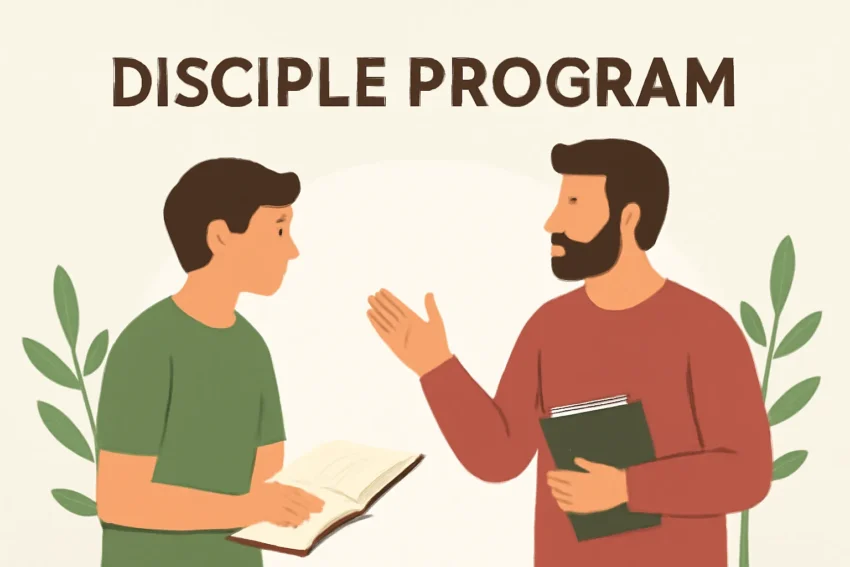
A disciple program—also known as a disciple-making program or a discipleship initiative—is a structured effort to form people into devoted followers who live out their beliefs through daily practice, community life, and purposeful service. The goal is not merely knowledge, but transformation: a shift in priorities, habits, and influence that multiplies beyond the initial participants. In many communities, this kind of disciple formation emphasizes a shared pathway, clear expectations, and accountable relationships that help individuals grow from interest to integration and from knowledge to mission.
This guide offers a comprehensive overview of what a disciple-making track can look like, how to design and implement it, and what it takes to sustain momentum over the long term. While the language often originates in faith communities, the core principles—intentional cultivation, mentorship, practical application, and communal accountability—translate to many contexts, including non-profit outreach, campus ministry, workplace faith groups, and family-based formation.
Throughout this article, you will encounter variations of the term disciple program, such as discipleship curriculum, discipleship pathway, or disciple-making curriculum. Each variation signals a slightly different emphasis or delivery method, but all share a commitment to developing learners into people who live with purpose, courage, and generosity.
What a Disciple Program Is and Is Not
At its core, a disciple program is a guided journey from passive interest to active imitation of a set of shared values. It is not merely a study group or a lecture series; it is a deliberately designed process that blends study, practice, mentorship, and accountability. A well-crafted disciple-making initiative helps participants discover what it means to follow a particular vision of life, grow in character, and contribute to the well-being of others.
Important distinctions to consider:
Intentionality: Every element is designed to move a person forward, not simply to inform.
Multiplication: The aim is not only to equip individuals but to prepare them to equip others.
Holistic formation: Growth touches beliefs, practices, relationships, and leadership capacity.
Contextual relevance: The program adapts to local culture, needs, and opportunities for service.
Accountability: Learners are encouraged to receive feedback and to hold one another accountable in constructive ways.
A disciple-making pathway typically integrates four pillars: knowledge, practice, community, and mission. When these pillars align, participants experience not only intellectual growth but also practical competence—an ability to apply convictions in daily life, relationships, and work.
Core Components of the Disciple-Making Program
While the exact design varies, most successful disciplined discipleship tracks rest on a common architecture. Here are the essential elements that define a robust disciple program:
Clear mission and outcomes: A well-stated purpose and measurable goals that guide curriculum and evaluation.
Structured curriculum: A sequenced set of modules or units that build on one another.
Mentor relationships: A framework for one-on-one or small-group guidance that models leadership and care.
Scriptural or foundational study: Rigorous content that grounds learners in core beliefs and practices.
Practical application: Real-world assignments and service opportunities that translate theory into action.
Community life: Regular gatherings, accountability partnerships, and shared rhythms of practice.
Assessment and feedback: Ongoing reflection, progress tracking, and opportunities for improvement.
Scalability and adaptability: A design that can grow and adjust to new participants and contexts.
Institutions often emphasize two modes of delivery: in-person mentorship and online or hybrid formats. The combination allows for flexible participation while preserving the relational core that makes discipleship compelling.
Variations of Disciple-Making Initiatives
Different communities choose different models depending on resources, culture, and goals. Below are several popular variations, with disciple program variants that you can adapt or combine.
Disciple-Making Pathway (Church or Community Anchor)
This model centers a formal pathway from initial interest to leadership involvement. It often includes an onboarding phase, a core curriculum, and a next-step track for mentors-in-training.
Onboarding to establish identity, values, and expectations
A core sequence of modules on faith, ethics, and service
A mentorship track to prepare participants for leadership
Small-Group Discipleship
A small-group discipleship approach emphasizes intimate peer support. Groups meet weekly or biweekly, engaging in discussion, practice, and accountability within a tight-knit setting.
Peer-led or facilitator-guided sessions
Accountability partnerships within the group
Collaborative service projects that reflect group learning
One-on-One Mentorship
A mentorship program pairs a learner with an experienced guide for personalized development. This variation suits individuals seeking deep, customized formation and ongoing encouragement.
Regular mentor-mentee meetings
Customized growth plans and milestones
Shadowing opportunities in real-world ministry or service contexts
Online and Hybrid Disciple Programs
A digital discipleship curriculum makes formation accessible across distances. Modules may combine video lectures, reflective prompts, discussion forums, and live coaching sessions.
Self-paced modules with milestones
Virtual cohorts to preserve community
Multimedia resources and asynchronous reflection
Household-Based Formation
A family or household discipleship program invites whole households into togetherness and shared practice. This model often integrates daily rhythms, family challenges, and joint service.
Family devotional routines
Age-appropriate learning tracks for children and adults
Shared service projects that involve the whole household
Workplace-Integrated Disciple Programs
A workplace discipleship track seeks to bring formation into a professional setting, focusing on leadership, ethics, teamwork, and servant-minded service within a workplace culture.
Leadership development aligned with mission
Ethical decision-making frameworks
Mentor networks across departments
Curriculum and Content of a Disciple Formation Program
A well-rounded disciple-making curriculum blends substantial study with practical application. Below is a representative spine for a comprehensive discipleship curriculum, adaptable to various contexts.
Foundations of Faith: Core beliefs, worldview, and the guiding principles of the community.
Prayer and Spiritual Disciplines: Practices such as silence, Scripture intake, journaling, fasting, and contemplation.
Biblical Study Methods: Tools for interpretation, hermeneutics, and applying Scripture to daily life.
Character Formation: Ethics, integrity, humility, and habits that shape character over time.
Mission and Service: Outreach, justice, mercy, and practical acts of love within the community.
Leadership Development: Teams, mentoring, conflict resolution, and vision casting.
Relational Skills: Communication, empathy, boundaries, and healthy accountability structures.
Integrated Practice: Real-world assignments—service projects, ministry roles, or community partnerships.
Most programs also include an optional advanced track for those who want to train as mentors or leaders. This track delves into multiplication strategies, training others to facilitate groups, and creating sustainable pipelines for new participants.
Optional Modules and Add-Ons
Depending on context, you can add modules such as:
Digital Discipleship: Leveraging apps, social media, and online communities for formation.
Intercultural Competence: Building bridges across diverse backgrounds and beliefs.
Financial Stewardship: Aligning generosity and responsible stewardship with mission work.
Missional Living: Practicing faithful presence in daily life, not just within church walls.
Implementation: How to Start and Scale a Disciple-Making Initiative
Launching a disciple program requires a blend of clarity, relationships, and practical steps. Here is a pragmatic rollout guide designed to be adapted to local contexts.
Step-by-step Roadmap
Define outcomes and scope: Decide what transformation you expect to see in 6–12 months and beyond, and who the program will serve.
Design the curriculum: Map a sequenced set of modules, activities, and assignments that align with outcomes.
Recruit and train mentors: Identify potential mentors, provide training in coaching, feedback, and healthy boundaries.
Pilot the program: Run a small, bounded version to test content, logistics, and engagement.
Launch with a cohort: Bring in the first full group, pair with mentors, and establish rhythms for accountability.
Measure progress: Track milestones, retention, and qualitative feedback to refine the program.
Scale thoughtfully: Expand by adding cohorts, training more mentors, and adapting to new contexts while preserving core values.
Key Infrastructure Elements
Mentor training program to ensure consistent coaching quality.
Curriculum management with clear units, timelines, and resources.
Communication channels for announcements, reminders, and reflections.
Accountability systems that are safe, constructive, and sustainable.
Assessment framework combining qualitative reflections and measurable outcomes.
Measuring Impact in a Disciple Journey
Evaluation is essential for learning and for sustaining support from leaders, funders, and participants. A well-designed disciple program tracks both process metrics and outcome indicators.
Process Metrics
Attendance and participation rates
Mentor-mentee meeting frequency and quality
Completion rates for modules
Timely submission of reflections and assignments
Outcome Metrics
Demonstrated growth in knowledge and practical skills
Increased engagement in service or outreach projects
Quality of relationships within the community and in mentorship circles
Multiplication: number of participants who begin mentoring others
In addition to quantitative measures, collect qualitative feedback through interviews, focus groups, and narrative reports. Stories of transformation—however small—are powerful indicators of impact and can guide future iterations.
Common Challenges and How to Overcome Them
No disciple-making initiative is without hurdles. Anticipating obstacles helps you respond thoughtfully and maintain momentum.
People-Related Challenges
Low consistent participation: Address with flexible scheduling, clearer expectations, and engaging mentors.
Mentor burnout: Provide ongoing support, smaller cohorts, and opportunities for rest and renewal.
Resistance to accountability: Create a culture of trust, safety, and constructive feedback norms.
Content and Delivery Challenges
Curriculum overload: Prioritize core modules and space out advanced topics over multiple terms.
Maintaining relevance: Solicit participant input and tailor content to local contexts and needs.
Digital fatigue in online formats: Mix live sessions with asynchronous activities, and add interactive elements.
Resource Constraints
Limited funds or volunteers: Leverage partnerships, train volunteer multipliers, and stage growth gradually.
Space and scheduling limitations: Use hybrid formats and community spaces to maximize accessibility.
Best Practices for a Sustainable Disciple Program
To increase the likelihood of lasting impact, consider these evidence-based practices that strengthen any disciple program or discipleship pathway.
Clarity of vision: Communicate purpose, expected outcomes, and the long-term arc of the journey.
Relational leadership: Prioritize mentoring relationships over top-down instruction.
Rhythms of practice: Establish daily, weekly, and monthly practices that anchor formation.
Hands-on mission: Integrate service opportunities that connect learning to tangible impact.
Feedback culture: Normalize honest, compassionate feedback and continuous improvement.
Multiplication mindset: Build a framework that enables participants to mentor others and start new cohorts.
Inclusivity: Create space for diverse backgrounds, perspectives, and experiences to enrich formation.
Sustainability: Design for long-term viability with phased growth and predictable leadership pipelines.
A mid-size congregation launched a disciple-making pathway to equip members for leadership and service. The program combined a six-month core curriculum with a mentorship track. Within a year, participants reported stronger personal devotional habits, deeper communal ties, and increased participation in outreach projects. The leadership team observed a steady uptick in participants who began mentoring others, signaling a successful multiplication cycle.
Case Study B: Online Discipleship for a Regional Campus Network
An online discipleship curriculum connected learners across campuses through weekly live sessions and asynchronous study. The hybrid model helped sustain engagement during travel and break periods. Participants highlighted the convenience and the sense of belonging fostered by virtual small groups, while mentors noted improved consistency in coaching quality due to centralized training materials.
Case Study C: Family-Based Formation in a Multigenerational Home
A household discipleship model invited families to practice together—daily devotionals, weekly service, and joint reflection. The program strengthened relationships across generations, with teenagers reporting increased ownership of their faith and younger children benefiting from modeling by parents and older siblings.
Tools, Resources, and Further Reading
Building a robust disciple program is easier when you leverage established resources and proven practices. The following categories offer practical help.
Curriculum templates and modular designs that you can adapt to your context.
Mentor training guides for coaching, feedback, boundaries, and safeguarding.
Assessment rubrics to measure knowledge, behavior, and impact.
Case studies from varied settings to inform your design decisions.
Suggested starting points for deeper study include:
Books and guides on discipleship in your tradition
Courses on biblical study methods and leadership development
Toolkits for mentorship training and multiplication strategies
If you are launching in an institutional setting, consider partnering with local mentors, schools, or nonprofits to expand your reach and ensure a sustainable pipeline of participants and leaders.
Conclusion: The Long-Term Impact of Disciple-Making
A thoughtful disciple program has the potential to reshape individuals, communities, and even entire organizations. By combining clear purpose, a robust curriculum, generous mentorship, and practical service, you create a pathway that moves people from curiosity to conviction to contribution. The most enduring programs cultivate a culture where discipleship is not an event but a way of life—an ongoing invitation to grow, to give, and to guide others along the same road.
If you are considering launching a disciple-making pathway in your context, start with clarity about your mission, recruit committed mentors, design a feasible curriculum, and build the safeguards that keep relationships healthy and sustainable. Remember: the aim is not merely to fill seats or complete modules, but to foster a multiplying movement of people who live with intention, practice generosity, and invest in the development of others.