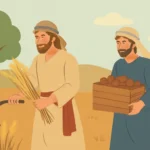
Disciple Training: A Practical Guide to Equipping Disciples
Disciple training is more than a classroom project or a weekly meeting. It is a relational process that aims to form spiritual maturity, cultivate biblical literacy, and activate believers to live out the gospel in everyday life. This guide offers practical, field-tested steps for building a robust disciple-making culture. Whether you are starting from scratch or looking to refine an existing framework, the following principles and practices are designed to be adaptable to different settings, ages, and contexts. The aim is equipping—not merely instruction—so that every learner becomes a disciple who makes more disciples.
Understanding the Disciple: Purpose and Identity
At its core, a disciple is someone who follows a master, learns to imitate the master’s life, and participates in the master’s mission. In a Christian context, this translates into a person who knows Jesus, loves Jesus, and works toward reproducing that life in others. To train such learners well, it helps to articulate three anchors that shape discipleship efforts:
Identity: The learner is not simply a student but a participant in a shared mission. The goal is character formation and personal transformation, not just the acquisition of information.
Maturity: Growth includes knowledge, conviction, prayer, service, and leadership capacity. A mature disciple is reliable, resilient, and grounded in Scripture.
Multiplication: Training is intentionally designed to develop learners who train others. The aim is reproduction rather than consumption.
With these anchors in mind, you can build a program that honors the dignity of every learner while pushing them toward greater discipleship impact.
Principles of Effective Disciple Making
Healthy disciple training rests on enduring principles that keep a program grounded and sustainable. The following guiding ideas have proven effective in diverse settings:
Relational foundation: Relationships—not programs—drive lasting transformation. Life-on-life mentorship creates trust, accountability, and safety for honest growth.
Gospel-centered: All training content should be anchored in the life, death, and resurrection of Jesus, with the gospel demonstrated in every practice.
Intentional cadence: Training succeeds when there is predictable rhythm—weekly meetings, monthly check-ins, and quarterly evaluations.
Contextual relevance: The methods and messages should be adapted to local culture, language, and everyday realities while remaining faithful to core truths.
Competence for service: Learners should gain practical skills—biblical study, prayer, evangelism, service, leadership—that enable effective ministry today.
Accountability and encouragement: A culture of accountability helps sustain discipline, integrity, and perseverance.
These principles create a framework for disciple training programs that are credible, scalable, and resilient, rather than one-off events that quickly fade away.
The Disciple Training Pathway: A Practical Roadmap
Any successful program is built around a pathway—clear stages that guide a learner from initial exposure to ongoing leadership and multiplication. The following roadmap outlines common stages, while remaining flexible enough to adapt to your context.
Stage 1: Encounter and Invitation
In this initial stage, the aim is to spark curiosity, establish trust, and present a compelling reason to engage in discipleship relationships. Key practices include:
Invitational conversations that emphasize life with Jesus, not mere rules or knowledge.
Short, accessible introductions to the Bible and to a simple gospel summary.
Low-barrier commitments, such as a 6- to 12-week pilot or a trio of guided conversations.
Outcome: The learner chooses to participate in a lifegiving mentorship relationship and commits to a defined training window.
Stage 2: Foundations
Foundations establish the core knowledge, habits, and expectations that undergird a lifelong path of following Jesus. Focus areas include:
Bible literacy—basic tools for observation, interpretation, and application.
Prayer—practices that cultivate intimacy with God and sensitivity to the Holy Spirit.
Identity in Christ—acceptance of who God says we are and what we are called to be.
Mission clarity—understanding the believer’s role in loving neighbors and sharing good news.
Outcome: The learner gains tangible skills and a growing confidence to participate in gospel-centered activities with others.
Stage 3: Engagement in Mission
With foundations in place, the learner steps into real-world engagement. This stage emphasizes practical ministry and collaborative living:
Participating in service projects that meet real needs in the community.
Co-leading a small group or helping with outreach initiatives to develop team leadership.
Regularly practicing evangelism and invitation in natural contexts, such as work, school, or family life.
Outcome: The disciple becomes a confident, dependable contributor to the mission of the community and learns by doing.
Stage 4: Reproduction and Leadership Development
The aim in this phase is not only to grow personally but to train others. Core activities include:
Mentoring new learners in short cycles and multiplication plans.
Designing and delivering simple curricula for peers, including Bible study methods and basic mentoring.
Developing character and leadership capacity—integrity, courage, perseverance, and humility.
Outcome: The learner begins to mentor others, creating a sustainable pipeline of leadership and multiplication.
Stage 5: Sustained Impact
In the final stage, disciple-makers exercise influence beyond their immediate circles through reproducible patterns and long-term commitments:
Establishing discipleship networks that cross generations and contexts.
Institutionalizing rhythms of growth, accountability, and renewal.
Continuing to train new generations of disciple trainers who can model and scale the process.
Outcome: A thriving ecosystem of learners who continually train others, creating a lasting impact in families, churches, and communities.
Training Modules and Practices: Concrete Everyday Methods
While the pathway gives a structural rhythm, concrete modules provide the content and practices that empower learners to grow. The following modules are commonly used in effective disciple-training programs. Each module is designed to be delivered in short sessions, with practical assignments and built-in accountability.
Module A: Bible Study Methods
The goal is to equip learners with tools to read the Bible accurately, interpret responsibly, and apply insights boldly. Elements include:
Observation techniques (noting repeated terms, patterns, and questions).
Interpretation frameworks (historical context, literary genre, and author intent).
Application guidelines (specific actions tied to the text).
Practice exercises in small groups to reinforce disciplines such as inductive Bible study and Scripture memorization.
Module B: Prayer and Spiritual Disciplines
Prayer is the heartbeat of a growing disciple. This module includes:
Structured practice of personal prayer, including Adoration, Confession, Thanksgiving, and Supplication.
Guided times of communal prayer and intercession.
Introduction to additional disciplines such as fasting, Sabbath rest, and solitude.
Module C: Life-on-Life Mentoring
Mentoring is the primary engine of growth in a disciple-building culture. Key practices:
Regular one-on-one or small-group mentoring sessions with clear agendas and action steps.
Observation-based learning: the mentor models behavior, and the learner imitates it in real-life contexts.
Accountability structures that celebrate progress and address challenges with compassion and honesty.
Tools and Resources: Making Training Fit Your Context
To implement disciple training effectively, you’ll need practical tools that keep people engaged and accountable. The following resources are commonly used across contexts:
Personal Growth Plans that outline goals, milestones, and timeframes for spiritual development.
Curriculum Guides that map each module to specific outcomes and activities.
Mentoring Schedules with regular check-ins, topic prompts, and accountability notes.
Assessment Rubrics to measure progress in knowledge, practices, and leadership capacity.
Reflection Journals for learners to document insights, challenges, and commitments.
Digital tools for collaboration, such as shared calendars, note repositories, and online discussion spaces.
Design your toolkit with flexibility in mind. Some communities prefer paper-based tracks; others lean into apps and online platforms. The key is to maintain simplicity so instructors can readily train new mentors, and learners can easily track their growth.
Culture and Ecology: Creating a Reproducible Disciple-Making Environment
A robust disciple training program is not a one-time event but a living culture. Here are ways to cultivate a thriving ecosystem where disciple-making multiplies:
Relational networks: Encourage peer-to-peer learning, where learners coach one another and form small apprenticeships.
Clear leadership pipelines: Develop a plan to identify, train, and deploy new mentors who can sustain growth over time.
Regular rhythms: Set consistent times for training, feedback, and celebration of milestones to maintain momentum.
Contextual adaptability: Allow room for the program to reflect local language, culture, and ministry needs without compromising core principles.
Accountability structures: Build groups that check in on commitments, encourage persistence, and address failures constructively.
When the training culture is healthy, you observe discipleship multiplication across generations, regions, or ministries. The aim is for every participant to become a disciple-maker who can pass on the essentials of the journey to others.
Evaluation and Growth: Measuring What Matters
Assessment should be formative and collaborative, not punitive. A practical evaluation framework includes:
Qualitative feedback from mentors, peers, and the learners themselves about growth areas and personal transformation.
Observable behaviors such as consistent Bible study, weekly prayer, and regular service involvement.
Leadership emergence: evidence that learners are stepping into mentoring roles or leading projects.
Multiplication metrics: number of new learners brought into the pathway and the number of active mentors.
Periodic curriculum reviews to ensure content remains relevant and biblically faithful.
Use these measures to iterate. The goal is not to penalize but to equip needs-based improvements so that the training remains effective, sustainable, and joyful.
Common Challenges and Practical Solutions
Implementing a comprehensive disciple-training approach can encounter several predictable obstacles. Here are practical ideas to overcome them:
Challenge: Time constraints and busy schedules.
Solution: Design short, highly actionable sessions (30–45 minutes) with optional deeper dive tracks for interested learners.
Challenge: Insufficient mentors.
Solution: Create a deliberate mentor-recruitment plan and offer training that equips new mentors with practical coaching skills.
Challenge: Drift from core gospel-centeredness.
Solution: Reaffirm a gospel-centered baseline in every module, including explicit summaries of how each practice points back to Jesus.
Challenge: Cultural resistance or fear of change.
Solution: Emphasize relational trust, listen before instructing, and show concrete benefits through small wins and testimonials.
By anticipating these challenges and addressing them with practical strategies, you can sustain momentum and keep the focus on equipping disciples to lead and multiply.
Consider a mid-sized church that sought to implement a comprehensive disciple training program. They began with a small pilot group of eight participants and two mentors. Over six months, they implemented the following steps:
Clarified the target outcome: Each participant would mentor at least one other learner within a year.
Established a lightweight curriculum with three modules: Bible study methods, prayer and spiritual disciplines, and life-on-life mentoring.
Set up weekly 45-minute sessions, combining teaching, practice, and accountability.
Introduced a simple personal growth plan for each learner and a shared tracking system for progress.
Expanded to a second cohort after three months, inviting graduates of the pilot to become mentors.
Within a year, the church reported a growing network of disciples who were actively mentoring others, leading small groups, and serving in outreach projects. The combination of relational mentorship, practical modules, and measurable goals created a sustainable pattern of multiplication rather than mere participation.
Addressing Diversity in Disciple Training
Disciple training is most effective when it respects diversity and includes varied voices. Cultural, linguistic, generational, and theological differences can enrich the training landscape as long as core truths are preserved. Here are approaches to ensure inclusion and depth:
Inclusive language and multiple entry points so people with different backgrounds feel welcome to participate.
Multiple learning styles (visual, auditory, kinesthetic) integrated into each module so learners can engage in the method that suits them best.
Flexible mentorship models (one-on-one, small groups, cohort-based) to accommodate schedules and preferences.
Contextualized content that addresses local realities (workplace challenges, family dynamics, community service opportunities) while maintaining fidelity to the core discipline.
Embracing diversity strengthens the discipline of disciple training and broadens its impact, allowing more people to become effective participants in the mission and to pass the flame to the next generation.
Final Thoughts: Sustaining Momentum and Faithful Practice
Discipleship is a journey, not a sprint. A well-designed training program offers structure, clarity, and support while inviting ongoing ownership from participants. To sustain momentum, consider the following end goals:
Continual learning that never stops; discipleship is an ongoing process of growing in grace, knowledge, and service.
Relational stewardship where mentors shepherd, peers encourage, and communities rally around shared purpose.
Gospel-driven multiplication where every learner becomes a trainer, and every trainer becomes a catalyst for more learners.
Sustainable practice with clear guardrails, simple tools, and regular evaluation to avoid burnout and disengagement.
When implemented with care, a disciple training program becomes a living organism within a faith community—one that breathes life into people, empowers them to serve, and reproduces itself through generations of disciple-makers.
In summary, Disciple Training: A Practical Guide to Equipping Disciples proposes a holistic approach to formation and mission. By combining clear pathways, practical modules, relational mentoring, context-sensitive adaptation, and measurable multiplication, you can cultivate a durable culture of discipleship. The end goal is not only to grow individuals in knowledge but to empower a thriving network of learners who, in turn, train others and extend the influence of the gospel into every corner of life.