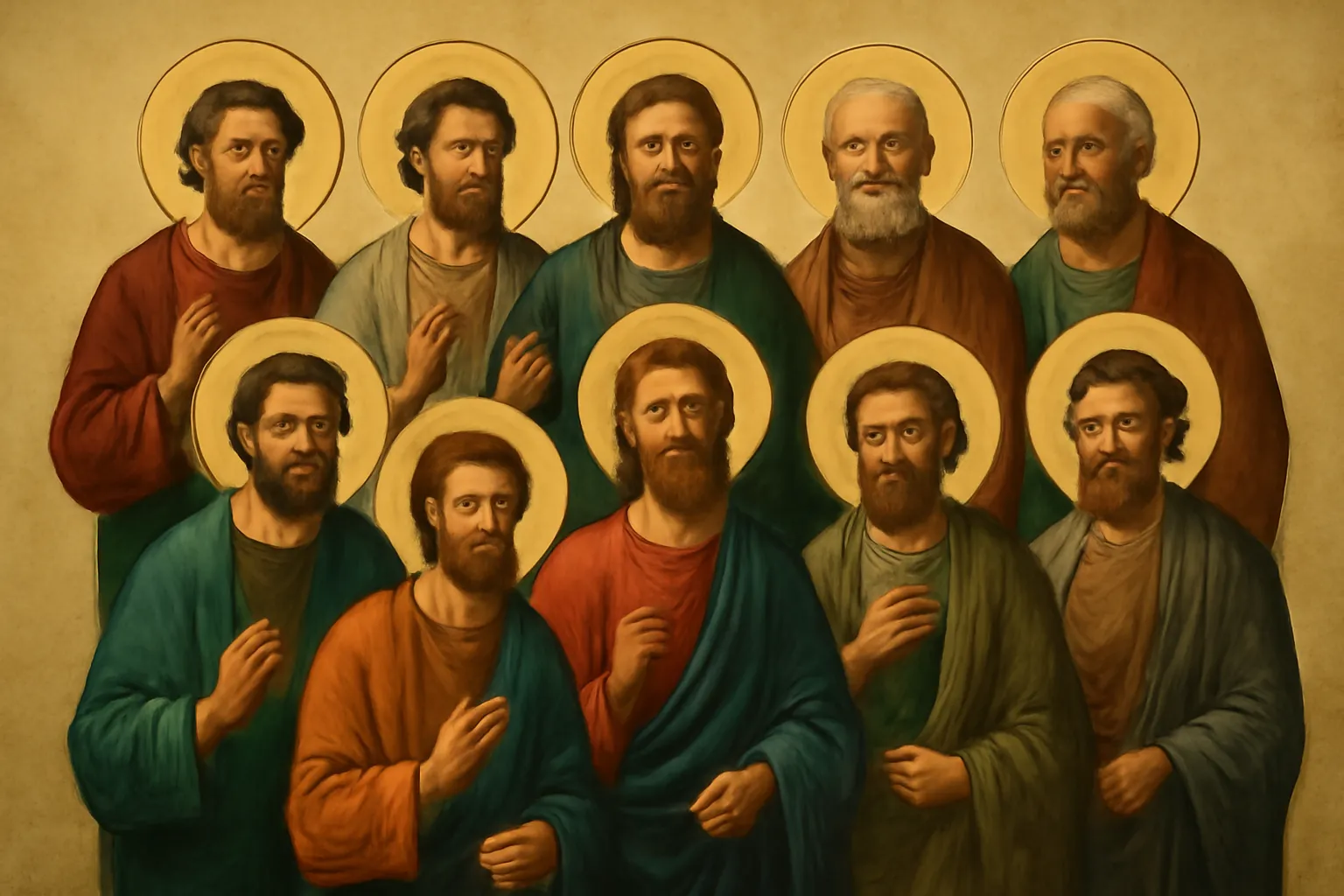
12 Apostles and Their Characteristics: A Quick Guide
From the earliest days of the Christian movement, the Twelve Apostles stood as the primary circle entrusted with proclaiming Jesus’s teachings and guiding the early church. Each disciple carried a distinct set of gifts, temperaments, and life experiences that flavored the trajectory of Christian tradition. This guide presents the twelve by name, pairing each with core attributes, notable strengths, common weaknesses, and their traditional roles within the early Christian community. It also uses variations of their names to reflect how they are known in different biblical books and later tradition, providing a broader semantic palette for readers exploring the topic.
Overview: The Twelve and the Range of Their Gifts
The Twelve were not a monolithic group. While they shared a common mission—to bear witness to Jesus’s life, death, and resurrection—they differed in personality, expertise, and temperament. Some were natural leaders, others were meticulous record-keepers, some were hardened in their zeal, and others carried a more contemplative or merciful bend. In this guide, you will see each apostle described through a lens that highlights their defining traits, their primary roles, and the symbolic significance attached to their particular gifts. Acknowledge that there are multiple ways to refer to some of these figures (for example, Peter vs. Simon Peter; James the Greater vs. James the Less; Bartholomew vs. Nathanael; Judas Thaddaeus vs. Jude), and this guide foregrounds those variations to enrich understanding and searchability.
Meet the Twelve: Names and Core Attributes
The following ordered list presents each apostle with a concise header and a detailed description. Each item uses a consistent pattern: the apostle’s name (with common variants), a short subtitle, a narrative of key traits, and a bulleted list of strengths, challenges, and symbolic or practical implications for their ministry.
Peter — The Rock and the Relentless Leader
Peter, also called Simon Peter, is famously described as the “rock” on which the church would be built. His path reveals a journey from impulsive fisherman to a steadfast shepherd of the community. He embodies bold faith, courage, and relentless loyalty, even as he wrestles with fear and denial. This mix makes him a compelling figure for leadership stories—the human who learns through failure and grows into resilience.
Role: Primary spokesperson among the Twelve; foundational leader in the early church
Weaknesses: Impulsiveness, bravado, occasional inconsistency under pressure
Symbolism: The rock and the keys of the kingdom—emblems of authority and access to divine revelation
Significance: Pentecost leadership, outreach to Jews and Gentiles, early church governance
Andrew — The Bridge-builder and Practical Mentor
Andrew is often remembered as Peter’s brother and a collaborator who embodies discernment and outreach. He is frequently portrayed as the first to introduce others to Jesus, underscoring his role as a bridge-builder who connects people to transformative possibilities. His temperament blends steadiness with an eagerness to mobilize others for mission.
Role: Early evangelist; connector who “brings people to Jesus”
Weaknesses: Quiet persistence can be overlooked in louder moments
Symbolism: The fisherman’s net as a metaphor for gathering people
Significance: Foundations of missionary approach that emphasizes invitation and partnership
James the Great (James the Greater) — Zeal with a Shepherd’s Heart
James the son of Zebedee, often called James the Great, is associated with the high-energy, forward-leaning side of the apostolic spectrum. His life reflects zeal and ambition, as well as a pastoral leadership emphasis. He is remembered for his martyrdom and for embodying the passionate commitment that characterized early Christian witness.
Role: Leader among the Twelve; among the first to bear witness in Jerusalem
Strengths: Courageous faith, organizational zeal, willingness to endure sacrifice
Weaknesses: Can be quick to push forward without weighing every consequence
Symbolism: Fire, bold proclamation, and a model of steadfastness
Significance: Early expansion of the church through bold missionary activity
John — The Beloved Disciple and Theological Intimacy
John (the Beloved Disciple) is renowned for his intimate relationship with Jesus and his profound theological writings. His temperament blends deep warmth, empathy, and a contemplative nature that yields sustained attention to Jesus’s teaching. He is often associated with the most reflective of the Gospel texts and with the message of divine love.
Role: Theologian and evangelist; author of the Gospel of John and Revelation (traditionally)
Strengths: Spiritual insight, pastoral care, quiet leadership
Weaknesses: Reserved (less flashy in public leadership), sometimes introspective to a fault
Symbolism: The “disciple whom Jesus loved” as exemplar of intimate relationship with God
Significance: Shaping Christology and the Christian concept of love
Philip — The Questioner with a Practical Vision
Philip stands out for his practicality and his readiness to ask clarifying questions that reveal a desire for understanding. He often pushes for concrete manifestations of faith and is comfortable asking for a tangible sense of direction from Jesus. Philip’s approach illustrates how inquiry can lead to robust growth in belief and mission.
Role: Organizer and clarifier; helps translate teaching into action
Strengths: Analytical thinking, pragmatic planning, clear communication
Weaknesses: Tends to seek direct evidence before acting
Symbolism: The search for the Father and for clear guidance
Significance: Emphasizes the importance of understanding in faith formation
Bartholomew (Nathanael) — Candor, Candor, and Honest Insight
Bartholomew, sometimes identified with Nathanael, is celebrated for his honesty and unpretentious faith. The tradition often highlights his initial skepticism (e.g., “Can anything good come out of Nazareth?” in the Gospel of John) giving way to a sincere and transforming recognition of Jesus as the Son of God.
Role: Trusted witness with a focus on genuine belief
Weaknesses: Might be slow to speak, but precise when he does
Symbolism: The value of honest appraisal in faith
Significance: Demonstrates that authentic belief often grows through patient observation
Matthew (Levi) — The Tax Collector Turned Scribe of Mercy
Matthew, also known as Levi, provides a compelling portrait of transformation. A tax collector by trade, he responded to Jesus with a willingness to reframe his life around a missionary vocation. Matthew’s gospel, rich with attention to fulfillment of prophecy and ethical teaching, sits at the crossroads of Jewish expectation and the new Christian mission.
Role: Evangelist and scribe; the apostle most associated with writing a gospel
Strengths: Methodical organization, attention to detail, inclusive outreach
Weaknesses: Perceived past complicity in oppression; needs to model genuine restitution
Symbolism: Transformation and new beginnings
Significance: Demonstrates how social outcasts can become agents of grace
Thomas — The Seeker of Proof and Profound Confessor
Thomas is often remembered as Doubting Thomas because of his request for tangible evidence before faith, yet his later confession—“My Lord and my God”—is a move from doubt to a personal proclamation of worship. His stance invites readers to recognize that honest doubt can lead to deep, experiential faith.
Role: Faithful witness with a rigorous approach to belief
Weaknesses: Tendency toward skepticism if evidence is insufficient
Symbolism: The journey from doubt to devotion
Significance: Encourages believers to bring questions to God as a path to deeper trust
James the Less (James, Son of Alphaeus) — The Quiet Pillar
James the son of Alphaeus, often called James the Less, is sometimes portrayed as a steady, unobtrusive presence within the circle. Thought of as a humble pillar of the early church, he represents the reliability of quieter leadership and consistent faithfulness that undergirds bold public ministry.
Role: Anchor for the community; steady, trustworthy presence
Strengths: Humility, discipline, dependability
Weaknesses: Limited biblical spotlight; less dramatic in outward acts
Symbolism: Reliability and enough character to sustain a growing church
Significance: Demonstrates that not all leadership is loud; some is persistent and faithful
Judas Thaddaeus (Jude, Judas the Apostle) — The Patron of Hopeful Integrity
Judas Thaddaeus, commonly rendered as Jude or Judas the Apostle, often appears in lists with a note of confusion around his name. Tradition emphasizes his role as a pragmatic advocate for solidarity among Jesus’s followers and his work in teaching and healing among early Christian communities. He represents steadfast fidelity and a practical approach to ministry.
Role: Messenger and organizer within the church’s outreach
Weaknesses: Sometimes overshadowed by more prominent apostles
Symbolism: The quiet, enduring work that sustains mission
Significance: Demonstrates the value of lesser-known voices in a collaborative mission
Simon the Zealot — The Scholar of Devotion and Political Temperament
Simon the Zealot belonged to a group known for strong political conviction, yet his inclusion among Jesus’s followers shows the potential to harmonize political energy with spiritual devotion. This facet highlights how the early church bridged diverse backgrounds into a shared mission of discipleship.
Role: Advocate for fervent commitment to mission
Strengths: Determination, strategic zeal, courage under pressure
Weaknesses: Potential tension between zeal and gentleness
Symbolism: The union of conviction and grace in apostleship
Significance: Demonstrates that the church can welcome people from varied walks of life
Judas Iscariot — The Cautionary Figure of Betrayal
Judas Iscariot is widely known for his betrayal of Jesus, a dramatic reminder of the human risk of greed and spiritual compromise. His presence in the traditional list underscores the complexity of the apostolic circle and the sobering truth that even intimate circles can experience profound failing. He is often presented as a counterexample that emphasizes the need for integrity within leadership.
Role: Keeper of the purse; acts of betrayal highlight moral fragility
Strengths: Familiarity with financial affairs; intimate access to Jesus’s circle
Weaknesses: Temptation to covet wealth or power; ultimate failure of trust
Symbolism: The danger of unguarded heart and unchecked ambition
Significance: Serves as a cautionary tale about fidelity and conversion
Matthias — The Faithful Replacer and Steady Witness
After the betrayal and death of Judas Iscariot, the early church sought to restore the number to twelve by choosing Matthias (often identified as Barsabbas or Justus in some traditions) through a discerning process. Matthias embodies the idea that leadership can be renewed and that the church values fidelity, spiritual discernment, and a quiet, unwavering commitment to mission. His selection is a reminder that continuity and integrity can be preserved even after traumatic events.
Role: Replacement apostle; participates in the apostolic witness after Judas’s departure
Strengths: Steadfast faith, humble service, readiness to serve without fanfare
Weaknesses: Lesser-known in early tradition compared to some peers
Symbolism: Renewal and the unbroken chain of apostolic witness
Significance: Demonstrates the importance of continuity and authorized selection in leadership
Variations and Naming: How Different Traditions Refer to the Twelve
To enrich understanding and searchability, a few notes on naming conventions are helpful. Across the New Testament and later tradition, you will encounter paired names and epithets for some apostles. Examples include:
– Pete(r) vs. Simon Peter (same person)
– James the Great vs. James the Less (two different brothers named James)
– Bartholomew vs. Nathanael (same figure in different lists)
– Judas Thaddaeus vs. Jude (often the same apostle, with alternate titles)
– Matthias as the replacement for Judas Iscariot
These variations help readers recognize the same person across different gospel accounts and later hagiographies, and they offer a chance to appreciate the diversity of textual traditions within early Christianity. When you study these names across sources, you will often see more than one label attached to each figure, and that linguistic variety can be part of the learning experience itself.
Why These Portraits Matter: Lessons from the Apostles for Modern Readers
Although the Twelve belong to a historical and theological milieu vastly different from ours, their characteristics offer enduring lessons for leadership, teamwork, and personal faith. Reading their profiles side by side invites us to reflect on how:
– Strong leadership and humility can coexist in the same community, as Peter leads while others model patience and care.
– Doubt and faith can live together in the same person, as demonstrated by Thomas’s journey from questioning to worship.
– Transformation is possible in people from all walks of life, as seen in Matthew’s shift from tax collector to gospel writer.
– Integrity matters in leadership, and betrayal reminds us why accountability and spiritual discernment matter.
– Diversity of gifts can unite around a shared mission, showing that different temperaments can complement one another in service to a common purpose.
Practicaltakeaways: How to Apply the Apostles’ Qualities Today
Lead with both courage and care: Peter’s example shows how courage can guide a group, while John’s tenderness demonstrates how to shepherd with compassion.
Ask honest questions (like Philip or Thomas): Asking for clarity can deepen understanding and strengthen collective outcomes.
Value transformation over status: Matthew’s conversion from a tax collector to a gospel writer highlights the transformative power of encountering truth.
Honor quiet contributors: James the Less teaches that consistent, humble service supports the whole team, even if it is not always in the spotlight.
Practice discernment in leadership choices: Matthias’s selection underscores the importance of selected, legitimate processes to maintain unity and integrity.
Closing Reflections: A Quick Synthesis of Twelve Distinct Voices
In sum, the 12 Apostles present a spectrum rather than a single mold. From the robust, outspoken leadership of Peter to the reflective devotion of John, and from the impetuous zeal of James the Great to the quiet steadfastness of James the Less, each apostle contributes a unique thread to the tapestry of early Christian witness. The variations in names—such as Bartholomew and Nathanael, or Judas Iscariot and Judas Thaddaeus—mirror the multifaceted nature of biblical tradition. And the story of Matthias reminds us that leadership can endure beyond crisis and continue to serve the mission with integrity.
This guide aims to offer a comprehensive yet accessible portrait that can serve students, readers of biblical history, and curious minds who want a clear, well-structured reference. The apostles, taken together, illustrate how faith communities evolve when different personalities are united by a common mission, disciplined by shared values, and sustained by a belief in a higher purpose. If you want to explore further, you can cross-reference each apostle’s traits with their accounts in the Gospels and the Acts of the Apostles, where their perspectives, travels, and acts of ministry are described in greater depth.