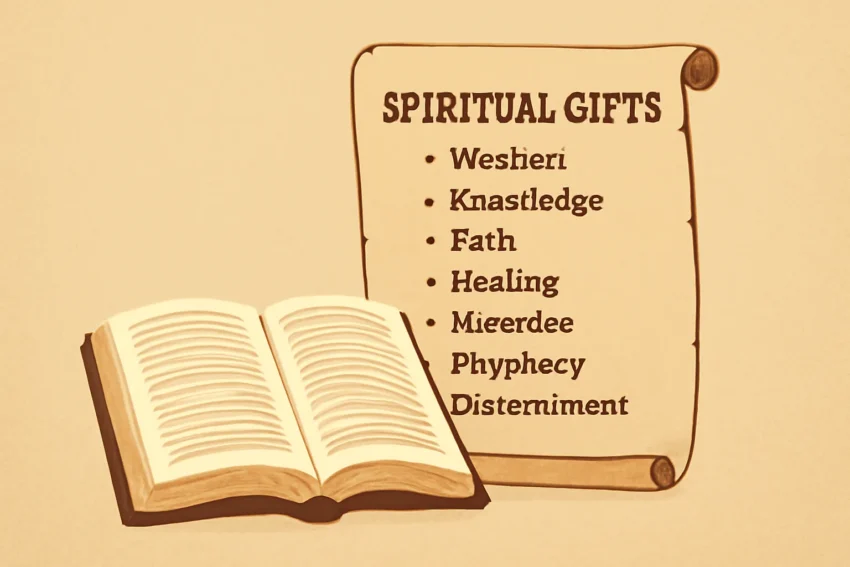
The topic often summarized as the bible spiritual gifts list refers to the
set of divine enablements described in Scripture that enable believers to serve God and build up the church. These gifts, sometimes called the gifts of the Spirit, are not natural talents but gracious endowments given by the Holy Spirit for a particular purpose and for a limited period of time within the body of Christ.
In this guide we will explore the comprehensive Bible gifts list across the major New Testament passages, explain what each gift involves, discuss how these gifts interact in a church context, and offer practical guidance on discerning and developing them. We will use variations of the phrase bible spiritual gifts list to reflect how readers may search for this topic and to broaden the semantic reach of the article.
Categories of Gifts in Scripture
The New Testament presents several overlapping categories of spiritual gifts. Broadly, these can be grouped into four families that scholars and teachers commonly describe as:
Revelation gifts (knowledge about God’s will and the realities of the Spirit world): Word of Wisdom, Word of Knowledge, and Discerning of Spirits.
Power gifts (enable actions that demonstrate God’s power): Faith, Gifts of Healing, and Working of Miracles.
Utterance gifts (spoken or vocal manifestations): Prophecy, Tongues, and Interpretation of Tongues.
Serving/Leadership gifts (practical ministry enablings that organize and equip the church): Ministry/Service, Teaching, Exhortation, Giving, Ruling, and Mercy.
A closely related set is the fivefold ministry concept, drawn from Ephesians 4:11, which highlights particular offices within the church: Apostles, Prophets, Evangelists, Pastors (shepherds), and Teachers.
Comprehensive List of Spiritual Gifts Mentioned in Scripture
Gifts from Romans 12:6-8 (Gifts of Service and Teaching Next to Prophecy)
In Romans 12, the apostle Paul describes an array of gifts that manifest in the life of believers as they use their lives to build up the body of Christ. The list includes both service-oriented gifts and gifts that equip others through instruction and exhortation:
Prophesying or prophecy (speaking God’s truth into present circumstances for edification, exhortation, and comfort).
Serving or ministry (physical or logistical service that meets needs within the church and beyond).
Teaching (the ability to explain and apply biblical truth clearly).
Exhortation (encouragement and exhorting others to persevere in the faith).
Giving (cheerful and sacrificial generosity to support the work of God).
Leading or ruling (administrative and governance abilities to guide a community).
Showing mercy (compassionate service to those in need, often through acts of kindness).
These gifts emphasize the practical functioning of a healthy church—each believer contributes in a distinctive way, and all gifts are to be exercised in love (see 1 Corinthians 13 as a corrective to misusing spiritual gifts in pursuit of personal status).
Gifts from 1 Corinthians 12:8-10; 12:28 (Revelation, Power, and Utterance Gifts)
The most detailed catalog of spiritual gifts in Scripture appears in 1 Corinthians 12. While Paul stresses that the Holy Spirit distributes gifts as He wills, he lists several that illuminate the breadth of divine enablement:
Word of Wisdom (divine insight into how to apply God’s truth in a situation beyond ordinary wisdom).
Word of Knowledge (divine information about persons or situations that could not be known by natural means).
Faith (special confidence in God’s promises and power beyond ordinary faith).
Gifts of Healing (the ability to heal diseases or infirmities supernaturally by the Spirit’s activity).
Working of Miracles (supernatural intervention that demonstrates God’s power in extraordinary events).
Prophecy (speaking forth a divinely inspired message for edification, exhortation, and comfort).
Discerning of Spirits (the ability to distinguish between the Holy Spirit, a demonic spirit, or human spirit operating behind a message or action).
Tongues (speaking in a language not previously learned, often for personal edification or corporate prayer when interpreted).
Interpretation of Tongues (interpreting a message spoken in tongues so it can edify the church).
In addition to these, some traditions include other gifts mentioned in the context of church life as part of the same ecosystem of divine enablement, though the emphasis in Paul’s letters is on how the whole body functions in love and mutual interdependence.
Gifts from Ephesians 4:11 and the Fivefold Ministry
The passage in Ephesians 4:11 presents a slightly different emphasis—special offices or roles given to the church to equip the saints for ministry and to build up the body. These are often described as the fivefold ministry:
Apostles (those sent with a foundational, mission-driven mandate, often overseeing church planting and governance).
Prophets (those who speak God’s word with insight into God’s purposes for his people and the church at large).
Evangelists (those gifted to articulate and demonstrate the gospel with the aim of expanding God’s family).
Pastors or shepherds (those who guard, nurture, and guide a local church community).
Teachers (those who explain Scripture faithfully and help the church understand God’s truth and how to live it out).
The interaction of the fivefold gifts with the broader pool of spiritual gifts underscores how the church functions as a body where diverse gifts cooperate to mature believers and advance God’s mission.
Gifts Mentioned in 1 Peter 4:10-11
The epistle of 1 Peter also highlights the responsibility that comes with spiritual gifts. Believers are described as stewards of God’s grace and are urged to use their gifts faithfully to serve others:
Ministry” or “serving” (the ongoing use of gifts in practical service).
Speaking or teaching (speaking God’s truth with clarity and integrity).
Speaking and serving as two complementary strands—enabling each believer to contribute to God’s grace in a variety of contexts.
Taken together, these passages provide a broad and varied landscape of bible spiritual gifts lists that have shaped Christian thought about how believers participate in God’s mission.
Interpreting the Gift Lists Together
While the lists come from different authors and contexts, they converge on a few key ideas:
Gifts are distributed by the Holy Spirit for the common good, not for personal glory.
The gifts are meant to build up the church, lead people closer to Christ, and help proclaim the gospel.
There is a diversity of gifts, and each believer has a role to play within the body of Christ.
Contemporary readers and churches often categorize these gifts into the three broad streams of revelation, power, and utterance, with leadership gifts providing structure and maturity to the church. The goal in applying the Bible spiritual gifts list is to discern how God is at work in a specific community and how believers can respond in obedience, love, and service.
How to Discern and Develop Spiritual Gifts
Discovering and developing one’s spiritual gifts is not a one-time event but a journey that requires prayer, community discernment, and practical experimentation. Here are some commonly recommended steps for engaging with the bible spiritual gifts list in a healthy and constructive way.
Seek God through prayer. Ask the Holy Spirit to reveal where your gifts may lie and to give you humility to use them for others’ good, not your own status.
Study Scripture. Read the gift passages (Romans 12, 1 Corinthians 12-14, Ephesians 4, 1 Peter 4) and consider how the gifts function in community life. Look for examples of how gifts were used in the early church.
Invite community input. Seek confirmation from mature believers, mentors, or elders who can observe your life, gifts, and character in practice.
Experiment in safe contexts. Try different gifts in small ways—serving, teaching a short lesson, participating in prayer ministry, or offering acts of mercy—while being accountable to others.
Measure by love and edification. Paul emphasizes that the true test of any gift is its ability to build up the body and express love (see 1 Corinthians 13).
Grow through discipline and training. Some gifts benefit greatly from study, training, and disciplined practice—teaching methods, counseling skills, or leadership development require intentional growth.
It is also important to cultivate a hospitable attitude toward learning from others who may have different gifts. Unity in the Spirit does not require uniformity of function, but it does require mutual respect, accountability, and a shared commitment to Christ’s gospel.
The practical aim of exploring the bible spiritual gifts list is to equip believers to serve effectively, shepherd one another in love, and witness to the world with God’s power and truth. However, there are common questions and misconceptions that churches often address.
Common Questions
Are gifts still active today, or did the apostolic era close them? This question is at the heart of the cessationism vs. continuationism debate. Most churches affirm ongoing spiritual gifts but differ on their distribution, visibility, and how they should be supervised within church life.
How can a local church avoid misuse or sensationalism with the gift of tongues or prophecy? Emphasis on biblical alignment, testing, and corporate discernment is crucial, along with clear boundaries and accountability.
What is the role of gifted leaders (apostles, prophets, evangelists, pastors, teachers) in the everyday life of a congregation? The consensus among many traditions is that such offices exist to equip the saints for ministry and to maintain doctrinal integrity, while empowering all believers to participate in ministry.
Safety and Discernment in Practice
In any discussion about the bible spiritual gifts list, safety and discernment are essential. Communities should:
Establish clear guidelines for testing messages or signs that claim to be gifts, including alignment with Scripture and consistency with the gospel.
Maintain accountability structures—leaders and laypeople alike benefit from oversight and opportunity for correction with love and humility.
Prioritize love and service as the defining mark of all gifts, following the biblical admonition to pursue love above all things (1 Corinthians 13).
Conclusion: Embracing the Bible Spiritual Gifts List with Humility
The journey through the bible spiritual gifts list invites believers to recognize the Spirit’s work in diverse ways, to grow in grace, and to participate in God’s mission with both courage and prudence. Scripture presents a vibrant picture of the church as a body made up of many parts, each gift contributing to the whole. From the revelation gifts that illuminate truth to the power gifts that demonstrate God’s mercy and authority, and from the utterance gifts that nourish the church’s practice to the serving and leadership gifts that organize and sustain ministry, the Bible’s spiritual gifts list invites every believer to examine their own life and seek to serve Christ and one another in love.
Whether you call it the gifts of the Spirit, the gifts list in Scripture, or simply the bible spiritual gifts list, the aim remains constant: to empower the church to bear fruit for God’s glory, to shepherd one another wisely, and to proclaim the good news of Jesus with power, compassion, and truth.