Welcome to a comprehensive exploration of how South Park has approached Mormonism over the years. This article surveys the way the show portrays Mormon characters, how it uses episode formats to lampoon religious practice, and the kinds of parodies that recur when the town of South Park encounters the Church of Jesus Christ of Latter-day Saints. The goal is to present an informative, balanced look at All About the Mormons South Park—often framed as All About the Mormons in casual discussion, but understood here as a broader examination of how the series treats Mormon themes, beliefs, and cultural footprints. What follows is a detailed guide that covers characters, episodes, and parodies, with attention to how the show’s humor coexists with real-world conversations about faith, doubt, families, and community.
Overview: all about the mormons south park and the show’s approach to religion
South Park is renowned for its blunt, often provocative satire of religion, politics, and popular culture. When the series turns its attention toward Mormonism, it tends to mix affection with critique, spotlighting the tension between devotion and doubt, the everyday lives of people in a faith community, and the broader media landscape surrounding religious movements. The episode structure frequently uses humor to probe questions such as: How does faith influence decisions in ordinary life? How do communities interpret sacred narratives in a modern setting? And what happens when beliefs collide with skepticism, science, or conflicting worldviews?
To understand all about the mormons south park, it helps to recognize a few recurring motifs. The show often centers on ordinary kids—while allowing adults to represent the cultural and doctrinal boundaries of the faith. It uses the format of satire to dissect how a religious tradition is taught, learned, propagated, and sometimes misconstrued by its adherents and by outside observers. In this sense, All About the Mormons South Park is less a single narrative and more a lens through which the series examines questions of truth, belonging, and community in a pluralistic society.
Characters: who are the Mormon figures in South Park?
Recurring archetypes and the role of Mormon characters
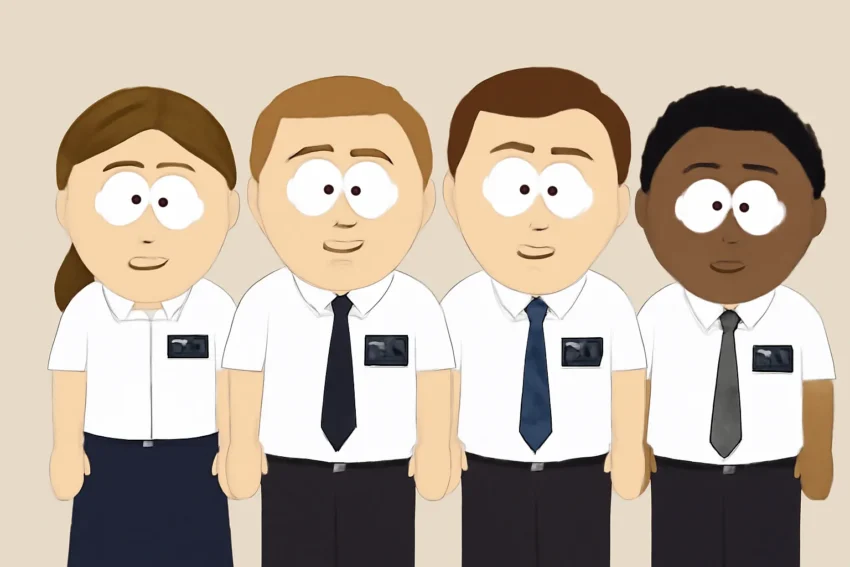
Two young Mormon missionaries who appear in various episodes as representatives of the church’s outreach program. These characters usually arrive in town with earnestness, a specific mission, and a framework of polite, friendly persuasion. Their interactions with the kids of South Park create opportunities for humor, moral questions, and cultural commentary. The dynamic often contrasts their idealism with the show’s skepticism about institutional messaging.
Members of a Mormon family who embody everyday life within a faith community. This family foil(s) the kids’ adventures by offering warmth, routine, and a set of values that are both admirable and occasionally limiting. Through these family portrayals, the show can poke at the everyday realities of navigating faith, parenting, and intergenerational dialogue about beliefs.
Supportive and skeptical voices within the town—those who broker conversations about faith, doubt, and what it means to belong. These characters help situate Mormon life within a broader social milieu, allowing for conversations about pluralism, tolerance, and the boundaries of acceptance in a small town.
Important to note is how the show handles the balance between respect for religious experience and ridicule of dogma. In the best examples, the Mormon characters are not simply punchlines; they serve as vehicles for exploring themes such as community cohesion, missionary zeal, family dynamics, and the way religious narratives shape personal identity. For viewers, this combination creates a sense of foregrounded cultural nuance even within the program’s signature irreverent tone.
Episodes: how South Park handles Mormon themes across episodes
While South Park isn’t a documentary about Mormonism, it has produced multiple episodes where Mormon themes, missionary practices, and the church’s public persona are central to the plot. The franchise’s episodes tend to approach the topic in one of several ways: a character-driven narrative that localizes Mormon concerns in South Park’s world; a broader satire of how religious movements present themselves to the world; or a meta-commentary on media representations of faith. In all cases, the episodes function as case studies in how satire can illuminate belief without wholly dismissing the people who hold those beliefs.
Common episode patterns and themes in Mormon-related storylines
Missionary outreach and cultural clash: Episodes frequently spotlight the interaction between two missionaries and the town’s residents, highlighting miscommunications, earnestness, humor, and the consequences of proselytizing in a secular, media-saturated environment.
Family influence and tradition: Storylines depict how family members teach, negotiate, and sometimes resist religious advice, ritual practice, or church culture. These arcs can juxtapose parental concern with adolescent curiosity and rebellion.
Historical and doctrinal joke frameworks: The show may reference foundational stories, historical narratives, or doctrinal positions in a way that invites viewers to consider how belief is formed, taught, and defended in everyday life.
Community dynamics in a small town: The Mormon subplot often intersects with South Park’s broader commentary on community norms, social expectations, and the tension between conformity and individual belief.
Ethical dilemmas and doubt: By placing characters in situations where faith faces practical challenges, the episodes invite reflection on how belief coexists with doubt, skepticism, and personal conscience.
Because South Park is known for its rapid-fire, topical humor, each Mormon-related episode tends to reflect contemporary cultural conversations about religion, faith communities, and the public image of a religious group. The pattern is less about presenting a single definitive view and more about using satire to expand the audience’s awareness of how religion operates in modern life.
Parodies: the kinds of religious satire South Park uses with Mormon material
The parodic treatments of Mormonism in South Park fall into a few recognizable categories. These parodies aim to entertain while prompting viewers to think about how religious messages are conveyed, how communities police moral norms, and how media representations influence public perception. Here are some recurring modes of parody you’ll encounter when the show engages with Mormon themes:
Proselytizing satire: The missionaries’ earnest, door-to-door or in-public settings approach is often exaggerated to highlight the friction between private faith and public persuasion. The humor arises from the mismatch between intense belief and mundane, modern life.
Temple and ritual imagery as comedic devices: Sacred practices or symbols may be depicted in ways that foreground their unfamiliarity to outsiders, inviting a playful, if irreverent, exploration of ritual life without necessarily attacking the people who participate in those rituals.
Community norms vs. individual choice: Parodies can contrast a community’s insistence on shared beliefs with a character’s personal journey, curiosity, or rejection of a given dogma, raising questions about freedom of belief and the costs of belonging.
Media and public image parodies: The way religious groups present themselves to the wider world—through public relations, fundraising, or tourism—can be lampooned to comment on the interplay between faith and media strategy in contemporary society.
Historical critique and modern reception: Parody may reference how a faith tradition’s history is narrated in public discourse, including debates about interpretation, revelation, and the legitimacy of certain doctrinal claims in light of modern sensibilities.
These modes of parody are not unique to Mormon storylines; they are part of South Park’s broader toolkit for tackling religion. When the show targets Mormonism, the aim is often to illuminate how belief systems adapt under pressure—whether from secular culture, competing faiths, or the unpredictable realities of everyday life—while maintaining a sense of humor about human fallibility.
Notable moments: how the show’s Mormon content has resonated with audiences
Across its run, South Park has produced moments that become touchstones for fans discussing the Mormon angle. While the specifics of each scene can vary, several recurring ideas tend to leave an impression:
Character-driven humor: Scenes that hinge on the humanity of Mormon characters—their kindness, their awkwardness, and their sincere attempts to do good—often land as warm-hearted while still funny. These moments emphasize that the show’s satire is aimed at ideas and institutional dynamics, not individual believers.
Dialog about belief and doubt: Quick exchanges in which a character’s faith is tested by doubt or conflicting information can feel surprisingly reflective, offering a moment of philosophical pause amid jokes.
Satire that invites dialogue: Some scenes prompt viewers to consider how religious communities respond to outsiders or skeptics, potentially broadening the audience’s understanding of what it means to belong to a faith tradition.
When discussing all about the mormons south park in these moments, it’s not solely about mockery. It’s also about how popular culture can model complex conversations about faith, identity, and belonging—even in a show famous for provocative humor.
Impact and reception: how audiences and scholars view Mormon content in South Park
The portrayal of Mormon characters and themes in South Park has drawn a range of responses. Some viewers appreciate the show’s willingness to engage with religious topics in a manner that is provocative but not entirely dismissive of people’s beliefs. Others critique the format for sometimes reducing a living tradition to caricature or for treating spiritual matters with a level of irreverence that can feel dismissive to believers. The conversation around this material often centers on questions such as:
Does satire help or hinder understanding? Can humor illuminate aspects of faith that straightforward critique might miss, or does it trivialize deeply held beliefs?
Who is the audience? Are episodes primarily aimed at faithful viewers who seek validation, or at broader audiences who want to decode cultural cues about religion and society?
What is the line between critique and disrespect? How does the show navigate respect for individual believers while lampooning religious institutions and their public narratives?
Scholars of media and religion have often discussed South Park as a text that challenges easy answers. In the case of Mormon-related content, the series tends to push viewers to examine not only what is believed, but how belief is taught, defended, and normalized within communities. The result is a form of cultural critique that sits at the intersection of humor, religion, and media literacy.
Historical context: how South Park’s Mormon material fits into the show’s broader satirical project
To place the Mormon episodes in context, consider how South Park has consistently used satire to interrogate adaptable belief systems within American life. The show often treats religion as a lens through which to examine social contracts, moral expectations, and the fragility of certainty. When Mormon themes appear, they are not isolated from the rest of the series’ current events-oriented humor; rather, they become another arena where the writers test assumptions about authority, tradition, and the right to question received wisdom. In this sense, the Mormon material contributes to the show’s long-standing project of testing boundaries—while also offering a nuanced take on a faith tradition that has played a significant role in American cultural history.
How to approach “All About the Mormons South Park” today: viewing guidance
For readers or viewers approaching these episodes or segments for the first time, a few guidelines can help maximize understanding and enjoyment:
Understand the tone: South Park uses exaggeration and rapid-fire humor to make points about beliefs, not to indict individual practitioners. Recognize the show’s intent to explore ideas rather than to merely provoke.
Separate the art from the real world: While the episodes draw on real-world religious practices and narratives, they are crafted for satire. Use critical viewing to distinguish between portrayal and lived religious experience.
Consider cultural context: The way Mormon themes are treated may reflect specific moments in American cultural conversations about religion, mission work, and media representation. Bear in mind the era in which an episode was produced.
Engage with multiple perspectives: Reading scholarly analyses, religious community responses, and fan discussions can broaden understanding of how different groups interpret the same material.
Conclusion: all about the mormons south park as a lens on faith and culture
In sum, the All About the Mormons South Park conversation is less about a single storyline and more about a recurring approach to religion in satire. The show’s Mormon-related material offers a window into how a modern animated program negotiates faith, community, doubt, and public discourse. By presenting characters who embody belief in everyday life, by crafting episodes that explore the friction between devotion and skepticism, and by deploying parodic strategies that critique public narratives as well as private faith, South Park creates a durable, if provocative, media artifact. For audiences, this material invites thought about the ways religious groups are seen, understood, and represented in popular culture, as well as about the responsibilities of creators when they wield humor to discuss sacred topics. The result is a distinctive, sometimes controversial, but consistently provocative contribution to the broader conversation about religion in contemporary media.
Whether you approach it as entertainment, as cultural critique, or as a case study in religious satire, the exploration of Mormon themes in South Park remains a valuable example of how a modern animated show can provoke dialogue about belief, community, and the complexities of faith in a pluralistic society. This is the essence of All About the Mormons South Park: a mix of character-driven moments, episodic experimentation, and parodic bravado that together illuminate how a beloved, controversial cartoon can reflect and challenge the world it portrays.