Bible Forgiveness: How Many Times Can You Forgive?
People often ask a fundamental question when they read the Bible on forgiveness: bible forgiveness how many times is allowed or expected? The short answer in Christian teaching is not a rigid quota but an invitation to ongoing mercy and a life shaped by grace. In Scripture, forgiveness is presented as a core rhythm of the Christian life—not a one-time event but a continuing posture, an attitude of the heart that mirrors God’s own mercy toward us. This article explores the biblical basis for forgiveness frequency, the famous teaching on seventy times seven, the surrounding parables, and practical implications for living out forgiveness in daily relationships. We will also look at the balance between forgiving others and practicing healthy boundaries, as well as how repentance, reconciliation, and repentance interact with forgiveness in the life of faith.
Foundational Principle: Forgiveness as a Way of Life
From the opening pages of the New Testament, forgiveness is not framed as a temporary fix but as a defining characteristic of Christ-followers. The apostle Paul exhorts believers to clothe themselves with compassion, kindness, humility, and forgiveness, just as God forgave us in Christ (see Ephesians 4:32; Colossians 3:13). The Bible repeatedly calls people to be merciful and to extend forgiveness as a reflection of God’s mercy—an orientation that becomes a way of life rather than a once-and-done gesture.
In a broader sense, forgiveness in the biblical narrative is inseparable from the gospel. God’s forgiveness toward sinners is the model that Christians are to imitate toward others. This raises the question of frequency: if God forgives infinitely, should human forgiveness be limited? The biblical answer leans toward unlimited mercy in practice, tempered by wisdom, discernment, and the hard realities of life in community. The key is not a numerical tally but the heart posture: forgiveness freely given, forgiveness sought, and forgiveness practiced continually as long as conditions allow for reconciliation and healing.
Jesus’ Teachings on Forgiveness: The Limitless Model
Matthew 18:21-22 and the idea of seventy times seven
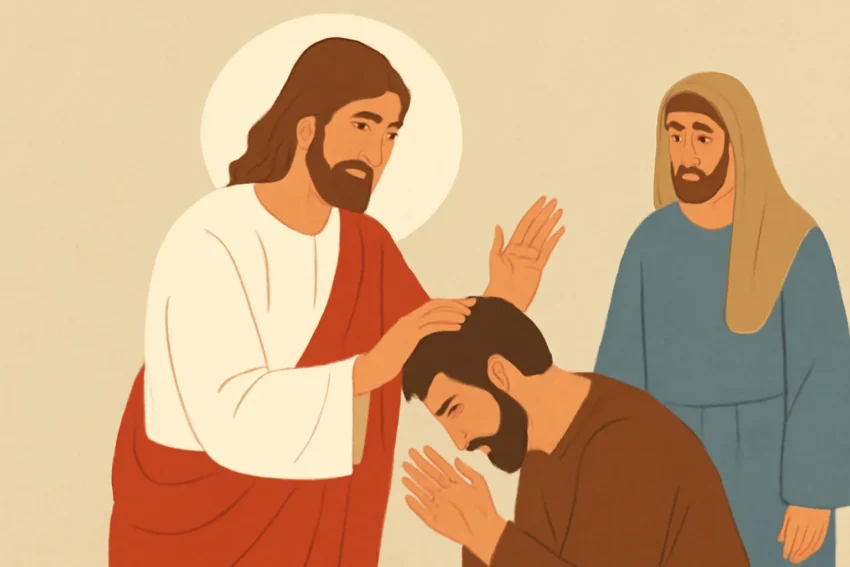
One of the clearest statements about the frequency of forgiveness comes from Jesus in response to a question about how often to forgive a brother who sins against you. In Matthew 18:21-22, Peter asks, “Lord, how many times shall I forgive my brother or sister who sins against me? Up to seven times?” Jesus answers, “I tell you, not seven times, but seventy-seven times.” Some translations say “seventy times seven.” The essential point is not the exact number but the absence of a finite limit. The phrase signals boundless forgiveness and a refusal to keep score when it comes to merciful response.
In many English translations the number is presented as seventy-seven or seventy times seven, but the impact remains the same: in the kingdom of God, forgiveness is not exhausted by repetition. The call is to cultivate a posture of mercy that keeps forgiving, not tallying, even when offenses recur. The tone of Jesus’ teaching is radical mercy, challenging the human tendency to rationalize or withdraw after a certain point.
The Parable of the Unmerciful Servant
Immediately after the instruction on unlimited forgiveness, Jesus tells the Parable of the Unmerciful Servant (Matthew 18:23-35). A servant who has been forgiven a massive debt refuses to forgive a much smaller debt owed to him by a fellow servant. When the king discovers the lack of mercy, he restores the original debt and condemns the unmerciful servant. The parable ends with a stark warning: forgiveness withheld breeds judgment, while forgiveness freely given demonstrates the true heart of a disciple who has received mercy from God.
This story anchors the idea that forgiveness in the Christian life is reciprocal in spirit. God’s forgiveness toward us creates a moral and spiritual responsibility to forgive others, even when the offenses are repetitive or deeply painful. The parable also emphasizes that forgiveness has consequences for community health; a culture of mercy promotes reconciliation, healing, and trust, whereas a culture of grievance undermines relationships and justice.
Other Biblical Passages on Forgiveness Frequency
Beyond the famous Matthew 18 passage, the Bible provides additional guides about forgiveness that shape how many times a believer should forgive and under what conditions. The following passages help to broaden biblical forgiveness how many times into a fuller biblical ethic:
Luke 17:3-4: “If your brother sins, rebuke him, and if he repents, forgive him. And if he sins against you seven times in a day and seven times comes back to you saying, ‘I repent,’ you must forgive.” This text emphasizes a pattern of accountability (rebuke when needed) coupled with ongoing forgiveness when genuine repentance is present, even if offenses repeat.
Mark 11:25 and Matthew 6:14-15: Jesus ties forgiveness from others to God’s forgiveness of us. “And when you stand praying, if you hold anything against anyone, forgive them, so that your Father may forgive you your sins.” The moral equation is clear: a forgiving heart opens the door to God’s own forgiveness toward us, underscoring a dynamic reciprocity in Christian practice.
Luke 6:37 and Matthew 7:1-5 (the broader invitation not to judge and to forgive): These passages reinforce a liberating posture toward others. Forgiveness is connected to humility, mercy, and the avoidance of a condemning spirit—an essential framework for how many times to forgive in daily life.
Ephesians 4:32 and Colossians 3:13: “Be kind and compassionate to one another, forgiving one another, just as in Christ God forgave you.” This is a deliberate exhortation to adopt a forgiving disposition as a core identity marker of the Christian community.
James 5:16 and 1 John 1:9: Confession, repentance, and forgiveness are woven together in communal and personal spiritual life. Confession to one another and seeking God’s forgiveness are parts of living in the truth of grace and healing relationships.
Taken together, these passages present forgiveness as an ongoing practice—one that is not primarily about a counting device but about the heart that seeks reconciliation, restoration, and mercy. The biblical phrase “how many times” becomes a question about the depth of mercy one is willing to extend, aligned with God’s own mercy toward humanity.
Forgiveness, Repentance, and Reconciliation: Navigating Boundaries
Although the Bible calls Christians to forgive freely, it also recognizes the complexities of real life. Forgiveness does not always mean immediate reconciliation, nor does it erase the need for accountability, protection, or wise boundaries. The Bible invites believers to distinguish between forgiveness (the interior decision to release a debt or grievance in the heart) and reconciliation (the restoration of the relationship), which may require time, safety, and clear changes in behavior.
Forgiveness is a decision of the heart that frees the forgiver from bitterness and releases the offender to God’s judgment or mercy, depending on God’s sovereignty and the offender’s response.
Reconciliation is a mutual process that may or may not be possible, depending on the offense, the offender’s repentance, and the presence of healthy boundaries that protect all parties (and especially the vulnerable).
In situations of abuse or ongoing harm, forgiveness does not require remaining in dangerous circumstances. Prayer, counsel, and community support can guide the path toward safety while maintaining a posture of mercy toward the offender.
Thus, the biblical answer to “bible forgiveness how many times” is not a simple arithmetic limit but a call to a forgiving spirit that remains prudent and wise. The lover of truth in the Bible advances mercy, but the lover of justice also seeks restoration and safety. The balance is delicate and requires discernment, prayer, and the counsel of wise Christian community leaders when needed.
Practical Pathways: How to Practice Forgiveness Day by Day
Discerning how to implement biblical forgiveness in real life can be challenging. Here are practical steps that reflect the biblical ethic while acknowledging human frailty:
Acknowledge the hurt. Name what happened and how it affected you. Honest acknowledgement is the first step toward healing.
Decide to forgive as a determinate choice of the will, not a spontaneous feeling. Forgiveness is often a process, not a single moment.
Pray for grace. Ask God to soften your heart, to help you release the debt the offender owes you, and to empower you to walk in mercy.
Release the offender in your heart. This is a deliberate act of relinquishing ownership of the grievance to God, which helps prevent bitterness from taking root.
Seek understanding and truth. If possible and safe, address the offense with the person to seek repentance or explanation; use discernment to determine if reconciliation is wise.
Establish healthy boundaries. Forgiveness does not erase the need for boundaries in relationships where harm has occurred.
Pray for the other person. If feasible, intercede for their growth and healing, recognizing that transformation is a work of God.
Practice ongoing forgiveness. Even when hurt resurfaces, return to the posture of mercy and ask God for renewed strength to forgive again.
These steps reflect a practical forgiveness practice that aligns with biblical instruction. They help believers maintain a healthy spiritual rhythm—one that remains faithful to the gospel’s call to forgive as we have been forgiven, while also honoring the realities of human relationships and safety.
When Forgiveness Feels Impossible: Hope for the Frustrated and Wounded
There are seasons when forgiveness feels beyond reach. Trauma, sustained harm, or repeated offenses can make the path toward forgiveness seem remote. In these moments it is essential to seek support—from trusted spiritual mentors, pastors, counselors, and community members who can help you navigate hurt with wisdom and compassion. The Bible does not require people to perform emotional miracles instantly; it invites them to trust in God’s grace and to walk forward one step at a time. In the meantime, you can:
Pray honestly about your pain and your struggle to forgive; God can meet you in your honesty.
Identify small, achievable steps toward mercy—even small moments of choosing release can cultivate a broader capacity to forgive over time.
Preserve your safety and dignity through appropriate boundaries and accountability, especially in cases of ongoing harm or abuse.
Remember that forgiveness is a process that can coexist with accountability and justice where needed.
Ultimately, the biblical vision of forgiveness is hopeful: God’s mercy toward us becomes the engine that renews our ability to extend mercy to others. The Psalmist and the apostle Paul both point toward mercy as a defining mark of a life shaped by faith in God’s grace. Even when forgiveness feels distant, faith provides a path forward—often a patient, steady, and holy pursuit of mercy that grows with time and God’s help.
Common Questions About Bible Forgiveness: How Many Times and Why It Matters
To address some common concerns people have about bible forgiveness how many times, here are concise answers to frequent questions:
Can I forgive someone seventy times seven? The Bible’s point is not a literal count but a directive to forgive without limit. The phrase expresses radical mercy, not a finite quota.
Is there any limit to forgiveness in Scripture? The New Testament consistently portrays forgiveness as ongoing, especially when there is repentance. However, forgiveness is not a carte blanche for harmful behavior; healthy boundaries and accountability remain important.
What about severe or repeated offenses? Repeated offenses may require careful discernment and sometimes professional or pastoral guidance. Forgiveness can be offered, but safety and well-being must be safeguarded, and reconciliation may require more time or may not be possible in every case.
Are some sins unforgivable? Scripture speaks of the sin against the Holy Spirit (blasphemy against the Spirit) as a grave matter, but this passage is often misunderstood. The broader canon emphasizes that forgiveness is available through repentance and faith in Christ. The Bible does not present a simple, universal “unforgivable” category for human beings in ordinary relational offenses.
What is the relationship between forgiveness and reconciliation? Forgiveness is primarily an interior act; reconciliation is a mutually engaged process that may require time, healing, and structural change in a relationship. Forgiveness does not always guarantee reconciliation, but it makes reconciliation possible.
Forgiveness as a Transforming Spiritual Discipline
Viewed through the lens of Christian spirituality, forgiveness is more than a response to injury. It is a discipline that shapes character, deepens trust in God, and restores relationships in line with the gospel. The Bible repeatedly pictures forgiveness as a gift that God gives to us, which we then share with others. This reciprocity is central to understanding how many times to forgive: the rhythm should be continuous mercy, rooted in the mercy God has shown us in Christ.
In practical Christian life, forgiveness becomes a daily practice that transforms interactions within families, workplaces, churches, and communities. It reduces the corrosive power of bitterness and makes room for healing where healing is possible. It also testifies to a watching world that the gospel’s message—God’s grace toward sinners—alters human behavior in meaningful, measurable ways.
Conclusion: The Spirit of Forgiveness in Bible Teaching
The question, “How many times can you forgive?” receives its deepest answer not from a tally but from a posture. The biblical witness invites believers to embrace an approach of unlimited mercy modeled after God’s own forgiving love. Jesus’ teaching about seventy times seven signals a life without fixed limits where mercy continually flows. The parables and teaching about accountability, repentance, and reconciliation remind us that forgiveness is best understood within the broader fabric of God’s grace in Christ and the church’s mission to reflect that grace in the world.
So when you encounter harm, offense, or repeated breach, let the Bible’s pattern guide you toward a mercy that is resilient, wise, and faithful. Let your forgiveness be guided by the gospel’s power, your love for truth, and your commitment to the wellbeing of your community. In the end, the biblical answer to Bible forgiveness how many times remains simple and profound: forgive, again and again, as God has forgiven you, and trust that God’s grace will continue to empower you to walk in mercy with courage and humility.