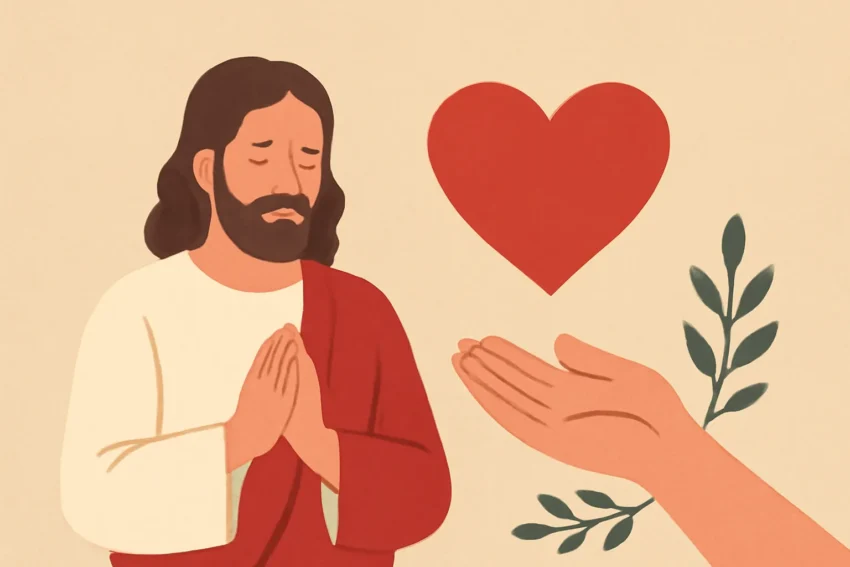
Bible Verse About Loving God and Others: 5 Scriptures to Inspire Your Daily Love
In a world full of noise and distraction, the Bible anchors daily living in two-command love: loving God with all your heart, soul, and mind, and loving other people with the same care you extend to yourself. This article gathers five plainspoken scriptural anchors that illuminate what it means to love God and love others each day. Each section offers a short reading of the verse in classic language, a practical unpacking of its meaning, and ideas you can apply today. The goal is not merely to admire love as a concept but to practice it in concrete ways—by attitude, choice, and action—so that your daily life becomes a continuous expression of love to God and neighbor.
1) Matthew 22:37-39 — The Great Commandment: Love God First, Then Neighbor
“Jesus said unto him, Thou shalt love the Lord thy God with all thy heart, and with all thy soul, and with all thy mind. This is the first and great commandment. And the second is like unto it, Thou shalt love thy neighbour as thyself.
Context and meaning. In this foundational moment, Jesus sums up the law and the prophets with a twofold invitation: a passionate, comprehensive love for God, and a compassionate love for neighbors. The phrase with all your heart, soul, and mind signals total devotion—no part of you is exempt from love’s demands. The companion commandment—to love your neighbor as yourself—extends the same energy, attention, and regard you give to your own well‑being toward others. Taken together, these verses redirect religious life from ritual alone to a living, relational rhythm of love.
Key themes and rich meanings. Loving God is not a casual feeling; it is a transformed orientation that shapes choices, priorities, and worship. Loving neighbor is not merely liking people who are easy to love; it extends to the poor, the stranger, the difficult person, and even enemies. This is inclusive love that crosses boundaries of status, culture, and personal preference. When love governs your life, your daily actions—hospitality, honesty, generosity, and mercy—become natural expressions of faith.
Practical steps for daily life
Begin and end each day with a brief moment of prayer or reflection focused on loving God and blessing others you will encounter.
Make room for active neighbor-love—checking on a coworker, helping someone in need, or offering a kind word to a stranger.
Dedicate a small portion of your month to acts of service—volunteering, supporting mercy ministries, or sharing resources with those in want.
Reflective prompts. How does your schedule reveal the priority of love? In what ways could your daily routines be reshaped to reflect a deeper love for God and for people around you?
Cross-references for breadth. The Great Commandment echoes Leviticus 19:18 and is reaffirmed throughout Jesus’ teaching in the Gospels, serving as a touchstone for Christian ethics and community life.
2) John 13:34-35 — A New Commandment: Love One Another as I Have Loved You
“A new commandment I give unto you, That ye love one another; as I have loved you, that ye also love one another. By this shall all men know that ye are my disciples, if ye have love one to another.”
What makes this verse pivotal is the standard: Christ’s love becomes the pattern for human love. The commandment is grounded not in sentiment but in imitation—the love Jesus has shown is the measure by which believers should love each other. The visibility of this love—the way it shows up in relationships—becomes the landmark signature of discipleship.
Key themes and nuance. This commandment shifts love from a purely private virtue to a public credential. It’s not enough to claim allegiance to Christ; your love for others, modeled after Jesus, demonstrates that you belong to him. The quality of your love—patient, self-giving, and others-centered—speaks louder than words and religious rituals.
Practical steps for daily life
Practice sidebar solidarity: take time to listen deeply, seek the good of the other, and set aside personal agendas when someone else needs attention.
Measure your Friday or weekend interactions by the Jesus-shaped standard: would you respond to others as Christ would have you respond?
Build a rhythm of mutual encouragement in your community—letters, texts, or small groups that remind each other of Christ’s love.
Devotional reflection. Consider a moment when someone showed you love in a way that mirrored Jesus. What did that love unlock in you? Then consider someone you find hard to love; pray for a perspective that aligns with Jesus’ pattern of love.
Related thought. The urgent call of this passage is not merely to be kind, but to embody a love that witnesses to Christ in a broken world. It resonates with the broader biblical call to live as witnesses—an outward sign of inward transformation.
3) 1 Corinthians 13:4-7 — The Practical Form of Love: Patience, Kindness, and Truth
“Charity suffereth long, and is kind; charity envieth not; charity vaunteth not itself, is not puffed up, Doth not behave itself unseemly, seeketh not her own, is not easily provoked, thinketh no evil; Rejoiceth not in iniquity, but rejoiceth in the truth; Beareth all things, believeth all things, hopeth all things, endureth all things.”
The famous “love chapter” translates love into concrete virtues. In the KJV, charity is more than a feeling; it is a living, disciplined orientation toward others. This passage is not a passive ideal but a standard against which our reactions, judgments, and daily choices are measured. It helps us diagnose the gaps between our desires and our actual behavior, inviting us to grow in practical, unwavering love.
Key themes and depth. This text highlights that love is not jealous or competitive; it does not seek its own advantage; it is not easily provoked; it protects and believes the best in others. In a world of quick judgments and fragile relationships, this is a countercultural invitation: love bears, endures, and seeks truth with grace. Love’s patience and kindness translate into a steadiness that anchors families, workplaces, and churches alike.
Practical steps for daily life
Practice patience with difficult people or situations, choosing to respond with kindness rather than reflexive anger.
Make a habit of seeking the good in others. If you catch yourself thinking ill of someone, pause to consider their perspective or offer a constructive word.
Engage in truth-telling and honest communication anchored in love, aiming to build up rather than tear down.
Application prompts. When a conflict arises today, ask, “How can love guide my response more than my pride or need to win?” Write a short note to the person involved, focusing on outcomes that promote healing and truth.
Broader context. Paul’s emphasis on love complements his instructions about gifts and church life. Without love, spiritual prowess or gifts lose their true purpose—to build people and bring them closer to God.
4) 1 John 4:7-8 — God Is Love: Letting Divine Love Flow Through Us
“Beloved, let us love one another: for love is of God; and every one that loveth is born of God, and knoweth God. He that loveth not knoweth not God; for God is love.”
This passage frames love as the essential evidence of a life touched by God. When we love, we participate in the divine nature; when we withhold love, we reveal a deep miss of spiritual connection. The nature of God—love itself—becomes the standard by which every relationship is measured. It’s a radical invitation to see others, even those who challenge us, as bearers of God’s image and recipients of grace.
Key themes and nuance. The assertion “God is love” (1 John 4:8) does more than define God; it redefines human purpose. If love is the basic revelation of God, then love is the primary evidence of knowing God. The text invites believers to alignment: what we do in love is a witness to the world of God’s existence, character, and mercy. Love is both a gift received from God and a grace we extend to others.
Practical steps for daily life
Begin with self-examination: is there someone you find it hard to love? Pray for a softened heart and practical acts of grace toward that person.
Let love be your daily standard in conversations, decisions, and service—especially toward those overlooked or dismissed.
Engage in small, consistent acts of love—a grocery drop for a neighbor, a note of encouragement, or a listening ear for a friend who is hurting.
Devotional reflection. Consider time today to meditate on the idea that God is love. How does that reality shape the way you frame your relationships, respond to conflict, or extend forgiveness?
Community impact. When Christians embody love because God is love, communities experience forgiveness, reconciliation, and renewed trust. The verse invites believers to be living testimonies that God’s character is real in daily life.
5) Mark 12:31 — The Second Commandment: Love Your Neighbor as Yourself
“And the second is like, namely this, Thou shalt love thy neighbour as thyself.”
This succinct commandment, repeated in other places (notably Leviticus 19:18), sharpens attention on how we treat others in the ordinary course of life. It presumes a healthy sense of self-respect and dignity, while challenging us to extend that respect to the people around us—regardless of relationship, background, or circumstance.
Key themes and breadth. The verse anchors social ethics in the rhythm of love. It complements the first commandment by turning inward attention outward: if you care for your own well-being, you’re called to steward others’ well-being as care for your neighbor. The breadth of “neighbor” includes family, coworkers, strangers, and even people who irritate or oppose you. The principle calls for practical, tangible care—not merely sympathy, but concrete acts of kindness, fairness, and justice.
Practical steps for daily life
Practice equitable kindness: ensure your behavior toward others reflects the respect you extend to yourself—no shortcuts or double standards.
Engage in neighborly acts that meet real needs—rides to appointments, helping carry groceries, or sharing a meal with someone alone.
Promote fairness and inclusion in your circles—listen to voices different from yours and stand against injustice that harms the vulnerable.
Questions for reflection. Who is one neighbor you can genuinely bless this week? What barrier (fear, pride, apathy) might be keeping you from loving that person as yourself, and how can you move past it?
Connection to the broader Bible narrative. The command to love neighbor as self recurs across both testaments, showing a consistent thread: love is not a private sentiment but a public, transformative practice that shapes communities toward peace and justice.
Putting Five Scriptures into daily practice: a practical guide to daily love
As you carry these five scriptures into everyday life, consider turning them into a simple routine that reinforces love as a daily discipline. Here are five practical pillars to help you live out these verses with consistency:
Morning rhythm: start with a short prayer or meditation focused on loving God and waking your heart to love others today.
Midday check-in: pause at noon or during a break to ask, “Who around me needs love today, and what can I do right now to bless them?”
Evening reflection: review the day’s interactions. Where did love shine, and where could it grow? Write down one concrete improvement for tomorrow.
Service sprint: schedule small acts of service weekly—a meal for a neighbor, a note of encouragement to a friend, or volunteering with a local ministry.
Community accountability: share your goals for loving God and others with a trusted friend or group, inviting accountability and encouragement.
Devotional prompts. Use these prompts to deepen your practice of love: “In what way did I reflect God’s love today? How did I demonstrate love that costs me something?” “Who can I bless tomorrow, even if they cannot repay me?”
Variations and broader biblical breadth on loving God and others
To gain semantic breadth and avoid redundancy, it helps to hear the same core command in different wording across Scripture. Here are some related ideas that enrich the five core verses above:
God is love as a foundational identity (1 John 4:8, 16) — when God’s nature is the source, love becomes a durable reservoir you draw from, not a fleeting feeling.
Let all that you do be done in love (1 Corinthians 16:14) — love should animate every action, plan, and decision.
Love as a fruit of the Spirit (Galatians 5:22-23) — love is not merely a duty but a Spirit-produced character trait that grows within a believer.
Jesus’ example of love in action — he fed the hungry, healed the sick, welcomed the outcast, and laid down his life for others, modeling a love that is costly and sacrificial.
These variations help you see that loving God and loving others are not isolated commands but a coherent, enduring invitation to live in the way God designed humanity to live—together, with mercy, justice, and grace at the center.
Conclusion: a daily invitation to live out love
Across these five scriptures, the Bible presents a unified call: love God with everything you are, and let that love flow outward to love your neighbor with integrity, patience, and courage. The love described here is not a sentimental mood; it is a discipline that orders your inner life and your outward actions, shaping your relationships, your community, and your witness to the world. By returning to these verses in daily life—through prayer, reflection, and concrete deeds—you can cultivate a lifestyle where love is the daily grammar of your faith.
May your days be marked by intentional love—a love that honors God and blesses people, one small, faithful step at a time. If you’d like, you can use the five verses as a weekly focus, revisiting one verse each day to anchor your thoughts, prayers, and actions in love.