Introduction: Why a church text service matters in modern ministry
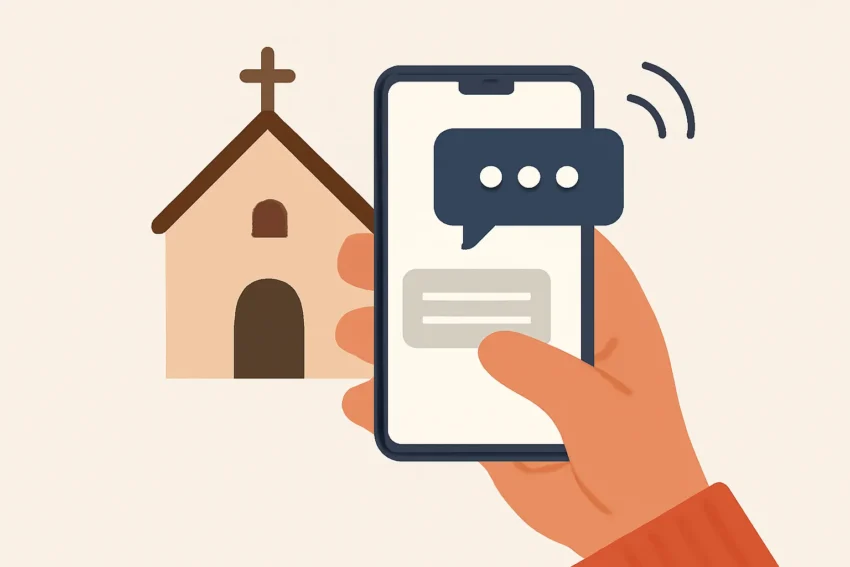
In an age where people are glued to their phones, a church text service offers a practical, high-impact way to engage your congregation beyond Sunday services. This form of text-based outreach—also described as SMS outreach, text messaging ministry, or a mobile messaging program—brings timely information, spiritual encouragement, and community connection directly to the devices people carry with them every day. When thoughtfully designed, a text messaging service for churches can improve attendance, equip volunteers, support prayer, and foster a culture of participation without demanding additional meetings or complex technologies.
The goal of a church text solution is not to replace face-to-face worship or personal pastoral care, but to complement them with timely, relevant, and respectful communication. This article explores what a text-based ministry entails, the benefits and best practices, practical steps to implement it, and strategies to measure impact—so your faith community can grow stronger through thoughtful use of SMS technology.
What is a church text service and how does it work?
A text service for churches is a structured program that uses short message service (SMS) to send brief messages to a list of subscribers who have opted in. It typically involves a combination of one-way announcements and optional two-way texting that allows recipients to respond, engage, and participate in church life.
The basic components of a successful SMS outreach for churches include:
Opt-in mechanism: A clear, consent-based process that allows people to subscribe to updates (for example, by texting a keyword to a short code or a number, or by checking a consent box on your church website).
Audience management: Segmentation and targeting so messages reach the right people (e.g., worship attendees, youth ministry families, volunteers).
Content scheduling: A calendar of messages that aligns with church events, seasons, prayer needs, and announcements.
Two-way communication: A system that accepts replies, enables autoresponses, and supports simple interactions like RSVP, prayer requests, or poll participation.
Compliance and privacy: Clear privacy notices, opt-out options, and secure handling of personal data.
Some churches use a short code (a short, easy-to-remember number) for quick opt-ins, while others leverage a regular long code (a standard phone number) for more natural conversation. The choice between one-way announcements and two-way interactions will shape your program’s structure, staffing needs, and technology requirements.
Benefits of SMS for congregations
Implementing a text-based ministry offers a range of tangible advantages:
High open rates and quick visibility: Messages arrive instantly and are read quickly, often within minutes.
Inclusive communication: Reaches people who may not check email regularly or who prefer mobile alerts.
Event RSVPs and reminders: Increases attendance and reduces no-shows for worship services, Bible studies, youth events, and community activities.
Volunteer mobilization: Facilitates last-minute signups, shift reminders, and coordination for service days or outreach projects.
Practical pastoral care: Enables short prayers, scripture verses, and supportive messages during difficult times, while respecting boundaries.
Donor and giving support: If aligned with your policy, text-based giving and reminders can improve stewardship, though this should be handled with care and consent.
Feedback and listening: Simple polls and quick surveys help leadership understand needs and adjust programming.
A well-executed text messaging strategy respects personal space and avoids fatigue. It should complement—not overwhelm—your church calendar. With the right cadence, tone, and consent practices, a mobile outreach channel becomes a trusted bridge between Sunday worship and everyday faith life.
When evaluating or designing a texting program for churches, look for features that support meaningful engagement, not just mass broadcasting:
Two-way texting and auto-responses to acknowledge inquiries and prayers.
Segmented lists to tailor messages by ministry area, age group, language, or season.
Scheduling and automation to deliver timely content without manual effort.
Keyword-based opt-in for simple, accessible enrollment (e.g., text “JOIN” to a number).
Event RSVPs via text, with quick confirmations and reminders.
Prayer request intake with routing to pastoral teams or care groups.
Reminders and alerts for Sunday services, small groups, worship rehearsals, and community initiatives.
Privacy controls including opt-out, data minimization, and secure data handling.
Two-way communication and engagement
A dynamic texting program invites responses. Recipients might request a prayer, sign up for a study, or ask questions about church programs. This interactive texting builds relationships and makes people feel heard.
Personalization and segmentation
Personal references—such as the recipient’s name, ministry affiliation, or last event attended—can be delivered through variable content while preserving privacy. Segmentation helps ensure that a parent receiving a weekly kids’ ministry update isn’t overwhelmed by youth group reminders, and vice versa.
Content quality and tone
Messages should be concise, respectful, and clear. Use short sentences, a supportive tone, and actionable next steps. The spiritual tone should reflect your church’s identity, whether it’s formal, contemporary, or family-friendly.
Getting started: planning and preparation
Launching a successful SMS program requires thoughtful planning. Use this starter checklist to guide your team:
Define goals: What do you want to achieve with the texting service? Examples include increasing Sunday attendance, promoting small groups, and sharing prayer needs.
Identify audience segments: Who will receive messages? Consider worship attendees, visitors, families, youth, seniors, volunteers, and language preferences.
Design consent and opt-in: Create a transparent opt-in process with a clear explanation of what subscribers will receive, how often, and how to opt out.
Select a platform that supports your needs (two-way texting, automation, segmentation, analytics) and aligns with your budget.
Plan content strategy: Develop a calendar that balances announcements, encouragement, and engagement prompts across seasons and events.
Set governance and privacy policies: Define who can send messages, who manages data, and how unsubscribe requests are handled.
Assign roles: Designate a program administrator, a content reviewer, and a compliance lead.
Compliance, privacy, and ethics in church text communications
A responsible text-based ministry acknowledges that people’s contact information is personal. Adhering to privacy principles helps build trust and protects your church from unintended consequences.
Consent and opt-in: Ensure subscribers explicitly opt in, understand what they are signing up for, and can easily opt out at any time.
Transparency: Share how often you will message them and the purposes of the messages (announcements, reminders, prayers, etc.).
Data minimization: Collect only information that is necessary for your outreach goals, and avoid storing sensitive data unless essential.
Security: Use platforms that protect data with encryption, access controls, and audit trails.
Compliance with local regulations: Be aware of national and local laws governing text messaging, opt-in processes, and data handling.
Opt-out and archiving: Provide easy unsubscribe options and establish procedures for removing or de-identifying data when appropriate.
In a faith community, privacy is also about trust. Clearly communicating how the information will be used and ensuring it aligns with your church’s values encourages ongoing participation without intruding on personal boundaries.
Best practices for engagement and growth
To maximize the impact of your text message ministry, keep these practices in mind:
Respect cadence: Avoid daily or overly frequent messages. A sustainable rhythm—such as 1–3 messages per week—keeps attention without fatigue.
Provide value: Every message should offer something meaningful—an invitation, a prayer, a resource, or an opportunity to serve.
Be timely and relevant: Align messages with upcoming events, seasonal themes, or urgent prayer needs.
Offer clear actions: End messages with a simple, specific call to action (RSVP, sign up, pray, share a link).
Test and iterate: Run small tests on subject lines, tones, and send times to optimize engagement.
Provide language options: If your community is multilingual, offer messages in multiple languages and allow subscribers to choose.
Monitor opt-outs: Track churn and identify patterns that indicate fatigue or confusion about content.
Great content for a church texting program spans the spiritual lifecycle of your community. Here are ideas to populate your calendar:
Weekly devotion or scripture: A brief verse or meditation to start the week.
Worship reminders: Service times, location changes, or parking guidance.
Event promotion: Small groups, outreach projects, mission trips, concerts, or volunteer opportunities.
Prayer requests: A channel for submitting prayers or receiving curated prayer prompts.
Volunteer shout-outs: Sign-ups for service roles, such as greeters, ushers, or children’s ministry helpers.
Volunteer and staff updates: Schedule changes, announce new leaders, or welcome new volunteers.
Educational series: Short reflections from pastors or guest speakers that tie into a sermon series.
Emergency or breaking news: Timely alerts for safety concerns, weather closures, or urgent care requests during crises.
Giving reminders (with care): Optional prompts for financial stewardship, clearly labeled and opt-in-based.
Sample message framework
Use concise templates to maintain consistency while allowing personalization:
Invitation template: “Hello [Name], join us for worship this Sunday at 9:00 AM. We’d love to see you there. Reply YES to RSVP.»
Prayer request template: “Please share your prayer needs with us. Reply PRAY to receive a prayer partner.”
Reminder template: “This is a reminder for Seasonal Bible Study tonight at 7:00 PM. Location: Room 3. RSVP STOP to opt out.”
Audience segmentation and personalization
Segmentation is a powerful tool in a church context. The goal is not to segment people into groups for exclusion but to tailor communications to their interests and needs:
Language and accessibility: Messages in multiple languages; simple language for accessibility.
Personalization can be as simple as addressing recipients by name or referencing their last attended ministry event. Modern platforms support dynamic content that adapts to subscriber data, enabling more meaningful outreach without compromising privacy.
Security, data governance, and risk management
As a faith-based organization, your communication should be secure and respectful. Consider these governance practices:
Access control: Limit who can send messages and manage lists; maintain an audit trail of message campaigns.
Data retention policy: Define how long subscriber data is stored and when it is purged.
Encryption and vendor compliance: Choose service providers that offer encryption in transit and at rest, and that comply with applicable regulations.
Hard stop management: Immediately honor unsubscribe requests and remove the individual from all future campaigns.
A well-governed SMS program for churches reduces risk, protects trust, and demonstrates a commitment to ethical communications.
Measuring impact and learning from data
Evaluation helps you understand the value of your text-based ministry and informs continuous improvement. Useful metrics include:
Opt-in growth rate: How many new subscribers join over a given period.
Delivery rate: The percentage of messages successfully delivered.
Open and response rates: Proportion of recipients who read and engage with messages.
Click-through or action rate: If you include links or actions, how many complete them (RSVPs, prayer submissions, etc.).
Unsubscribe rate: Indicating fatigue or mismatch of content.
Event attendance impact: Correlate SMS campaigns with worship attendance, small group participation, or volunteer signups.
Use a quarterly review to assess what content resonates, adjust cadence, and refine segmentation. Transparent reporting to your leadership and, when appropriate, to your congregation helps sustain trust and accountability.
Implementation guide: step-by-step to launch
Turn theory into practice with a practical rollout plan. Here is a phased approach you can adapt to your context:
Define success metrics: Decide what you want to achieve (attendance, engagement, care reach) and how you will measure it.
Choose a platform: Compare features, pricing, reliability, and vendor support. Ensure it supports opt-in workflows, two-way texting, and compliance features.
Create opt-in content and landing pages: Prepare clear opt-in descriptions and a simple signup path (text keyword to number, website form, or in-person sign-up).
Build your first lists and segments: Start with a small test group (e.g., a single ministry) to pilot your approach.
Develop content calendars: Schedule a mix of devotionals, reminders, and engagement prompts for several weeks at a time.
Establish governance: Draft privacy notices, opt-out procedures, and data handling rules; assign responsibility to a team member.
Train your team: Educate staff and volunteers on best practices, tone, response management, and compliance.
Launch and monitor: Begin with a soft launch, monitor performance, and gather feedback from subscribers.
Iterate and scale: Expand segments, add new content types, and optimize based on data and feedback.
Real-world examples illustrate how a texting program for churches can work in practice. While each community is unique, the following scenarios demonstrate common outcomes:
Rural small church: After launching a modest opt-in campaign, the congregation saw a 25% increase in RSVPs for the monthly community meal and a 15% rise in midweek Bible study attendance, attributed to timely reminders and easy sign-up via text.
Urban multi-site church: By segmenting by campus and language preference, the ministry improved event participation across sites and languages, with two-way texting enabling quick prayer requests that staff could respond to within a few hours.
Youth and families: A youth ministry used short, youth-friendly messages and polls to plan a weekend retreat, resulting in higher registration rates and enhanced family engagement through post-event reflections shared via SMS.
These examples highlight that the impact of a mobile ministry program grows when messages are timely, relevant, and respectful of subscribers’ space.
Accessibility and inclusive design for SMS outreach
Effective digital ministry should be accessible to all members of your community. Consider these accessibility practices:
Plain language: Keep messages concise, avoid jargon, and provide clear actions.
Language options: Offer translations or bilingual messaging where needed, and allow subscribers to choose their preferred language.
Readable formats: Use simple, short sentences and avoid all caps or excessive punctuation that can hinder readability.
Opt-out clarity: Ensure unsubscribe instructions are easy to find and follow.
An inclusive approach ensures that your text communication program serves the whole community, including families with limited internet access or mobility constraints.
Tools and considerations: choosing a provider for church SMS
When selecting a platform to support your text-based ministry, consider the following:
Two-way messaging capabilities: Ability to receive replies and automate responses.
Automation and scheduling: Drip campaigns, reminders, and event promotions.
Segmentation and custom lists: Target messages by ministry, language, or demographics.
Analytics and reporting: Access to delivery, engagement, and opt-out metrics.
Security and compliance: Data protection, encryption, and privacy controls.
Budget and scalability: Pricing that fits your church size and growth plans.
Ease of use: An intuitive interface for volunteers with varying levels of tech proficiency.
Some churches pair their texting program with a broader digital ministry toolkit that includes email, social media, and messaging apps, creating a cohesive multi-channel outreach strategy.
Conclusion: the future of church communication through SMS
A well-designed church text service is more than a broadcast channel; it is a living bridge that connects worship, care, and service with daily life. By prioritizing consent, privacy, relevance, and accessibility, a text messaging outreach can become a trusted companion for members, newcomers, and volunteers alike.
As technology evolves, the core principles remain the same: serve with clarity, respect boundaries, and invite meaningful participation. With thoughtful implementation, a text-based ministry can expand your church’s reach, deepen relationships, and empower your community to live out faith in practical, tangible ways.
Engage your congregation with SMS—and let the cadence of caring, prayer, and invitation resonate beyond the walls of your church.