Communion Elements: A Complete Guide to the Bread, Wine, and Symbolic Significance
Across Christian traditions, the elements used in the sacrament commonly called Eucharist, Holy Communion, or the Lord’s Supper carry rich meanings that go beyond mere ritual. The two central tangible signs—the bread and the wine (or their close substitutes)—are joined by a host of symbolic associations, liturgical practices, and historical variations that shape how communities understand faith, memory, covenant, and witness. This article offers a thorough overview of the bread and wine, their symbolic significance, the artifacts that accompany them, and the ways in which different traditions practice the rite today. The aim is to provide a clear, accessible guide that respects diverse theological emphases while highlighting the common threads that unite Christians in this sacred act.
Foundations of the Elements: Bread and Wine in Christian Thought
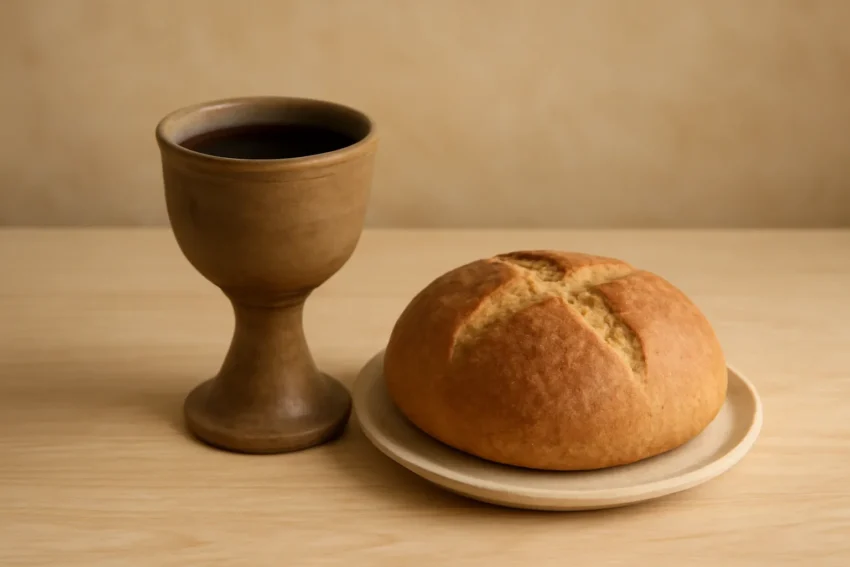
Two elements sit at the center of the rite: a loaf or wafer of bread and a cup of wine or its substitute. These elements are not merely symbols; they are interpretive vehicles that carry the faith community’s memory of Jesus’ last supper, his teachings, his sacrifice, and his ongoing presence in the life of the church. While the precise meaning attached to these elements has varied across time and tradition, most Christian theologians agree that the bread and wine function as visible signs pointing toward invisible realities—most notably the body and blood of Christ as understood within the respective theological framework of a given tradition.
In biblical accounts, the Last Supper is described as a meal during which Jesus broke bread and shared wine with his disciples, telling them that the bread was his body and the cup his blood of the new covenant. From this framework, centuries of reflection have drawn out several core meanings that are common to many Christian communities: remembrance, thanksgiving, communion (the sharing of one body in Christ), and anticipation of the heavenly feast. In addition, many traditions emphasize the elements as spiritual nourishment, covenantal sign, and a mystery of union with Christ and with one another.
Bread in the Eucharist: Forms, Varieties, and Theological Significance
The bread used in the sacrament has produced a wide range of forms depending on denomination, geography, and historical period. The leading variations include unleavened bread (hosts), leavened bread, and bread wafers or pancake-like portions used in some liturgies. Each form carries its own history and theological nuance, and many communities embrace a specific practice as part of their tradition.
Traditional Unleavened Hosts vs. Leavened Bread
Unleavened hosts are flat, round wafers made without yeast. They are standard in the Roman Catholic Church and in many Evangelical and Anglican settings. The use of unleavened bread is often linked to the Jewish Passover context of the Last Supper and the early church’s intentional alignment with that moment in salvation history.
Leavened bread is used in several Eastern Christian and some Protestant traditions. In these contexts, the bread may be raised and crumbly, evoking the living, growing body of Christ and the ongoing sanctification of believers.
Wafer-like hosts and small loaves represent different liturgical sensibilities: the wafer emphasizes uniformity and ease of distribution; the loaf highlights a sense of shared participation in a common bread.
Symbolism Associated with Bread
The body of Christ given for the life of the world.
Participation in a community of believers who share one loaf, thereby signifying unity.
A link to the Jewish heritage of the Last Supper and Jesus’ identification with the people of God.
An emblem of humility and simple nourishment, reminding worshipers that God often works through ordinary means.
Wine and Its Substitutes: Tradition, Symbolism, and Practical Realities
The wine used in communion has its own diverse history. In many Christian traditions, red wine represents the blood of Christ shed for the forgiveness of sins. In others, non-alcoholic substitutes—such as grape juice—are used for reasons of health, conscience, or inclusive accessibility. The choice between wine and juice, as well as the specific style of wine (red, white, fortified, sweet, dry), carries theological and pastoral significance that can reflect a community’s context and convictions.
Wine vs. Grape Juice: Why Substitutes Are Used
Wine has a long sacramental tradition in most liturgies, aligning with the words of Jesus at the Last Supper and with the continuity of apostolic practice.
Grape juice provides an inclusive alternative for minors, individuals with alcohol sensitivities, or communities seeking a non-alcoholic option while preserving the symbolism of the feast.
Some traditions employ mixed cups or separate cups for wine and juice within the same service to accommodate diverse preferences.
Symbolism Associated with Wine
The blood of Christ shed for the covenant and for the remission of sins.
A sign of new covenant renewal, paralleling biblical imagery of gladness, celebration, and the unveiling of God’s grace.
An invitation to repentance, gratitude, and joyful reliance on divine grace.
Ritual Objects and Settings: The Physical Context of the Sacrament
Beyond the bread and wine, the sacrament involves a set of objects, vessels, and configurations that shape how the elements are perceived, distributed, and celebrated. The terminology and use of these items can vary, but several core components are widely recognized across traditions.
Chalice: a cup or goblet used to hold the wine, often made of metal or glass and sometimes ornate to reflect the dignity of the rite.
Paten or diskos: a plate or broad dish that holds the bread or host for consecration and distribution.
Ciborium or pyx: a container with a lid for keeping the consecrated bread or hosts, particularly in tabernacles or when reserve sacrament is practiced.
Purificator and burse: cloths and coverings used to wipe and cover vessels; they reflect reverence and care for the sacred signs.
Fillet of linen or napkin: used to maintain cleanliness during the distribution and to wrap the vessels in some settings.
In some liturgical contexts, specialized terms describe variations in the distribution process. For example, intinction refers to dipping the bread into the wine for receiving both elements in one gesture. Communion under one kind may retain only the bread or the wine for practical reasons, while distribution under both kinds emphasizes the full symbol in a single act. Churches may use gloves, towels, and other practical accoutrements to maintain reverence and hygiene, especially in contemporary contexts with large congregations.
Liturgical Variations Across Traditions
One of the most striking features of communion practice is the breadth of variation among Christian traditions. While all affirm the central symbolic significance of bread and wine, the way the rite is celebrated—its language, timing, form, and governance—varies. Understanding these differences can foster respect, ecumenical dialogue, and a deeper appreciation for the shared center of the Christian faith.
Roman Catholic and Eastern Catholic Traditions
The Roman Catholic Church emphasizes the words of institution and the real presence of Christ in the elements, generally administering wine (often mixed with a small amount of water) to the faithful via a chalice and offering unleavened bread for distribution.
Eastern Catholic churches maintain similar symbolism but may differ in language, liturgical posture, and the emphasis on the variety of liturgical rites that belong to the broader Catholic tradition.
Eastern Orthodox and Oriental Orthodox Traditions
In many Eastern churches, the bread is typically leavened and the wine is offered in a common cup, with a practiced ritual of receiving both elements together via the chalice and a spear or spoon element in some communities.
The emphasis often includes the concept of the mystery of theosis—participation in divine life—through the sacrament, with emphasis on the church as the body of Christ and the continuity with the apostolic tradition.
The Anglican Communion often centers on both the bread and wine and uses varied liturgical language that ranges from more Catholic-leaning to more Protestant-inflected forms. The laity may receive under one kind (bread only) in some parishes, or under both kinds, depending on locale and custom.
In many parishes, the sacrament is framed as a thanksgiving and a remembrance of Christ’s saving deeds, with a focus on the unity of the church and the outward visible sign of the inward grace.
Lutheran and Reformed Traditions
In Lutheran churches, the bread and wine are often seen as a real presence in a manner distinctly explained by Luther (in the sense of sacramental union without transubstantiation), with a strong emphasis on grace and forgiveness proclaimed in the rite.
In Reformed churches, emphasis may be placed on the memorial and covenantal aspects, with an appreciation for the symbolic memory of Christ’s sacrifice and the communal celebration of faith.
Non-Denominational and Restorationist Traditions
Some communities emphasize a straightforward, biblical approach to the rite, often using symbolic language and focusing on participation and gratitude rather than a detailed doctrinal formula about the presence of Christ in the elements.
In many of these settings, juice may be offered as an alternative to wine, aligning with concerns for inclusivity and health considerations.
Practical Considerations for Observance
How congregations carry out the rite is shaped by practical realities: space, demographics, health considerations, and pastoral priorities. The following elements show how communities translate ancient symbols into contemporary practice.
Frequency: Common patterns include weekly observance, semiweekly, monthly, or quarterly celebrations. The choice often reflects theological emphasis, pastoral logistics, and liturgical tradition.
Distribution methods: Intinction (dipping bread into wine), common cup (shared cup), or individualized cups are used in different contexts for reasons of convenience, safety, and inclusivity.
Sanctuary placement: The presentation of the elements in a proper liturgical setting—whether at a table, credence shelf, or altar—helps communicate reverence and order.
Pastoral considerations: Provisions for children, catechesis on the meaning of the rite, and guidance for those who are unable to participate due to health or conscience.
Historical Development and Theological Context
The rite of communion has evolved over two millennia. Its development has been shaped by scriptural interpretation, doctrinal disputes, cultural practices, and ecumenical dialogues. This historical arc helps explain why there is such variety today while also highlighting the enduring core of the practice.
In the early church, the Lord’s Supper was typically celebrated within a shared meal context (the agape feast). Over time, some communities formalized the rite with specific prayers, liturgical actions, and a move toward a more sacramental understanding of the elements. By the medieval period, the Roman Catholic tradition emphasized the real presence of Christ in the eucharistic elements, and the associated ritual apparatus became increasingly elaborate. The Protestant Reformation brought renewed emphasis on the Scriptures, the covenant sign, and the variety of forms of the rite that could emerge within a broader Christian unity. In the modern era, discussions about ecumenism and accessibility led to inclusive practices, such as offering grape juice alternatives or increasing the number of distribution points to seat larger congregations with ease.
Across these developments, three themes recur: remembrance, gratitude, and participation. In many traditions, the rite is understood as a way of anchoring faith in a shared story—the story of Jesus’ life, death, and resurrection—and of inviting believers into a continuing participation in that story. The way this is articulated varies, but the aim remains to form a community in Christ through a tangible, meaningful act.
Common Misconceptions and Clarifications
As with many sacramental practices, there are misconceptions that can arise when people encounter the communion rite for the first time or move between traditions. Here are some clarifications that help maintain accuracy and respect for diverse understandings.
The Elements Are Not Merely Symbols: For many traditions, bread and wine are more than symbols; they are real means of grace in a specific theological sense, though the exact interpretation differs from one tradition to another.
Distribution Is Not a Measure of Worth: Access to the elements is not a sign of spiritual maturity or status; all who are properly prepared and invited are welcome to participate according to their tradition’s guidelines.
One Rite, Many Expressions: The same core event can be celebrated in remarkably different ways without compromising essential faith commitments.
Devotional and Theological Implications for Individuals
For individuals, participating in the rite can be a deeply personal and communal experience. The bread and wine serve as focal points for reflection on the grace of God, the forgiveness extended through Christ, and the promise of future fellowship with God and one another. The practice invites participants to:
Remember Christ’s sacrifice with gratitude and awe.
Affirm faith in the new covenant proclaimed in the gospel.
Confess sins and receive the assurance of forgiveness offered through grace.
Recommit to living as part of a community that embodies Christ’s love in the world.
Practical Guidance for Churches and Congregations
Church leaders and lay volunteers often wrestle with practical questions about implementing the rite in ways that are theologically faithful, pastorally sensitive, and logistically feasible. The following considerations may be helpful for planning and ongoing practice.
Theological clarity: Offer catechesis or brief explanations about what the bread and wine signify in your tradition to help believers participate with informed consciences.
Accessibility: Provide options (gluten-free wafers, non-alcoholic alternatives, large-print orders of service) so that participants with dietary restrictions or accessibility needs can join fully.
Safety and stewardship: Ensure proper hygiene and safe handling of the elements, especially in large gatherings, while honoring the sacred character of the rite.
Pastoral sensitivity: Be attentive to individuals who may be new to the tradition or who have questions about participation, distribution, or the meaning of the signs.
Ecumenical dialogue: When possible, engage in conversations with other communities about shared understandings and differences to promote mutual respect and possible collaborations in outreach and service.
Frequently Asked Questions
What is the purpose of communion? The central purpose is to remember Christ, celebrate the new covenant, and participate in the life of the community through a tangible sign of grace.
Is communion required for Christians? Practices vary; some traditions require regular participation as a normative practice, while others encourage participation as a spiritual discipline without making it mandatory for all.
Can children take part? Varied practices exist: some traditions offer child catechesis and participation at certain ages, others reserve the rite for baptized members or communicant members; parents and pastors decide based on the polity of the congregation.
What about alcohol concerns? Many communities provide grape juice as an alternative to wine, ensuring that all who wish to participate can do so in good conscience.
What do the symbols mean today? The symbols point to the life, death, and resurrection of Jesus, to Christian unity, and to the hope of God’s ultimate consummation of the kingdom. They remain living signs that invite ongoing reflection and faith.
Conclusion: The Ongoing Significance of the Bread, the Cup, and the Community
Across the centuries and across diverse church settings, the bread and wine (or their substitutes) continue to be meaningful, multifaceted signs that invite believers into a deeper participation in God’s grace and in one another. The elements serve as a bridge between memory and hope, remembrance and renewal, personal devotion and corporate witness. Whether celebrated weekly in a grand cathedral, in a quiet country chapel, or in a small house church setting, the rite remains a shared confession: that the life of faith is formed in community, fed by grace, and oriented toward the coming fullness of God’s kingdom. In this light, communion is not a static ritual but a living practice that invites continual renewal, thoughtful reflection, and generous hospitality toward all who seek to join in the feast.