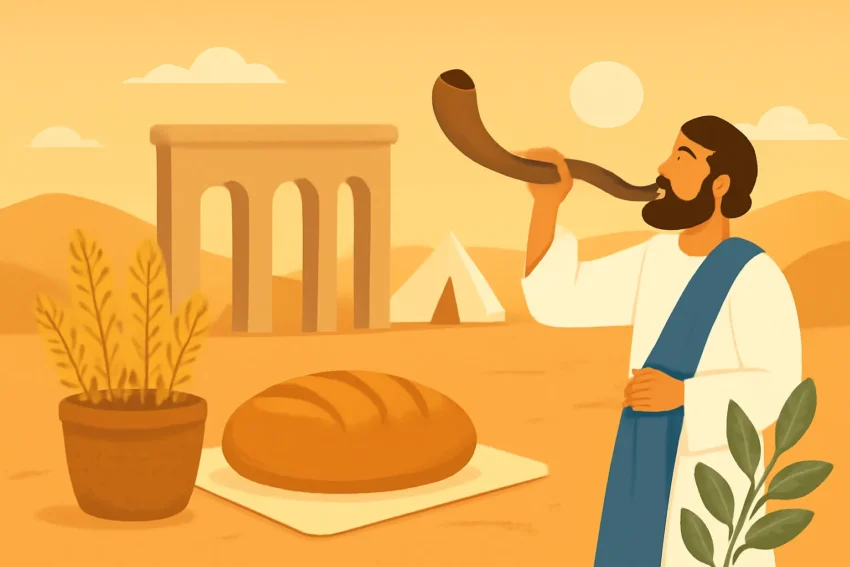
Bible Festivals: A Complete Guide to Sacred Celebrations explores the biblical festival calendar, how these sacred seasons functioned in ancient Israel, and how they continue to influence Jewish and Christian worship today. This guide uses the language of the biblical text, the scholarly understanding of the biblical calendar, and practical ideas for readers who want to engage with the festivals in meaningful ways. By looking at the rhythms of salvation history—the journey from bondage to freedom, from harvest to covenant renewal—we gain insight into the spiritual architecture of the Bible and the ways these celebrations illuminate faith communities across time.
What are biblical festivals and why do they matter?
In the Bible, a festival (or feast) is a sacred occasion appointed by God for collective worship, remembrance, and participation in divine acts of salvation. The phrase Feasts of the Lord or appointed times captures the sense that these celebrations are not human inventions but invitations to align with God’s redemptive timeline. These sacred days are often tied to agricultural cycles and historical milestones, reminding the people of God that their lives are woven into God’s largerstory of rescue and restoration.
There are several layers to the biblical festival framework, including:
The Lord’s commanded feasts, described in Leviticus 23 as the core annual calendar for Israel.
Pilgrimage festivals, conducted in Jerusalem when conditions allowed, inviting the whole nation to gather in worship.
Seasonal and agricultural feasts, which point to God as the giver of harvest, sustainer of life, and source of provision.
Messianic and Christian interpretations, which read these celebrations through the lens of Christ’s work and the Spirit’s coming.
As a result, bible festivals are not mere historical artifacts. They are living refrains that echo across generations: liberation from oppression, recognition of God’s provision, and the anticipation of God’s future fulfillment. This guide will walk you through the canonical feasts, explain their meanings, and offer guidance for study and personal or communal practice. We will also consider related celebrations that appear in later biblical texts and in subsequent Jewish and Christian tradition.
The Seven Feasts of the Lord: Old Testament foundations
In the Hebrew Bible, the core set of sacred days is enumerated as seven principal feasts in Leviticus 23. These are sometimes grouped into three clusters: Passover and Unleavened Bread as a linked pair; Firstfruits and Weeks (Pentecost) as harvest-related feasts; and Trumpets, Day of Atonement, and Tabernacles as high holy days with ritual and national significance. Each of these biblical celebrations carries its own historical memory and theological emphasis, yet all are connected through themes of redemption, holiness, and covenant fidelity.
Passover (Pesach)
Passover, the first of the biblical festivals in the sequence, anchors the narrative of liberation from Egyptian bondage. It commemorates the night when the angel of death passed over the israelite homes marked with blood on the doorposts, leading to the release from slavery. The central elements include the Passover lamb, the blood sign on doorposts, and the night of communal eating and storytelling known as the Seder in later Jewish practice.
Origins and purpose: A remembrance of deliverance from oppression and a confession of God as rescuer and redeemer.
Timing and symbols: Observed on the 14th day of the Hebrew month of Nisan, with a ritual meal that recounts the exodus story and emphasizes redemption by blood.
Biblical practices: In biblical times, the Passover involved a sacrificed lamb and the unleavened bread; in modern faith communities, it often appears as a Passover Seder or symbolic meal that preserves the memory of God’s faithfulness.
Unleavened Bread (Chag HaMatzot)
Immediately following Passover is the week-long festival of Unleavened Bread. The emphasis here is on purity and haste—the people departed Egypt with quickness, without time for dough to rise. The command to remove leaven from houses became a powerful symbol of sanctification, repentance, and the removal of sin’s influence from the community.
Link to Passover: The two feasts are inseparable in the biblical calendar, forming a combined memory of redemption and consecration.
Practices and emphasis: The days are marked by the eating of unleavened bread and various regulations intended to emphasize holiness and the break from the old life in Egypt.
The festival of Firstfruits celebrates the early harvest and expresses gratitude to God for provision. In biblical times, the first portion of the harvest was dedicated to God as an acknowledgment that all crops ultimately belong to Him. This liturgical moment foreshadows a broader sense of seasonal blessing that culminates in the later feasts.
Theological emphasis: Recognition that every harvest is a gift from God and a sign of ongoing covenant faithfulness.
Rituals: The first ripe sheaf of barley or other grains was presented to the priest, with feasts and sacrifices that accompanied the occasion.
Weeks (Shavuot, the Feast of Weeks)
Also known as Shavuot or the Feast of Weeks, this festival marks the culmination of the spring harvest season and is associated with the giving of the Law at Mount Sinai in traditional interpretation. The name “Weeks” reflects the counting of the Omer—a measure of time between Firstfruits and Weeks.
Timing: Observed 50 days after Firstfruits, typically in late spring or early summer.
Thematic focus: Gratitude for harvest, celebration of covenant revelation, and in later Christian tradition, a link to the outpouring of the Spirit at Pentecost.
Observances: In biblical times, offerings and pilgrimages to the temple; today, many communities observe with study, prayer, and joyful feasting.
Trumpets (Rosh HaShanah)
The festival known as Trumpets or the Feast of Trumpets announces the new year in the biblical calendar and sets the tone for reflection and worship. It is a day of remembrance and anticipation, invoking God as ruler and judge. In later Jewish tradition, it merges with the new year observances and has an eschatological dimension that resonates with Christian expectations of renewal and judgment.
Timing: Observed on the first day of the seventh month (Tishrei in the Hebrew calendar), traditionally a day of soundings and calls to repentance.
Theological emphasis: God’s sovereignty, the call to wakefulness, and the confidence that the year’s trajectory is under divine governance.
Day of Atonement (Yom Kippur)
The most solemn day in the biblical calendar, Day of Atonement centers on sin, repentance, and reconciliation with God. It is a day of fasting, prayer, and confession, designed to restore and renew the community’s relationship with the holy God. In biblical narrative and later tradition, Yom Kippur stands as the climactic moment of cleansing and renewal.
Core practices: Fasting, solemn assembly, confession of sins, and prayers for forgiveness; in times present, communal prayers and specific liturgical rites.
Theological significance: Atonement through sacrifice and intercession, and the possibility of restoration after failure or sin.
Sukkot (Tabernacles or Booths)
Sukkot, often translated as Tabernacles or Booths, commemorates the wilderness wandering and God’s protection and presence among the people. The festival emphasizes hospitality, gratitude for the harvest, and dwelling in temporary shelters to recall the desert journey.
Historical memory: The way God led, provided, and protected during the wilderness wandering.
Ritual components: Living in booths or tents, waving palm branches, and celebratory meals that emphasize joy and hospitality.
These seven core feasts constitute the traditional framework of the biblical festival calendar, sometimes referred to as the Levitical calendar because of their explicit instructions in Leviticus 23. They form a connected narrative: redemption from bondage, sanctification in daily life, gratitude for provision, and anticipation of future fulfillment. The festivals function as both worship and instruction, shaping identity as God’s people.
Secondary biblical celebrations: Purim, Hanukkah, and more
Beyond the canonical seven feasts, the Bible includes other sacred days and festivals rooted in historical events and redemptive memory. While not listed in Leviticus 23, these days appear in the broader biblical canon or in post-exilic literature and have continued to shape religious practice in Judaism and, in Christian contexts, in various ways.
Purim
Purim is a joyful festival recounted in the Book of Esther that celebrates deliverance from a plot to annihilate the Jewish people in the Persian Empire. It is a festival of feasting, merriment, gift-giving, and reading the Book of Esther aloud in community settings.
Origins and memory: The deliverance under Queen Esther and Mordecai is remembered through feasting and acts of kindness.
Rituals: Public readings, costumes, and the exchange of gifts—creating a sense of communal solidarity in adversity.
Hanukkah and the Festival of Dedication
Hanukkah recalls the rededication of the Jerusalem Temple after the Maccabean revolt and the miracle of oil that lasted eight days. In the Gospel of John, Jesus is depicted attending the Feast of Dedication, illustrating how later biblical tradition and early Christian writers integrated these events into the larger religious conversation.
Historical context: A post-exilic festival that centers on rededication, light, and resilience in faith.
Practice and symbolism: Lighting the menorah, special songs, and the public celebration of perseverance in faith.
Purposes and practices of the extended biblical calendar
While Purim and Hanukkah are not among the seven canonical feasts, they illustrate how biblical interpretation and later Jewish tradition continued to shape sacred practice. These days highlight themes of courage, divine sovereignty, and communal memory in ways that complement the earlier feasts.
Memory and identity: They reinforce identity as a community faithful to God in the face of oppression or spiritual compromise.
Ritual innovation: The festivals often introduce unique rituals (like lighting lamps, public readings, feasting) that become enduring parts of worship life.
New Testament perspectives: how early Christians read biblical festivals
In the New Testament era, the relationship between the biblical festivals and Christian faith is complex and rich. Early Christians, many of whom were Jewish, understood the feasts in light of the life and ministry of Jesus. This section highlights how bible festivals acquired new meanings in the Christian church while retaining their continuity with the Hebrew Scriptures.
Passover and the Last Supper
For Christians, Passover often becomes a lens for interpreting Jesus’ crucifixion as a fulfillment of the Passover symbolism. The Gospel narratives portray Jesus as the Lamb of God who takes away the sin of the world, linking the sacrificial language of Passover with the work of Christ.
Christological reading: Jesus as the fulfillment of redemptive history, with the blood sign representing more than physical rescue—it points to spiritual liberation.
Liturgical impact: The Last Supper is framed as a Passover meal, shaping early Christian rites and the cadence of the church’s annual calendar.
Shavuot and Pentecost
The festival of Weeks or Shavuot becomes a powerful backdrop for the outpouring of the Holy Spirit at Pentecost in the book of Acts. The event signifies the birth of the church and the universal proclamation of the gospel in multiple languages, echoing the idea that the Spirit equips the church for witness in the harvest-field of humanity.
Fulfillment motif: The Spirit’s arrival is read as a fulfillment of the promise associated with the harvest festival.
Mission emphasis: Pentecost inaugurates a new season of mission and evangelism in the early church.
Other Christian reflections on the biblical calendar
Christians have various ways of approaching the broader biblical calendar. Some traditions emphasize liturgical seasons that echo the biblical feasts—Advent and Christmas (as a parallel to the expectation of the Messiah), Lent and Easter (as a reflection on sin, atonement, and resurrection). In addition, many Christian communities today observe biblical study groups around the themes of redemption and covenant that are foundational to the biblical feasts.
Symbolic resonance: The cycles of repentance, renewal, and hope recur in Christian worship and preaching.
Ecumenical connections: Shared themes across traditions strengthen interfaith and intra-faith conversations about worship, justice, and mercy.
How to study biblical festivals: a practical guide
If you want to study and perhaps observe the bible festivals in a thoughtful, informed way, here is practical guidance that helps you engage with the material deeply while respecting historical context and contemporary practice.
Begin with the biblical text
Read Leviticus 23 carefully and note the language used for each feast, including timing, sacrifices (where described), and purposes.
Consult surrounding chapters to understand the exodus narrative and the agricultural imagery that undergirds the festivals.
Explore cross-references in the Pentateuch, the historical books, and the prophetic literature that allude to these seasons.
Study the historical and cultural background
Learn about the lunar calendar and the way months were named in ancient Israel (e.g., Nisan, Tishrei).
Investigate how the biblical feasts functioned in a society organized around temple worship and pilgrimage.
Examine how each festival related to the agricultural cycle—harvest, planting, and fasting periods—and how those rhythms sustained village life.
Explore how Judaism preserves and interprets these days in everyday life, including Seder meals, synagogue readings, and penitential practices.
Examine how Christian communities interpret the feasts in light of Christ’s life, death, and resurrection, with an eye toward worship, preaching, and mission.
Practical ways to observe or celebrate
Try a Passover Seder or a symbolic Passover meal that explains the elements of the exodus story to family and friends.
Participate in a study of the Book of Leviticus with attention to the feasts’ theological themes: redemption, holiness, and covenant renewal.
In a community setting, host a meal for Firstfruits or Shavuot to celebrate harvest and the revelation of God’s law, respectively.
Observe a day of reflection or fasting around Yom Kippur, focusing on confession, forgiveness, and reconciliation in personal and communal life.
Modern observance: how communities keep the biblical festivals alive
Across the world, both Jewish and Christian communities draw on the biblical festivals to enrich worship, education, and social life. While the exact practices vary by tradition, the underlying aims remain consistent: to remember, to reorient life toward God, and to anticipate the fulfillment of God’s promises.
In Jewish practice today
Passover is celebrated with a Seder that retells the Exodus story, emphasizes freedom from oppression, and reinforces family identity and faith.
Shavuot features readings from the Torah, study, and often dairy foods, highlighting revelation and covenant fidelity.
Sukkot involves living in temporary booths, sharing meals in community, and showing hospitality to the vulnerable.
In Christian practice today
Some churches commemorate Passover or the Eucharist in ways that reflect the Last Supper’s Passover imagery.
Celebrations around Pentecost focus on the work of the Holy Spirit and the church’s mission in the world.
Seasonal liturgies such as Advent and Lent echo the rhythm of biblical feasts by guiding believers through expectation, repentance, and renewal.
Key themes that unite bible festivals across traditions
Despite the diversity of practice, several themes run through the biblical festivals and their modern interpretations. Recognizing these can help readers engage with the material more deeply and apply its lessons to everyday life.
Redemption and liberation: The core impulse of the scriptures is to remember and celebrate God’s acts of rescue.
Holiness and consecration: The feasts press believers toward a life set apart for God’s purposes.
Gratitude for provision: Harvest times and firstfruits emphasize dependence on God as source and sustainer.
Community and covenant: Many biblical festivals bring the community together for worship, teaching, and shared memory.
Hope and eschatology: The festivals point toward a future fulfillment and the consummation of God’s plans for the world.
Frequently asked questions about bible festivals
For readers exploring this topic, several questions commonly arise. Here are concise answers to help clarify core points while inviting further study.
Are these festivals only for Jews? While the original commands were given to Israel, many Christians study these festivals as part of their biblical heritage, and some communities practice elements of these feasts to deepen faith and understanding of redemption.
Do Christians have to celebrate these feasts? Not as a mandatory requirement for worship, but as a spiritual discipline they can adopt if it aligns with their theological stance and church tradition.
What is the relationship between the biblical feasts and Easter? In Christian interpretation, Easter often intersects with the themes of Passover and Firstfruits, highlighting resurrection and new life as fulfillment of biblical promises.
Can I observe these feasts at home? Yes. Home-centered observance often includes storytelling, shared meals, study, and optional symbolic meals that reflect the biblical narratives.
The biblical festival calendar is more than a set of ceremonial instructions. It is a living pedagogy—a way to teach memory, reinforce community identity, and shape hopes about God’s ongoing work in history. The bible festivals illuminate how God’s people remember the past, live in the present, and anticipate a future where justice, peace, and restoration pervade creation. Whether you study them as ancient rites, as fulfilled fulfilled prophecies, or as modern-day spiritual disciplines, these sacred seasons invite believers to align their calendars with God’s purposes, to cultivate gratitude, and to participate in a story larger than themselves.
Suggestions for further study and practice
Begin with a structured Bible study plan focusing on Leviticus 23 and related passages in the Pentateuch, along with key New Testament passages that discuss the fulfillment of the feasts.
Attend local services or online resources during times that correspond to Passover, Shavuot, and Sukkot to gain practical exposure to how different communities observe the festivals.
Involve families or small groups in a festival-themed study where each session centers on a different feast—its biblical context, its theology, and contemporary applications.
Create a personal or family festival journal to record insights, prayers, and experiences related to each sacred season.
Ultimately, a thorough exploration of the biblical festival calendar reveals a pattern of grace: God’s people are invited to remember, to respond in worship, to rejoice in provision, and to look forward with hopeful anticipation. Whether approached as an ancient code of laws, a vivid theology of redemption, or a flexible framework for modern worship, bible festivals remain a rich resource for personal growth and communal faith formation. By engaging with these sacred times—whether through study, celebration, or liturgical practice—you enter a conversation about God’s faithfulness that spans generations and borders, a conversation that continues to shape how communities live in covenant with their Creator.