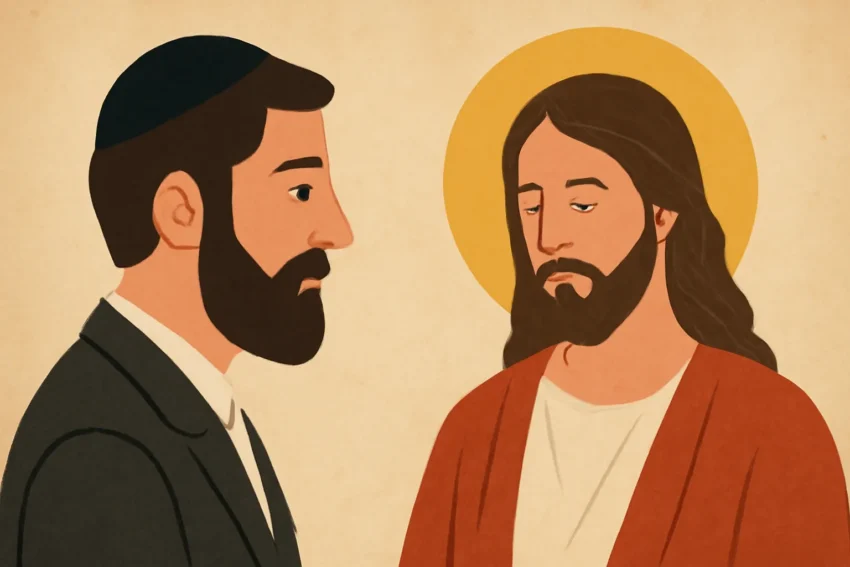
Introduction: Do Jews Believe That Jesus Is God? A Comprehensive Guide
The question “Do Jews believe that Jesus is God?” touches on theology, history, and the delicate boundaries between religions. In broad terms, the answer in mainstream Judaism is clear: God is one, and the divine status of Jesus is not part of Jewish faith or practice. Yet the topic is layered. Historical context, variations among Jewish movements, and the existence of communities that blend Jewish identity with belief in Jesus as the Messiah or divine figure all contribute to a more nuanced picture.
This article offers a comprehensive guide to Jewish perspectives on Jesus, the status of Jesus in Jewish thought, and how this question is treated in various Jewish communities today. We will examine why most Jews do not regard Jesus as God, how the concept of the Messiah is understood in Judaism, and where the differences lie between historical Jewish sources and Christian claims about Jesus. The aim is to present a thorough, balanced overview that helps readers understand the diverse landscape without oversimplifying complex theological discussions.
What Judaism means by God and the status of Jesus: Core principles
Central to Jewish belief is the doctrine of monotheism — the belief in a unique, indivisible God who is the Creator and Sustainer of the universe. This principle is repeatedly emphasized across foundational texts and rabbinic teaching. In Jewish thought, God is not a person among other persons, and divinity is not ascribed to humans.
In this framing, the question “Is Jesus divine?” or “Can Jesus be God?” does not align with mainstream Jewish theology. The vast majority of Jewish authorities, from classical rabbinic sources to contemporary thinkers, maintain that the Messiah (when he comes) is a human agent who serves as a leader, restorer of the Jewish people, and usher of an era of peace, but he does not become divine.
Judaism distinguishes between honoring a teacher or interpreter of Torah and ascribing divine status to that figure. While Jesus is recognized in history as a Jewish teacher and preacher of the first century, the Jewish understanding of God and Messiah does not converge with Christian claims about Jesus’s divinity.
Jesus in historical context: How he appears in Jewish sources and memory
To understand whether do Jews believe that Jesus is God, it helps to place Jesus within the Jewish world of his time. Jesus of Nazareth lived in a first-century Jewish milieu, spoke in Aramaic, studied Torah, and engaged with Jewish leaders and communities of his day. The historical question—what did Jesus claim about himself, and how did his Jewish contemporaries understand him—remains a topic of scholarly investigation.
In later centuries, some Jewish writers and rabbis discussed Jesus in polemical terms as part of the broader Christian movement. In many medieval and modern discussions, Jesus was portrayed not as God but as a divisive figure or a heretical teacher whose followers formed a distinct religious movement. It is important to distinguish between historical memory and theological claims: Jewish sources about Jesus are seldom focused on ascribing him divinity; rather, they address his role as a figure within a rival religious community.
There are also texts such as the medieval Toledot Yeshu (a secular, polemical narrative produced by opponents of Christianity) which characterize Jesus in a particular light. These works are not canonical, and modern Jewish scholars treat them as polemical literature reflecting interreligious conflict rather than reliable theology. When engaging with these sources, readers should keep in mind their context, genre, and purpose.
Do Jews believe that Jesus is God? A direct answer
In most contemporary Jewish communities, the answer to “Do Jews believe that Jesus is God?” is a clear and simple one: No. The core Jewish creed is the Shema: “Hear, O Israel: the Lord is our God, the Lord is one.” This creed underlines a strict, indivisible monotheism that does not permit divinity to be ascribed to any human being.
The question often carries a second layer: How is Jesus viewed in Jewish thought? While Judaism honors Jesus as a historical figure and as a teacher within a Jewish context, the theological framework does not identify him as God or as a divine being. The concept of the two natures in one person or the Trinity is incompatible with the Jewish understanding of God’s singularity.
It is helpful to differentiate two related ideas:
The divinity of Jesus — rejected in mainstream Judaism; not part of the Jewish creed.
The Messiah’s status — anticipated as a future human leader, not a divine figure.
That said, there are interesting discussions about Jesus’s position within Jewish history and how Jewish communities relate to the figure in interfaith dialogue. These discussions often explore how Jews and Christians remember and interpret Jesus differently, and how this affects modern attitudes toward interreligious respect and cooperation.
Diverse Jewish perspectives: Orthodox, Conservative, Reform, and beyond
Judaism is not a monolith. Across different movements, there are nuanced views about Jesus, his place in history, and his reputation among Jews. The essential consensus, however, remains: Jesus is not considered God in Judaism, and the messianic expectation remains focused on a future human leader.
Orthodox Judaism
In Orthodox Judaism, the basic theological stance is explicit: God is one, indivisible, and no human being can share or receive divine status. The Messiah is expected to be a human king who restores Jewish sovereignty and spiritual vitality, rebuilds the Temple, and ushers in an era of peace, but he does not become God or a divine manifestation.
Within Orthodox sources, Jesus is seldom discussed in positive terms; when mentioned, he is typically treated as a historical figure whose life intersected with Jewish life in the period of Second Temple Judaism. The prevailing Orthodox view rejects the idea that Jesus’s following constitutes an extension of Judaism in a way that would imply divine status for Jesus or the Trinity.
Conservative and Reform Judaism share the core commitment to monotheism and to the belief that the Messiah is a future human leader. They may approach Jesus as an important historical figure who had an impact on religious development and culture, but they do not accept his divinity or claim that Jesus fulfills the Messiah role in the way Christians understand it.
Some scholars within these movements highlight Jesus’s teachings about justice, compassion, and social ethics, viewing him as part of the broad tapestry of Jewish history. Others emphasize the distinct theological trajectories that arose after Jesus’s lifetime, noting how Christian belief introduced concepts such as the Incarnation and the Trinity that are not part of Jewish theology.
In short, do Jews believe that Jesus is God in these streams? The answer remains No, with a willingness to study Jesus’s life and influence from a historical or literary vantage point while maintaining the central tenets of Jewish faith.
Messianic Judaism and related movements
It is important to acknowledge that there are communities that identify as Jewish while affirming Jesus as the Messiah and sometimes as divine. These groups are generally referred to as Messianic Judaism or Jews for Jesus. They interpret Jewish law and practice through a Christian theological lens, and many mainline Jewish denominations do not recognize Messianic Judaism as an authentic expression of Judaism.
For mainstream Jewish organizations, Messianic Judaism is not considered a form of Judaism; it is typically categorized as a Christian movement that uses Jewish symbols and language. As such, adherents often participate in churches and Christian communities, and their religious identity is viewed differently by traditional Jewish institutions.
Jewish sources, Christian claims, and interfaith dialogue
The relationship between Judaism and Christianity rests on two streams: the shared Hebrew Bible (the Tanakh) and the divergent theological interpretations that emerged after Jesus’s lifetime. Jewish-Christian dialogue over the last century has sought to respect the beliefs of one another while maintaining distinct theological boundaries.
In dialogue settings, participants may examine questions such as:
What do the term Messiah and the concept of divine sonship look like in each tradition?
How do each tradition interpret prophetic writings that Christians claim point to Jesus?
How can communities cooperate on social ethics, justice, and mutual understanding?
These conversations do not blur the core differences—especially the Jewish insistence on the oneness of God and the Christian claim of Jesus’s divinity. Yet they can foster mutual respect, shared learning, and better historical comprehension about how each tradition arrived at its distinctive beliefs.
Common myths vs. historical reality: Do Jews believe in a Trinity or a divine Jesus?
A frequent misconception is that Judaism outright rejects any reference to Jesus within Jewish texts. In reality, the matter is less about rejection of Jesus as a historical figure and more about the central theological question: Is Jesus divine? The historic jewish position is that the Trinity is not a Jewish concept and that God’s oneness is not compatible with Jesus being God or part of a divine triad. This is not merely a technical detail; it reflects a fundamental difference in how revelation, divine nature, and the messianic role are understood.
Another myth is that Judaism dismisses Jesus entirely. While mainstream Judaism does not venerate Jesus, it does acknowledge him as a figure who influenced religious development and the broader moral and ethical conversations of the era. Some scholars distinguish between Jesus as a historical person and Jesus as a theological claim in Christian tradition.
Do Jews consider Jesus part of the canon or scriptures?
In Jewish practice, the scriptural canon is the Hebrew Bible (Tanakh), which does not include Jesus or later Christian writings as authoritative scripture. Jews do not view the New Testament as sacred scripture, and Jesus is not considered a prophetic or divine figure within Jewish religious literature.
Jewish study often engages with Christian texts in academic or interfaith contexts. When Christians interpret verses in the Hebrew Bible as messianic prophecies about Jesus, Jewish readers may respond with alternative readings or highlight passages that emphasize the future, yet anonymous, Messiah who has not yet come.
Practical implications: How this question shapes Jewish life and education
The question “Do Jews believe that Jesus is God?” has practical consequences in education, worship, and interfaith encounters. In Jewish educational settings, teachers frame Jesus as:
Historical figure within a Jewish context, not divine.
Part of the broader tapestry of 1st-century Jewish life and the historical development of religious movements.
Sometimes a lens for understanding how Christianity emerged and differentiated itself from Judaism.
In interfaith settings, Jewish participants may discuss Jesus as a way to explain Jewish definitions of God, the Messiah, and monotheism. These discussions often aim to build mutual respect and reduce misunderstandings, while clearly maintaining the distinction between Jewish and Christian doctrinal boundaries.
Frequently asked questions: Do Jews believe that Jesus is God?
Do Jews believe Jesus was the Messiah? In most Jewish interpretations, the Messiah is a future human leader; Jesus is not accepted as the Messiah in traditional Jewish belief.
Do Jews believe Jesus is divine? No. The standard Jewish position is that God is unique and indivisible, and divinity cannot be ascribed to any human.
Are there Jewish groups that regard Jesus as God? Some minor groups identify as Messianic or Jewish-Christian; they are typically not recognized as part of mainstream Judaism and are often categorized as Christian by major Jewish bodies.
How do Jewish scholars handle Jesus in historical studies? Many scholars study Jesus as a historical figure within the context of Second Temple Judaism, focusing on his impact on Jewish life and the early development of Christianity without endorsing divine claims.
What about the Trinity? The Trinity is a central Christian doctrine and does not align with Jewish monotheism, which emphasizes God’s absolute oneness.
Conclusion: A nuanced answer to a longstanding question
In sum, the guiding answer to “Do Jews believe that Jesus is God?” is no, in the sense of mainstream Jewish theology. Yet the topic is nuanced and reveals much about how Judaism understands God, the Messiah, and the boundaries between religious communities. Jesus appears in Jewish history as a Jewish figure within a particular historical moment, but the concept of Jesus as God or as part of a divine Trinity does not fit within traditional Jewish belief.
Across the spectrum—from Orthodox to Reform—from historical study to interfaith dialogue—the central Jewish commitment remains intact: faith in one God, adherence to the Torah, and a distinctive vision of the Messiah as a future human leader. Understanding these distinctions is essential for anyone seeking to comprehend why Jews and Christians diverge on the question of divinity while still sharing a long history of religious and cultural exchange.
For readers curious about semantic breadth, phrases such as “Is Jesus divine in Jewish thought?”, “Do Jews honor Jesus as a religious figure but not as God?”, or “Does Judaism accept Jesus as Messiah?” all point to the same essential truth: the Jewish view emphasizes monotheism and human messianism, not divinity. Exploring these variations helps illuminate not just a specific belief, but a broader dialogue about how two great monotheistic traditions understand revelation, salvation, and the ethical life.