The number 144,000 appears in the final book of the Bible, the book of Revelation, and it has fascinated readers for centuries. In this article, we offer a comprehensive guide to what the 144,000 represents in Revelation, how the verses describe them, and the range of meanings scholars and traditions have attached to this number. We will explore the foundational passages, the symbolism of sealing and firstfruits, the lists of tribes, and the different interpretive approaches. The aim is to help readers understand the theological and literary significance of the 144,000 in the biblical narrative, rather than to settle debates about specific denominations.
The primary references to the 144,000 occur in the last book of the Bible, particularly in Revelation 7 and Revelation 14. These chapters present the number, the identity markers, and the role of the group in the divine drama of the end times.
Revelation 7:4–8 describes a group of 12,000 sealed from each of the twelve tribes of Israel. This section emphasizes a complete, divinely protected company by listing the tribes and noting that the sealing marks belong to these specific lines of descent.
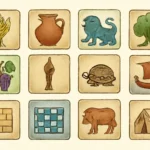
The list of tribes in Revelation 7:5–8 features the tribes in a particular order that includes Judah, Reuben, Gad, Asher, Naphtali, Manasseh, Simeon, Levi, Issachar, Zebulun, Joseph (often rendered as Joseph rather than the separate tribe of Ephraim in some traditions), and Benjamin. Some manuscript traditions differ slightly, with Dan or Ephraim appearing in other lists, but the Revelation text itself presents the twelve tribes in this sequence.
Revelation 7:9–17 then presents a contrasting image: a great multitude from every nation, tribe, people, and language, standing before the throne. This demonstrates that the biblical narrative surrounding the 144,000 is set within a larger scene in which faithful worshippers from all peoples are brought into God’s saving purposes.
Revelation 14:1–5 depicts the Lamb standing on Mount Zion with the 144,000 who have the name of the Lamb and the Father written on their foreheads. They are described as morally distinct—“these are they which were not defiled with women; for they are virgins”—and as redeemed as first fruits unto God and the Lamb.
The meaning of “sealed” and the idea of first fruits
A central motif in Revelation is the idea of being sealed by God. Sealing in biblical terms often communicates belonging, protection, and ownership. The 144,000 are described as sealed on earth in preparation for whatever lies ahead in the unfolding visions. This sealing motif signals that God has marked these individuals as his own, ensuring their security within a period of tribulation and divine judgment commonly associated with the end times.
Protection during turmoil is a recurring theme. The seal is a sign that the faithful are preserved in the context of cosmic upheaval, not abandoned to chaos.
The label “first fruits” (Revelation 14:4) ties the 144,000 to agricultural and sacrificial language from the Hebrew Bible. First fruits symbolize a chosen subset that anticipates a fuller harvest. Interpreters often read this as a symbolic way of saying that the 144,000 are the earliest, representative possessors of redemption that anticipates the larger salvation of many.
Tribal composition: which tribes are named and why variations occur
The list of the twelve tribes in Revelation 7 has long been a focus of study. The verse sequence features the tribes in a distinct order and includes the following names: Judah, Reuben, Gad, Asher, Naphtali, Manasseh, Simeon, Levi, Issachar, Zebulun, Joseph, Benjamin. Some textual traditions substitute Ephraim for Joseph or omit Dan in other lists, but the Revelation text itself (in the traditional rendering) preserves the 12-tribe pattern with Joseph as the representative for Ephraim’s portion.
Historical and manuscript variations account for differences in how the tribes are listed. The exact tribal names can differ between Greek manuscripts, Latin translations, and later commentaries, but the essential point remains: the division into twelve groups with a complete set of names is a symbolic way of signaling completeness and unity with the covenant people.
Tribal symbolism goes beyond genealogy. In many scholarly and devotional readings, the twelve tribes function as a microcosm of the faithful people of God—an inclusive seed that transcends individual cultures while still preserving a link to Israel’s historical covenant.
Revelation 14:1–5 and the heavenly context of the 144,000
Revelation 14 presents a vivid picture: the Lamb on Mount Zion, with the 144,000 who bear the Lamb’s name and the Father’s name on their foreheads. This scene deepens the symbolism by connecting the earthly seal with a heavenly identity, emphasizing fidelity to the Lamb in a cosmic setting.
The description that they “follow the Lamb wherever he goes” highlights a priority of allegiance and devotion.
The phrase that they were redeemed as first fruits emphasizes their exceptional status within the redemptive plan and their role as a prelude to the broader harvest of God’s people.
The text also notes moral and spiritual criteria—though many readers interpret these descriptions symbolically, they signal a standard of purity, devotion, and worship that characterizes the faithful in Revelation’s dramatic arc.
Interpretive frameworks: how scholars and traditions view the 144,000
Across Christian history, theologians and denominations have offered several ways to understand the 144,000. The main approaches fall into two broad camps: literal/ethnic interpretations and symbolic/representational interpretations. Some traditions also carve out a distinct historical or dispensational reading.
In this view, the 144,000 are understood as a real, identifiable group of people who come from the twelve tribes of Israel. Adherents may hold that this group is either a literal, future elect of Israel or a present, ongoing community that has a distinct role in end-times events. Some readers also connect this interpretation to Jewish restoration or political-historical expectations.
Symbolic/representational interpretation
A broad scholarly approach treats the 144,000 as symbolic of a completed, faithful community of God’s people—past, present, and future—rather than a fixed genealogical population. In this reading, the number underscores completeness (12 x 12) and perfection multiplied by a large, indefinite number (1000). The emphasis is on spiritual fidelity, allegiance to the Lamb, and moral purity rather than a precise census.
Historical and literary-context views
Some historians and theologians situate the imagery within the broader narrative of Revelation, which blends political, cosmic, and liturgical symbolism. The “sealed” company, the group of worshippers from every nation in the following vision, and the parallel image of a remnant faithful through trials all contribute to a layered message about perseverance, divine protection, and ultimate redemption.
How the 144,000 fits into the larger biblical narrative
The concept of a defined, sealed group and the juxtaposition with a much larger multitude invites readers to consider two complementary ideas in Scripture: the call to covenant faithfulness and the assurance of universal invitation. The 144,000 serves a role in the end-times drama that is balanced by the image of the vast assembly from every nation in Revelation 7:9.
Unity and diversity: The juxtaposition of a specific, sealed group with a diverse multitude reflects a theological theme of unity in the people of God that transcends cultural and ethnic boundaries.
Justice and mercy: The sealing and the following scenes portray both divine judgment and mercy, inviting readers to recognize the sovereignty and mercy of God in salvation history.
Purpose and hope: The imagery of first fruits and a sealed remnant provides a sense of purpose and hope for readers who face trials, suggesting that fidelity matters within the cosmic scope of God’s plan.
Common questions about the 144,000 today
Is the 144,000 a Jewish population only? The text roots the number in the twelve tribes of Israel, but interpretation ranges from literal ethnic fulfillment to symbolic representation of the faithful people of God across times and nations. Most contemporary scholars emphasize symbolic or representational readings rather than a strictly ethnic census.
What is the relation between the 144,000 and the great multitude? Revelation 7 presents the sealed 144,000 as a distinct group, while Revelation 7:9–17 presents a vast multitude from every nation. Many readers understand these images as describing different aspects of God’s salvific plan—one focusing on fidelity and protection, the other on universal invitation and worship.
Do modern groups claim a special status for the 144,000? Some movements have identified a specific class of believers as the “anointed” or “elect” who will reign with Christ in heaven. Other traditions view the 144,000 as a symbolic figure representing the fullness of God’s people. It is important to distinguish denominational teaching from broader biblical interpretation.
How should a reader approach the numbers and imagery? Numbers in Revelation are often symbolic. Readers are encouraged to consider how the imagery communicates themes of fidelity, worship, divine protection, and the fulfilment of God’s promises rather than treating the numbers as a literal census.
While the 144,000 is a highly specific biblical image, the broader themes offer practical guidance for modern readers:
Perseverance under pressure: The imagery of sealing and protection speaks to faithfulness in times of difficulty and tribulation, encouraging believers to stay true to their commitments to God and neighbor.
Identity and belonging: The seal communicates belonging to God. For readers today, this invites reflection on one’s own spiritual identity and to what or whom one is devoted.
Purity and devotion: The moral markers associated with the 144,000—not defiling themselves, following the Lamb—offer a model of purity, loyalty, and worship as central to the Christian life.
Hopeful eschatology: The juxtaposition of a sealed remnant and a great multitude provides a balanced sense of hope—God preserves a faithful people while inviting all nations into his saving purposes.
Variations of the phrase and how readers talk about the number
In English translations, you will see a few common renderings of the number:
The variation in wording often reflects translation choices, manuscript traditions, and readers’ emphasis on certain theological ideas (completeness, sanctification, or eschatological timing). Across translations, the essential message remains: a divinely marked, faithful group in Revelation’s portrayal of the end times.
The 144,000 in Revelation represents more than a numeric census. It embodies themes of divine protection, belonging, and fidelity within the broader drama of salvation history. The surrounding visions—such as the great multitude of worshippers from every nation and the Lamb’s victorious presence on Mount Zion—invite readers to understand God’s redemptive purposes as both particular (a chosen remnant) and universal (all nations invited to participate in the worship and healing represented by the Lamb).
For readers today, the key takeaway is not only to wrestle with how a number functions in surreal apocalyptic imagery but also to glean practical guidance about faithfulness, identity, and hope amid life’s uncertainties. By engaging with the primary passages—especially Revelation 7 and Revelation 14—and comparing how various traditions interpret them, you can cultivate a nuanced, well-informed understanding of what the 144,000 signifies in the biblical canon and in contemporary faith communities.