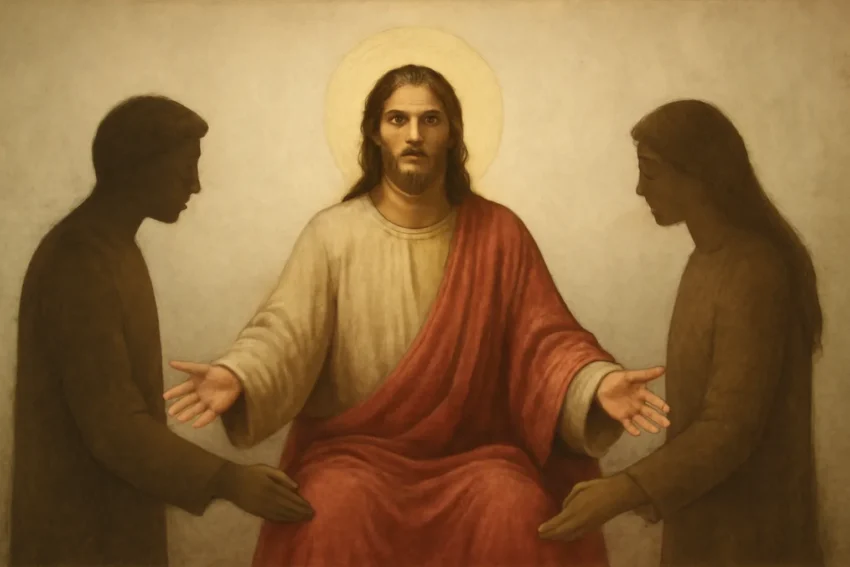
Introduction: The Core Reason for a Mediator in Scripture
Throughout Christian Scripture, a central claim recurs with clarity: Jesus Christ is the one Mediator between God and humanity. This assertion weaves together the deepest needs of fallen people—reconciliation with a holy God, forgiveness for sin, access to divine presence, and hope for eternal life—and the gracious provision of God in the person of Christ. In this article, we will use a range of phrases to describe this crucial role, including Christ as mediator, Mediator Jesus, the Mediator who reconciles, the intercessor, and the Messiah as go-between. Our goal is to illuminate what the Bible teaches about the unique, exclusive, and indispensable work of Christ in mediating between God and humanity, while also considering historical developments and practical implications for faith and worship.
Theological Foundations: Why a Mediator Is Necessary
The need for a Mediator arises from a coherent reading of Scripture’s account of God, humanity, and sin. In the biblical storyline, God is holy and human beings are mortal and finite. When these two realms intersect, sin creates a barrier—an offense that requires both judgment and grace. The Christian claim is not that humanity merely needs moral improvement, but that reconciliation with the Creator requires a mediator who can bear humanity’s guilt, satisfy divine justice, and secure a renewed relationship with God.
The role of the Christ mediator is not a general idea about spirituality; it is an explicit, historical, and theological claim rooted in both the Old Covenant patterns and the New Covenant revelation. In the biblical picture, the Mediator is both divine and human, possessing the authority of God and the solidarity of humanity. This dual nature enables the mediator to represent humanity before God and to bear God’s answer to humanity in return. The following key themes help establish this foundational understanding:
Access to God: Humanity is invited to draw near to God, but sin obstructs direct access. A mediator provides a legal and relational channel for relationship with the Creator.
Forgiveness and Justification: A mediator’s work includes addressing guilt and securing a righteous standing before God, not merely removing symptoms of wrongdoing.
Reconciliation: The goal of mediation is harmonious restoration—between God and people, and among the members of the people of God.
Intercession: Beyond representing us before God, the Mediator also pleads our case, continuously presenting petitions and prayers on behalf of the faithful.
Sacrifice and Covenant: In biblical terms, mediation often involves a sacrificial element and the sealing of a new covenant between God and humanity.
New Testament Affirmations: Texts that Highlight the Mediator’s Uniqueness
The New Testament is replete with statements and descriptions that identify Jesus as the singular Mediator. While the phrase “one mediator” is most directly tied to Paul’s teaching in 1 Timothy 2:5, the broader corpus develops the idea across several books. In this section, we explore key passages and their implications for the Mediator’s exclusive role.
1 Timothy 2:5 and the Apostolic Proclamation
The Apostle Paul states plainly that there is one God and one mediator between God and humanity, the man Jesus Christ. This verse anchors the claim that no other figure, whether angelic or human, holds the same mediatorial authority. It is not a claim about organizational structures but about the fundamental access point to God. As the Mediator Jesus engages humanity, he does so as the one who embodies both divinity and humanity in perfect unity.
Hebrews: The High Priest and the Mediator’s Efficacy
The Letter to the Hebrews presents Jesus as the ultimate high priest who serves in the heavenly sanctuary, replacing the ancient Levitical priesthood. The Mediator’s work is portrayed as effective not merely because of moral example but because it accomplishes forgiveness and ongoing intercession. Hebrews 4–7 emphasizes Christ’s permanent priesthood, his ability to sympathize with our weaknesses, and the security of a new covenant in which sins are dealt with decisively.
John 14:6 and the Unique Access Point
In the Gospel according to John, Jesus declares himself to be the only path to the Father. This statement—often summarized as “the way, the truth, and the life”—is a bold assertion about mediation: there is no other route to God except through Christ. When Jesus speaks of his intimate relationship with the Father, he is also describing the means by which humanity is brought into that relationship.
Romans 5:9–11 and Reconciliation through the Mediator
In Romans, Paul articulates a reconciliation narrative in which the Mediator’s work bridges the gap created by sin. By the cross, believers are justified by grace, reconciled to God, and thus saved from wrath. The Mediator’s activity is the hinge upon which human response to God turns from estrangement to peace.
Colossians and Ephesians: Cosmic Mediation and Unity
In Colossians and Ephesians, the mediatorial role of Jesus extends beyond personal salvation to the cosmic reconciliation of all things. Christ’s work is described as a unifying act that reconciles Jews and Gentiles, creates one body, and eliminates hostility. The Mediator thus functions as the center of both salvation history and the ongoing life of the church.
Old Testament Foundations: Shadows and Types of a Mediator
Before the fullness of the gospel manifests, Scripture hints at a Mediator through types, covenants, and priestly function. The Old Testament provides a rich backdrop in which the later identity of Christ as Mediator can be read with greater clarity. The Mediator’s work in the New Testament does not erase the significance of earlier figures; rather, it fills them with their intended meaning.
Adam, Abraham, Moses: Foretastes of Mediation
Early biblical narratives present moments where a figure acts as a conduit of blessing or a sign of God’s presence. While these figures are not the ultimate Mediator, their stories prepare the ground for a messianic mediator who will accomplish everything the law and the prophets pointed toward. In this sense, the prefigured mediator points forward to Jesus, who fulfills the promises that these patriarchs and prophets foreshadowed.
The Levitical Priesthood as a Structural Prelude
The system of priests and sacrifices in the Old Covenant points toward a once-for-all fulfillment. The mediator is linked to the Levitical order, but the New Covenant envisions a superior priesthood in the person of Christ. The blood of the covenant and the tabernacle imagery in Hebrews highlight how the old forms anticipate the reality in which a single, perfect Mediator stands between God and humanity.
The Person and Work of Jesus as the Mediator
The Christian claim holds that the Mediator is not merely a role or a function but a person—Jesus of Nazareth—whose identity as the eternal Son and the incarnate Word shapes every aspect of mediation. This section surveys how the biblical portrayal of Christ as Mediator integrates his person, his mission, and his work of reconciliation.
The Incarnate Mediator: God and Humanity in One Person
The central mystery and joy of Christian theology is that the God-Man stands in solidarity with humanity while bearing divine authority. This union enables him to represent us before the Father without compromise and to reveal the Father to us with unparalleled authenticity. The incarnate Mediator embodies both divine holiness and human vulnerability, which is essential for a truly effective mediation.
Work of Reconciliation: Atonement and Peace with God
The atonement described in the New Testament is not a vague moral healing but a concrete act in which the Mediator bears the burden of sin, satisfies divine justice, and restores the broken relationship. The cross becomes the focal point in which the Mediator’s redemptive work is accomplished. Because of this sacrifice, humanity is invited to live in peace with God and to enter into the divine presence with confidence.
Intercession: Ongoing Pleading Before the Father
A distinctive dimension of the Mediator’s work is ongoing intercession. Jesus does not simply finish the work of salvation and depart; he continues as intercessor for the church. The Mediator’s intercession is grounded in his perfect identification with us, including our needs, temptations, and weaknesses. This ongoing advocacy ensures that the Father’s plan for our sanctification and perseverance remains in effect.
Access and Community: Mediator and Corporate Life
In addition to personal access to God, the Mediator creates a new community. Through Christ, believers are brought into a reconciled relationship with God and with one another. The church as the body of Christ is formed by mediation—people who have been reconciled are called to extend that reconciliation to others. The Mediator thus initiates a new way of living: one where communal mercy, shared worship, and cooperative mission flow from a center that is Jesus Christ.
Implications for Faith, Worship, and Everyday Life
Belief in Jesus as the sole Mediator has far-reaching implications for how Christians relate to God, to neighbors, and to themselves. It shapes prayer, sacraments, preaching, and personal devotion. Below are several practical implications that reflect Christ-centered mediation in daily life.
Prayer becomes Christ-directed: believers approach God through the Mediator, asking in Jesus’ name, with confidence that his work has secured access and acceptance.
Worship centers on the Mediator’s person and work: praise for the cross, thanksgiving for forgiveness, and adoration of the risen Christ who intercedes.
Sacraments reflect mediation: baptism and the Lord’s Supper are visible signs of union with Christ and of ongoing participation in the life of the Mediator’s covenant people.
Forgiveness and Reconciliation become communal practices: the Mediator’s work calls Christians to practice forgiveness, seek reconciliation, and maintain unity in the Spirit.
Hope and Perseverance are rooted in the Mediator’s ongoing advocacy: the assurance of grace sustains believers through trials and temptations.
Practical Applications in Evangelism and Daily Living
For those sharing the faith, the claim that Jesus is the only Mediator directs how to present the gospel. It emphasizes that salvation is not earned by works, cleverness, or affiliation, but received through faith in the person and work of Christ. For believers, the Mediator’s work provides a powerful grounds for confidence when engaging a skeptical world: a concrete, historical claim about a person who accomplished reconciliation with God.
Historical and Denominational Perspectives on Mediation
Across Christian history, different traditions have articulated and nuanced the role of the Mediator, sometimes highlighting related themes like priesthood, intercession, or atonement in distinctive ways. The essential claim—that Christ is the Mediator—is shared widely, but the emphases can differ across traditions such as Catholic, Orthodox, and Protestant contexts.
Catholic and Orthodox Emphases: Mediator, Priest, and Sacrament
In Catholic theology, the Mediator is deeply linked to the priesthood and the sacramental life. The concept of the priestly mediation of Christ is expressed in the sacramental economy, where the church participates in Christ’s mediation through the sacraments. The Orthodox tradition emphasizes the incarnation and the theandric action of Christ, with mediation modeled in liturgy, prayer, and the life of the saints. In both traditions, the singular sufficiency of Christ remains central, even as additional channels of grace are understood to flow through the church and its worship.
Protestant and Reformed Perspectives: Sufficient Mediation by Christ Alone
Many Protestant and Reformed frameworks stress the principle of solus Christus—Christ alone—as the source of salvation and the sole mediator. These perspectives often emphasize that access to God comes through faith in Jesus, rather than through human mediators or sacerdotal acts. Sola fide and the centrality of the cross are common threads, though there can be different ways of interpreting the exact relationship between Christ’s mediation and church authority.
Anglican and Protestant-Cecorporate Similarities: Mediator and Priesthood of Believers
In Anglican and other Protestant circles, there is an emphasis on the priesthood of all believers and the mediating function of Christ that enables corporate worship and personal devotion. While ordination and liturgical structures can reflect mediatory reality, the ultimate mediator remains Jesus Christ. The practical upshot is a balance between reverence for the cross and the empowerment of the Spirit in everyday life.
Common Questions and Clarifications about the Mediator
Because the topic of mediation touches core beliefs about salvation, prayer, and church life, readers often ask clarifying questions. Here are some common inquiries, along with concise explanations that align with the biblical witness.
Is Christ the Mediator for all people or only for believers? The biblical teaching presents Jesus as the mediator who opens access to God through faith. While his mediation enables salvation, personal appropriation of that work occurs when a person responds in faith.
Does mediation exclude other forms of prayer or intercession? Christ’s unique mediation does not render prayer for others or intercession for the world irrelevant. Rather, it provides the ultimate basis for intercession—believers can intercede, but always through Christ and his finished work.
What about prayers to Mary or saints? In traditions that emphasize the Mediator’s primacy, prayers to Mary or the saints are understood differently. For many, intercession remains ultimately centered on Christ; these prayers may be directed to the saints only as they point to Christ’s mediatory work rather than as independent channels of grace.
How does mediation relate to grace and faith? Mediation is the context in which grace is mediated. Salvation flows from Christ’s work, and faith is the human response to that gift.
Is mediation a past event or an ongoing reality? The Mediator’s work is both historical (accomplished on the cross and resurrection) and ongoing (intercession and present life of the church). Christians affirm a present, living mediation through Jesus Christ.
Variations in Terminology: Expanding the Lexicon around the Mediator
To capture the breadth of biblical teaching, scholars and pastors use a range of terms that describe different facets of the same core reality. These terms help speak to diverse readers while preserving the Bible’s central claim that the Mediator is Jesus.
Mediator (the most formal term): emphasizes the bridging role between God and humanity.
Intercessor: highlights Jesus’ ongoing advocacy before the Father.
High Priest or priestly Mediator: foregrounds the priestly aspect of Christ’s work in temple imagery and sacrifice.
Go-between: a more relational portrayal of Jesus as the link that unites humanity to God.
Messiah as Mediator: underscores the messianic expectation fulfilled in Christ’s mediatorial activity.
Christus Mediator (Latinized usage): a way to speak of Christ across historical theological literature.
Son of God incarnate as Mediator: highlights the distinctive identity that enables mediation across the divine and human natures.
Common Theological Cautions: What Mediation Is and Is Not
While the doctrine of Christ as the Mediator is central, it must be engaged carefully to avoid distortions. A few cautions help keep the doctrine faithful to Scripture:
Avoiding the equating of mediation with magic: Mediation is not a magical power that controls God; it is the divine plan by which God has chosen to relate to humanity through Christ, in a way that honors both divine sovereignty and human need.
Avoiding deprecation of the believer’s role: Although Christ is the Mediator, believers are still called to pray, witness, and live out their faith. Mediated access does not eliminate human responsibility.
Avoiding competition between Christ and the church: The mediator’s work is personal to Christ, but the church participates in the life of mediation through faith, worship, and mission; the two are mutually related, never opposed.
Avoiding blurring the boundaries of mediation: The biblical claim is explicit: there is one mediator between God and humanity. While others may serve in partnership with Christ, no other figure shares the same mediatorial role.
Conclusion: The One Mediator and the Christian Hope
In sum, the figure of Christ as Mediator—whether described as the Mediator Jesus, the go-between, the high priest, or the intercessor—is central to Christian faith and worship. The Bible presents a coherent, unified witness: human beings, separated by sin, are reconciled to God not by their own efforts but by the work of a unique, divine-human Savior who, through his life, death, resurrection, and ongoing intercession, makes access to God possible and meaningful. This Mediator’s work culminates in the peace of the New Covenant, the transformation of individuals, and the creation of a new community—the church—that bears witness to the reality of God’s reconciling love.
For readers seeking to deepen their understanding, an attentive study of the key passages discussed—such as 1 Timothy 2:5, Hebrews 8–10, John 14:6, and Romans 5—will illuminate how Scripture’s portrait of mediation is integrated into the broader narrative of redemption. The message remains clear: Jesus Christ, in his person and work, stands as the one Mediator between God and humanity, ensuring that human longing for fellowship with the Creator finds its definitive answer in him.
As you reflect on this central truth, you may wish to engage with the following guiding questions:
How does understanding Christ as the Mediator shape my approach to prayer and worship?
In what ways does the Mediator’s work inform my understanding of forgiveness and reconciliation within the church?
How does the biblical concept of mediation relate to the sacraments and to mission in my local community?
By keeping Christ at the center—as the sole Mediator who reconciles us to God—we align ourselves with the biblical witness and with the hope that spans centuries of Christian faith. This focus does not diminish the beauty of the church’s fellowship or the value of faithful service; instead, it anchors them in a robust, historical, and theological conviction: in Jesus Christ, God and humanity are truly brought together.