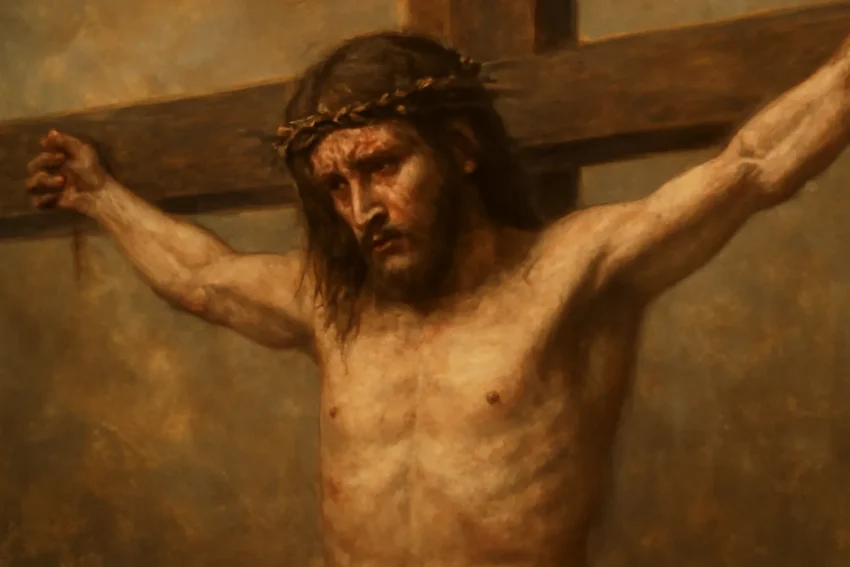
Christ’s last seven words—often called the Seven Last Words or the final sayings of Jesus—have long stood at the center of Christian devotion, theology, and art. These brief statements, drawn from the Gospel accounts, are not simply historical curiosities; they are compact windows into the person of Jesus, his mission, and the character of God as understood in Christian faith. In this article, we explore the seven final utterances of Christ with careful attention to their biblical context, their literary form, and their enduring significance for faith communities today. We will use a range of terms to describe this topic—Christ’s final sayings, Jesus’ last words, the seven last phrases of the crucified Lord—to highlight that there are multiple ways readers and traditions refer to this material, all pointing to the same poignant moment in the Christian narrative.
The phrase the last seven words refers to seven distinct statements attributed to Jesus as he hangs on the cross. Across the four canonical Gospels, some sayings appear in one or more accounts, and others are integrated into a composite portrait of the crucifixion. While the exact wording varies between translations, the core content affirms universal themes: forgiveness, grace, salvation, care for kin and community, solitary suffering, triumphant completion, and trustful surrender. Not every Gospel writer records all seven statements, yet within the tradition there has emerged a ready list that many churches recite or reflect upon in preaching, liturgy, and personal meditation.
This article presents the traditional enumeration, while also acknowledging that the exact sequence and wording may differ in textual study and in various Bible translations. The aim is not to demand doctrinal certainty about every nuance but to illuminate what these words reveal about Jesus, about God, and about the meaning of the cross for communities across time and culture.
Historical and literary context
Origins of the tradition
The collection of Jesus’ sayings from the cross arises from a combination of eyewitness memory, gospel composition, and later devotional practice. The Gospel authors each write with a purpose, shaping their accounts to convey faith claims about who Jesus is and what his death accomplishes. In early Christian devotion, the cross was not merely a symbol of suffering but the site where God’s mercy, justice, and love intersected in history. The seven utterances became a compact lens through which believers could ponder the meaning of the crucified and risen Christ.
Gospel sources and textual variety
The canonical Gospels provide different snapshots of the cross, and the famous seven sayings come from there in a way that has been harmonized by tradition. Some phrases appear in more than one Gospel, while others are drawn from a single narrative. In studying the sources, scholars note:
Luke emphasizes forgiveness and grace, with statements that invite mercy even to the perpetrators.
Luke also includes the promise of companionship in paradise in the midst of suffering.
John foregrounds the relational and covenantal dimensions—care expressed in the moment of death, and the final «it is finished» as a declaration about mission accomplished.
Matthew and Mark present the cry of abandonment, which has been interpreted in diverse ways in Christian theology.
The result is a set of sayings that function theologically across traditions, offering a coherent arc: pain and mercy, judgment and grace, human need and divine response. For readers and preachers, the variations in wording remind us to attend to language itself—how different Greek terms, Aramaic idioms, and translation choices shape our understanding of Jesus’ final moments.
The seven sayings: a close look
The following presentation follows the traditional order commonly found in liturgical and devotional contexts. Each entry includes the original Gospel reference, the core content of the saying, and a brief reflection on its theme. The aim is to illuminate the theological significance of each phrase and to show how they build a theological narrative from forgiveness to trust.
1) “Father, forgive them, for they know not what they do.” (Luke 23:34)
This first saying is often noted for its extraordinary demonstration of forgiveness and mercy, even at the moment when harm is being inflicted. Jesus prays for his executioners, turning hatred into opportunity for grace. The sentiment has two crucial dimensions: a divine prerogative to forgive, and a call to those who hear the cry to recognize their responsibility before God. In many sermons, this line is read as a model of non-retaliation and a radical invitation to extend mercy beyond what is customary.
2) “Truly, I say to you, today you will be with me in paradise.” (Luke 23:43)
Addressed to the penitent thief, this saying centers on salvation and the immediacy of God’s gift. It challenges human standards of worthiness and invites listeners to consider the breadth of divine grace. The parallel in some manuscripts emphasizes the intimate relationship between faith and entry into the realm of blessedness, even at the final moments of life. This phrase has been a source of comfort for many who wrestle with doubt, guilt, or late-in-life opportunities for grace.
3) “Woman, behold your son” and “Behold your mother.” (John 19:26–27)
These paired sayings appear in John’s account and underscore the care for family and the creation of a new community of kinship at the moment of Jesus’ death. By entrusting his mother to the beloved disciple, Jesus establishes a relational pattern that extends beyond biology to the formation of faith communities. The emphasis is not only on care for vulnerable loved ones but on the way Jesus reshapes social bonds in the age of the gospel.
4) “My God, my God, why have you forsaken me?” (Matthew 27:46; Mark 15:34)
This cry of lament is among the most enigmatic and debated lines in the crucifixion narratives. While some readers interpret it as a real sense of divine abandonment, others emphasize its role within the psalms tradition and its solidarity with the human experience of suffering. The phrase invites reflection on the depth of Jesus’ earthly suffering and his sense of distance from the divine presence, while many theologians insist that this moment does not imply God’s ultimate withdrawal but rather the experience of the cross in its most acute form.
5) “I thirst.” (John 19:28)
This succinct statement moves the reader from the mental to the physical: Jesus communicates a basic human need—hunger for water—and it foregrounds his full humanity. The cry has been interpreted as a sign of the intensity of suffering but also as a sign of steadfast endurance. Some readers see in this line a symbol of longing for the fulfillment of God’s promises, and a reminder that God’s plan involves the complete experience of the human condition.
6) “It is finished.” (John 19:30)
The fourth saying to be given emphasis in Christian preaching, this conclusion signals completion and the successful accomplishment of the mission. The original Greek verb implies a work that is accomplished, a task completed, or a debt paid in full. The line has often been interpreted as an affirmative verdict announcing victory over sin and death, while still leaving room for the ongoing work of God in the lives of believers. For many, it embodies the sense that salvation is completed in Christ, not earned by human effort.
7) “Father, into your hands I commit my spirit.” (Luke 23:46)
The final utterance is a radical act of trust and surrender. Jesus entrusts his life into the Father’s care, even in death. This line is often read as a model for how believers might face their own end with confidence, placing their lives—the whole of their being—in God’s hands. It also resonates with the liturgical practice of offering one’s life to God as a continual act of devotion.
Interpretive threads: what do the sayings reveal?
Forgiveness as a core identity
Across the collection, the thread of forgiveness stands out as a defining attribute of the crucified Christ. The insistence on mercy—summarized in the opening saying—frames the cross not as a defeat but as a reconciling act that makes possible a transformed relationship between God and humanity.
Salvation offered through grace
The promise granted to the thief in Luke’s account, and the broader claim that faith in Jesus yields eternal life, anchors Christian hope. The sayings function as a compact gospel: even at death, God’s gift of salvation is available, surprising, and inclusive.
New family and social order at the cross
The exchange involving Mary and the beloved disciple reframes who counts as family. In the crucifixion story, kinship becomes a spiritual reality for the church, extending beyond bloodlines to the bonds of faith, trust, and mutual care.
Solitude and solidarity in suffering
The cry of abandonment marks a profound moment of solidarity with human beings who suffer. It invites readers to consider the complexities of divine presence in pain and to reflect on how God remains near, even when the experience feels solitary.
From thirst to completion: the arc of mission
The progression from physical hunger (thirst) to the declaration of completion (it is finished) can be read as a narrative arc: Jesus endures the cross to its terminal point so that the purpose of his mission is fulfilled. This arc encourages readers to see the crucifixion as a purposeful culmination rather than a mere tragedy.
Translations, language, and textual nuance
The seven sayings exist within Greek, with several phrases carrying Aramaic or Hebrew echoes in the narrative. Two factors are particularly relevant for understanding their nuance:
Translation choices matter. Different English translations render the same Greek verb with subtle shades of meaning, which can influence whether a saying is read as a present reality or a poetic claim of faith.
Textual variants exist in minor degrees across manuscripts. In some cases, the sequence or wording of sayings may differ, which invites careful study but does not undermine the core theological themes the tradition emphasizes.
The phrase «into your hands I commend my spirit» involves a literary image of entrusting one’s life to God, while «it is finished» expresses a sense of mission accomplished. In each case, the language invites readers to engage with the mystery of how divine purpose unfolds in human history.
Theological reflections on the last seven words
Christology in the crucifixion
The seven sayings contribute to a robust picture of Christology—the study of the person and work of Christ. They present Jesus as both fully divine and fully human, bearing suffering with grace while carrying out a divine mission. The balance of mercy (forgiveness), justice (the problem of sin), and trust (entrusting himself to the Father) points to a nuanced understanding of salvation as a divine-human act.
Pneumatology and soteriology in conversation
While the sayings are primarily about the cross, they also invite reflection on the role of the Holy Spirit and the nature of salvation. The way Jesus includes others in his prayer (forgiveness) or in his care (Mary and the beloved disciple) reveals a Spirit-shaped community formed through love. The arc from longing for God (my God, why have you forsaken me?) to confident entrustment (Father, into your hands) expresses a journey of faith under the pressure of trial.
Practical implications for worship, devotion, and education
Liturgy and prayer practices
Many Christian communities craft liturgies around the seven sayings, using them as a framework for meditation, confession, or intercession. The cadence of the sayings can guide a brief devotional service, a full Lenten meditation, or a Sunday sermon series. Each phrase invites believers to engage with key questions of forgiveness, grace, care for others, human vulnerability, and ultimate trust in God.
Art, music, and storytelling
The seven utterances have inspired countless works of art, poetry, drama, and music. Artists often use these phrases to explore themes of mercy, sacrifice, and hope. For readers and listeners, such works offer a multisensory doorway into the biblical narrative, enabling a deeper encounter with the mysteries of the cross.
Education and catechesis
In teaching settings, instructors frequently present the seven sayings as a compact catechetical tool: they prompt questions about who Jesus is, why his death matters, and what it means to respond to God in faith. The structure also makes it possible to introduce biblical languages, textual criticism, and historical context in an accessible way for students at various levels.
Common questions and clarifications
The tradition of the seven final sayings raises a few recurring questions. Here are concise answers to help readers navigate common points of curiosity.
Are these seven sayings the only words Jesus spoke on the cross? The Gospels record several sayings and moments surrounding the crucifixion. The “seven last words” is a traditional framework that highlights seven notable phrases across the Gospel accounts.
Do all Christian traditions agree on the seven? Most Western Christian traditions adopt the same seven-key statements, but some communities emphasize different aspects or interpretive emphases based on their theological heritage.
Are the words meant to be read in a particular order? The common order reflects how the sayings have been historically gathered for devotional use. Biblical narrators do not present the exact sequence as a formal liturgical rule, but the order helps convey a coherent spiritual journey—from mercy to grace, kinship, suffering, fulfillment, and trust.
What about the language and accuracy of quotes? Translation inevitably affects nuance. Yet the core ideas—forgiveness, salvation, care, abandonment, thirst, completion, surrender—remain central to the message of Christ’s crucifixion across translations.
Misconceptions and clarifications
Some readers worry that the Seven Last Words are purely pious rhetoric or that they reduce the cross to a sentimental summary. In reality, the sayings function as a compact theological synthesis. They teach:
God’s mercy extends even to adversaries and the guilty—the forgiveness uttered on the cross remains a radical claim about the character of God.
Grace is transformative and available now to those who believe, without hours or merit elsewise required.
God’s people are called to care for others in the midst of suffering, mirroring the cross-shaped love that Jesus models.
Faith can name fear and despair while still clinging to trust in the God who remains faithful.
A concluding reflection: the enduring message of Christ’s final sayings
The story of Christ’s crucifixion is not a single moment but a complex convergence of love, judgment, mercy, and hope. The seven final sayings function as a compact liturgy within the broader gospel narrative. They invite readers to reflect on how forgiveness is extended to all, how grace takes root in communities, how suffering is endured with dignity, and how trust in God can persist in the face of death. In this sense, the sayings are less a set of isolated quotes and more a program for Christian life: a call to forgive, to extend grace to the marginalized, to care for one another as family, to witness to the reality of suffering and God’s presence within it, and to entrust one’s entire life into God’s hands.
By exploring the last seven words of Christ with attention to context and meaning, readers gain more than a theological summary. They encounter a narrative about courage under pressure, about the depth of divine love, and about the possibility of a new community born from the cross. Whether one reads these words devotionally, theologically, historically, or liturgically, they offer a persistent invitation: to encounter the crucified and risen Jesus through the intimate, memorable, and transformative phrases he spoke in his final hours.
In sum, the seven final utterances of Jesus illuminate that the crucifixion is not simply an ending but a revelation—of mercy that moves toward the world, of grace that redefines who is welcome, and of trust that holds fast in the darkest of times. For Christians and in Christian education, this compact set of sayings continues to be a rich source for preaching, worship, and personal meditation, inviting people to reflect on what it means to follow a savior whose last words were of forgiveness, grace, care, pain, completion, and trust.