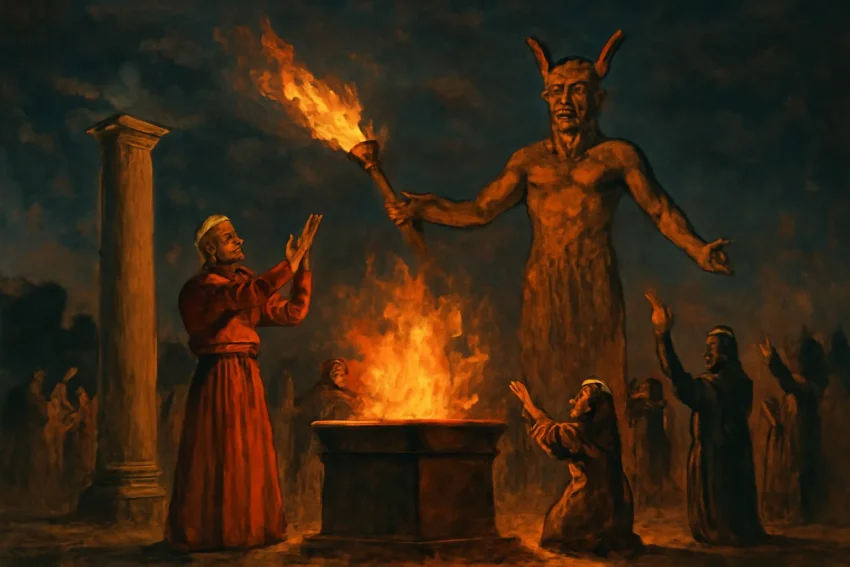
Ba’al worship, a term that often appears in ancient texts and archaeological reports, denotes a family of related deities worshiped across the Levant and parts of North Africa in antiquity. The name Ba’al itself is a Northwest Semitic word meaning “lord” or “master,” and it was used both as a title and as a proper name for specific gods in different regions. This article provides a comprehensive overview of baal worship practices, tracing the origins, exploring the rituals, and surveying the regional variations across Canaanite, Phoenician, and Punic contexts. The aim is to offer a clear, evidence-based guide to how the Ba’als functioned within ancient religious life, how scholars reconstruct those practices, and how later traditions interpreted them.
The term Baal was not a single, uniform deity but a title that encompassed several distinct gods in different city-states. In many texts, the title is attached to a specific god’s epithet, creating names such as Baal Hadad, Baal Hammon, or Baal Zebub. Understanding the origins of Baal worship requires disentangling linguistic usage from political and cultic realities in the ancient Near East.
Baal Hadad (often simply called Baal) is the storm god in the Ugaritic/Baal Cycle tradition. His primary domains include rain, storms, fertility, and agricultural vitality. In this context, Baal Hadad is the chief deity of the Canaanite pantheon in many regions.
Baal Hammon is prominent in North Africa among the Carthaginian and Punic spheres. Over time, Baal Hammon becomes associated with leadership, fertility, and agricultural renewal, and he is frequently depicted alongside his consort Tanit in temple art and inscriptions.
Baal Zebub appears in the Hebrew Bible as a rival deity worshiped by certain Philistine communities, commonly translated as “lord of the flies.” The name itself points to a localized cult attributed to a Baal figure, though interpretations vary widely among scholars.
In most regions, a single deity could bear the title “Baal” while being identified with different epithets and responsibilities. This plurality is essential to grasp because it means that “Baal worship” was not a monolithic set of practices but a family of cults with shared vocabulary and a common motif: the lordship over vital forces in nature and society.
Central Cults, Temples, and Sacred Spaces
Where Baal worship flourished, religious life tended to center around temples, sanctuaries, and ritual spaces that organized offerings, festivals, and ritual drama. The architecture of these sacred spaces—altars, incense altars, hearths, and votive niches—reflected a theology of life—birth, growth, death, and renewal—that Baal worship sought to sustain.
Temples and high places (often hilltop sanctuaries) served as the primary locus for cultic activity. Priests and priestesses carried out daily rites, while regional elites funded and supervised larger public ceremonies.
Altars and stone stelae played a key role in ritual geography. Offering stones, standing stones, and sculpted figures could be positioned at the threshold between the sacred and the profane space of the city.
Votive offerings—animals, grains, wine, oils, and sometimes crafted goods—were dedicated to Baal as a sign of gratitude, reliance, or supplication during droughts, harvests, and times of danger.
Across Phoenician ports, Canaanite inland communities, and Punic settlements, the basic framework of temple life remained recognizable, even as the precise liturgy and iconography varied. In places like Tyre, Sidon, and Carthage, Baal-like figures coexisted with other deities in a polytheistic milieu, suggesting a syncretic religious ecosystem where ritual practice could adapt to changing political and economic landscapes.
Ritual Practices Attributed to Baal Worship
Offerings, Sacrifices, and the Sacred Meal
One of the most consistently attested aspects of Baal worship across sources is the presentation of offerings to secure divine favor. These offerings ranged from inexpensive daily acts to more elaborate ceremonial gifts during festivals. In many texts, the practice of animal sacrifice is foregrounded, though the scale and significance of such sacrifices could differ by region and era.
Animal offerings, especially of sheep and bulls, were commonly presented at altars as means to nourish the deity and recruit their protection for crops, weather, and fertility.
Grain, wine, and oil were offered at its most basic form as libations and ritual meals shared with the gods and, in some accounts, with priests, temple staff, and participating worshippers.
In addition to tangible offerings, ritual meals were often part of temple life—fostering a sense of communion between the divine and human communities.
It is important to note that the evidence for human sacrifice in Baal worship is highly debated and controversial. While some ancient sources describe dramatic sacrifices in broader Canaanite contexts, many modern scholars view these accounts with caution, recognizing that later authors (including biblical writers) may have projected extreme forms of cult behavior onto earlier practices. The consensus among many scholars is that animal sacrifice and ritual meals formed the core of public Baal rites, with human sacrifice representing a minority or contested element in certain local traditions.
Seasonal rites and ceremonies tied to agricultural cycles were central to Baal worship. The storm god’s authority to bring rain and ensure harvests framed a calendar of feasts and processions that bore the name and symbolism of Baal in various locales.
Seasonal processions and temple rites aimed to awaken Baal’s vitality at key agricultural moments, particularly before planting and during harvest time.
Ritualized storms—whether depicted as symbolic lightning, thunder, or rain prayers—recalled Baal’s power to restore fertility to land and people.
Processional offerings along city streets or temple precincts often culminated in a dramatic reception of the deity within the sanctuary, symbolizing renewal and protection over the community.
Ritual Prose, Hymns, and Mythic Drama
The study of Baal’s cult is inseparable from its mythic literature. The heroism of Baal in weather and war cycles is reflected in hymns, prayers, and mythic cycles that narrate Baal’s battles, ascents, and victories over adversaries. Ugaritic texts—especially those concerning the Baal Cycle—offer a window into the literary framing of ritual practice, showing how myth and ritual reinforce one another.
Hymns and prayers invoke Baal’s victory over chaos and the restoration of order, often framed as a solar or seasonal event that sustains life.
The myths describe ritual acts within the narrative frame—recounting the reverent offerings, the ceremonial acclaim of the god, and the communal response to divine intervention.
In ritual terms, these texts served as a template for temple musicians, priests, and cult participants who enacted or re-enacted Baal’s exploits through performance and liturgy.
Texts and Evidence: What the Sources Tell Us
Our understanding of baal worship practices rests on a combination of archaeological finds, inscriptional evidence, and textual sources like Ugaritic tablets and biblical texts. The synthesis of material culture and literary documents allows scholars to infer the shape of Baal cults across different times and places.
Ugaritic tablets from Ras Shamra provide the most detailed non-biblical portrait of Baal as a central storm god, including the Baal Cycle where Baal contends with deities of chaos and gains dominion over certain symbolic spheres of power.
Phoenician inscriptions and votive offerings illuminate the presence of Baal-adjacent deities in urban centers along the Mediterranean littoral, with temple dedications, dedicatory inscriptions, and iconographic motifs that point to ritual life beyond narrative texts.
Hebrew Bible references offer a complex picture of Baal worship as a counterpoint to Yahwistic worship. Biblical authors frequently describe Baal as a rival deity or as the object of prophetic critique, yet they also acknowledge the social reality of Baal cults in the landscape of ancient Israel and Judah.
These sources collectively reveal a religious world in which rituals, offerings, and mythic narratives intersect to sustain social order, agricultural productivity, and communal identity. They also show how the figure of Baal could be adapted to different political and cultural climates, leading to regional variations that nonetheless shared a common core: a divine lord whose favor was sought through structured ritual acts.
Baal in the Hebrew Bible: Conflict, Coexistence, and Interpretation
Across the Hebrew Bible, Baal appears both as a real foe and as a symbol of competing religious economies. The portrayal of Baal worship reveals the authors’ concerns about political alliances, religious syncretism, and the dangers of devotion to other gods. Yet the biblical text also reflects intermittent coexistence and a evolving stance toward Baal-adjacent cults, highlighting the complexity of the relationship between monotheistic emphasis and the diverse religious landscape of the region.
The «Baal of Peor» narrative (Numbers 25) depicts a crisis of moral and cultic order when Moabite and Midianite practices draw Israelites into Baal-worship-like rites, prompting divine anger and punitive response.
In the books of Kings and Chronicles, Baal worship is depicted as a social and political threat, especially when it stabilizes alliances with foreign rulers or when it coexists with Yahweh worship in certain regions.
Scholars emphasize that the biblical editors’ portrayal of Baal is not simply polemical; it also demonstrates how religious identity, political power, and ritual practice intersect in ancient Near Eastern societies.
From a methodological standpoint, reading Baal texts and references requires attention to genre, rhetoric, and historical context. The idea of Baal is not merely a set of beliefs about the divine; it is a framework for understanding how communities organized their agricultural calendars, public festivals, and social duties around a powerful, protective deity who could intervene in times of need.
Because Baal was a title used across diverse city-states and cultures, the practices, iconography, and liturgical details show regional flavor. Here are some of the notable streams within the Baal family of cults:
Canaanite Baal in the inland Levant: A storm and fertility god whose ritual life centered on rainfall, crop renewal, and seasonal fertility, often associated with Anat and Asherah as part of a broader pantheon.
Phoenician Baal and Baal-related deities in coastal cities: The urban ritual economy created public cults, where Baal-like figures appeared in temple complexes along with other deities, and where seaborne trade communities shaped offerings and dedications.
Baal Hammon in Carthage and the Punic sphere: The Carthaginian adaptation of Baal’s cult, linked with agriculture and renewal, often depicted in tandem with Tanit in overlooking inscriptions and temple art; ritual life could involve elaborate processions and public feasts.
Regional variants such as Baal of Maon, Baal of Peor, or other local cults that adapted the Baal title to local myths and political needs. Each variant reflects how a portable divine title becomes embedded in a distinct religious ecosystem.
The regional diversity of Baal worship demonstrates how ancient religious life balanced shared theological motifs with local expressions of devotion. It also shows how the title “Baal” could be mobilized for city-state identity and political legitimacy, especially in contexts where agricultural success or military protection were tied to divine favor.
Common Misconceptions and Scholarly Clarifications
Because Baal worship has entered popular imagination through dramatic biblical narratives and sensationalized summaries, several misconceptions persist. A careful scholarly approach helps separate myth from ritual reality and prevents oversimplification.
Misconception: Baal worship always involved dramatic human sacrifice. Clarification: While some sources discuss animal offerings and ritual drama, evidence for widespread human sacrifice is limited and contested. In many contexts, animal sacrifices and ritual meals were the central act of devotion.
Misconception: Baal worship was a monolithic system with a single dogma. Clarification: Baal was a title used by multiple local deities, and each city’s rites could differ based on climate, agriculture, politics, and cultural exchange. This diversity means “Baal worship” encompasses a broad spectrum of practices.
Misconception: Baal was simply a rival to Yahweh with no shared religious vocabulary. Clarification: The Baal-Yahweh dynamic is complex; in some periods and places, worshipers may have engaged in ritual zones of overlap, competition, or syncretism, reflected in inscriptions and literary texts.
Archaeological and Epigraphic Windows into Baal Rituals
Archaeology provides a tangible counterpart to textual accounts, offering glimpses of how Baal worship manifested in material culture. Artifacts, inscriptions, and architectural remains contribute to a more nuanced picture of ritual life.
Votive inscriptions and offerings that demonstrate what worshipers dedicated to Baal and for what occasions, including votive tablets and inscribed altars.
Iconography such as bull symbols, horns, and festival motifs that point to the god’s agrarian and protective roles in temple art.
Temple architecture—the layout of sanctuaries, altars facing a sacred direction, and the spatial arrangement of processional routes—that illuminate how communities organized public worship and seasonal ceremonies.
Taken together, these sources illuminate a religious system in which the cultic calendar—with its feasts, sacrifices, and processions—was central to communal life, promising divine aid for crops, political stability, and social cohesion.
Ritual Etiquette: How Worshipers Approached Baal
Within Baal worship, ritual etiquette and priestly roles helped regulate access to the divine. The priesthood acted as mediators, interpreters of sacred law, and custodians of liturgical knowledge. Worshipers participated in carefully choreographed rituals that charted a path from private supplication to public celebration.
Priestly roles included officiating at offerings, maintaining temple sanctity, and leading processions during major festivals. Priests often belonged to hereditary families, ensuring continuity of the ritual tradition.
Cosmological symbolism guided ritual movement: offerings rose in significance as they aligned with cosmic patterns of rain, sun, and seasonal renewal.
Public festivals served as communal expressions of gratitude and dependence on the deity’s favor, reinforcing social bonds and political legitimacy.
This combination of public ritual and private prayer created a durable framework for Baal worship that could adapt to evolving social and environmental pressures while maintaining a recognizable core identity across centuries and regions.
Legacy and Modern Reception
Today, studies of Baal worship inform our understanding of how ancient religious landscapes organized themselves around powerful deities associated with weather, fertility, and sovereignty. The legacy of Baal worship extends into modern scholarship, where researchers emphasize:
The importance of contextualization: Recognizing the local political, economic, and environmental factors that shaped Baal rites.
The need to distinguish myth from ritual: Understanding how narrative texts and liturgical practices relate to one another without assuming a one-to-one correspondence.
The value of interdisciplinary evidence: Integrating textual studies, archaeology, art history, and philology to reconstruct religious life more accurately.
In contemporary discourse, Baal is often invoked as a symbol of ancient polytheism and religious pluralism in the Levant. This broader cultural memory helps to illuminate how ancient communities navigated questions of identity, power, and legitimacy in the context of shared sacred spaces and overlapping traditions.
Case Studies: Selected Regional Portraits
To illustrate the variety within the Baal family of deities and the ways in which ritual life took shape in different locales, here are concise case sketches that highlight regional flavor and practice:
Canaanite Baal in the Levant: Centered on the storm-god motif, with seasonal rites tied to rainfall and harvest. Temples would celebrate Baal’s dominion with hymns, processions, and offerings that reaffirmed agricultural prosperity.
Phoenician Baal in the maritime cities: A cosmopolitan ritual economy that integrated Baal with other gods, reflecting commercial networks, temple patronage, and public festivals that helped coastal communities maintain social cohesion.
Baal Hammon and Tanit in Punic lands: The Carthaginian adaptation of Baal theology, where husband-and-wife divine dyads symbolized fertility and renewal, often represented in monumental sculpture and votive generosity.
Baal as a literary motif in biblical texts: The biblical portrayal often treats Baal as a competing religious framework, while scholarship recognizes the political and social dynamics that shaped such representations.
Conclusion: A Complex Tapestry of Beliefs and Practices
Baal worship practices reflect a broad and dynamic religious landscape in the ancient Near East. Far from a single, monolithic cult, Baal represents a family of local and regional cults united by a shared linguistic title and a common set of theological concerns: control over weather and fertility, the protection of the city, and the maintenance of social order through ritual action. The sources—textual, epigraphic, and archaeological—show how beliefs about Baal could be tailored to local climates, economies, and political ambitions, yielding a rich tapestry of rites, symbols, and performances.
For students and curious readers, exploring Baal worship offers a window into how ancient societies negotiated humanity’s most basic needs and fears: rain for crops, secure harvests, victorious weather, and the assurance that the gods remain attentive and responsive. Though the details vary from one city-state to another, the universal impulse to seek divine favor through structured ritual remains a unifying thread across the Baal family of cults. By tracing origins, rituals, and regional adaptations, we gain a deeper appreciation of how ancient people organized their lives around the cycles of nature and the caprices of the divine.