Christian Christmas Songs for Preschool: Faith-Based Music
Christmas is a season filled with stories, wonders, and gentle, joyful melodies. For
early learners, faith-based music offers a natural and memorable way to
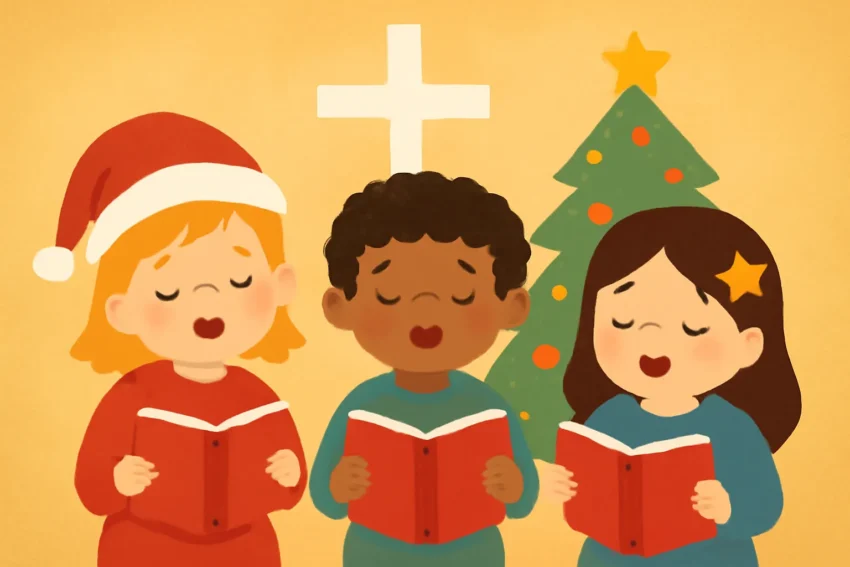
explore the Christmas narrative while building foundational skills. This article dives into Christian Christmas songs for preschool and related phrases—such as preschool Christian Christmas songs, Christian songs for preschool Christmas, and faith-based Christmas songs for preschoolers—and provides practical ideas for selecting,
teaching, and using these songs in a classroom, Sunday school, or family setting. The goal is
to make learning meaningful, developmentally appropriate, and full of warmth and wonder.
What makes Christmas songs suitable for preschool learners?
When we consider Christian Christmas songs for preschool, we are looking at
music that is gentle in tempo, simple in structure, and rich in imagery from the nativity story.
These songs support language development, rhythm sense, and social interaction, while also
reinforcing early literacy through repeated phrases and predictable patterns. For many
preschoolers, music is a multisensory motor activity: they clap, tap, sway, and echo words as they
listen. The combination of multisensory learning and story-based content
helps children remember ideas about Christmas and about faith.
Benefits of including Christian Christmas music in preschool
Language development: Repetition of simple phrases supports vocabulary growth and pronunciation.
Memory and sequencing: Many songs introduce a narrative or sequence—shepherds, angels, stable, manger—that helps memory work.
Rhythm and auditory discrimination: Music enhances the ability to hear and reproduce patterns of sounds, which supports early literacy.
Social and emotional growth: Group singing fosters cooperation, listening, turn-taking, and shared joy.
Faith formation: Preschool-age children begin to grasp basic Bible stories and the meaning of Christmas in a developmentally appropriate way.
Motor development: Movement songs promote gross motor skills through clapping, stomping, and simple dances.
Cultural and religious literacy: Exposure to liturgical songs, carols, and nativity-themed tunes helps children understand a broader tradition.
Key considerations when choosing preschool Christian Christmas songs
Selecting songs for preschool-level Christian Christmas music involves balancing
content with age-appropriateness and inclusivity. Consider the following:
Age-appropriateness: Choose songs with simple vocabulary, slow tempo, and clear imagery. Avoid lyrics with heavy theological concepts that may be confusing for very young children.
Length: Short songs or repetitive verses work best for short attention spans. You can use a longer piece by breaking it into 2–3 brief segments.
Content focus: Emphasize the manger scene, angels, shepherds, and the joy of Jesus’ birth rather than purely secular holiday themes.
Inclusivity and accessibility: Provide visuals, sign language snippets, or actions so that children with varied abilities can participate.
Musical variety: Include lullabies, action songs, echo phrases, and call-and-response formats to engage different learners.
Categories of Christian Christmas songs for preschool
To help you plan a well-rounded experience, you can organize Christian Christmas songs for preschool into categories. Each category highlights a different facet of the Christmas story and offers specific song selections that align with a preschooler’s developmental needs.
Nativity-focused songs
Nativity-themed tunes are a core element of early Christmas music experiences. They introduce the most common
characters and settings in a simple, narrative way. Look for songs with a clear verse about Mary, Joseph, the baby Jesus, the stable, the manger, and the star.
Away in a Manger — A gentle lullaby that invites children to picture the manger and notice the sleeping baby.
We Three Kings — A short, rhythmic piece focusing on the arrival of visitors who present gifts.
Silent Night (age-appropriate adaptations) — A calm, reflective song that can be simplified for preschoolers through short phrases and gentle actions.
Angel and shepherd-themed songs
Songs about angels and shepherds introduce the idea of divine message and humble witnesses. They often include call-and-response cues and movement that keep young children engaged.
Hark! The Herald Angels Sing (simplified)
Angels We Have Heard on High (with actions like “glow” hands for the angelic chorus)
While Shepherds Watched Their Flocks — A short, repetitive chorus that invites kids to act out the scene with soft toys or puppets.
Joyful praise and worship songs
Joyful songs connected to Christmas focus on celebration, gratitude, and praise. They are excellent for transitions, circle time, and worship moments.
Joy to the World — Upbeat and repetitive; great for whole-group singing and simple movement.
A Little Town of Bethlehem — A gentle, contemplative song that can lead into a quiet reflection time.
Action and movement songs
Movement songs leverage the kinesthetic learning style of preschoolers. They can involve finger plays, whole-body actions, and simple dances.
Go Tell It on the Mountain — Rhythm, call-and-response, and easy actions.
We Wish You a Merry Christmas (with a Christian focus) — Can include a handshake or group hug rhythm to reinforce social bonds.
Multisensory and craft-integrated songs
Combine songs with visuals, simple instruments, and tactile activities to solidify memory and meaning.
Jesus is Born (customizable lyrics) — Use fabric stars and a felt stable to tell the story while singing.
preparations for Christmas songs that include peek-a-boo for visuals — Pair with flannel boards or felt boards depicting the nativity scene.
Sample song selections and why they work for preschool
The following lists feature specific songs that are well-suited for preschool Christian Christmas music.
For each song, you’ll find a brief note on the focus, ideal activities, and a suggested duration. Variations of the phrase Christian Christmas songs for preschool appear throughout, acknowledging the different ways educators talk about this material.
Short, repetitive tunes for circle time
Away in a Manger — Duration: 2–3 minutes. Use a simple hand-motion sequence representing the manger, star, and baby Jesus. Perfect for a calm transition and for reinforcing vocabulary like “sleeping baby” and “tiny manger.”
Joy to the World — Duration: 2–4 minutes. Simple chorus with a marching-step motion. Great for classroom celebration and a sense of communal joy.
Reliability and flexibility
We Three Kings — Duration: 2–3 minutes. A short, narrative piece that can be adapted to a quiet storytelling moment with a felt board.
Hark the Herald Angels Sing — Duration: 2–3 minutes. Use a “halo glow” visual and light-up props to illustrate the angel chorus.
Movement-friendly options
Go Tell It on the Mountain — Duration: 3–5 minutes. Use call-and-response with a simple instrument like shakers or maracas to guide participation.
Angels We Have Heard on High — Duration: 2–4 minutes. Incorporate “angel wings” motions using cloths or streamers to dramatize the lines about the angels’ song.
Sample weekly plan: integrating Christian Christmas songs for preschool
A thoughtful weekly plan helps teachers introduce new material without overwhelming preschoolers. Below is a
basic outline that can be adapted to your setting, whether you’re teaching in a preschool classroom, a church-based
program, or a family education time. The plan emphasizes multisensory learning, faith-based themes,
and age-appropriate pacing.
Monday — Introduce a nativity-focused song. Read a simple picture book about Jesus’ birth, show a felt nativity scene, and sing the song 2–3 times with actions.
Tuesday — Movement day. Repeat a movement-focused Christmas song (e.g., Go Tell It on the Mountain) with simplified moves. Encourage children to improvise an action that represents a part of the story.
Wednesday — Quiet time and visual storytelling. Use a felt board to narrate a portion of the nativity while playing a soft version of a Christmas carol in the background.
Thursday — Instrument exploration. Provide simple percussion instruments (shakers, tambourines, bells) and let children explore the beat while singing a chorus or a refrain.
Friday — Family-facing activity. Invite families to join a short circle time where children perform a couple of songs and share a simple craft related to the story, such as a star or manger ornament.
Classroom and family-friendly activities that accompany Christian Christmas songs
Music is most impactful when paired with meaningful activities. Below are practical ideas to extend faith-based Christmas music for preschoolers
beyond the song itself. These activities reinforce the narrative, support social-emotional skills, and invite active participation
from families.
Visual storytelling: Use a felt board or felt characters (Mary, Joseph, baby Jesus, angels, shepherds) to retell the nativity as the song plays.
Symbolic crafts: Create simple ornaments or paper stars that symbolize the guiding light of the Christmas story. Have children decorate with stickers or gentle textures.
Movement and peace: During a quiet moment, invite children to place a hand over their heart or take a slow breath while listening to a gentle carol. This fosters a sense of calm and reverence.
Puppetry and storytelling: Use hand puppets to act out a verse of a song. Children can switch puppets to represent different characters, reinforcing memory through role-play.
Finger plays: Pair short finger play verses with the lyrics. For example, a finger-gesture sequence for “little baby Jesus” can help kids remember the phrase visually.
Family sing-alongs: Share a simple lyric sheet with families and invite them to practice at home. A low-pressure home practice strengthens communities and reinforces learning.
Tips for teachers and caregivers: effective ways to lead Christian Christmas songs
Leading preschool Christian Christmas songs requires patience, clarity, and a gentle, joyful tone. Here are some practical tips:
Model the actions: Demonstrate clapping, tapping, or stomping and then invite children to imitate. Start by doing the motion slowly and then speed up as they gain confidence.
Use visual supports: Keep a large, colorful poster with images that represent the key ideas of each song. This helps children connect words to pictures and stay engaged.
Segment the song: Break longer songs into 2–3 short chunks. Teach each chunk separately and then reassemble into a full performance.
Offer varied pacing: Some children will want to participate immediately; others may need a moment to observe. Create opportunities for both kinds of learners by offering a short listening period before joining in.
Adapt for accessibility: Provide sign-language cues or simplified lyrics for children who may not yet have strong verbal skills. For non-native speakers, offer bilingual prompts or picture supports if available.
Resources to support teaching Christian Christmas songs for preschool
A variety of tools can enhance your practice in teaching Christian Christmas songs for preschool. Here are some categories of resources that are helpful:
Music playlists: Curated collections of short, age-appropriate carols and nativity songs, designed for preschool listening and participation.
Simple instrument kits: Small percussion items like shakers, bells, and rhythm sticks can keep young learners engaged and provide a tactile experience of music.
Visual aids: Felt boards, picture cards, and story visuals that align with each song’s narrative.
Song cards: Lyrics sheets with large fonts and simple phrases to help teachers facilitate participation and confidence.
Family guides: Light-weight, printable guides with at-home activities that echo the week’s songs and themes.
Assessment in a preschool setting: how to reflect on Christian Christmas music learning
Traditional grading is not typical in early childhood. Assessment in a preschool context focuses on observing growth in skills
and engagement. For faith-based Christmas music in preschool, consider the following indicators:
Ability to participate in repeated songs with simple actions
Skill development in basic rhythm activities (clapping, tapping, moving in time)
Memory recall of sequence or narrative elements tied to the song
Engagement during group singing and cooperative movement
Emergence of language use related to the song’s themes (e.g., “angel,” “baby Jesus,” “star”)
Enhancing cultural and religious understanding through Christian Christmas songs
For many families, Christmas is a time of shared tradition within a faith context. Preschool music that centers on
the Christmas story can be a bridge between classroom learning and family observance. When presenting Preschool Christian Christmas songs, you have an opportunity to honor diverse families while
modeling respectful, age-appropriate faith-based storytelling. Variations of Christian songs for preschool Christmas can be crafted to emphasize inclusivity and warmth, ensuring that every child feels welcomed and valued.
Different formats to deliver Christian Christmas songs for preschoolers
Depending on your setting, you may deliver these songs in different formats. Each format has its advantages and can be used
to support multisensory learning and faith-based exploration.
In-person circle time: A compact, interactive session where children gather in a circle, sing, and participate in short actions. This format emphasizes community and shared focus.
Storytime integration: A short reading of a Christmas-themed Bible story or children’s Bible storybook, followed by a related song and a simple activity.
Family-friendly virtual or take-home materials: Printable lyric sheets, simple video demonstrations, and at-home crafts tied to the songs, designed for easy sharing with families.
Puppet or drama-based exploration: A gentle, short puppet show or drama activity that accompanies a song, helping children visualize the narrative and connect with the characters.
Sample schedule for a themed week: Christian Christmas songs for preschool
If you’re planning a themed week around Christian Christmas songs for preschool, you might structure each day
around a different facet of the story and song style. Here is a flexible example you can adapt to a two- or three-week block:
Day 1 — Nativity introduction: Read a picture book about the birth of Jesus, introduce a nativity felt board, and sing a simple nativity tune with actions.
Day 2 — Angels and announcements: Learn an angel-themed song and perform a short chorus with shimmering props to suggest heavenly light.
Day 3 — Shepherds and wonder: Sing a shepherds song while walking around the room with tiny shepherd staffs or soft toys; discuss how the shepherds heard good news.
Day 4 — Joyful celebration: Day centered on a joyful carol and a short movement activity. Invite families to contribute a simple ornament or lyric card.
Day 5 — Reflection and sharing: Quiet time with a small listening activity and a craft reflecting on what Christmas means to each child.
Example crafts and home activities that complement Christian Christmas songs for preschool
Crafts and home activities reinforce what children learn through song and story. Here are simple, low-cost ideas that pair
well with preschool Christian Christmas music and help families participate in meaningful ways:
Star decorations: Cut simple star shapes from paper and decorate with crayons, stickers, or glitter. Attach a short lyric line from a song to help families reinforce language at home.
Nativity felt boards: Create a small felt board display with Mary, Joseph, baby Jesus, shepherds, and angels. Children can arrange and rearrange the scene while the song plays.
Star of Bethlehem mobiles: Craft a simple mobile with paper stars and strings, which can be hung near the listening area for a visual cue of the Christmas story.
Sound-and-sense bottles: Fill clear bottles with small items (corn, beads) and fill with a little water. Label with the song title. Shake to learn rhythm while singing.
Inclusive approaches to Christian Christmas songs for preschool
Creating an inclusive environment is essential when teaching Christian Christmas songs for preschool.
Children come from diverse family backgrounds, and music can be a shared, welcoming experience when approached with care.
Consider these principles:
Respectful storytelling: Present the nativity narrative in a way that is respectful and accessible to all learners, acknowledging that some families celebrate differently or may not celebrate in the same way.
Options for participation: Provide multiple ways to participate—singing, clapping, gesturing, or simply listening—so every child can engage at a level comfortable for them.
Clear language: Use straightforward phrases and avoid overly complex theological language in early development stages.
Closing considerations: nurturing faith through Christian Christmas songs for preschool
Christian Christmas songs for preschool are more than just entertainment. They can be a gentle doorway
into faith-related themes, a way to reinforce community and care, and a tool for building early literacy and musical
foundations. When thoughtfully chosen and skillfully taught, these songs help preschoolers approach Christmas with curiosity,
empathy, and joy. The combination of narrative clarity, musical structure, and movement supports the whole-child approach
that many early childhood programs strive to embody.
Final thoughts: building a durable, joyful program around faith-inspired music
In summary, a durable program of Preschool music with a Christian Christmas focus emphasizes
repetition, gentle pacing, and a rich set of experiences that nurture both mind and heart. By organizing songs into
categories—nativity-based tunes, angel and shepherd pieces, joyful praise, and action-oriented melodies—you can create
a cohesive learning arc that feels natural and meaningful to young children. Pair songs with visuals, sensory activities, and
family engagement to extend the impact beyond the classroom. And remember, the most memorable moments often come from
the simple, shared joy of singing together.