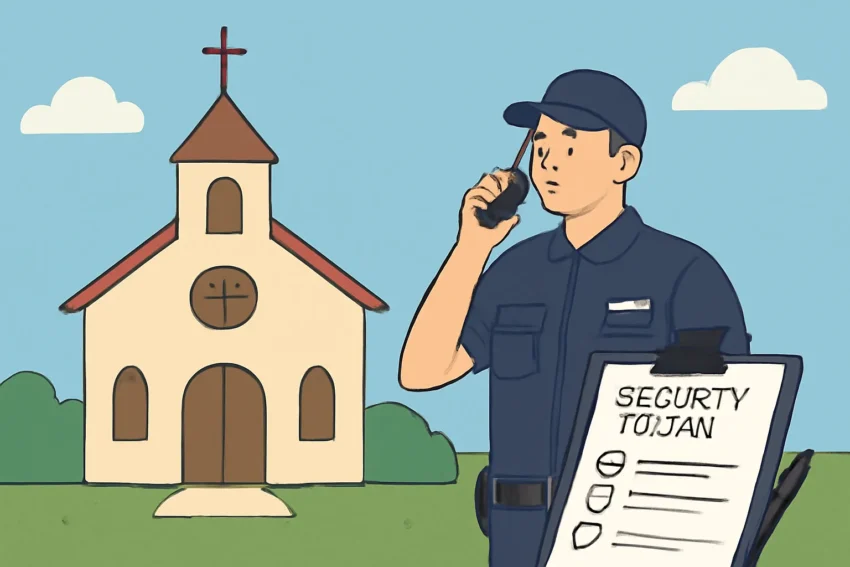
In communities around the world, houses of worship serve as vibrant hubs for worship, learning, and service. Yet the very openness that makes these places welcoming can also present security challenges. Church security planning — sometimes described as security planning for churches, safety planning for congregations, or congregation security planning — is the deliberate process of assessing risks, designing protective measures, and coordinating people and resources so that a church can fulfill its mission while minimizing harm during emergencies. This article offers a practical guide to building a safer environment without sacrificing the warmth and hospitality that define congregational life.
The goal of security planning for religious communities is not to create a fortress, but to create a prepared, resilient culture. A robust approach blends people-centered readiness, physical security, clear policies, and collaborative partnerships with local authorities and community organizations. Whether you are starting from scratch or refining an existing program, this guide provides actionable steps, checklists, and examples to help churches safeguard congregants, staff, visitors, and vulnerable populations.
Foundational Principles of Safety Planning for Congregations
Effective planning rests on a few enduring principles. These ethics-and-operations touchpoints guide every decision, from layout changes to training curricula:
Openness with prudence: Security should enable worship, education, and outreach without creating an atmosphere of fear.
Proportionality: The level of security measures should match identified risks and available resources, avoiding overreaction or under-preparedness.
Scalability: Plans should adapt to different service sizes, events, and activities, from weekly services to special gatherings.
Inclusion and safeguarding: Protecting vulnerable groups (children, elderly, and people with disabilities) is central to all policies and practices.
Collaboration: Security planning is a team effort that involves clergy, staff, lay leaders, volunteers, and outside partners.
As you build a church safety program, recognize that risk management is ongoing. Urban and rural congregations face different threat landscapes — from petty crime and property vandalism to informal harassment or active threats. A threat assessment process helps you identify what matters most to your community, where your assets lie, and how you can respond effectively while preserving the mission of the church.
Risk Assessment and Threat Identification
A comprehensive risk assessment forms the backbone of any congregation security strategy. It helps answer questions like: What assets need protection? Who is most vulnerable? What channels of entry can be controlled? What events pose greater risk? Below are practical steps to conduct a thorough assessment.
Inventory assets: Identify physical assets (buildings, sanctuaries, classrooms), people (staff, volunteers, members, guests), and information (membership data, sermon notes, event schedules).
Map threats: Consider common risk categories such as crime, violence, medical emergencies, weather events, fire, and accidental incidents. Include cyber threats affecting data and communications.
Evaluate vulnerabilities: Examine doors, windows, lighting, alarms, camera coverage, access control, and crowd flow. Assess procedural gaps in check-in processes, contact tracing, and emergency communications.
Assess consequence and likelihood: For each scenario, estimate the potential impact on people, operations, and reputation, as well as how likely the event is to occur.
Prioritize actions: Create a tiered plan that addresses high-probability, high-impact risks first, while maintaining readiness for less likely but severe events.
A risk-based approach ensures that safety investments align with real needs. It also helps with grant writing, budgeting, and communicating with parishioners about why certain measures exist. When performing a risk assessment, involve diverse voices — clergy, lay leaders, security volunteers, and, where appropriate, external experts such as risk management consultants or local law enforcement liaisons.
Physical security is not about isolation; it is about controlled openness. A well-designed security posture uses environmental design, routines, and technology to deter threats and protect people without making the space feel hostile. Key components include perimeter security, interior access control, lighting, cameras, and clear sightlines.
Perimeter and Exterior Security
Creating clear boundaries helps guide behavior and provides time to respond to incidents. Practical measures include:
Lighting that eliminates dark corners and highlights entry points during evening events.
Fencing and landscaping that define boundaries while maintaining accessibility for emergency responders.
Controlled entry points with primary doors monitored during services and events.
Clear signage directing visitors to entrances, check-in desks, and assembly areas in case of evacuation.
Interior Access Control
Inside the building, access control should balance hospitality with safety. Consider:
Visitor management that records arrivals and directs guests to appropriate spaces.
Layered access to restrict sensitive areas (e.g., office suites, classrooms) while keeping common areas welcoming.
Visitor screening policies that are respectful and non-discriminatory, with clear procedures for staff to follow during high-risk situations.
Locked doors with approved exceptions during events and gatherings, plus rapid unlocks for emergencies.
Environmental Design and CPTED Principles
Crime Prevention Through Environmental Design (CPTED) emphasizes how space design influences behavior. Helpful CPTED practices for churches include:
Natural surveillance: Ensure lines of sight to entry points and common areas from staff stations or security posts.
Territorial reinforcement: Use physical cues (landscaping, signage) to indicate ownership and stewardship of the space.
Activity support: Encourage regular foot traffic in hallways and common spaces to reduce vulnerability.
Maintenance signals: Prompt repair of broken locks, lighting, or alarms communicates that the space is cared for and monitored.
Operational Planning and Incident Response
Operational planning translates risk analysis into concrete actions. It includes emergency action plans, incident management, evacuation procedures, and post-incident recovery. A structured approach helps systems, people, and communications stay coordinated under pressure.
Incident Command System and Roles
An Incident Command System (ICS) provides a flexible structure to manage emergencies. Assign roles such as Incident Commander, Safety Officer, Public Information Officer, and Liaison to law enforcement or medical services. Document a clear chain of command so volunteers and staff know who takes charge during a crisis.
Emergency Action Plans and Evacuation
The Emergency Action Plan (EAP) should be a living document that outlines procedures for common scenarios, including evacuation, shelter-in-place, lockdown, and reunification. Essential elements:
Pre-identified assembly points and routes
Roles and responsibilities during evacuation
Methods for accounting for attendees (including children and visitors)
Communication protocols to inform staff, worshipers, and families
Coordination with local emergency services and nearby facilities
Practice the EAP regularly through drills, tabletop exercises, and real-world rehearsals. A periodic review ensures the plan remains aligned with changes in staffing, room layouts, and community needs.
Emergency Communications and Alerting
A robust communications plan ensures timely, accurate information dissemination during incidents. Components include:
Public communications templates for media, social networks, and signage inside the building.
Internal alerts (PA systems, text alerts, or radio networks) to direct people to safety or reunification points.
Coordination with local authorities for information sharing and situational updates.
Consideration of privacy and sensitivity for individuals and families impacted by the incident.
Policies, Governance, and Safeguarding
Clear policies provide the governance framework that makes security measures consistent, fair, and legally sound. They also help staff and volunteers understand expectations and their responsibilities.
Code of Conduct and Behavioral Expectations
A church code of conduct should articulate expectations for behavior, interaction with others, and consequences for violations. Emphasize respect, inclusivity, and safety as core values, while outlining procedures for addressing concerns.
Safeguarding Children, Youth, and Vulnerable Adults
Protecting those most at risk is central to any congregational safety framework. Key elements include:
Background checks and appropriate screening for all volunteers and staff working with children or vulnerable populations.
Two-person rules for activities involving minors or vulnerable adults when feasible.
Code of conduct specific to safeguarding, with clear reporting pathways for suspected abuse or neglect.
Regular safeguarding training for staff, volunteers, and leaders, with updates for new policies or laws.
Churches often collect data for membership, event registration, and safety checks. Policies should balance privacy with safety needs. Consider:
Minimum necessary data collection and retention periods aligned with legal requirements.
Secure storage of sensitive information and controlled access for authorized personnel.
Clear protocols for sharing data with authorities or partners during investigations or emergencies.
Training, Drills, and Readiness
Training and practice turn written plans into practiced responses. A comprehensive program combines initial instruction, ongoing refreshers, and realistic drills that reinforce muscle memory without creating panic.
Core Training Areas
De-escalation and conflict management to reduce potential confrontations and to support staff in tense situations.
Medical response basics, including first aid, CPR, and the use of automated external defibrillators (AEDs).
Fire safety and evacuation, including alarm recognition and safe exit routes.
Emergency communications, ensuring staff can convey critical information clearly and calmly.
Tabletop Exercises and Live Drills
Tabletop exercises simulate scenarios in a low-stakes setting to test decision-making and coordination. Live drills practice actual movement, communications, and reunification. When planning drills:
Start with low-impact simulations and gradually increase complexity.
Include representatives from clergy, security volunteers, and staff.
Debrief after drills with a focus on lessons learned and concrete improvements.
Coordinate drills with local emergency services for realism and accountability.
Community Collaboration and Formal Partnerships
Security planning for churches benefits from partnerships beyond the building. A collaborative approach strengthens readiness and reduces duplication of effort.
Law Enforcement and Public Safety Partnerships
Establish a formal liaison with local police, emergency medical services, and fire departments. Benefits include:
Access to training opportunities and expert guidance tailored to religious settings.
Joint planning for events, large crowds, and high-risk situations.
Quick, accurate information sharing during emergencies to minimize confusion.
Community Resources and Interfaith Networks
Engage with neighboring faith communities, schools, and community centers to share best practices, mutual aid plans, and crisis response resources. A well-connected network can:
Provide mutual aid during shelter-in-place or evacuation scenarios.
Enhance public safety messaging during widespread events.
Offer access to volunteers with specialized skills (health care, logistics, communications).
Technology, Privacy, and Cyber Considerations
The digital dimension of church operations requires careful attention. Technology can enhance safety but also introduces new risks if not managed properly.
Surveillance and Monitoring
If cameras or access-control systems are deployed, policies should define who can view footage, how long recordings are stored, and under what circumstances footage can be shared. Transparent practices build trust and comply with privacy expectations.
Data Security and Communications Infrastructure
Protecting membership data and internal communications is essential. Consider:
Encrypted communications for sensitive information shared among staff and security volunteers.
Regular software updates and patch management for security systems, social platforms, and visitor management tools.
Multi-factor authentication for critical accounts and restricted access to administrative consoles.
A proactive approach to technology helps ensure that security measures support the mission rather than complicating it. When technology is used, maintain a balance between convenience, privacy, and safety.
Resource Planning: Budgeting, Staffing, and Volunteers
Implementing a practical security program requires thoughtful allocation of time, money, and people. A realistic budget accounts for both initial investments and ongoing maintenance.
Budgeting for Security Enhancements
Consider a phased approach that prioritizes high-impact, low-cost measures first, while planning for longer-term investments. Common expense categories include:
Physical improvements (lighting upgrades, door reinforcement, signage).
Access control systems and monitoring equipment (cameras, door sensors).
Training programs and certification costs for staff and volunteers.
Emergency preparedness supplies (first aid kits, AEDs, portable radios).
Insurance and risk transfer considerations and potential grants for safety improvements.
Volunteer Management and Roles
A security program relies on trusted volunteers with defined duties. Structure roles such as:
A simple template helps teams document identified risks, existing controls, residual risk, and action items. Sections typically include:
Asset (what is being protected)
Threat (who or what could cause harm)
Vulnerability (where the weakness lies)
Impact (consequence severity)
Likelihood (probability)
Controls (existing mitigations)
Residual risk (post-controls)
Responsible person and due date
Evacuation and Assembly Point Maps
Visuals help attendees understand how to exit safely. Include clearly labeled maps in common areas, along with digital versions accessible to staff and volunteers. Ensure maps reflect accessible routes for visitors with mobility challenges.
Case Studies and Real-World Scenarios
Real-world examples help translate theory into practice. The following illustrative cases show how churches can apply the concepts of church security planning and related strategies to varied circumstances.
Case Study A: Small Rural Church with Limited Resources
A rural church with a single building hosts weekly services, youth groups, and seasonal gatherings. Challenges include limited staff, daytime and evening events, and remote location. Practical steps implemented:
Establish a volunteer security team composed of trusted members with basic first aid and de-escalation training.
Install adequate lighting around the property and ensure unobstructed sightlines to entrances.
Create a simple visitor check-in process that respects privacy while logging attendees.
Coordinate with the nearest law enforcement unit to schedule periodic safety briefings and drills.
Case Study B: Urban Multi-Use Campus
An urban church campus hosts worship, community meals, counseling, and educational programs. The complexity increases with multiple entry points and high foot traffic. Actions taken:
Adopt a layered access control approach (public spaces vs. back offices).
Implement a centralized incident command structure during large gatherings.
Develop a rapid communication plan for attendees, volunteers, and families.
Engage with city services for joint training and to secure grants for safety upgrades.
Conclusion: Building Safer Congregations
Safety planning for religious communities is not just about installing cameras or posting guards; it is about building a culture of readiness that respects the dignity of every person while prioritizing protection and service. A practical guide to church security planning emphasizes a balanced approach: address real risks with proportionate measures, empower volunteers with clear roles and training, maintain transparent policies that protect privacy, and foster strong partnerships with local authorities and community groups. By embracing a holistic strategy — integrating risk assessment, physical security, operational readiness, safeguarding, technology stewardship, and prudent budgeting — congregations can grow with confidence, knowing they are prepared to respond to emergencies while continuing to welcome all who seek solace, education, and fellowship.
If you are starting today, consider assembling a security planning team that includes clergy leadership, a security coordinator, a facilities manager, a safeguarding officer, and a volunteer from the congregation. Schedule an initial risk assessment, review existing policies, and identify three top priorities for the next six months. Remember: the aim is resilience, not fear, and to ensure that every member of the church community can participate in worship and ministry with confidence in their safety.