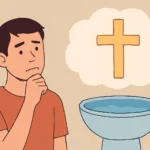
Do You Go to Heaven as Soon as You Die? Exploring Afterlife Beliefs Across Religions
The question “do you go to heaven as soon as you die?” is a shared curiosity across many cultures, even when the answer varies dramatically. Some traditions describe a quick transition to the heavenly realms, while others emphasize an intermediate state or a longer process of judgment. Still others teach that the journey after death is deeply shaped by karma, grace, or a combination of both. In this article, we explore how different faiths and philosophies frame the moment of death and the possibility of entering heaven—or its closest equivalents—immediately or after a period of time. By examining beliefs about afterlife, judgment, and eternal reward, we can better understand why this question is so often debated, and why the answer tends to be as diverse as the people who ask it.
A Framework for Understanding: When people ask about immediate heaven
When readers or listeners ask, do you go to heaven right away after death, they are usually trying to reconcile two ideas: 1) the certainty of a destination after death, and 2) the timing of that destination. Across traditions, timing is connected to concepts like judgment, grace, merit, and soul or consciousness after death.
It is important to recognize that there is often more than one legitimate answer within a single tradition. Some beliefs maintain a period of waiting or purification, while others posit an immediate transition for the virtuous or faithful. Still others reject the idea of a single, universal destination altogether, offering a more complex map of realms, states, or cycles. In what follows, you will encounter a spectrum of views—each shaped by history, scripture, theology, and culture.
A Snapshot of Major Traditions
Below are condensed portraits of several broad religious families. In each case, we highlight how the question of whether heaven comes immediately after death is addressed, and what terms people use to describe the afterlife experience.
Christianity: Immediate Heaven, Purgatory, and Resurrection
Christianity, with its wide range of denominations, offers a variety of answers to do you go to heaven as soon as you die. A few broad patterns are common:
Protestant traditions often teach that, at the moment of death for a believer, the soul moves to the presence of God. In many evangelical and mainline Protestant communities, the emphasis is on eternal life with Christ beginning immediately after death for the faithful, with resurrection and the final judgment to come at the end of time.
Catholic doctrine distinguishes between the moment of death and the final, universal judgment. Officially, each person experiences a particular judgment at death, determining whether the soul goes to Heaven, Hell, or Purgatory (a state of purification). In Catholic thought, heaven may be immediate for some, but others may require purification before entering the fullness of God’s presence.
Eastern Orthodox Christianity emphasizes the mystery of the afterlife. While a blessed dead may enter heavenly glory in God’s presence, there is a strong sense of the ongoing process of salvation and the perfection of the saints. The precise timing is less a clock, more a relation to God’s eternal plan.
Across these streams, the language shifts between immediate reward for the righteous and a more intricate sequence that includes purification or ongoing judgment. In some modern dialogues, Christians also speak of a person entering the presence of God at death, while others focus on the resurrection of the dead that completes God’s redemptive timeline.
Islam: Barzakh, Day of Judgment, and the Path to Paradise or Hell
In Islam, the question “do you go to heaven immediately after death” must be understood in light of the concept of Barzakh (the intermediate state between death and the Day of Resurrection). The standard view is that the soul experiences a preparatory stage after death, where it awaits the ultimate verdict of Allah on the Day of Judgment.
Some Muslims emphasize that the righteous may be granted comfort, visions, or peace in the grave during Barzakh, but final entry into Paradise (Jannah) or Hell (Jahannam) awaits the Day of Resurrection.
Others interpret hadith and Qur’anic imagery to suggest that good deeds, faith, and God’s mercy can influence the immediate experience after death in modest ways, yet the universal judgment remains the defining event of ultimate destination.
The nuance in Islam is important: while there is room for a sense of reward or relief after death, the clear teaching of many traditions is that the complete fulfillment of heaven or hell arrives with the Day of Judgment. Some scholars also discuss the possibility that the truly faithful may encounter a favorable afterlife scenario before the final Judgment, but this does not constitute a universal guarantee of instantaneous admission to Paradise at the moment the breath leaves the body.
Judaism: Sheol, Olam Ha-Ba, and the Messianic Era
Jewish conceptions of the afterlife are diverse and historically fluid. The ancient idea of Sheol pictured a shadowy underworld, but later texts and rabbinic literature introduced more nuanced views, including the World to Come (Olam Ha-Ba) and the resurrection of the dead (techiyat ha-metim) in the Messianic era.
Some streams emphasize a more immediate awareness of divine judgment after death, while others stress that the ultimate destiny depends on one’s life, actions, and covenantal relationship with God.
In modern Judaism, many people do not insist on a single timetable for the afterlife. Some believe in the possibility of a spiritual reward in this life or the next, while others emphasize the eventual restoration of the righteous in an era of peace and justice.
For many Jews, the primary concern is living a life aligned with ethical commandments and holiness, with the afterlife remaining a meaningful, but less precisely defined, dimension. The question “do you go to heaven as soon as you die” thus tends to yield a spectrum of answers, from immediate divine presence to a more gradual recognition of one’s place in the World to Come.
Hinduism: Moksha, Rebirth, and the Transience of Heaven
In Hinduism, the afterlife is deeply tied to karma and the cycle of samsara. Heaven and hell are temporary destinations within this cycle, not final destinations. The ultimate goal is Moksha—liberation from rebirth and union with the ultimate reality, Brahman.
A virtuous life can lead to a pleasant heavenly realm (Svarga) for a period, but this is not permanent in most Hindu frameworks.
After exhausting one’s merit in Svarga, the soul returns to the earthly plane for another birth, continuing the cycle until Moksha is achieved.
Therefore, the question “do you go to heaven as soon as you die” in Hindu thought does not have a universal yes or no. Some souls may experience heaven-like pleasures briefly after death, but the ultimate end is not a permanent heavenly residence unless one attains Moksha. This perspective invites a long view of life’s purpose: to move beyond the cycle of rebirth rather than to secure an everlasting residence in heaven alone.
Buddhism: Rebirth, Realms, and the End of Suffering
Buddhism teaches that there is no permanent, unchanging self and that sentient beings move through a series of rebirths guided by karma. The ultimate aim is Nirvana, the cessation of suffering and the end of the cycle of birth and death.
Within Buddhist cosmology, there are numerous realms, including heavens (deva realms) where beings may experience great pleasures, but these are temporary and impermanent.
Whether you would describe this as an “immediate heaven after death” depends on the tradition. Some schools emphasize a favorable rebirth resulting from virtuous action, which might feel like a quick ascent, while others emphasize the more important goal of awakening rather than secure a place in a heavenly calendar.
In Buddhism, the path after death is less about achieving a permanent residence in a heaven and more about escaping the cycle of samsara entirely. Thus, the framing of the question “do you go to heaven as soon as you die” often shifts toward whether the dying person has generated enough merit, understanding, and compassion to reduce suffering in the next life—though the emphasis remains on liberation, not an everlasting stay in heaven.
Sikhism and Other Traditions: Devotion, Truth, and the Afterlife
Sikhism emphasizes a devotion to God (Naam) and ethical living as a path toward union with the divine. The afterlife imagery in Sikh scripture speaks of merging with the divine Light in Sachkhand (the Realm of Truth). In this worldview, the focus is less on a simple binary of heaven or hell at death and more on the soul’s alignment with divine will.
Sikhs understand life as a chance to awaken to God-consciousness; death is a transition rather than an endpoint. The afterlife, in many teachings, is about closeness to God rather than a secular-imagined “heaven” as a fixed, permanent dwelling.
Other traditions, including several Indigenous and regional faiths, offer their own accounts of an afterlife that may feature ancestral realms, spirit worlds, or cycles of rebirth. Across these diverse lines, the common thread is often a moral map: conduct in this life shapes what comes next.
Key Concepts That Shape Beliefs About Death and Heaven
Though the details differ, some core ideas recur across traditions when people ask “do you go to heaven as soon as you die”.
Judgment and accountability: The soul’s destination is often tied to a life lived in alignment (or misalignment) with divine or moral law.
Grace or mercy: In several faiths, especially within Christianity and Islam, divine mercy can alter the outcome or timing of post-death rewards.
Intermediate states: States like Barzakh (Islam) or purgatorial purification (Catholicism) are common ways to describe gestation periods between death and final destiny.
Temporary versus permanent destinations: Heaven, if it exists in a tradition, might be permanent for some souls, or one of several stages in a larger journey.
Karma and rebirth: For many Eastern traditions, what happens after death is deeply connected to one’s actions across lifetimes.
Ultimate goal: Some frameworks prioritize union with the divine or liberation from suffering rather than a fixed, static afterlife location.
A useful way to approach the question is to separate the personal, pastoral, and doctrinal dimensions:
Personal belief: How individuals feel about the afterlife often depends on tradition, family background, personal experiences, and contemporary stories or near-death experiences.
Pastoral care: Spiritual leaders commonly frame death as a time of mercy, justice, or hope, emphasizing God’s love more than a precise timetable.
Doctrinal nuance: The official teachings of a tradition may set out a complex path from death to final judgment, rather than a simple, one-step ascent.
When some people ask this question in a modern, pluralistic society, they are also testing how different beliefs intersect with contemporary science, philosophy, and ethical life. The core concern is not merely the mechanics of the afterlife, but the meaning of life, the moral weight of one’s actions, and the hope that challenges and suffering have purpose within a larger cosmic design.
Several traditions describe an intermediate state in which the soul or consciousness experiences a form of reality distinct from the living body but not yet in an ultimate, final dwelling. These stages can be temporary, varying in length, and often correspond to the moral and spiritual condition of a person at death.
Barzakh (Islam): an intermediate state where the soul awaits resurrection, sometimes described as a period of comfort for the righteous or punishment for the wicked, depending on the interpretive tradition.
Purgatory (Catholicism): a purification that prepares the soul for full union with God, typically understood as a temporary condition rather than a final destiny.
State of the righteous or the blessed (various Christian and Jewish readings): a phase of sweet, immediate presence with God or peace, followed by a final consummation at the last judgment.
The existence and nature of an intermediate state are not universally accepted in all branches of every tradition. Still, this concept helps many believers reconcile the idea of divine justice with mercy and a longing for a transformed existence after death.
Beliefs about whether heaven is reached immediately or after a process can shape everyday life in meaningful ways. For some people, the assurance of an immediate heavenly outcome for the righteous fosters courage, hope, and a sense of ultimate justice. For others, the emphasis on purification or ongoing judgment can strengthen motivation to live ethically, practice compassion, and cultivate spiritual discipline.
Ethical living: If one believes that actions matter for one’s final state, there is often a stronger emphasis on compassion, honesty, hospitality, and service.
Grief and consolation: How a community speaks about death affects how families grieve. Some narratives offer immediate consolation in the certainty of God’s mercy, while others focus on the mystery and the ongoing relationship with the deceased.
Hope and resilience: Belief in some form of continued existence beyond death provides a framework for meaning-making in the face of loss.
To ground the discussion, here are some common myths, followed by clarifications:
Myth: Heaven is always immediate and guaranteed for every good person. Clarification: In many traditions, the timing and certainty of heaven depend on factors such as judgment, mercy, purification, and the nature of one’s faith and deeds.
Myth: There is only one heaven for all people. Clarification: Some traditions depict multiple heavens or levels, while others envision a single divine presence accessed in diverse ways.
Myth: The afterlife is only about reward and punishment. Clarification: Some teachings emphasize spiritual transformation, liberation, or reunion with the divine as the ultimate goal, beyond a simple reward/punishment dichotomy.
In the present century, many people draw on religious heritage while also incorporating personal experience, science, and interfaith dialogue. Some trends include:
Pluralistic spirituality: People increasingly encounter multiple narratives about the afterlife and synthesize them into personalized beliefs. The question “do you go to heaven immediately after death” becomes less about doctrinal enforcement and more about personal meaning and hope.
Near-death experiences (NDEs) and lingering questions: Accounts of out-of-body experiences, light-filled tunnels, and encounters with unworldly beings provoke fresh discussions about consciousness, heaven-like states, and the boundary between life and death.
Ethics of the living: Some communities emphasize how the living honor the dead—through memory, ritual, and social justice—more than the precise mechanics of what happens after death.
Interfaith conversations: In a globalized world, believers listen to Catholic, Muslim, Jewish, Hindu, Buddhist, and secular perspectives alike, often discovering shared values around compassion, dignity, and care for the vulnerable.
Because beliefs about death and the afterlife touch deep emotions and identity, approaching the topic with care is essential. A few guidelines:
Listen before you judge: Different traditions have internal diversity. Do not assume a single, monolithic view.
Acknowledge mystery: Many teachings emphasize that the ultimate nature of the afterlife is beyond full human comprehension.
Center compassion: Even when doctrines differ, most faiths encourage compassion for the dying, the bereaved, and the human family.
Avoid caricatures: Use precise terms (Barzakh, Purgatory, Nirvana, Olam Ha-Ba) rather than generic phrases that oversimplify beliefs.
The question “do you go to heaven as soon as you die” does not have a single universal answer. Across religions, cultures, and eras, people have imagined the moment of dying in many ways: some speak of an immediate presence with the divine, others describe a waiting period or purification, and still others frame death as the doorway to a longer journey that culminates in universal reconciliation or liberation. By exploring the diverse map of afterlife beliefs—from immediate entry to heaven, to intermediate states, to reincarnation or Moksha—we gain a richer understanding of how humans interpret mortality, justice, mercy, and love.
Whether you read this as a theological question, a philosophical inquiry, or a personal mystery, the core themes remain remarkably similar: dignity in life, care for others, responsibility for our choices, and hopeful engagement with the unknown. The arc from death to whatever lies beyond is, for many, a reminder to live with integrity, compassion, and intention. And in that sense, the age-old question continues to invite conversation, reflection, and unity across beliefs: what kind of life makes a meaningful bridge to whatever comes after?