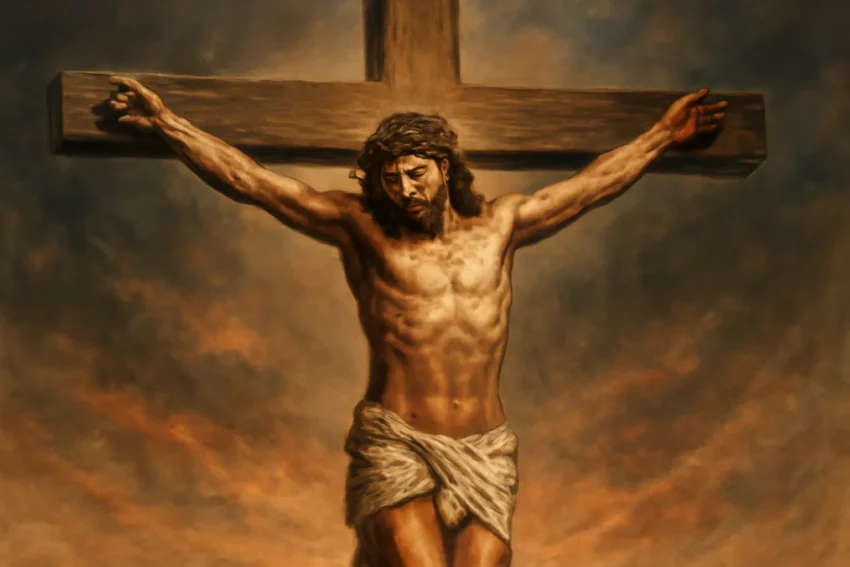
Introduction: Did Jesus Die for Our Sins? A Question with Deep Roots
Across centuries of faith and reflection, the question “Did Jesus die for our sins?” has stood at the center of Christian
proclamation. For many believers, the claim is not merely a theological idea but a defining event that shapes
worship, ethics, and hope. The answer, as presented in the pages of the Bible, is complex and multifaceted: Jesus’ death is presented as the decisive act of atonement—an event that addresses human brokenness,
satisfies divine justice, and opens the way to a restored relationship with God.
This article offers a broad, biblically grounded explanation of whether and how Jesus’ death functions as atonement for sin.
We will explore Old Testament foreshadowing, the New Testament accounts, and the main atonement
theories that Christians have developed over time. While this piece surveys a range of perspectives, the aim is to
present a faithful, accessible overview based on Scripture while noting where theological traditions differ.
What the Bible Teaches: Is Jesus’ Death for Our Sins a Core Claim?
The central claim of the Christian Scriptures is that Jesus’ death on the cross was a decisive act related to sin and forgiveness. The words and narratives of the New Testament repeatedly tie Jesus’ death to the problem of human rebellion
against God and to the provision of grace. Phrased plainly, the Bible presents that through Jesus’ death,
humanity is granted remission, reconciliation, and the possibility of a transformed life.
The exact way this works has been described with a range of theological terms. Some call it a penal substitution—a legal
framework in which Christ bears the penalty deserved by sinners. Others emphasize victory over sin and death (a
Christus Victor reading), or the idea that Jesus’ life and death demonstrate and cultivate moral influence that leads
people toward repentance and faith. Still others speak of a ransom paid to liberate humanity from bondage, or of a broader recapitulation of all things in Christ. Each of these perspectives seeks to describe the same biblical reality
from different angles, and many believers find truth in more than one picture.
Key Scriptures That Speak About Sin, Atonement, and the Death of Jesus
To ground our discussion, here are representative passages that teachers and pastors often cite when they consider the claim “Did Jesus die for our sins?” in light of the biblical witness.
Isaiah 53 — The prophetic portrayal of the Suffering Servant, who bears our iniquities and by whose wounds
we are healed, is frequently cited as prefiguring the cross and its atoning work.
Romans 3:23–26 — Paul declares that all have sinned and fallen short of God’s glory, yet Jesus’ death displays
God’s righteousness and provides a means for justification by faith.
Romans 5:8 — “God demonstrates his own love for us in this: while we were sinners, Christ died for us.” This highlights
the unmerited grace disclosed in the cross.
Romans 6:23 — The wages of sin is death, but the gift of God is eternal life through Jesus Christ our Lord.
1 Corinthians 15:3–4 — “Christ died for our sins in accordance with the Scriptures, that he was buried, that he was raised
on the third day in accordance with the Scriptures.” This emphasizes both death and resurrection as essential components
of the gospel.
Galatians 3:13–14 — Christ redeemed us from the curse of the law by becoming a curse for us, so that the blessing of Abraham
might come to the Gentiles through faith.
Hebrews 9–10 — The author contrasts the old covenant with the new, showing how Jesus’ once-for-all sacrifice
surpasses the repeated animal offerings of the old system.
1 John 2:2 — Jesus is the atoning sacrifice not only for believers but for “the sins of the whole world,” inviting people
to receive forgiveness by faith.
1 Peter 2:24 — The righteous one bore our sins in his body on the tree, enabling us to live unto righteousness.
Old Testament Foreshadows: The Promise of Atonement
Before Jesus’ birth, God began laying groundwork for the idea that sin requires forgiveness and that blood and sacrifice
point toward a future fulfillment. Scripture frequently presents typological images—persons, events, and institutions that point beyond themselves
to a greater reality fulfilled in Christ.
The Levitical system (Leviticus 16) describes the Day of Atonement, in which a priest enters the Most Holy Place to make
atonement for the people’s sins. Although this ritual was repeated annually, it signaled the necessity of a definitive solution for sin.
The Passover lamb (Exodus 12) exemplifies substitutionary imagery: the blood of a spotless animal spared God’s people from judgment.
In Christian readers, the Passover motifs often point to Jesus as the true Passover Lamb who takes away the sin of the world.
Abraham and the sacrifice of Isaac (Genesis 22) includes a dramatic moment where obedience and faith intersect with the provision
of a substitute. While not identical in form, this narrative contributes to a broader biblical pattern that points toward a decisive divine act.
The biblical narrative increasingly frames forgiveness and reconciliation as a gift grounded in God’s grace
that culminates in Jesus. The phrase “did Jesus die for our sins?” gains its strongest clarity when we see how the Old Testament promises meet the New Testament fulfillment in the person and work of Christ.
New Testament Fulfillment: The Death of Jesus and the Atonement
The four gospels narrate the crucifixion of Jesus, but the theological meaning of that event is unpacked throughout the letters of the
New Testament. The phrasing often centers on the forgiveness of sins and the creation of a new relationship with God that
was previously impossible under the broken old covenant.
Jesus’ own words on the cross, including “It is finished” (John 19:30), are read by many as declaring the completion of the work
required to deal with sin and separation.
The preaching of the apostles repeatedly anchors salvation in the events of Jesus’ death, burial, and resurrection—as essential
factual components of the gospel message.
Redemption and justification are presented as gifts received by faith, in virtue of what Jesus accomplished on the cross.
When Christians ask “Did Jesus die for our sins?” they are often pointing to the way the man Jesus, who lived among people
in first-century Palestine, became the locus of God’s grace for the world. The cross, then, is not merely a tragedy; it is the center of God’s plan for salvation and the means by which humanity can be reconciled to its Creator.
Understanding Atonement: Theories and Perspectives
The church has described the work of Christ from several theological angles. While no single model captures the entire truth, each contributes
to a fuller picture of what did Jesus die for our sins means in practice and in faith.
Penal Substitution — The idea that Christ bore the penalty due to sinners, satisfying justice so that God can pardon the guilty
without compromising righteousness. This is a dominant motif in many Protestant traditions.
Christus Victor — Jesus defeats the powers of sin, death, and evil, rescuing humanity from bondage and securing a victorious outcome.
Moral Influence — Jesus’ life and death reveal God’s love in a way that moves people toward repentance and a transformed life.
Ransom Theory — Jesus pays a price to liberate humanity held in bondage, often framed in terms of rescue from captivity to sin and death.
Recapitulation — Christ sums up and re-fashions creation by embodying and recapitulating the trajectory of human history to its intended telos.
Governmental Theory — Jesus’ death demonstrates God’s sovereignty and upholds moral order, underlining the seriousness of breaking God’s law.
It is important to note that different Christian traditions emphasize different aspects of atonement. Some communities will
foreground penal substitution as the key, while others will highlight victory over evil or moral transformation. Yet across these varieties, a common claim remains: the cross is the place where sin is dealt with,
and faith in Christ is the means by which individuals receive forgiveness and reconciliation.
What Did Jesus Accomplish on the Cross?
Beyond a single doctrine, the biblical witness portrays several interwoven accomplishments associated with Jesus’ death.
Forgiveness of sins — The cross makes possible the remission of transgression and the release from guilt that separates humans from God.
Justification and reconciliation — Believers are declared righteous by faith in Christ, enabling restored relationship with God.
Redemption — The cross purchases spiritual liberty, delivering people from bondage to sin and to the powers that oppress.
New covenant — Jesus inaugurates a new way of relating to God, not through animal sacrifice alone but through faith, the Spirit, and a transformed life.
Imputation and transformation — God credits Christ’s righteousness to believers, while believers are gradually conformed to Christ in character and conduct.
For readers asking how exactly did Jesus die for our sins in a practical sense?, the answer lies in understanding the cross as both
a judicial act and a relational invitation: justice and mercy meet in the person of Jesus, allowing humans to be declared
righteous and invited into a lived, daily relationship with God.
Practical Implications for Believers: How the Death of Jesus Shapes Life
Knowing that Jesus died for our sins has consequences that go beyond doctrine. It shapes identity, worship, and daily living.
Identity in Christ — Believers see themselves as reconciled people, adopted into God’s family, with a future hope.
Forgiveness and reconciliation — Christians are called to receive forgiveness personally and to extend forgiveness to others.
Transformation and sanctification — The cross invites a transformed life, empowered by the Spirit, which bears fruit in love, joy, peace, and justice.
Hope amid suffering — The cross and resurrection provide a narrative through which suffering can be understood in light of God’s purposes.
Grace-driven ethics — Because salvation is by grace, believers are urged to live in gratitude and as ambassadors of that grace in the world.
Common Questions and Clarifications
As people reflect on the phrase “Did Jesus die for our sins?”, a few common questions often arise. Here are concise clarifications that reflect mainstream biblical teaching while recognizing diverse interpretations.
Was Jesus’ death universal or limited in scope? — Some traditions emphasize universal scope (Christ died for sins of all people and offers forgiveness to all who believe), while others speak of the particularity of grace given to those who trust in him. The most common biblical emphasis is that the benefits of Jesus’ death become effective to those who respond in faith.
Is the cross still necessary for Christians today? — The cross remains central because it articulates the core message of salvation: forgiveness, reconciliation, and new life.
Do other religions believe in atonement? — Many religious traditions address forgiveness, guilt, and moral reform, but Christian teaching about the unique work of Jesus on the cross differentiates its path to salvation.
Can one affirm the cross without subscribing to a single theological label? — Yes. People often enjoy a robust faith that appreciates multiple facets of atonement without feeling compelled to adopt one theory to the exclusion of others.
Throughout sermons, studies, and conversations, readers and hearers ask about this topic using varied language. Some common formulations include:
“Did Jesus die for the sins of the world?” — Emphasizing broad scope and universal potential for forgiveness.
“Did Jesus die on the cross to atone for humanity’s sins?” — Focusing on the means by which sin is addressed.
“Did Jesus’ death pay the penalty for our transgressions?” — Highlighting the legal or judicial aspect of atonement in some traditions.
“Is the forgiveness of sins possible only through Jesus’ death and resurrection?” — Capturing the central claims about Jesus’ unique role in salvation.
“What did the death of Jesus accomplish beyond forgiveness?” — Inviting exploration of reconciliation, empowerment, and new life.
To study Did Jesus die for our sins? in a careful way, consider adopting the following approach, which helps readers appreciate both the continuity and the differences within biblical teaching.
Read the Old Testament passages that speak of atonement, sacrifice, and mercy to understand the background for the cross.
Survey the four Gospels to see how each narrator presents the events of Jesus’ death, paying attention to key terms like redemption, blood, and kingdom.
Consult Paul’s letters to see how early Christians interpreted Jesus’ death in terms of justification, redemption, and the new covenant.
Note how Hebrews develops a contrast between the old covenant sacrifices and the once-for-all sacrifice of Christ.
Consider how different Christian traditions interpret these texts and how those interpretations affect worship and practice.
Conclusion: The Biblical Answer to “Did Jesus Die for Our Sins?”
The biblical witness presents Jesus’ death on the cross as more than a historical event. It is portrayed as the
decisive act by which sin is forgiven, justice is satisfied, and humanity is invited back into relationship with God.
The atonement described in Scripture encompasses legal, relational, cosmic, and personal dimensions. Whether one frames it primarily as penal substitution, victory over the powers, moral influence, or another model, the biblical claim remains: Jesus is the center of God’s work to redeem and restore the world.
If you are exploring this question, a patient, study-filled path can illuminate how different passages relate to one another. The life, death,
and resurrection of Jesus repeatedly call readers to respond in faith, trust, and obedience—recognizing that the cross is not merely a symbol
but the place where God’s love and justice meet. As you reflect on Did Jesus die for our sins, consider how these biblical
truths invite you into a deeper relationship with God and a life shaped by grace.