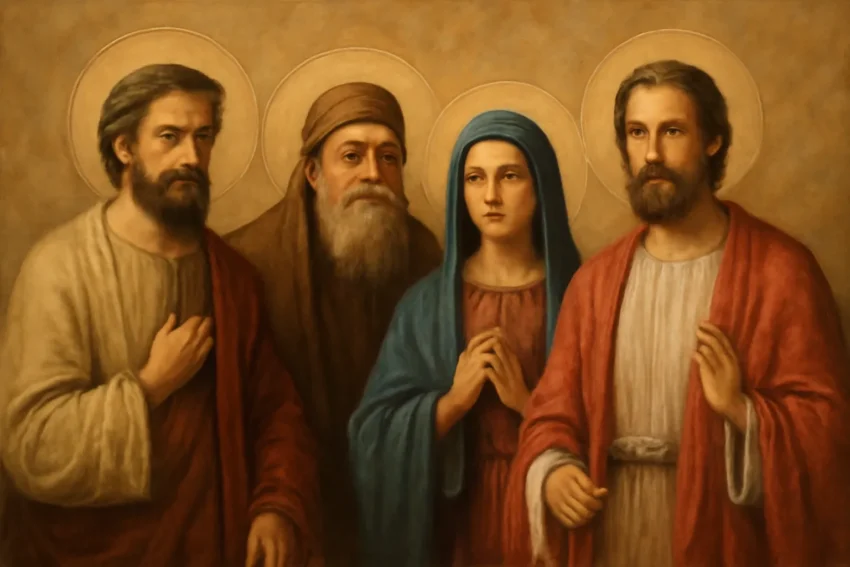
The Bible is a panoramic portrait of people who lived, believed, failed, recovered, and grew in their relationship with the divine. Bible figures are not just names in a list of characters; they are the voices through which towering themes—faith, obedience, courage, mercy, justice, failure, forgiveness, and redemption—are explored. From the earliest generations in Genesis to the testimonies of the early church, these figures carry narratives that answer timeless questions: Who is God? Who are we in relation to the divine? How does God act in history when people choose trust rather than fear?
This article surveys key people and their stories, presenting each figure in context and highlighting the lessons they leave behind for readers today. Throughout, you’ll find variations of names and titles—such as Abram/Abraham, Sarai/Sarah, Jacob/Israel, Peter/Simon Peter, and Paul/Saul—reflecting the breadth of biblical tradition and its use of multiple modes of reference to describe the same person across different periods and audiences.
Patriarchs and Matriarchs: Foundations of Faith
Abram and Sarai (Abraham and Sarah)
Often described as the father and mother of faith, Abram (later Abraham) and his wife Sarai (later Sarah) embody the Bible’s powerful storyline of divine promise meeting human doubt. In the call of Abram, God declares a radical relationship with a family and a nation: you will be a blessing to the nations and your offspring will number as the stars. This is the origin of the covenantal thread that weaves through both Old Testament narratives and the New Testament understanding of faith as trust in God’s promises. The journey of Abraham — from the land of Ur to the land of Canaan — is a study in faith under pressure, including moments when trust is tested by delay and uncertainty. The narrative also emphasizes hospitality, righteousness, and care for the vulnerable as integral facets of a life lived with God.
In the life of Abraham, the idea that righteousness is counted by faith rather than perfect performance becomes a central motif. The couple’s experiences—bearing a promised heir in old age, welcoming strangers as divine guests, and their willingness to follow God into unknown territory—offer a framework for understanding covenant faithfulness, obedience, and the deep longing for a future shaped by God’s blessing. The story of Sarai/Sarah mirrors this with its own arc of doubt, laughter, and eventual trust, culminating in a pregnancy that challenges natural limits and signals the reach of God’s plan beyond human expectations.
Isaac and Rebekah
Isaac, the son of Abram and Sarai, inherits the promises and becomes a bridge between the patriarchs and the next generation. While his life is less dramatic than his father’s, Isaac’s role is crucial in sustaining the line through which the blessing would pass. His wife, Rebekah, is portrayed as a decisive partner who helps ensure that the birthright and blessing pass to the rightful heir, foreshadowing themes of divine sovereignty and human agency working together.
Jacob (Israel) and Esau
Jacob, who later receives the name Israel, is a study in perseverance, cunning, and transformation. His complex journey—birthright pursuits, deception, a nocturnal encounter that changes his limp and his name, and a night-time wrestling with the divine—speaks to the ways God works through imperfect people to accomplish grand purposes. His twelve sons become the tribes of Israel, linking a family story to a national epic. Esau, in contrast, represents the tension between immediate appetite and lasting inheritance, and the contrast between impulsive choices and future-oriented faith.
Joseph
Joseph stands out for his capacity to interpret dreams, endure betrayal, and rise to leadership within a hostile environment. His life is a powerful narrative about forgiveness, redeeming providence, and the way God can use apparent misfortune to safeguard a people during famine. The arc—from favored son to prisoner to governor—illustrates how integrity, patient trust, and steadfast faith can shape salvific outcomes for a broader community. Joseph’s story also highlights the theme of divine sovereignty working through human decisions, even when people act with ill intent.
Moses is the quintessential deliverer and lawgiver in biblical memory. Raised in a realm of power and humbled by the burning bush, he becomes the instrument through which God liberates the people from Egyptian oppression and receives the Law, including the Ten Commandments, at Mount Sinai. The life of Moses encompasses the tension between human frailty and divine purpose: a reluctant speaker who nevertheless becomes a fearless leader, a shepherd who becomes a spokesman for God, and a mediator who guides a people through wilderness wanderings toward a promised homeland. Aaron, as his brother and priest, helps structure the liturgical and ceremonial life of Israel, illustrating how leadership in faith often includes both proclamation and service.
Prophets: Isaiah, Jeremiah, Ezekiel, Daniel
The prophetic books present messengers of God who call the people back to covenant faithfulness, often in the face of political turmoil and moral compromise. Isaiah articulates the hope of a coming Messiah and the universal scope of God’s salvation. Jeremiah speaks with candor about heart-level change, calling the people to true repentance rather than mere ritual observance. Ezekiel uses vivid symbolic acts and visions to critique idolatry and to promise spiritual renewal. Daniel embodies steadfastness in exile, demonstrating how wisdom and courage can coexist with humble dependence on God even in foreign courts. Taken together, these prophets present a broad panorama: judgment, mercy, hope, and a future beyond exile that points forward to enduring themes in the biblical witness.
Kings: David and Solomon
David is a man after God’s own heart who becomes a unifying monarch and a central figure in biblical history. His life blends triumph with failure and shows how genuine repentance and trust can reset a life marked by weakness. David’s psalms—many of which express longing, lament, joy, and praise—serve as a treasury of language for the worshipful life. Solomon, his son, inherits a kingdom of wealth and wisdom but faces the temptation to rely on splendor rather than on covenant fidelity. The tension between wisdom and pride, devotion and distraction, makes Solomon a nuanced study: how wisdom can guide a nation, yet personal choices can undermine even the most brilliant administration.
Judges and Judges-like Figures
Deborah
Deborah, a prophet and judge, demonstrates how courage, discernment, and faith can lead a people to victory. Her leadership shows that wisdom is not simply masculine or martial; it is a gift for complex decision-making under pressure. Her story also highlights the power of collaboration with other leaders, including Barak, who trusts her guidance and leadership in battle. Deborah’s song and prophecy celebrate the deliverance of Israel through steadfast faith and communal courage.
Gideon, Samson, and Other Judges
Gideon embodies the tension between human insecurity and divine strength. His journey—from a hidden shepherd hiding his fear to a fearless leader who follows God’s strategy to defeat overwhelming odds—emphasizes the biblical theme that true power rests in God’s presence rather than in human methods. Samson, with his extraordinary strength and his tragic flaws, offers a cautionary tale about the dangers of self-reliance and the grace of God that can still accomplish redemptive purposes through broken vessels.
Women of Faith: Courage, Wisdom, and Influence
Esther
Esther stands at the crossroads of fate and risk. As a Jewish queen in a foreign imperial court, she uses political acumen and bold courage to avert genocide and secure the survival of her people. Her story demonstrates how timely courage and a willingness to act for the greater good can reveal the hidden purposes of God even in seemingly unlikely circumstances.
Ruth embodies steadfast loyalty and radiant hospitality toward outsiders. Her journey from a Moabite widow to the great-grandmother of King David is a narrative of humble fidelity, family devotion, and divine providence guiding ordinary lives toward extraordinary outcomes. The phrase “where you go, I will go” has become a timeless expression of commitment and kinship grounded in trust.
Mary, Martha, and Other Women in the Gospels
Mary of Nazareth is honored for her responsive faith—she entrusts her life to God’s plan, becoming the mother of Jesus. Martha represents active service and the balance between contemplation and action as she welcomes the Lord into her home. The figures of Miriam and other women in Scripture remind readers that the biblical story includes female voices who contribute to redemption, leadership, and community life across generations.
Apostles and Early Church Leaders
Peter (Simon Peter)
Peter is often portrayed as the rock upon which the early church is built, yet he is also a model of human growth and transformation. His progression—from impulsive speech and fear to bold proclamation after Pentecost—illustrates how a life can mature through encountering the risen Christ and receiving the Holy Spirit. His leadership helps shape the early Christian community’s identity, mission, and pastoral care.
Paul represents a dramatic turn from persecutor to promoter of the gospel. His missionary journeys, theological letters, and enduring commitment to Christ demonstrate how a personal encounter with Jesus can redefine purpose, vocation, and worldview. Saul’s epistles—addressing topics such as faith, grace, righteousness, church unity, and Christian ethics—continue to influence theological reflection and practical living across diverse Christian traditions.
John, James, and the Beloved
John and James (the sons of Zebedee) offer complementary strands of the New Testament witness. John’s Gospel emphasizes encounter with the incarnate Word and the theme of love, while the Epistles attributed to him highlight the ethical and doctrinal implications of faith in Christ. James, with a practical voice, speaks to how faith must be evidenced in action, shaping a mature, virtuous Christian life. The “Beloved Disciple” tradition highlights a close relationship with Jesus, underscoring intimate devotional knowledge alongside communal responsibility.
Women in the New Testament Church
Beyond Mary and Mary Magdalene, the New Testament acknowledges women who played vital roles in the life of the early church and its mission. Priscilla and Aquila are commended for teaching alongside Paul and demonstrating collaborative ministry. Phoebe is named as a deacon or messenger who helped carry the early Christian message. These mentions affirm that leadership, teaching, hospitality, and service in the early church were permeated by women who contributed to spreading the gospel and strengthening communities.
Key Stories and Biblical Themes Across Figures
While each figure has a unique arc, several enduring stories and themes connect them across the biblical narrative. Reading these figures side by side helps readers discern how the Bible portrays faith in action, divine faithfulness, and the tension between human weakness and divine strength.
Calling and obedience — Figures such as Abram/Abraham, Moses, and Samuel illustrate how God calls people into missions that exceed their own abilities, inviting trust and reliance on God’s guidance.
Promises and fulfillment — The stories of Isaac, Jacob, David, and Paul reveal how divine promises unfold over generations, often requiring patience, endurance, and perseverance.
Faith under pressure — Daniel, Esther, and the apostles model steadfast faith when surroundings are hostile or uncertain, demonstrating that faithfulness can endure persecution and danger.
Leadership and accountability — Leaders like Deborah and Peter show how leadership must be grounded in wisdom, humility, and reliance on God rather than personal power.
Wisdom, discernment, and speech — The poets and prophets offer language for worship and critique, while figures like Solomon and Paul lay out practical and theological wisdom for living in community with God and one another.
Redemption and transformation — The arc of Paul, as well as many other figures who experience renewal, demonstrates that transformation is possible even after grave misjudgments and failures.
Studying these figures is more than historical curiosity. Their lives address perennial human questions and invite readers into a dialogue about what it means to live responsibly, ethically, and faithfully in a world that often tests convictions. Some practical takeaways include:
Developing a faith that endures through seasons of waiting, disappointment, and doubt—much like the patriarchs and prophets who continued to trust God’s promises even when fulfillment seemed distant.
Embracing sacred calling—recognizing that ordinary lives can be instruments in God’s larger plan, as demonstrated by many figures who answer a call with courage and humility.
Practicing mercy and justice—as shown in stories of Esther’s advocacy, Ruth’s loyalty, Deborah’s leadership, and the apostles’ care for marginalized communities.
Balancing faith and action—where belief in God must be accompanied by acts of love, service, and ethical living, exemplified in both Old and New Testament figures.
Seeking wisdom through collaboration—recognizing that leadership and discernment are frequently enhanced by wise partnership and mutual accountability, as seen in the shepherding of communities in both testaments.
Interpreting Variations: Names and Identities
Across biblical texts, many figures are known by more than one name or title, reflecting linguistic shifts, cultural contexts, and the unfolding of God’s plan. For example:
Abram becomes Abraham through a covenantal moment that redefines his identity and mission.
Sarai—translated as Sarah—becomes a matriarch who participates in the expansion of the promise to many nations.
Jacob is renamed Israel, signaling a transformation of his character and his role in the community of God’s people.
Saul becomes Paul after a life-changing encounter with Christ, marking a shift from persecutor to missionary.
Simon Peter is often referred to as Peter, the Rock, underscoring the role he plays in foundational church leadership.
These variations are not merely linguistic curiosities; they reflect the depth and continuity of biblical storytelling. They remind readers that identity in Scripture is often dynamic and shaped by encounters with the divine.
A Practical Guide to Reading Bible Figures
For readers who want to engage with these figures more intentionally, here is a practical approach:
Choose one figure per session and read the surrounding chapters to understand the context and the arc of the narrative (for example, Genesis 12–25 for Abraham, Exodus for Moses, 1 Samuel for David, Acts for Peter and Paul).
Note recurring themes such as faith, covenant, obedience, leadership, and mercy, and track how these themes evolve across generations.
Compare different perspectives—how do the Old Testament and New Testament portray the same figure, or how do different authors present related themes?
Reflect on application—consider how the character’s decisions, strengths, and weaknesses can inform contemporary ethical and spiritual choices.
Use a multi-voice approach—acknowledge that diverse traditions emphasize different aspects of a figure’s life, from lineage and prophecy to personal piety and communal responsibility.
Conclusion: The Living Thread of Scripture
From Abram and Sarai to Paul and the early church, Bible figures form a living thread that ties together the creation narrative, the giving of the Law, the history of Israel, the coming of Christ, and the mission of the church. Their stories are not isolated relics but ongoing invitations to encounter God, cultivate virtue, and participate in a larger story of transformation and hope. When you explore key people and stories from Scripture, you are tracing the path that many faithful readers have walked across generations—learning to live with integrity, seek justice, practice mercy, and trust in God’s unmerited grace even in the face of doubt and difficulty.