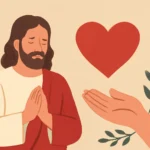
Bible Verse About Love Conquers All: Its Meaning and Power
The phrase “love conquers all” is widely used in Christian teaching, sermons, and inspirational literature. It captures a powerful intuition about the force of love in human life and in the divine story. While the exact words love conquers all do not appear as a direct quotation in most Bible translations, the idea is deeply rooted in Scripture. Across the biblical narrative, love is presented not as a passive emotion but as a transformative force that strengthens, heals, endures, and ultimately prevails over fear, suffering, injustice, and death.
This article explores the meaning, power, and practical implications of the theme that love conquers obstacles in life. We will survey key verses, explain their historical and theological contexts, and offer guidance on how to apply these timeless truths in everyday relationships, communities, and personal faith journeys. We will also discuss variations of the theme across translations to help readers hear the same message through different linguistic windows.
The core idea: love as strength and victory
In Scripture, love is not merely a sentiment; it is a dynamic action and a moral force. The New Testament speaks of agape love—self-giving, other-centered love—as foundational to Christian life. This love shows itself in kindness, patience, generosity, courage, forgiveness, and a steadfastness that remains even when circumstances are hard.
A core pattern you will notice is that love leads to outcomes that resemble victory: it endures when others falter, it heals wounds, it binds a community into unity, and it outlasts fear and pain. When we say love conquers all, we are speaking of a trajectory: love can prevail over hatred, cynicism, and despair because it mirrors the character of God and acts toward reconciliation, restoration, and hope.
Key verses that echo the idea
The Bible contains several verses that, together, illuminate how love overcomes difficulty. While different translations word the phrases in varied ways, the verbs and images convey a shared message: love is a power that persists, benefits others, and shapes reality in durable, transformative ways.
1 Corinthians 13:7-8 – “Love bears all things, believes all things, hopes all things, endures all things. Love never fails.” This passage situates love as a steadfast posture that continues through every trial and never loses its ultimate aim.
Romans 8:37 – “No, in all these things we are more than conquerors through him who loved us.” The concept of conquest here is not about domination over others but about triumph in the struggle of faith, enabled by divine love.
1 John 4:18 – “There is no fear in love. But perfect love drives out fear, because fear has to do with punishment.” This verse links love to emotional courage and freedom from fear, which is a kind of victory in the inner life.
1 Peter 4:8 – “Above all, maintain constant love for one another, because love covers a multitude of sins.” Here love acts as a healing, protective force within a community.
1 Corinthians 13:13 – “And now these three remain: faith, hope, and love. But the greatest of these is love.” The triad places love at the summit of virtue, giving direction to the other dimensions of life.
Colossians 3:14 – “And over all these virtues put on love, which binds them all together in perfect unity.” The image of binding and unifying suggests a cohesive victory that love achieves in a community.
Galatians 5:6 – “The only thing that counts is faith expressing itself through love.” This ties true religious life to the practical display of love.
1 Corinthians 16:14 – “Do everything in love.” A practical directive linking every action to the transformative power of love.
The language of conquest vs. the language of transformation
Some readers notice that the phrase “conquer” appears in translations like Romans 8:37, while others describe victory in terms of endurance, restoration, or healing. The biblical authors often mix metaphors: victory is achieved not through domination over people but through the triumph of love that breaks cycles of hatred, reconciles estranged relationships, and leads creation toward its intended harmony. In this sense, love conquers by transforming the conditions that generate conflict, fear, and despair.
Love in context: theology, history, and ethics
The idea that love conquers all sits at the intersection of several biblical currents: the character of God as love, the ethical call to live out that love, and the eschatological hope that God’s purposes prevail. The New Testament presents love as the standard by which all things are judged. Ethical behavior—how we treat neighbors, enemies, the vulnerable, and the weak—reveals the power of love to transform human societies.
The Greek word most often translated as love in the New Testament is agape, a deliberate, self-giving love that seeks the good of others. This agape is not a fleeting feeling; it is a disciplined, resilient choice. When we see verses that encourage bearing burdens, forgiving repeatedly, or choosing kindness in the face of opposition, we glimpse the practical expression of agape in action.
How love conquers fear, pain, and division
A practical way to understand the conquering power of love is to consider how it changes relationships and communities.
Love over fear: 1 John 4:18 teaches that perfect love casts out fear, liberating people to risk friendship, vulnerability, and reconciliation.
Love over pain: 1 Peter 4:8 emphasizes that persistent love can cover wounds and restore trust after harm has occurred.
Love over division: Colossians 3:14 invites believers to clothe themselves in love as the unifying bond that makes diverse members one body.
Love over despair: The verse about faith, hope, and love reminds us that even amid uncertainty, love remains the enduring, guiding force.
Variations of the theme across translations
Because Bible translations differ in wording, readers encounter a range of expressions that nonetheless point to the same moral reality: love is the source of true strength. Some common expressions you may encounter include:
Love endures or love never ends (emphasizing durability over time).
Love bears all things, believes all things, hopes all things, endures all things (emphasizing comprehensive steadfastness).
Conquerors or overcomes (emphasizing victory in the sense of triumph over trials with God’s help).
Perfect love casts out fear (emphasizing the inner transformation that enables brave living).
The effect of these variations is not to confuse the message but to broaden its semantic reach. A reader can encounter the same core idea—love as a transformative, victorious force—through a spectrum of images: endurance, security, healing, unity, and hopeful resilience.
Love in daily life: practical applications
If the claim is that love conquers all, how does that translate into concrete action? Here are practical areas where these verses can guide daily living.
In marriages and families: practice patience, sacrifice, and forgiveness; choose to act with love even when emotions run high. Do everything in love, including difficult conversations, setting boundaries, and offering grace.
In friendships and communities: cultivate trust, pursue reconciliation after conflict, and stand with the vulnerable. Let love be a protective force that forgives and restores.
In leadership and service: lead with humility and serve others; let love be the guiding motive behind decisions that affect others’ well-being.
In personal struggle: when facing fear, breakdowns, or pain, turn to Scripture for encouragement about love as inner strength, and lean on a community that embodies that agape love.
Five practical practices to cultivate love’s power
Daily reflection: meditate on one verse about love and write a brief prayer about how to embody it that day.
Intentional acts of kindness: perform a small, concrete act of love toward someone who cannot repay you.
Relational repair: identify a relationship in need of reconciliation and take a first step toward restoration, even if it feels risky.
Forgiveness practice: forgive a grievance not because the other person deserves it, but because love seeks freedom for both parties.
Community service: join a cause that serves the vulnerable and demonstrates love in action.
Common questions about love’s power and Bible verses
Readers often ask how these verses relate to real-world suffering, injustice, or tragedy. Here are some brief reflections that can help connect belief with practice.
Does love conquer pain? Scripture does not erase pain, but it offers a hope that love can heal, restore, and bring meaning in suffering. The perfect love described in 1 John 4:18 does not eliminate pain instantly; it reorients our response to pain and gives courage to endure.
Can love overcome systemic evil? Through patient advocacy, communal courage, and redemptive action, love seeks justice and healing in systems and structures that harm people. While this conquest may be slow and imperfect, love remains the primary means by which communities are transformed.
What is the relationship between faith, hope, and love? The triad—faith, hope, and love—frames a complete life in which belief, expectation, and motivated action come together. The greatest of these is love because love gives form and vitality to faith and hope in daily life.
How should we read the phrase “conquer” in Romans 8:37? The term indicates victory over fear, doubt, and spiritual danger, accomplished by reliance on Christ’s love. It is a victory that frees participants to live for the good of others, not a triumph over opponents.
Scholars emphasize that the concept of love as a victorious and transformative power is deeply rooted in the biblical narrative. In the literary context of the New Testament, the exhortations to love are paired with ethical instruction (how to live together in churches), pastoral care (how to shepherd and mend community), and eschatological hope (how to anticipate God’s future renewal of creation).
The consistency of the theme across books—especially Paul’s letters, the Johannine writings, and Peter’s epistles—helps readers see that the idea of love conquering all is not sentimental devotional language but a robust vision for life in a broken world. The language of endurance, perseverance, and overcoming in the face of trial is not simply moral advice; it is a respiratory pattern of faith that interlocks with hope and trust in God’s redemptive work.
Inclusive reflections: love as universal and particular
While the Bible discloses a particular revelation of God’s love in Jesus Christ, the virtue of love also has a universal appeal. The ethical height of love—for enemies, for the overlooked, for the marginalized—reflects a desire for human flourishing. At the same time, Christians affirm that God’s love is uniquely revealed in the person of Christ and calls every believer to respond in gratitude and service.
In this way, the idea that love conquers all becomes not a self-help slogan but a biblically grounded invitation: to allow God’s love to shape our hearts, to knit our communities together, and to transform our world through acts of courageous, self-denying, and joyful love.
Conclusion: embracing the power of love in faith and life
The Bible presents love as the strongest, most enduring force available to humanity. It is a force that does not erase pain but redefines it; it does not eliminate conflict instantly, yet it models a way through conflict that can lead to reconciliation and peace. Whether through the quiet patience of daily relationships or the bold witness of a community that chooses mercy over revenge, the love that is God’s own may be the most reliable power in the cosmos.
When we speak of a Bible verse about love conquers all, we are naming a compelling truth: love is not passive; it is active, courageous, and transformative. It shifts how we respond to fear, loss, and failure. It motivates us to serve, to forgive, and to stand with the vulnerable. It invites us to trust that, in the end, the force that began as God’s love will unfold the fullness of his redemptive purpose.