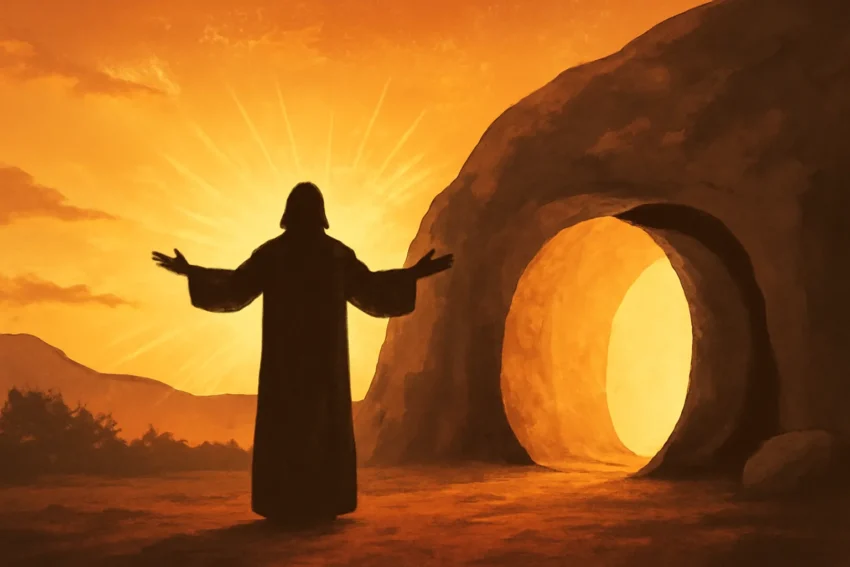
Across the Christian tradition, the message of resurrection power is a transformative thread woven through Scripture. It speaks not only of life after death but of God’s dynamic work in believers here and now: giving strength in weakness, stirring hope in despair, and renewing every corner of a life that God calls new. This article gathers a wide range of Bible verses that illuminate the theme of resurrection power—showing how the power that raised Jesus from the dead can energize our spirits, renew our minds, and empower us to walk in new life.
The Bible presents resurrection power as more than a doctrine; it is a present reality for those who trust in Christ. The apostle Paul speaks of a living power that is at work within believers, a power that defeats fear, conquers sin, and invites us into a vibrant relationship with the risen Lord. In the pages that follow, you’ll find verses arranged to highlight three essential facets of resurrection power: strength, hope, and new life. While the language varies across passages, the core truth remains consistent: God’s power makes dead things live again, and it makes living things live more fully.
Strength in weakness: God’s power upholds and sustains believers when human resources fail.
Hope as a confident expectation: the resurrection guarantees a future, and it seeds bold perseverance in the present.
New life through transformation: the old self is crucified with Christ, and a renewed self walks in his life.
Strength through the Spirit: Key Verses
One of the clearest statements about resurrection power is that the Spirit who raised Jesus from the dead dwells in believers. This is not a distant or theoretical idea; it is a present, daily resource for spiritual vitality and courageous living.
Romans 8:11 — The Spirit that raised Jesus empowers our mortal bodies
“But if the Spirit of him that raised up Jesus from the dead dwell in you, he that raised up Christ from the dead shall also quicken your mortal bodies by his Spirit that dwelleth in you.” (Romans 8:11, KJV)
In this verse, the Greek word for quicken means to make alive or give life. The logic is practical: the same Spirit who healed the tomb’s hold on Jesus can bring vitality to our bodies and lives. This is resurrection power available to daily moments of decision, discipline, and endurance. The verse also underscores a relational truth: the indwelling Spirit is the source of life, not merely an external force. In paraphrase form, one might say: God’s Spirit who raised Jesus is at work in you, bringing vitality to your life.
Romans 8:11 — Variations and reflections
Paraphrase or paraphrased reflections on this verse often highlight the effect of the Spirit’s presence in tangible terms: energy for righteous living, power over fear, and renewal of the body’s capabilities in God’s timing. Some readers describe it as divine stamina for trials, others as a steady renewal of strength that never exhausts. The core idea remains the same: the Spirit’s activity in believers is the ongoing expression of resurrection power in the present age.
Romans 6:4 — Walking in newness of life
“Therefore we are buried with him by baptism into death: that like as Christ was raised up from the dead by the glory of the Father, even so we also should walk in newness of life.” (Romans 6:4, KJV)
This verse ties resurrection power to a life-change: a spiritual baptism into Christ’s death and resurrection that authorizes a person to walk in newness of life. The imagery is participatory: as Christ was raised, so we are called to live the risen life. This is not about cosmic speculation; it’s about practical living—daily decisions that reflect the character of the risen Lord. The phrase newness of life signals fresh energy, fresh purposes, and a fresh orientation away from sin toward God’s design.
1 Corinthians 15:20-22 — The order of life, death, and life again
“But now is Christ risen from the dead, and become the firstfruits of them that slept. For since by man came death, by man came also the resurrection of the dead. For as in Adam all die, even so in Christ shall all be made alive.” (1 Corinthians 15:20-22, KJV)
Paul anchors resurrection power in the universal pattern of life and death—Christ’s resurrection inaugurates a new era in which all who are in Christ share in that life. The imagery of firstfruits suggests abundance and certainty: what began with Jesus will expand to all who belong to him. The verse speaks of a cosmic reordering—death defeated, life guaranteed—which has intimate, personal implications for how we live now. It invites readers to trust the Lord for ongoing transformation and to anticipate a comprehensive renewal when Christ returns.
Hope that Anchors the Soul: Assurance Through Resurrection
Resurrection power is inseparable from hope. The Bible presents hope not as wishful thinking but as a confident expectation rooted in the risen Christ. When life feels fragile, the gospel insists that the power that raised Jesus is also at work in us, giving us a steadfast assurance that our present sufferings are not the final word.
1 Peter 1:3 — A lively hope through the resurrection
“Blessed be the God and Father of our Lord Jesus Christ, which according to his abundant mercy hath begotten us again unto a lively hope by the resurrection of Jesus Christ from the dead.” (1 Peter 1:3, KJV)
Here, hope is not passive. It is something that God occasions by a new birth that is linked to the resurrection. This is the kind of hope that sustains believers through trials because it rests on the certainty that Christ’s power has already broken the hold of death. The language of begotten us again points to a creative act—God making something new out of what was dead. In practical terms, this means our trials can be endured with joy because they are told from the perspective of a living, resurrected Lord who governs history and our personal stories.
1 Thessalonians 4:14 — Death and life rejoined in Christ
“For if we believe that Jesus died and rose again, even so them also which sleep in Jesus will God bring with him.” (1 Thessalonians 4:14, KJV)
This verse connects resurrection power to the hope of reunion. Believers who have died in Christ will be raised and joined with the living, a reunion made possible through Christ’s own triumph over death. The promise is both comforting and urgent: because Christ lives, the future holds a comprehensive restoration of relationships and a final defeat of every form of decay. Readers can anchor their hearts in the certainty that death does not have the final say; resurrection power is the gripping narrative of the entire Bible when viewed through the lens of Christ’s victory.
New Life: Transformation and Renewal by the Resurrection
New life is a recurring theme in New Testament manuscripts that describe Christians as “new creations” because they have been raised with Christ or united with him through faith. The resurrection power is not merely a past event; it is a present force that creates ongoing change—shape-shifting attitudes, renewed desires, and a reoriented mission in the world.
Colossians 2:12 — Raised with him through faith
“Buried with him in baptism, wherein also ye are risen with him through the faith of the operation of God, who hath raised him from the dead.” (Colossians 2:12, KJV)
This verse ties together baptism, faith, and resurrection. The act of being raised with Christ is linked to the inward operation of God, who brings partnership with Jesus in life. The concept of new life here is both spiritual and relational: believers share in the inner life of Christ and grow toward a renewed identity in him. The language of operation of God emphasizes that transformation is God’s work, not merely human effort, though it is received by faith and evidenced in daily living.
John 11:25-26 — Jesus as the resurrection and the life
“Jesus said unto her, I am the resurrection, and the life: he that believeth in me, though he were dead, yet shall he live: And whosoever liveth and believeth in me shall never die.” (John 11:25-26, KJV)
In this intimate exchange, Jesus ties himself to the core reality of resurrection: life is personal, accessible, and transformative. Belief in Christ becomes the doorway to an ongoing experience of new life, even in the face of physical death. The verse invites readers to anchor their confidence not merely in a doctrine but in a person—Jesus, who embodies the power to restore, sustain, and renew.
Practical Ways to Live in Resurrection Power
Understanding resurrection power is one thing; living out its reality in daily routines is another. The following practical steps help believers cultivate an awareness of God’s power at work and invite it into everyday moments of decision, challenge, and opportunity.
Practice spiritual disciplines that invite the Spirit’s work: prayer, Scripture reading, worship, and corporate fellowship.
Embrace transformation by surrendering stubborn sins and pursuing lives marked by love, joy, peace, and gentleness.
Recall the risen Christ in moments of fear or fatigue, reminding yourself of the promise that the same power at work in Jesus is at work in you.
Share hope with others who are hurting or discouraged, pointing them to the reality of life-bearing resurrection power.
Engage mission with courage, knowing that powered by the Spirit, your work can bear lasting, spiritual fruit.
Practical exercise: a daily reflection prompt
Begin with a verse about resurrection power (for example, Romans 8:11).
Write one sentence that describes how this power could apply to today’s challenge.
End with a short prayer asking the Spirit to make that application real in your life.
Additional Verses and Variations: Expanding Semantic Breadth
The Bible contains numerous passages that speak to resurrection power, sometimes directly, sometimes by implication. Below are additional verses and paraphrased reflections that broaden semantic breadth while staying rooted in the central truth: God’s power brings life where there was death, and it sustains life with hope beyond circumstances.
Ephesians 1:19-20 — The power of God’s mighty strength, raised Jesus from the dead and seated him at God’s right hand: a model for how God’s power works toward elevation, authority, and purpose in the church.
Philippians 3:10 — A desire to know the power of his resurrection, to share in that life as the heart of spiritual growth and intimacy with Christ (paraphrase: “I want to know the strength that rose Jesus, so my life can reflect that victorious life.”).
2 Corinthians 4:14 — The knowledge that God will raise us along with Jesus, ensuring that life in Christ transcends current trials (paraphrase: “The risen Christ will bring us to life beyond present troubles.”).
Colossians 3:1-2 — Seek the things that are above, where Christ sits, because resurrection life reorders priorities and fuels a heavenward focus (paraphrase: “Let your life reflect the fact that you’re drawn into a new existence in Christ.”).
1 Thessalonians 5:23 — The believer’s spirit, soul, and body sanctified to abound in peace, in the context of the hope of resurrection (paraphrase: “God will make every part of you ready for the coming life in which death is finally defeated.”).
Symbolic and Theological Depth: How Resurrection Power Reshapes Belief
Beyond personal encouragement, the language of resurrection power shapes theology and worldview. It redefines our understanding of strength, not as domination or self-reliance but as reliance on the living God. It reframes hope not as passive waiting but as active trust in the One who has already conquered the grave. And it reimagines life not as a series of events but as a journey of continuous renewal—God’s work within a person that points to a future consummation when all things will be made new.
In that light, several thematic threads emerge:
Providence and purpose: Resurrection power accelerates divine purposes in history and in individual lives, guiding believers toward greater alignment with God’s will.
Victory over fear: Because death has been overcome, fear loses its grip when confronted with the truth of the risen Christ.
Identity in Christ: New life is not a revision of the old self but a new identity rooted in the risen Savior.
Transformation as witness: The ongoing work of resurrection power becomes a testimony to others about the reality of God at work in the world.
Prayerful Reflection: Inviting Resurrection Power into Today
Many readers find that turning verses into personal prayers helps anchor the truth of resurrection power in daily life. The following prayer prompts are designed to be read aloud or prayed silently, inviting God to manifest his power in concrete ways.
Prayer for strength: Lord, strengthen me with your mighty power so that, in my weakness, your power may be made perfect (paraphrase from 2 Corinthians 12:9-10 concept).
Prayer for hope: God of life, let your resurrection hope occupy my mind and heart today, so that I live with confidence rather than fear (paraphrase of 1 Peter 1:3 and Romans 15:13 concepts).
Prayer for renewal: Father, breathe your life into every area of my life that has grown cold or weary, that I might walk in your strength and new life (based on Colossians 3 and Romans 6 themes).
Conclusion: Walking in Power, Peace, and Purpose
The Bible’s portrayal of resurrection power invites readers into a life that is not defined by past failures or present limitations but by the risen Jesus who gives life, hope, and renewal. The verses cited here—whether quoted verbatim from the KJV or reflected upon in paraphrase—point to a single, transformative reality: God’s power is at work in his people, enabling them to live in strength, to endure with hope, and to experience life in fresh, new ways. For those who desire to grow in faith, the call remains simple and profound: trust in the power of the risen Christ, yield to the Spirit who raised him, and walk daily in the life that resurrection makes possible.
As you close this article, consider keeping a simple practice: memorize one short verse about resurrection power, reflect on what it implies for your present day, and then seek opportunities to live out that power through acts of love, patience, and courage. In doing so, you join the company of believers across generations who have counted the power of the resurrection as the defining rhythm of their lives—the rhythm of strength in weakness, hope in trouble, and life that cannot be quenched.