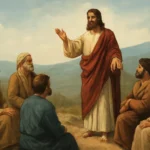
Christian illustrations have long served as a bridge between sacred text and lived experience. From the scrolls of antiquity to the pixels on a modern screen, Bible artwork functions not just as decoration but as a means of teaching, recollection, and meditation. This article surveys the many faces of biblical art and explains how educators, pastors, parents, and students can use illustrations to illuminate Scripture, engage imagination, and reinforce core beliefs. By tracing historical developments, exploring symbolic language, and outlining practical teaching strategies, we can appreciate how visual theology helps readers encounter the Bible in a multi-sensory way.
At its core, a Christian illustration is any image—painted, carved, stained, printed, or digital—that conveys biblical narratives, symbols, or themes. Illustrations can be literal depictions of scenes from Scripture or symbolic representations that suggest meanings beyond the surface image. They often operate through a shared vocabulary of imagery that audiences recognize, even across generations and cultures.
In scholarly terms, these artworks function as visual theology: they communicate doctrinal truths, ethical teachings, and redemptive narratives through form, color, composition, and iconography. For educators, this means that a single image can open multiple layers of understanding—from historical context to literary structure to spiritual reflection.
When we discuss variations of Christian illustrations, we encounter a spectrum that includes illuminated manuscripts, religious icons, fresco cycles, stained glass, prints and book arts, sculpture, and contemporary digital art. Each medium offers different affordances for teaching: the rhythm of a manuscript page invites quiet study; a stained-glass window catches the eye and frames a worshipful moment; a graphic novel or digital animation invites narrative exploration and discussion.
Historical Ways Bible Artwork Has Been Used for Teaching
Early Manuscripts and Illuminations
In the ancient and medieval worlds, illuminated manuscripts were portable classrooms. Scribes paired biblical text with decorative initials, marginal scenes, and full-page miniatures to guide readers through stories and doctrinal themes. These illuminations often clarified difficult passages, highlighted connections between covenants, and offered moral or spiritual reflections that complemented the written word. The visual apparatus—border motifs, historiated initials, and symbolic ornamentation—became a language that learners could read before they could fully understand the Latin or Greek texts.
Church Architecture and Visual Teaching
Across centuries, architecture itself became an instructional medium. Fresco cycles, mosaics, and sculptural programs in churches and cathedrals staged biblical narratives for congregations that could not read or access individual manuscripts. A nave or transept program might present the Fall, the Flood, the Exodus, or the Passion as a narrative arc that guided liturgical seasons. Stained glass windows, with their radiant color and luminous storytelling, turned the church into a catechetical space—an interactive Bible during services and processions. This approach democratized access to biblical stories by making them legible to people of different ages and languages.
Iconography in Eastern Traditions
In the Eastern Christian context, iconography developed as a disciplined discipline of representation. Icons—often created according to established conventions—aim to portray not merely a scene but the presence of the holy. The purpose of icons is pedagogical and contemplative: they invite viewers to encounter the divine mysteries through reverent gaze, gesture, and color symbolism. Iconography also demonstrates how symbolic language functions in Christian teaching: certain colors (e.g., gold for divine light, blue for heaven) and gestures carry meanings that surpass literal depiction.
The late medieval and Renaissance periods saw a blossoming of richly detailed biblical illustration in both manuscripts and early printed Bibles. These works often paired narrative cycles with exegetical marginalia, theological glosses, and devotional images intended for study and prayer. The interplay between text and image helped readers see connections—prophets foreshadowing Christ, types and antitypes, and ethical lessons embedded in the stories. The rise of movable type broadened access, enabling schools and households to own illustrated Bibles and study aids that reinforced literacy alongside faith.
Common Symbols and Their Meanings
Christian art frequently communicates through symbols that carry layered meanings. Understanding these symbols helps teachers guide interpretation and discussion.
The Cross: symbol of Christ’s crucifixion, salvation, and the Christian life of self-giving love.
The Lamb: Christ as the Lamb of God, sacrifice, innocence, and redemption.
The Dove: the Holy Spirit, peace, and divine inspiration.
The Fish (Ichthys): early Christian identification and a compact confession of faith.
Bread and Wine: the Eucharist, covenant, and communion with Christ.
Keys: authority given to Peter and the Church; spiritual access and stewardship.
Shepherd imagery: guidance, provision, and care for the flock (often representing Christ or leaders as shepherds).
Alpha and Omega: the beginning and the end, Christ’s eternal nature.
Olive Branch or dove combined motifs: peace and reconciliation.
Water motifs: life, purification, the Spirit, and baptismal themes.
In teaching contexts, these symbols can be used as interpretive keys. For example, a painting of the Good Shepherd is not merely a child-friendly image; it invites reflection on care, leadership, and the relationship between God and people. A stained-glass window depicting the Last Supper can prompt discussion about covenant, community, and the meaning of sacrifice in ordinary worship.
Modern Approaches to Bible Illustration
The digital age has expanded the scope of Christian illustrations beyond the church walls. Today, educators have access to a broad spectrum of media that can support classroom instruction and personal devotion. Modern Bible illustration encompasses graphic novels, digital paintings, interactive apps, and immersive media experiences, while still drawing on the ancient and classical traditions of symbol and narrative.
Graphic Novels and Sequential Art
Visual storytelling in graphic novels offers a dynamic way to present biblical narratives. With panels, pacing, dialogue balloons, and cinematic close-ups, sequential art can convey mood, conflict, and character development. For learners who relate to contemporary storytelling, a well-crafted Bible graphic novel can illuminate complex scenes—such as Abraham’s journey, Joseph’s trials, or Paul’s missionary journeys—through accessible, cinematic language.
Digital Painting and Concept Art
Digital art enables nuanced explorations of mood, atmosphere, and the inner life of characters. Concept art—preliminary designs that explore how a scene might look—can be used in teacher-led explorations or student projects. Digital tools also support color symbolism, texture study, and the creation of modern parabolic illustrations that translate timeless truths into contemporary contexts.
Interactive and Immersive Media
Interactive Bible experiences—apps with tappable scenes, guided reflections, and multimedia annotations—transform a page into a learning environment. Immersive media, including 3D models, virtual reality (VR) experiences, and interactive timelines, allow students to walk through biblical settings, encounter symbolic motifs up close, and reflect on how place shapes meaning.
Illustrated Bibles for Children
Children’s Bible artwork emphasizes clarity, warmth, and accessibility. Illustrators often foreground character motivation, moral choices, and the arc of redemptive history in approachable scenes. Rich, readable imagery supports memory, fosters discussion, and makes biblical narratives feel alive for young readers.
Choose purposeful imagery: select illustrations that align with the learning goals of the lesson. Look for images that provide entry points for discussion, not just decoration.
Frame the image with questions: ask open-ended questions about what students notice, what questions arise, and how the artwork connects to specific verses or themes.
Connect image to Scripture: guide students to locate the biblical text, compare translations, and identify how the image reinforces or reframes the passage.
Explore symbolism and culture: discuss cultural contexts, symbolic meanings, and the historical setting of the artwork. This helps learners avoid anachronistic conclusions and develop a richer interpretation.
Encourage multi-modal responses: invite students to respond through drawing, short writing, or discussion, so that the artwork becomes a catalyst for personal reflection.
Incorporate critique and care: teach students to analyze imagery ethically and theologically, considering how representations shape beliefs and attitudes toward others.
When using illustrated parables, for instance, you can present the image first, then read the parable, and finally discuss how the illustration illuminates key features—character choices, outcomes, and the moral of the story. For older learners, you can introduce typology (how Old Testament figures prefigure Christ) and use imagery to trace these connections across the canon.
Practical Classroom Scenarios
In a Sunday school setting, a teacher might display a stained-glass-inspired image of the Last Supper and prompt students to identify the symbols (bread, cup, shared meal) and discuss what the meal signifies for Christian faith today. In a high school Bible class, a comparison activity might juxtapose a Renaissance biblical engraving with a modern digital illustration of the same scene, inviting students to analyze stylistic differences, audience, and theological emphases.
Ethical and Theological Considerations
Visual representations of sacred narratives carry responsibility. Teachers and artists should be mindful of theological accuracy, cultural sensitivity, and denominational preferences. Some traditions emphasize iconic simplicity and discourage excessive reproduction of sacred figures, while others embrace richly detailed iconography. A thoughtful approach respects these differences while maintaining clarity about the Gospel message.
Accuracy and context: ensure that scenes reflect scriptural content and do not misrepresent the narrative or its themes.
Contextualization: adapt illustrations to the learners’ cultural and historical context without distorting the message.
Represenational integrity: consider how people from different cultures may interpret symbols and gestures, and strive for inclusive, respectful imagery.
Permission and licensing: when using art created by others, respect copyright, licenses, and attribution requirements.
Theological humility: acknowledge the mystery of faith and invite learners to wrestle with questions as they engage with imagery.
In practice, this means balancing reverence for sacred subjects with the pedagogical need to explain and analyze. It also means being explicit about the purpose of a given illustration—whether it is to evoke reverence, to prompt inquiry, or to illustrate a doctrinal point.
Incorporating Illustrations into Teaching Environments
Illustrations can enrich a variety of educational contexts. The key is to integrate imagery intentionally within a broader lesson plan, rather than presenting visuals in isolation.
Classrooms and lecture halls: project high-quality images on a screen, pair with scripture passages, and guide students through analysis questions.
Sunday schools and youth groups: use illustrated storyboards or art activities to retell parables and biblical events, fostering participation and dialogue.
Church libraries and study rooms: curate themed collections of prints, icons, or digital media that students can explore on their own or in small groups.
Home study and family devotions: select a single image to anchor a family discussion, followed by a shared reading and reflection.
Online courses and multimedia platforms: embed interactive images with annotations, timelines, and discussion prompts to reach remote learners.
Effective use of illustrations often involves scaffolding: starting with concrete visuals, then guiding learners toward abstract interpretive steps, and finally connecting the insights to daily life and faith practice.
Case Studies and Notable Works
Early Christian and Late Antique Imagery
The catacombs of Rome and early church sarcophagi offer some of the earliest examples of Christian visual storytelling. Scenes of the Good Shepherd, the Jonah motif, and biblical scenes carved or painted in modest spaces communicated faith to believers who could not read. These works were compact, portable catechesis, illustrating salvation history in a form accessible to ordinary Christians.
Medieval and Renaissance Bible Illustration
From the illuminated psalters of the 12th century to the grand cycles in altarpieces, medieval and Renaissance artists used image to teach. Iconography, typology, and allegory guided viewers through complex theological narratives. The visual programs in churches such as Chartres and Santa Maria Novella were not merely decorative; they were part of a pedagogy that trained the eye and the heart to recognize God’s work across time.
Modern Illustrated Bibles and Educational Art
Contemporary Christian illustrators produce work that speaks to present-day readers without abandoning the ancient story. Modern illustrated Bibles, children’s picture Bibles, and graphic novels adapt classic narratives for new audiences. They may foreground character psychology, ethical questions, and the social dimensions of biblical events—while still honoring core doctrines like salvation, grace, and the kingdom of God.
Future Trends and Resources
As technology evolves, new educational tools and artistic practices shape how Christians learn from Bible imagery. AI-assisted design can help educators experiment with composition, color palettes, and symbol systems, while ensuring that human discernment remains central to interpretation. Open-source image libraries and licensing platforms can broaden access to high-quality Christian art for classrooms and homes alike.
Important resources for teachers and learners include:
Digital repositories of iconography and stained glass patterns for classroom study
Catalogs of illuminated manuscript reproductions with historical context
Illustrated Bible commentaries that pair artwork with verse-by-verse explanations
Graphic novels and kid-friendly Bibles aimed at different age groups
Curricula and lesson plans that integrate art analysis with scripture reading
For those new to Bible illustration, starting points include curating a small, thematically organized collection (e.g., Creation, Covenant, Exodus, Portraits of Jesus, Parables, Sacraments) and pairing each image with guiding questions that illuminate rather than merely describe the scene.
Conclusion
Christian illustrations are a powerful, enduring channel for teaching and growth. They offer a way to encounter the Bible with the senses, cultivate memory, and foster conversation about faith, life, and values. Across history, the art of biblical storytelling has proven adaptable— from the scriptorium to the classroom, from the cathedral nave to the tablet screen. By embracing a range of media, honoring symbolic language, and teaching with intention and care, educators can help students see the Bible as a living narrative that continues to speak in every era.
Whether you are preparing a Sunday school module, designing a classroom unit, or curating a personal study, remember that the most effective illustrations are those that invite inquiry, clarify truth, and cultivate wonder. In that sense, Christian illustration remains not only a record of faith but also a doorway to ongoing encounter with God through Scripture.