Did God Create Good and Evil? The Theodicy Question and Theories About Morality
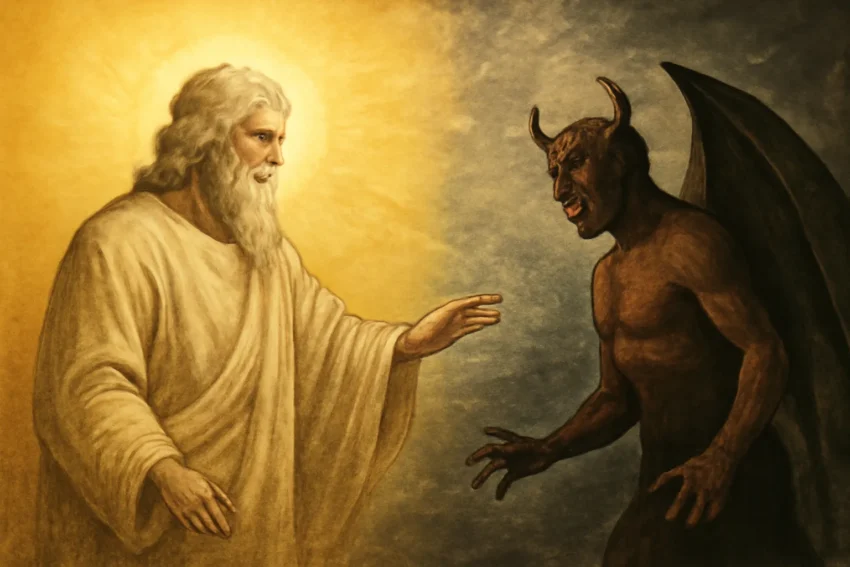
The question “Did God create good and evil?” has haunted thinkers for centuries. It sits at the crossroads of metaphysics, theology, ethics, and epistemology. If God is omnipotent, omniscient, and benevolent, how can evil exist in the world? If evil is simply a privation or a lack of goodness, what does that mean for human responsibility and divine justice? If free will is necessary for meaningful love and moral agency, does that imply that evil is an inevitable byproduct of a world where creatures can choose wrongly? These are the core tensions that many schools of thought have tried to address. In this article, we survey the major theodicies and moral philosophies that have been proposed to reconcile the existence of evil with the possibility of a good, powerful, and loving deity. We will consider the historical origins, key arguments, notable objections, and practical implications of each approach.
To broaden the discussion, this article uses variations of the phrase “did God create good and evil” to reflect the semantic breadth of the problem. Whether one asks whether God created good and evil as distinct ontological categories, or whether evil is a privation or a force with its own causal power, the underlying questions converge on how morality, freedom, and divine sovereignty relate to one another. The following sections present a structured overview of the main theodicies, followed by related debates about moral ontology, natural versus moral evil, and the implications for belief, practice, and public discourse.
Foundational distinctions: what do we mean by “good” and “evil”?
Before exploring the theodicies, it helps to distinguish some common terms that recur in the literature. These distinctions are not only technical; they shape how one interprets the problem.
Moral evil: wrongdoing caused by free agents (humans or intelligent beings) who choose wrongly, violating moral norms.
Natural evil: suffering caused by natural processes (earthquakes, disease, floods) that are not directly caused by human choices.
Privation of good: the view that evil is not a positive thing but a lack or absence of good, analogous to darkness being the absence of light.
Free will and moral responsibility: the idea that beings with the capacity to choose rightly or wrongly are accountable for their actions, which may lead to consequences that are painful or harmful.
Theodicy: a rational defense or justification of divine goodness and power in the face of evil.
With these terms in view, we can examine the major lines of argument. A central question in many discussions is the Euthyphro dilemma: Is what is morally right willed by God, or is it right by some standard independent of God? If the former, one might worry that morality is arbitrary; if the latter, divine sovereignty is challenged. Both prospects have sparked lively debate and shaped several prominent theodicies.
Classic theodicies and their core claims
1) The Augustinian theodicy: evil as privation
One of the oldest and most influential responses to the question “did God create good and evil?” is rooted in Augustine of Hippo. His account centers on the idea that God created everything good, and that evil is not a positive ontological status but a privation (privation boni)—an absence or defect of good. In Augustine’s framework:
God’s creation is fundamentally good because God is the source of all goodness.
Human beings were created with free will to love and choose; the misuse of freedom introduces sin and moral evil.
Natural evils are often explained as the result of a fallen world—a cosmos that has been morally compromised due to the rebellion of angelic and human agents.
Physical pain and suffering are not themselves positive goods but are sometimes construed as consequences of living in a world with limited or misdirected natural processes.
Augustine’s approach offers a compelling account of why God’s goodness would not be compromised by evil: evil has no independent ontological reality. Yet it faces challenges, especially when explaining the extent and intensity of natural evils, the accountability of non-human agents, and the perception of a world that seems to endure ongoing suffering from inexplicable sources.
2) The Irenaean soul-making theodicy: growth through adversity
Another influential approach is the Irenaean theodicy, named after Irenaeus of Lyons. This view emphasizes humanity’s moral and spiritual development through experience, suffering, and challenge. Key ideas include:
The world is a educational environment designed for character formation.
Evil and suffering provide occasions for individuals to develop virtues such as courage, compassion, humility, and perseverance.
Humans are created in the image of God but not yet in the full likeness; through life’s trials, they are shaped toward a deeper moral maturity.
The epistemic distance between humans and God—the gap in knowledge about divine purposes—serves a purpose: we must freely respond to moral truth without coercion.
Proponents argue that this programmatic account better explains the existence of meaningful moral growth and the social good that can emerge from shared suffering. Critics, however, raise questions about whether all suffering serves a justifying telos, whether some evils appear gratuitous, and whether an all-powerful God could have achieved the same growth with less pain.
3) The Free Will Defense: freedom as the ground of value
Perhaps the most widely cited modern response to the problem of evil is the free will defense, notably developed by Alvin Plantinga and others. The core claim is simple and powerful: moral goodness requires genuine freedom, and free creatures will sometimes choose badly. If God created beings who can freely choose, moral evil is a predictable consequence, but not metaphysically necessary. Highlights include:
God can create free creatures who freely choose to love and do good, but cannot ensure they always choose rightly.
Given freedom, the possibility of moral evil is logically compatible with an omnipotent, omnibenevolent God.
The defense focuses on moral evils rather than natural evils; many critics ask whether natural evils can be reconciled similarly or whether additional theodicies are needed.
Critics of the Free Will Defense sometimes push back with questions like: Why would a benevolent God allow gratuitous evil that seems to serve no greater good? Could God have created a world in which freedom exists but gratuitous suffering is minimized? The debate continues, with many theologians arguing that even when some evils are gratuitous on our terms, the overall balance of goods—including moral growth and genuine love—justifies the risk of evil.
4) The best of all possible worlds and the evidential problem
In the philosophic tradition associated with Leibniz, one offers a form of theodicy that this world is the best of all possible worlds given the constraints of freedom, the depth of moral deserts, and the necessity of certain laws. The idea is less about a straightforward justification and more about a perspective on optimality under constraints. In brief:
Even if evil exists, this world may maximize goods that would be impossible in any other configuration of possible worlds.
The argument attempts to address the environmental or «background» evils that seem inefficient or gratuitous from a human perspective but might play an essential role in a larger harmony.
Critics often label this as speculative and subject to probability assessments about possible worlds. The challenge remains to demonstrate that the world is indeed the best of all possible worlds, given what we know about probabilities, values, and human flourishing.
5) Theodicies that emphasize divine nature or sovereignty
A number of theodicies place priority on God’s nature or divine sovereignty as the ultimate framework for understanding evil. These approaches include:
Divine sovereignty and the limitations of human comprehension: God’s reasons for allowing evil may be inscrutable to human beings, yet ultimately just and wise.
Open theism and process theology: God is not timelessly omnipotent in the sense of controlling every event; God acts persuasively, works with creatures, and suffers with creation.
Divine love as transformative: God’s governance focuses on the ultimate transformation of creation into a state of greater love and harmony, even if that path requires painful episodes.
These approaches tend to resist simple explanations, inviting a more dynamic, relational sense of God and creation. They often raise further questions about omniscience, omnipotence, and human autonomy, but they also offer a framework for understanding how grace, providence, and moral growth can coexist with suffering.
Across theories, several recurrent questions shape the debate:
Is evil necessary for free will? If yes, does the necessity render the world into a morally meaningful arena or merely a compromise?
Can suffering be justified by its outcomes? If some evils lead to greater goods, how do we assess proportionality and distribution of harm?
What if God is not the source of all value? Some theories propose moral truths exist independently, or are grounded in rationality, human flourishing, or divine nature rather than divine command alone.
Open theism, process thought, and the problem of divine action
In open theism, God’s knowledge of the future is dynamic and partly open. In process theology, God is powerful and persuasive but not coercive in every circumstance. Both lines claim that God interacts with creation in real time, respects creaturely autonomy, and suffers with the world. The result is a theory of theodicy that emphasizes relationship and growth as essential aspects of divine governance rather than a fixed plan that simply explains away evil.
Skeptical theism: limits to human knowledge
Skeptical theism argues that human epistemic limits make it unreasonable to expect that we could understand God’s reasons for allowing evil. According to skeptical theists, the existence of seemingly gratuitous evils does not disprove the existence of a benevolent and all-powerful God; rather, our ignorance about divine purposes may be profound. This view shifts the burden of proof away from theodicies that attempt to derive a precise rationale for every evil toward humility about what we can know about God’s reasons.
Evil, morality, and the Euthyphro dilemma
Is ethics grounded in God’s will or in independent standards?
The Euthyphro dilemma casts a long shadow over religious ethics. The dilemma asks: “Is what is morally good commanded by God because it is morally good, or is it morally good because God commands it?” The first option risks divine arbitrariness, while the second option risks morality independent of God. Theodicies respond in different ways:
Some maintain that moral norms are rooted in the nature of God—God’s own character defines what is good, so God commands what is already good rather than creating goodness by fiat.
Others suggest that moral truths are external realities that God recognizes and upholds; divine will aligns with objective goods but is not the sole source of value.
Regardless of where one lands on the dilemma, the discussion reveals that concepts of good and evil are deeply entangled with questions about divine authority, moral ontology, and the possibility of non-divine goods that nonetheless command reverence and moral seriousness.
Natural evil vs moral evil: are both created or permitted?
Many theodicies distinguish between natural evils (suffering arising from natural processes) and moral evils (suffering arising from intentional actions of conscious agents). The question “did God create natural evil or allow it as a consequence of natural law?” prompts a different set of considerations from moral evil. Points to note include:
Natural laws are often seen as necessary for a coherent and intelligible cosmos. Without consistent laws governing matter and causation, orderly science and technological progress would be impossible.
Natural evils can be understood as the shadow side of a world with consistent laws that sustain life, but still require moral agents to respond with resilience, courage, and compassion.
Some theodicies suggest that natural evils remain compatible with a benevolent God if they enable greater goods, such as community solidarity, medical advances, or moral education through affliction.
Critics of these views sometimes argue that the scale or apparent gratuitousness of certain natural disasters strain these explanations. Supporters respond by refining accounts of proportionality, the long arc of history, and the possibility that human sin or structural injustice interacts with natural processes in complex ways.
Non-Abrahamic perspectives and global moral imagination
Many religious and philosophical traditions outside classical Western theism address the problem of evil in distinctive ways. While this article centers on the question “did God create good and evil?” within monotheistic frameworks, it is worth noting how other worldviews approach the issue. Some themes include:
Karma and dharma in Hindu and Buddhist contexts: moral order and cosmic justice operate across lifetimes, with suffering potentially serving as karmic correction or spiritual release.
Dualistic cosmologies where competing powers embody good and evil, and human moral agency participates within a larger cosmic drama.
Moral realism and secular ethics: independent standards of right and wrong can be justified through rational, humanistic, or natural-law arguments without invoking a divine mandate.
These variations illustrate that the problem of evil is not confined to a single theological framework. They also remind readers that questions about the origin and structure of morality can be formulated in diverse intellectual languages, each contributing to a richer understanding of human flourishing and justice.
Practical implications for belief, living, and public conversation
Whether one favors a particular theodicy or remains skeptical, the debate has tangible consequences for how people live, relate to others, and engage with public life. Some practical implications include:
Forgiveness and reconciliation: many theodicies model forgiveness not as denial of harm, but as a pathway toward healing, transformation, and the eventual restoration of relationships.
Compassion in the face of suffering: recognizing that suffering can be meaningful in some frameworks may inspire a more active, compassionate response rather than passive resignation.
Moral responsibility: if free will is essential to moral agency, societies may be more attentive to education, social conditions, and supportive structures that reduce coercive or harmful choices.
Religious pluralism and humility: the diversity of theodicies can foster humility about the limits of human knowledge and the legitimacy of other religious and philosophical voices.
For believers, engaging with theodicy often involves balancing confidence in divine goodness with honest acknowledgement of human suffering. For non-believers or secular readers, the discussion can sharpen critical thinking about how value commitments arise, how communities confront harm, and how best to cultivate resilient and just societies.
How to approach the question in a thoughtful way
If you are exploring the question of whether God created good and evil for personal or scholarly reasons, here are practical steps to approach the topic:
: define what you mean by “good,” “evil,” “free will,” and “divine power.” Distinguish moral evil from natural evil.
: are you working within a particular faith tradition, a secular philosophy, or a pluralistic approach?
: familiarize yourself with at least the three broad families of theodicy (privation-based, soul-making, and free-will-based) and note their strengths and weaknesses.
: be explicit about what problems you find most compelling (could be gratuitous suffering, the scope of evil, or the scale of divine power).
: read how non-Abrahamic religions and secular moral philosophy address similar questions; this broadens understanding and reduces echo-chamber bias.
Conclusion: the enduring question of evil and morality
The question “did God create good and evil?” remains a central, unresolved puzzle at the intersection of theology and philosophy. Across centuries and cultures, thinkers have proposed explanations that aim to preserve the integrity of divine goodness while acknowledging the reality of suffering. From the privatio boni of Augustine to the soul-making logic of Irenaeus, from the free will defense to the open theist and skeptical theist lines of thought, the landscape of answers is diverse and dynamic. Each approach highlights a different moral insight: the importance of freedom, the dignity of creatures capable of love, the meaningful but sometimes painful process of growth, and the humility needed when confronting mysteries beyond human comprehension.
For readers seeking to form a coherent view, it can be helpful to adopt a plural approach: recognize legitimate concerns raised by multiple theodicies, acknowledge the limits of human knowledge, and nurture a compassionate stance toward others who wrestle with these questions. The enduring value of this inquiry is not merely theoretical; it touches how we construct communities, how we respond to suffering, and how we imagine the possibility of a world in which goodness and beauty can exist alongside pain.
Ultimately, whether one emphasizes evil as privation, evils necessary for growth, or freedom as the ultimate value, the conversation invites continued reflection. The question is not finally settled by a single doctrine, but enriched by ongoing dialogue, careful argument, and lived practice that seeks to honor both the mystery of the divine and the dignity of every person who suffers or hopes for a better world.
If you’d like to explore this topic further, you may consider reading primary sources and contemporary commentaries on:
Augustine of Hippo and the privation theory;
Irenaeus and the soul-making perspective;
Alvin Plantinga on the Free Will Defense;
Open Theism and Process Theology perspectives;
critical examinations of the Euthyphro dilemma in modern ethics.
By engaging with these ideas, readers may gain a deeper understanding of how humans have sought to reconcile a beloved, powerful God with the reality of suffering, and how different frameworks illuminate paths toward moral responsibility, hope, and resilience in the face of the world’s pain.