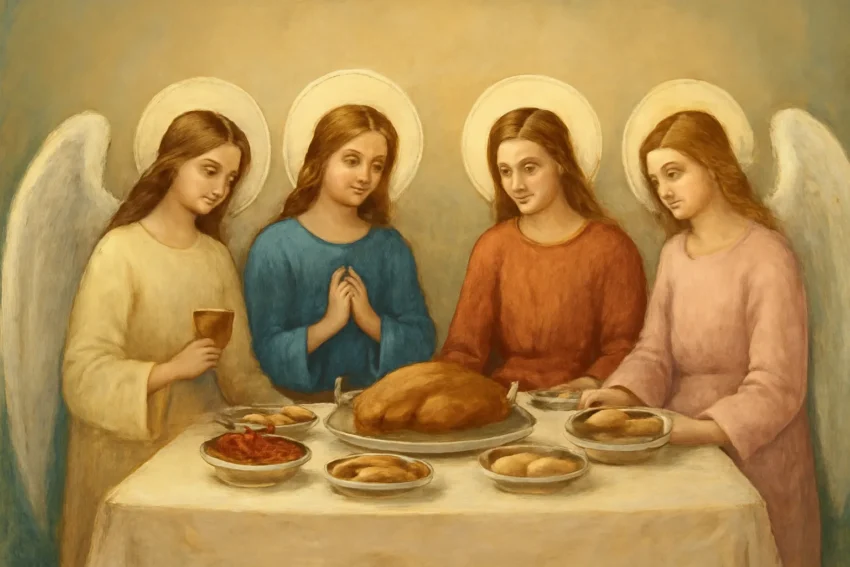
Across many Christian traditions, angel feast days mark moments when the sacred messengers and guardians of God are remembered, celebrated, and invited into daily life. These days punctuate the liturgical year with points of reflection on wisdom, protection, courage, and guidance. Whether you call them angelic feast days, feasts of the archangels, or guardian-angel commemorations, the practice invites people of faith to pause, pray, and act in harmony with what these heavenly beings symbolize. This article explores the meaning behind angel feast days, traces their history, and offers practical ideas for observing them in contemporary life.
Angel feast days are not just a calendar curiosity; they are a way to connect with the spiritual dimensions of belief. In many Christian traditions, angels serve as messengers between God and humanity, as protectors who accompany people in daily life, and as witnesses to the divine plan at work in history. The purpose of dedicating days to these beings is multifaceted:
Honor and learning — to learn about the qualities angels embody, such as courage, fidelity, healing, and hospitality, and to imitate those virtues in daily conduct.
Remembrance and gratitude — to remember God’s care through unseen helpers and to express gratitude for guidance in difficult times.
Spiritual formation — to cultivate practices that open the heart to divine communication, whether through Scripture, prayer, or contemplative quiet.
Community and continuity — to join with others in shared rituals, hymns, and stories that have carried through generations, linking the present with a long religious memory.
Seasonal alignment — to weave the presence of angelic beings into the rhythm of the liturgical year, aligning personal life with the broader movement of feasts and fasts, celebrations and vigils.
Historical Roots and Development
The venerable figure of angels appears early in biblical tradition and expands in the centuries that followed. In the New Testament, angels appear as heralds of important events — the annunciation to Mary, the angelic guidance to Joseph, and Acts of deliverance in early Christian communities. Over time, the church’s liturgical calendar began to include specific celebrations for certain angelic beings, especially the archangels who stand at the forefront of divine communication and protection.
The medieval period saw a growth in hagiography, theology, and liturgical practice that elevated angels from mere figures in stories to beings with distinct roles, names, and feast days. The development of canonical and devotional calendars helped ordinary Christians orient their prayers around particular heavenly patrons and guardians. Some communities emphasized pilgrimages, processions, and art that depicted archangels in moments of mission — imagery that reinforced the moral and spiritual lessons associated with each feast day.
Today, angel feast days live in a spectrum of Christian traditions. In the Roman Catholic and Anglican calendars, certain days mark the commemoration of archangels and guardian angels, while in the Eastern Orthodox tradition, feasts of the angels often appear within the context of broader feast cycles and liturgical commemorations. Across all these expressions, the shared impulse is to honor the vitality of God’s messengers and to invite their example into human life without confusing reverence for worship, which remains due to God alone.
Major Angel Feast Days: When to Mark Them
Several angelic commemorations recurred throughout the Christian year, with some dates standing out as anchor points in many Western calendars. The following list highlights widely observed angel feast days, with brief notes on what each celebration emphasizes. Note that dates can vary by locality or by whether a community uses the traditional calendar or a revised one; the dates below reflect common Western practice.
Archangel Michael – Michaelmas (September 29)
Also described as the “Feast of the Archangels” by many, it marks the leadership role of Michael in the heavenly army and in the fight against evil. In agrarian societies, Michaelmas has been linked to the harvest season and the turning point of the year.
Archangel Gabriel – The Annunciation (March 25)
This feast celebrates Gabriel’s visitation to the Virgin Mary to announce the Incarnation. It is a hallmark of divine communication and trust in God’s plan.
Archangel Raphael – Saint Raphael the Archangel (October 24)
Raphael is especially associated with healing, travel, and companionship. The Book of Tobit (a deuterocanonical text in the Catholic and Orthodox traditions) presents Raphael as a guiding and healing presence.
Guardian Angels – The Feast of the Guardian Angels (October 2)
Observed in many Western churches as a day to honor one’s personal guardian angel — the heavenly protector believed to accompany each person from birth to death.
Other archangel and angelic commemorations (various dates, depending on tradition)
Some traditions observe other angelic mentions within the broader context of the angels’ roles in salvation history or within local saints’ calendars.
Archangel Michael: Michaelmas and Its Significance
Michaelmas is one of the oldest and most widely observed angel feast days. Named after Archangel Michael, this celebration embodies courage, righteousness, and victory over evil. The name Michael means “Who is like God?” and the feast has historically served as a moment of moral and spiritual renewal. In some cultures, Michaelmas also marks the transition from summer to autumn and is tied to communal rites, blessing of crops, and acts of charity as a way to honor the protection attributed to Michael and the heavenly host.
Gabriel’s Day: The Annunciation and Message
The feast of the Archangel Gabriel centers on the annunciation — the moment when Gabriel announced to Mary that she would bear the Son of God. This day emphasizes revelation, obedience, and trust in God’s plan. It is often framed as a reminder that God’s purposes may unfold in quiet moments and unlikely ways, inviting believers to listen attentively and respond with generous response, much as Mary did.
Raphael and Healing: A Focus on Guidance and Health
On Raphael’s feast, the emphasis is on healing, travel protection, and guidance through difficult journeys. The story of Raphael in Tobit invites readers to consider patronage in health matters, safe travel, and compassionate care for others. This feast serves as a reminder that healing can take many forms—physical, emotional, spiritual—and that guidance may come when one asks for it with humility.
Guardians on Patrol: The Feast of the Guardian Angels
The guardian-angel celebration centers on the intimate idea that God assigns a personal guardian to each person. This day invites believers to reflect on the presence of a guardian who watches over them in daily life, especially during moments of risk, temptation, or uncertainty. It also invites families to teach children about safety, virtue, and the moral choices that shape a life guided by divine protection.
How to Observe Angel Feast Days Today
Observing angel feast days can be tailored to your tradition, location, and personal rhythm. The following ideas offer practical ways to translate ancient memory into modern practice, without requiring elaborate ceremony. You can mix and match these practices to suit your season and spiritual temperament.
Mark the date on your calendar and set a simple plan for prayer, reading, and reflection.
Create a small domestic altar with a light, an icon or image of the angel in question, a holy text passage, and a note of intention.
Pray or chant a brief prayer connected with the day’s focus, such as a traditional prayer to Archangel Michael for protection, to Gabriel for clarity, or to Raphael for healing.
Read invitation and guidance passages from Scripture or accepted devotional literature. For Michael, reflect on passages that speak of spiritual warfare and divine victory; for Gabriel, reflect on revelation and trust; for Raphael, reflect on healing and mercy. In Catholic devotion, you may also consult Tobit for Raphael, while Luke 1:26-38 is central for Gabriel’s Annunciation.
Offer acts of service or charity in memory of the day. A practical act might be helping someone who is sick, traveling, or in need of encouragement, echoing Raphael’s care and Michael’s protection.
Spend time in contemplation or a walk in nature to notice signs of guidance, protection, and grace in ordinary life.
Engage in family or community rituals such as lighting candles together, sharing a short reading, or offering universal intentions for peace, healing, and courage.
Artistic or musical observations — draw, write a poem, or sing a hymn that evokes the angelic theme of the day; the arts can be a potent way to internalize the virtues associated with the feast.
For those who follow a formal liturgical calendar, consult your local church or diocese’s schedule. Some communities may celebrate the archangels with a Mass or Divine Liturgy, while others observe a quieter vigil. Regardless of setting, the core idea remains the same: to orient your life around the divine message, protection, and care embodied by these heavenly beings.
Observances Across Traditions: Variations and Common Ground
Angel feast days take on distinctive shapes in different Christian traditions. Each tradition honors the same spiritual motifs—communication with God, divine protection, and compassionate service—but emphasizes different practices, liturgical tones, and devotional tools. Here is a brief overview of how some communities approach these commemorations:
Roman Catholic and many Western Christian communities often celebrate Michaelmas or the Feast of All Angels with formal prayers, processions, and special readings in conjunction with the archangels’ roles. The Guardian Angels day, on October 2, is commonly observed in schools, families, and local parishes as a reminder of personal protection and moral discernment.
Eastern Orthodox communities may observe angelic feast days within the broader framework of the church’s fixed and movable feasts. Icons, hymns, and liturgical readings emphasize the holy guardianship of angels and their role in governing the cosmos according to God’s will. Devotion often occurs through parish liturgies, psalms, and acclamations that honor the heavenly hosts.
Anglican and Lutheran traditions often retain a reverent remembrance of archangels within the liturgical year, using traditional prayers and readings while allowing for more flexible, lay-friendly observances. In many parishes, these days are celebrated with a short service or prayer service that invites congregants to reflect on the virtues associated with Michael, Gabriel, Raphael, and the guardians.
Popular piety and personal devotion — regardless of formal calendar status, individuals and families may adopt angel feast days as occasions for simple rituals, such as lighting a candle, saying a personal prayer, or offering a small act of mercy in memory of the day’s focus.
To support a thoughtful observance, consider the following practical tools. They can help you build a reliable routine around angel feast days, whether you are a longtime practitioner or a newcomer to these devotions.
Scripture and canonical/deuterocanonical texts — Luke 1:26-38 for Gabriel; Daniel 10:13-21 for some angelic references; Tobit 5-12 (Raphael) in traditions that include Tobit; and other scriptural passages that speak to angelic presence and intervention.
Official calendars and parish guides — many churches publish calendars showing when archangel feasts are observed in a given year. Use these guides to plan family observances or community services.
Books on angelology and devotion — introductory texts on angels provide context, vocabulary, and historical notes that enrich personal practice without requiring scholarly background.
Devotional prayers — canonical prayers to Archangel Michael, prayers to the Guardian Angels, and seasonal prayers crafted for the day can be found in traditional prayer collections and online repositories that respect the heritage of the practice.
Art, icons, and music — icons of Michael, Gabriel, and Raphael; sacred music or hymns dedicated to the angels can deepen contemplation and serve as a focal point for family or group prayer.
Throughout Christian history, angel feast days have been adapted to fit local cultures, languages, and spiritual needs. Some communities blend the angelic celebrations with agricultural rhythms (as in Michaelmas’s association with harvest season), while others emphasize moral and spiritual formation through guardian-angel devotion. In many places, these days have morphed into opportunities for charitable outreach, education, and communal renewal — a testimony to the belief that heavenly guardianship translates into everyday actions on earth.
In a world filled with constant change, angel feast days offer a steady rhythm that invites believers to stop, listen, and act with intention. They remind us that we are not alone in our journeys—that higher beings stand with us, exhorting us toward virtue, courage, healing, and mercy. Whether you approach them as a formal liturgical practice, a personal devotion, or a simple seasonal reminder, the essence remains the same: these days are invitations to align our lives with God’s gracious speech and to respond with trust, generosity, and steadfast faith.
For readers seeking a starting point, a practical suggestion is to choose one angelic feast day per season and build a small, repeatable practice around it. For example, in autumn you might observe Michaelmas by volunteering for a local charity drive or helping someone in need in your community, embodying the protection and justice that Michael represents. In spring, you could focus on Gabriel by engaging in a discernment exercise or study of a personal goal with a trusted mentor, echoing the clarity and communication of Gabriel’s role. In late autumn, Raphael’s emphasis on healing and guidance could inspire acts of care for someone who is unwell or in transitional life circumstances. And on October 2, you might celebrate the Guardian Angels by organizing a simple evening of reflection with family or friends, asking for guidance in daily decisions and offering prayers of protection for loved ones.
Ultimately, the enduring value of these angel feast days lies not in ornate ritual alone but in how they shape daily life: through gratitude for divine guardians, courage to face life’s challenges, acts of healing and mercy, and a continual openness to God’s mysterious and gracious communication. May these feasts be a source of light, learning, and love as you walk a path marked by the heavenly mentors who accompany humanity from dawn to dusk.