The Sermon on the Mount is one of the most influential blocks of teachings in the Christian tradition. Found in the Gospel of Matthew chapters 5–7, it presents a compact, demanding, and highly debated vision of life in the Kingdom of God. This article offers 10 facts that illuminate its historical context, its distinctive themes, its literary shape, and its ongoing relevance for personal ethics and communal life. Each fact is designed to showcase a different facet of the sermon, offering a breadth of interpretation while maintaining a coherent overview. Use this as a guide to navigate the text’s core claims, its argumentative logic, and the practical implications it has inspired across two millennia of reflection and practice.
Fact 1: Setting, audience, and historical backdrop
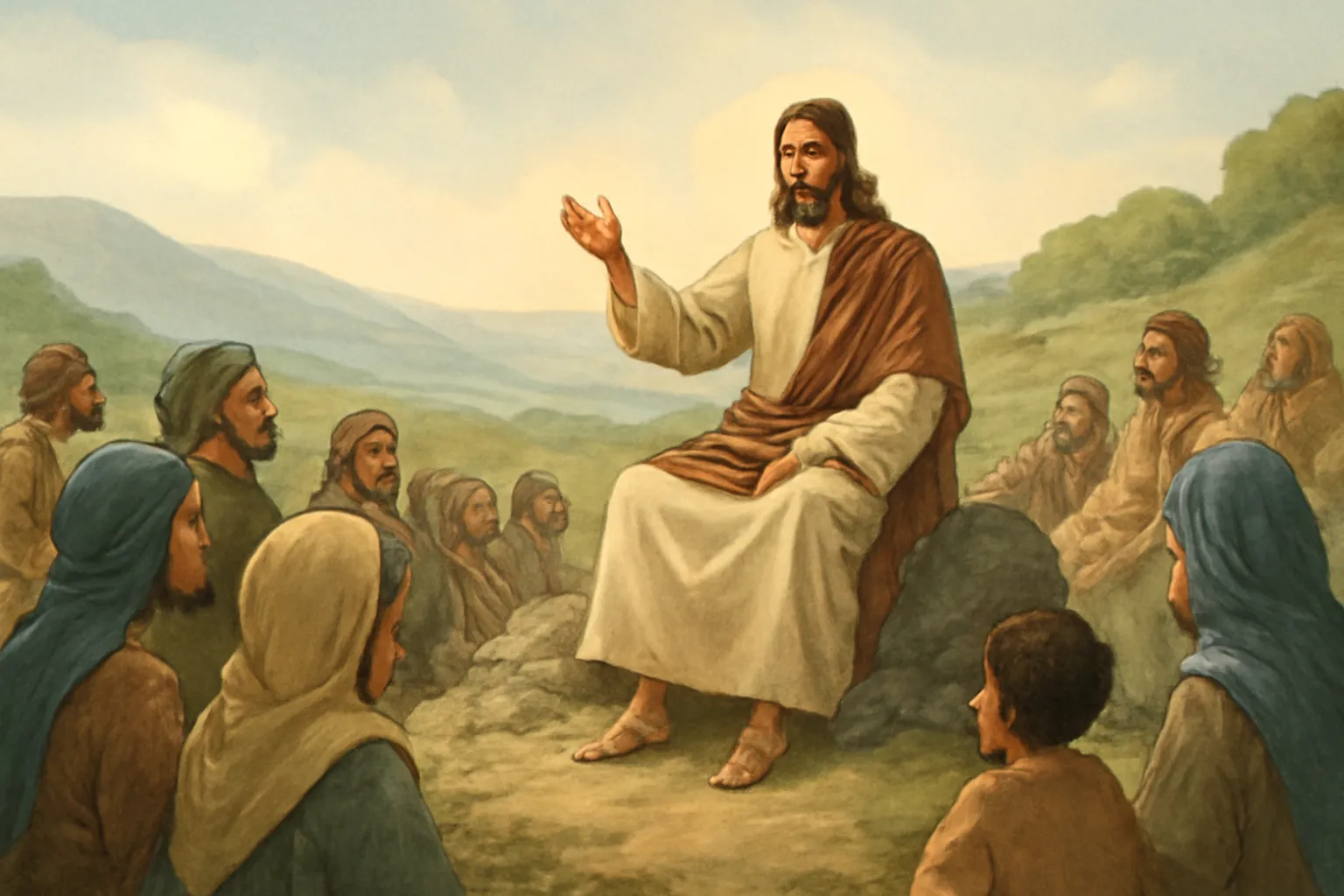
The Sermon on the Mount opens with a scene that is both literal and symbolic. The text describes Jesus going up a mountain and teaching the gathered crowd, but scholars also read the mountain as a literary and theological symbol that echoes the experience of receiving divine revelation, much like Moses on Sinai. This dual reading matters for understanding the sermon’s authority and purpose. The immediate context is Jesus’ early ministry among a diverse audience of fishermen, peasants, healers, and inquiring crowds, with a particular emphasis on his disciples and their role as the first recipients of a radical ethical vision. In historical terms, the sermon reflects a Jewish-Rabbinic milieu, negotiating the relationship between the Torah, the prophetic tradition, and the forthcoming interpretation of righteousness under the reign of God. It can be appreciated as both a personal proclamation and a community charter.
Why the setting matters
Symbolic geography: mountains as places of revelation and instruction.
Audiences understood as both a crowd and a close circle of followers.
Ethical boundaries framed by the expectations of the kingdom rather than by mere external conformity.
In short, this opening fact invites readers to consider how the sermon’s words function as both a message to individuals and a specification of a new communal way of living under God’s rule. The result is an invitation to interior transformation that bears public weight.
Fact 2: The Beatitudes—a counter‑cultural ethically radical vision
The opening Beatitudes (5:3–12) announce a series of blessings that invert ordinary social assumptions about happiness and success. Rather than blessing the powerful, the prosperous, or the self-assured, Jesus pronounces favor on the poor in spirit, the meek, those who hunger and thirst for righteousness, the merciful, and the peacemakers. This is a deliberately counter‑cultural framework that redefines blessedness through the language of expectancy in the kingdom of heaven. The Beatitudes do not merely offer consolation; they shape a moral psychology that prioritizes humility, justice, mercy, and a longing for righteousness as the true markers of a blessed life.
Key patterns in the Beatitudes
The statements begin with “Blessed”, signaling an oracle-like pronouncement rather than a moral exhortation.
The blessings often pair a present condition with a future inheritance.
They foreshadow later sections of the sermon by framing the ethical expectations that follow in 5–7.
Across historical reception, the Beatitudes have been read in multiple lights—from a revolutionary political manifesto to a spiritual pedagogy for personal virtue. Their enduring appeal stems from their ability to dignify vulnerability and to reorient success around God’s justice rather than human achievement.
Fact 3: The structure of righteousness—inner reform over outward show
A major theme throughout the sermon is a redefinition of what it means to be righteous. In the middle of the text, Jesus quotes familiar commandments with a radical twist: “You have heard that it was said … but I say to you” (for example, about anger, lust, oath-taking, and retaliation). This is not merely a tightening of moral rules; it is a claim about inner transformation—the heart’s intent matters as much as external action. The famous antitheses extend from anger to murder, from lust to adultery, and from careless speech to truthful integrity. The call is to deal with root causes in the inner life rather than only policing outward behavior.
Antithetical teaching as interpretive strategy
The “antithesis” formula reframes customary legal interpretations within a broader ethical horizon.
The section emphasizes hearts and motives, not just perimeters of conduct.
It lays out a trajectory toward a more righteousness that exceeds the scribal tradition.
Scholars debate how directly Jesus intends these statements to abolish or redefine Mosaic law, yet consensus remains that the sermon grounds moral life in Gospel holiness rather than purely external observance. The practical upshot for readers is a call to cultivate integrity, compassion, and a consistent moral imagination that aligns belief with behavior.
Fact 4: Prayer and the Lord’s Prayer as a model for spiritual life
Prayer occupies a central place in the sermon, with a notable emphasis on sincerity, simplicity, and dependence on God. Jesus instructs his followers not to pray to solicit public praise or to display piety, but rather to “pray in secret” and to rely on God daily. The Lord’s Prayer (6:9–13) stands as a compact template that moves from adoration («Hallowed be your name») to petition for daily provision, patience under temptation, and the path of moral and social healing through forgiveness. It concludes with a short doxology-like petition that aligns personal need with divine will. The surrounding material also contrasts private prayer with public piety—an important correction against performative religion.
Prayer as a discipline and communal form
The structure of the prayer models a rhythm of adoration, supplication, confession, and intercession.
It emphasizes daily dependence on God, rather than boasting about spiritual achievement.
The surrounding guidance on fasting and almsgiving situates prayer within a broader ethical life that witnesses to God’s kingdom without ostentation.
For many readers, the Lord’s Prayer remains not only a liturgical text but a guide to humble devotion and ethical critique—shaping how communities pray, discern, and act in daily life.
Fact 5: Almsgiving, fasting, and the right posture toward righteousness
In Matthew 6, Jesus links spiritual practices—giving to the needy, prayer, and fasting—with the motive behind them. The notable warning is not about the acts themselves but about how easily such acts can become public performances designed to gain social standing. The directive is clear: do not do these things to be seen by others because God sees what is done in secret. This creates a dynamic in which spiritual practices become meaningful precisely when they are lived out with humility and sincerity.
Practical implications of private piety
Almsgiving, prayer, and fasting are framed as means of formation, not trophies for display.
Treasure in heaven is prioritized over treasure on earth, reinforcing a long-term orientation toward divine reward rather than social acclaim.
Followers are invited to cultivate generosity, integrity, and steadfastness without seeking human approval.
Historically, this emphasis has influenced Christian practice in communities emphasizing simplicity, humility, and service. The aim is to redirect energy away from self-promotion toward a life that witnesses to the values of the Kingdom in tangible acts of mercy and justice.
Fact 6: Judgment, discernment, and the ethics of mercy
A recurring tension in the sermon concerns how believers should relate to others. The teaching surrounding judgment—“judge not,” and the related call to discern hypocrisy—rests alongside admonitions to exercise mercy, generosity, and truth-telling. Jesus also presents a practical approach to judgment: first deal with personal sin so you can see clearly to help your brother or sister. The passage tied to this idea (5:7; 7:1–5) cautions against self-righteous criticism while insisting that the moral life includes honest self-scrutiny and accountability within the community. The aim is not to withdraw from judgment altogether but to humble and careful discernment that leads to reconciliation rather than condemnation.
Framing mercy within justice
Mercy is not a substitute for truth-telling; it is a posture that seeks restoration.
The practice of discernment includes recognizing one’s own need for mercy before addressing others’ faults.
The ethical logic extends to social relationships, inspiring peacemaking and compassionate engagement with enemies.
In this light, the Sermon on the Mount offers a nuanced ethics of mercy that refuses both brittle legalism and perpetual cynicism. It invites believers to cultivate a community where judgment is measured, repentance is genuine, and mercy shapes public life.
Fact 7: The “two ways”—wisdom, obedience, and the parable of the builders
Towards the end of the sermon, the imagery of two foundations and two responses becomes a succinct summary of the ethical stakes. Jesus urges his listeners to hear his words and put them into practice, comparing the one who does so to a wise builder who lays a house on a solid rock. In contrast, the one who merely hears without acting is likened to a foolish builder who constructs on sand. The practical upshot is a call for integrated discipleship: belief must translate into action, not merely into theory or sentiment. The concluding admonition that a life built on obedience withstands life’s storms serves as a compelling test case for personal faith and communal integrity.
Discerning true discipleship
The parable functions as a diagnostic tool: faith that does not produce obedience is unstable.
Discipleship in this view is not a private mood but a shared way of living that sustains a community during trials.
Public witness—such as acts of mercy, peacemaking, and truthful speech—functions as evidence of a life built on rock.
Scholars weigh how the parable relates to the surrounding material—whether it marks a closing verdict on the sermon or functions as a practical synopsis for Christian life after Jesus’ teaching is heard. Either way, the emphasis remains on doing the words and on a stable, enduring form of discipleship.
Fact 8: Fulfillment of the Law and the Kingdom ethics
A critical hinge in the sermon is the statement about fulfilling the law rather than abolishing it. Jesus asserts that his mission includes fulfilling the Law and the Prophets, which has sparked extensive exegetical discussion. The core idea is that the new kingdom ethics Jesus proclaims does not discard Mosaic instruction; instead, it interprets and deepens it. This involves re-centering righteousness on the moral intensities of life—inner motives, generous justice, and a love that seeks the well-being of enemies as much as friends. The result is a vision of obedience that blends continuity with innovation: adherence to God’s purposes, while reimagining how those purposes are lived out in daily life.
Readers debate whether Jesus’ language implies a hostile opposition to the law or a transformative reinterpretation.
The ethical horizon expands to include care for the vulnerable, honesty in speech, and pursuit of peace.
The practical outcome is a life that embodies the values of the Kingdom, shaping the church’s identity and mission.
Understanding this fact helps readers see the sermon as a bridge between ancient Torah and the emergent Christian ethics, rather than as a simple departure from the law. It points toward a cohesive vision in which law, grace, and love converge in daily living.
Fact 9: The communal and social vision—salt, light, forgiveness, and peacemaking
Several verses—most notably where Jesus calls his followers salt of the earth and light of the world—frame the Sermon on the Mount as a call to visible, transformative influence in the world. The teaching extends beyond personal virtue to a social program of mercy, fairness, and reconciliation. The sermon affirms the dignity of every person, invites humility in leadership, and promotes peacemaking as a primary vocation of the people of God. Forgiveness is not merely a private sentiment but a social practice that seeks harmony within the community and in relationships beyond it. By placing ethical living in the context of public witness, the sermon makes a claim about how a community should function when it embodies the values of the Kingdom in every interaction, from personal disputes to communal governance.
Practical implications for today
Peacemaking involves active response to conflict, not withdrawal or indifference.
Forgiveness is presented as ongoing practice, not a one-time event, with implications for how communities heal and rebuild trust.
The salt-and-light metaphor anchors a social ethic: believers as agents of preservation, flavor, clarity, and moral illumination in public life.
In this light, the sermon’s social vision remains relevant for communities seeking to translate spiritual ideals into justice, mercy, and communal vitality—without losing the depth of interior formation that sustains such public witness.
Fact 10: Influence, reception, and the ongoing interpretive conversation
Finally, the Sermon on the Mount has influenced a broad spectrum of traditions, from medieval scholastic ethics to modern social justice movements, from liturgical prayer to personal piety. Its influence extends into art, literature, political theory, and everyday moral reflection. Yet it has also provoked intense scholarly debate about issues such as the exact nature of Jesus’ authority, the relationship of the sermon to the longer Gospel of Matthew, and how to balance radical interpretation with practical agency in diverse cultural contexts. Debates often center on how literally one should take the demands (for example, radical nonretaliation or absolute purity of heart) versus how to read them as ideals guiding ongoing reform. Regardless of the interpretive lane, the sermon’s core emphasis on kingdom life, integrity, and compassion continues to shape conversations about ethics, spirituality, and public life.
Contemporary relevance and pitfalls
Some readers use the sermon as a standard for moral critique of social systems, while others emphasize its spiritual inwardness as a call to personal renewal.
Scholars explore the text’s historical layering, sources, and literary structure to understand how Matthew’s community shaped the message for second‑half of the first century.
In practice, communities look to the sermon for guidance on prayer habits, economic ethics, conflict resolution, and civic responsibility.
In all its breadth, the Sermon on the Mount remains a living conversation partner for readers across eras. Its enduring appeal rests in the way it invites not just contemplation but sustained, courageous action grounded in a transformative relationship with God and with one another.