In Christian discourse, baptism is often described as more than a ritual; it is a declaration of faith, an initiation into the Christian community, and a sign of forgiveness and new life. The phrase Christian baptism meaning appears in sermons, catechesis, and scholarly writings to highlight the spiritual, theological, and communal dimensions of the rite. Across traditions, the core aspiration of baptism remains consistent: to point toward a person’s union with Christ, to mark entrance into the body of believers, and to symbolize a turning from sin toward a life shaped by the gospel.
Defining the term
The word baptism originates from the Greek baptizo, meaning to dip, immerse, or wash. In the biblical images, water stands as a powerful symbol: cleansing from sin, death to the old life, and emergence into a new, purposeful existence in Christ. Therefore, the meaning of baptism in Christianity encompasses several interwoven ideas—cleansing, covenantal belonging, transformation, and mission. When people speak of baptism in the New Testament, they usually refer to a rite that publicly identifies a believer with Jesus’ death and resurrection, while also signifying entry into the community of faith.
The historical roots of baptism
The practice of baptism has deep roots in Jewish purification rituals and in Jesus’ own commissioning of his followers. The Great Commission, in which Jesus instructs his disciples to make disciples of all nations and to baptize them, anchors the contemporary practice for many churches. Over the centuries, Christians have understood this act through various lenses—some emphasizing baptism as a means of grace, others as a symbolic ordinance that binds the believer to Christ in faith. The history of Christian baptism reveals a trajectory from a predominantly oral tradition among early believers to a structured liturgical rite within local congregations. Throughout this journey, the essential meaning—identification with Christ, entry into the people of God, and the promise of the Spirit—has remained central.
Theological significance: what the act communicates
Core meanings in baptism
Many Christians speak of baptism’s significance in terms of several overlapping truths. First, it is a public confession of faith: a person proclaims trust in Jesus Christ as Lord and Savior in the presence of a community. Second, it is a sign of cleansing and forgiveness: the rite communicates forgiveness of sins and a turning away from the power of sin. Third, it is a visible symbol of new life: the imagery of dying with Christ and rising to live a transformed life is central. Finally, baptism bears covenantal identity: it marks the believer’s belonging to God’s people and to a shared mission in the world.
Baptism as participation in the life of the Trinity
In much of Christian theology, baptism is understood as a baptism into the life of the Triune God. The believer is washed by the Spirit, claimed by the Father, and empowered by the Son. This Trinitarian frame emphasizes that the meaning of baptism includes more than a moment; it is a continuing relationship with God that shapes identity, allegiance, and hope.
Different interpretive perspectives
Across traditions, there are nuanced understandings of baptism meaning:
Sanctifying view: Some see baptism as a means by which God bestows grace or strengthens faith at the moment of baptism.
Symbolic view: Others emphasize baptism as an outward symbol signifying inward faith and commitment, without dictating a person’s salvation.
Covenantal view: Many Protestant and Catholic traditions understand baptism as a sign of the new covenant, placing emphasis on belonging to God’s people and to the mission of the Church.
Mystagogical view (in broader Christian thought): Ongoing formation in the mysteries of faith that baptism initiates, inviting continued spiritual growth.
Regardless of the particular angle, most Christians agree that baptism matters because it unites the believer to Christ, binds the covenant community, and inaugurates a path of discipleship. The meaning of baptism in Christian practice is inseparable from faith, repentance, and the Spirit’s work in the life of the believer.
Practices across Christian traditions: how baptism is done
Modes of baptism: immersion, pouring, and sprinkling
One of the most visible differences among traditions concerns the method of administering baptism. The options can be grouped as:
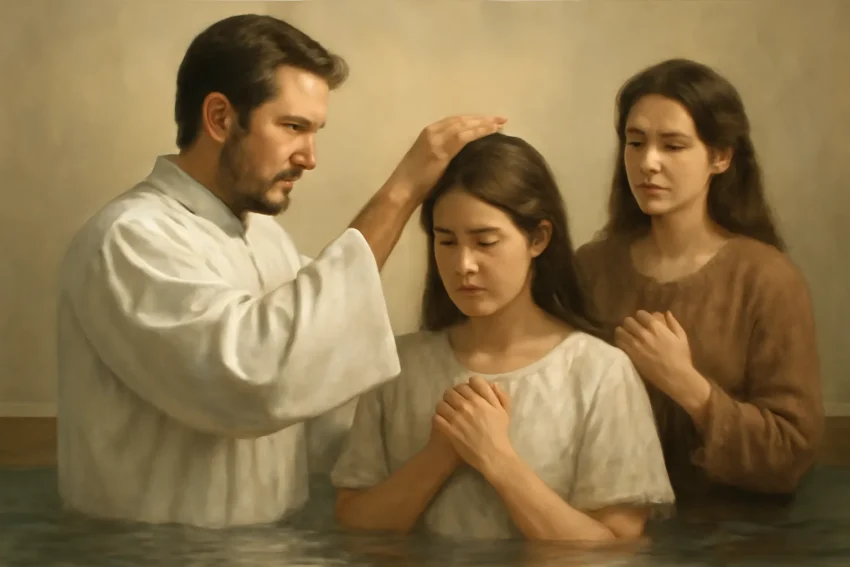
Immersion: Submerging the whole person in water; commonly associated with rivers or baptismal fonts in many Protestant and evangelical communities, and often linked to the earliest forms of baptism described in the New Testament.
Pouring (affusion): Water is poured over the head, typically three times, representing the outpouring of the Spirit and cleansing. This is widespread in Catholic, Orthodox, and some Protestant churches.
Sprinkling: Small amounts of water sprinkled on the head, sometimes used in infant baptisms or in settings where immersion is impractical.
Each mode carries a different emphasis but aims at the same meaning of baptism: the cleansing of sin, the formation of identity within the body of Christ, and the commencement of a life shaped by the gospel.
Baptism for whom? Infant baptism versus believer’s baptism
The question of infant baptism versus believer’s baptism has long shaped Christian practice. In some traditions, infants are baptized as a sign of inclusion in the covenant community and the expectation of personal faith later. In other traditions, baptism is reserved for those who can publicly profess faith in Christ, often following a period of catechesis or a personal conversion experience. The meaning of baptism in both cases remains tied to belonging to the people of God and responding to God’s grace, though the conditions and expressions differ.
Catholic, Orthodox, and many Protestant understandings
The baptismal rite in Catholic and Orthodox churches is typically sacramental and sacramentally efficacious, signifying forgiveness of sins and incorporation into the Body of Christ from the moment of administration. In many Protestant churches, baptism is viewed as an ordinance or a public declaration of faith that follows belief in Jesus. Even within broadly similar traditions, the meaning of baptism can be nuanced by local doctrine, church polity, and liturgical tradition.
Practical aspects of the practice
In practical terms, baptism often involves:
Preparation or catechesis to help candidates understand the commitment they are making and the symbolism of the rite.
Profession of faith or testimony, where the candidate or the family articulates belief in Jesus Christ and commitment to follow him.
Administration of the rite, whether by immersion, pouring, or sprinkling, usually in the presence of a congregation.
Blessing and commissioning, where the church prays over the candidate and affirms their inclusion into the mission of Christ’s people.
Ritual elements, symbols, and liturgy associated with baptism
Symbols of cleansing, rebirth, and covenant
The ritual is rich with symbolism. Water signifies cleansing from sin and purification. The old life dies in baptism, and the believer rises to new life in Christ. White garments symbolize purity and new identity, while the lighted candle often represents the ministry of Christ and the illumination of the believer by the Holy Spirit. In some traditions, the act is accompanied by anointing with oil, which signals sealing by the Spirit and empowerment for service.
Liturgical forms and structure
A baptism ceremony typically has a recognizable arc:
Liturgical greeting and invitation to participate in the service.
Profession of faith or testimony by the candidate or their sponsors.
Recitation of the baptismal vows, including commitments to live according to the gospel and to renounce sin and evil.
Administration of the water rite (immersion, pouring, or sprinkling).
Blessing and commissioning by the church, often followed by the sacramental prayer over the person.
Biblical foundations: what scripture says about baptism
Baptism as a response to the gospel
In the New Testament, baptism is closely linked to the gospel proclamation. The message of Jesus, the good news of salvation by grace through faith, is inseparable from the call to be baptized. The Acts of the Apostles presents baptism as a response to hearing and believing the gospel, often occurring after a profession of faith. The meaning of baptism here is consistently tied to trust in Christ, repentance, and reception of the Spirit.
Death and resurrection imagery in baptism
The Apostle Paul explicitly connects baptism with the death and resurrection of Christ. In Romans 6, Paul says that through baptism believers are buried with Christ into death and raised to walk in newness of life. This scriptural frame reinforces the core message of baptismal identity—the believer’s union with Christ in a representative, symbolic act that discloses a real, ongoing transformation.
Trinitarian framing in baptism
The Great Commission in Matthew 28 frames baptism in the name of the Father, Son, and Holy Spirit. This triune framing is a major theological anchor for many Christian communities, signaling that baptism is not merely a private act but a sign of belonging to the triune God and the church’s mission in the world.
The meaning of baptism for believers and communities
Identity and belonging
Baptism meaning for a believer includes identity formation: a person is named as a disciple, belonging within the local church and the broader Christian fellowship. It is an outward sign of a patient inward work—God’s grace shaping one’s life, values, and loyalties.
Public witness and mission
Baptism functions as a public witness to the gospel and a commissioning for mission. By being baptized, a believer joins a corporate story—the story of grace, rescue, and the ongoing work of God in the world. This public dimension is essential in many traditions, underscoring that the Christian faith is never merely private belief but a communal, mission-oriented faith.
Grace and obedience
For many theologians, baptism is both a sign of grace received and an act of obedience to Christ’s command. The baptismal act communicates trust in God’s promises while publicly aligning one’s life with the values of the gospel. Even in traditions where baptism is seen primarily as a sign, the obedience to Christ’s command remains a central theme in understanding its significance.
Practical considerations: how congregations prepare, administer, and follow up
Preparation and catechesis
In many churches, prospective baptisands participate in a period of instruction or catechesis. This preparation helps candidates understand the symbolism, theological implications, commitments, and the responsibilities that come with baptism. It also provides space to articulate personal faith, address questions, and build a supportive network within the faith community.
The baptismal rite in different traditions
Although the framework described above is shared by many Christian communities, the concrete practice can vary:
Roman Catholic and Eastern Orthodox rites emphasize the sacramental dimension, often including chrism (anointing), liturgical prayers, and a formal naming as part of baptism, often within the context of the Eucharist and the church calendar.
African Independent Churches, Pentecostal, and some evangelical communities may emphasize the inward experience of faith, often accompanied by expressive worship, testimonies, and a focus on personal encounter with the Holy Spirit.
Baptist and Reformed traditions tend to stress believer’s baptism (for those who can confess faith) or infant baptism as a covenant sign, followed by a formal dedication and ongoing discipleship.
The ongoing life after baptism
Baptism is not a one-time act that ends the Christian journey. Instead, it marks the beginning of a lifelong process of sanctification, discipleship, and service. Churches often encourage new believers to participate in the ongoing life of the community, engage in worship, study Scripture, serve others, and pursue spiritual growth. The meaning of baptism continues to unfold as believers are formed into the likeness of Christ through teaching, sacraments, fellowship, and mission.
Questions commonly asked about baptism and its meaning
Views differ across traditions. Some hold that baptism is essential as a sacrament of grace; others insist that faith in Christ is the primary condition, while baptism remains an important symbol of that faith. In many contexts, baptism is considered a normative expectation for believers, but there are also cases where individuals come to faith in circumstances where baptism cannot immediately occur. The baptism meaning in these cases emphasizes trust in God’s grace and the desire to be baptized when possible.
In most traditions, baptism is understood as a once-for-all sacrament or ordinance. Instances of re-baptism are often tied to significant doctrinal shifts or to a reaffirmation of faith in a new church community. The overarching baptismal meaning remains the same: identification with Christ, cleansing, and new life in the covenant community.
What is the difference between infant baptism and adult baptism in terms of meaning?
The central meaning—belonging to God’s people, receiving grace, and beginning a life of discipleship—remains consistent across both approaches. The difference typically lies in the timing and the role of personal confession of faith. Infant baptism often emphasizes God’s grace and the covenantal faith of the community and family, while adult baptism foregrounds personal faith and explicit profession. Both are intended to point to the same reality: a life oriented toward Christ within a faith community.
What role does the Holy Spirit play in baptism?
In many Christian theologies, the Spirit is integral to baptism; some traditions teach that the Spirit is given in the moment of baptism, while others emphasize the Spirit’s work that begins before baptism and continues afterward. The meaning of baptism in this light includes an empowerment for holy living, spiritual renewal, and participation in the church’s mission.
Conclusion: the enduring meaning of Christian baptism
Across denominations and cultures, the baptism meaning remains a robust, multi-layered concept. It is not merely a ritual act but a comprehensive declaration about who a person is in relation to God, to the church, and to the world. It is an outward sign that points to an inward transformation—death to an old way of living and new life grounded in the resurrection of Jesus. It is a covenantal marker that persons are welcomed into the body of Christ and strengthened for the calling to bear witness to the gospel. And it is a communal practice that invites the faithful to join in worship, service, and mission with others who share the same proclamation: Jesus is Lord, and by faith, we follow him.
Appendix: a quick reference to key ideas about baptism
Definitions
Baptism: the rite of initiation into the Christian faith, symbolizing cleansing, death to sin, and new life in Christ.
Infant baptism: baptism of a child or infant, signifying inclusion in the covenant community and the grace of God extending to the next generation.
Believer’s baptism: baptism administered to someone who has professed faith in Christ, typically highlighting personal repentance and trust.
Key symbolic elements
Water: cleansing, purification, and the sign of life in Christ.
White garment: purity and new identity in Christ.
Candle or light: Christ as the light, and the believer’s call to walk in that light.
Oil (where used): sealing by the Spirit and empowerment for service.
Common questions at a glance
What does baptism mean in my church tradition?
What are the requirements before baptism (faith, instruction, profession)?
What is the role of community in baptism?
In sum, the meaning of Christian baptism encompasses much more than the moment of immersion, pouring, or sprinkling. It is a sacramental sign and spiritual reality that communicates grace, affiliation, and responsibility. It invites believers into a lifelong journey of faithfulness and service, rooted in the gospel of Jesus Christ and sustained by the life of the church. Whether approached as a sacred mystery, a sacred ordinance, or a dynamic expression of faith, baptism remains a foundational rite that calls Christians to live out the gospel in word and deed.