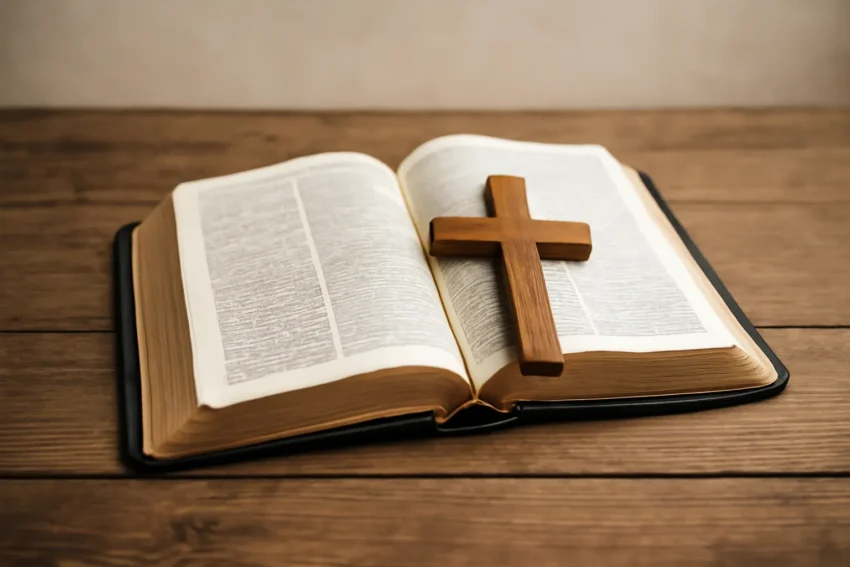
In the language of everyday faith, you will often hear the phrase “God has a plan for you”. It is a hopeful statement that resonates with people who are navigating life’s twists and turns. This article explores what that phrase means within the Bible, how it has been expressed in different parts of Scripture, and how readers can respond to the idea in practical, trustworthy ways. Rather than presenting a single verse as a simple slogan, we will consider a tapestry of biblical passages that together convey a robust understanding: God has a plan for you, and that plan invites trust, growth, and purposeful living even in uncertain times.
What it Means to Say “God Has a Plan for You”
Saying that God has a plan for your life is not a claim that life will be free of difficulty. Rather, it is the confession that a sovereign Creator is attentive to your needs, has a purpose for your days, and is actively shaping your journey toward a good end. In Scripture, the idea of divinely given purpose can be understood through several intertwined ideas:
Direction and purpose: God’s plan is meant to provide a direction for decision-making, not a static map that never changes with circumstance.
Hope and future: The plan is oriented toward hope—toward a future that transcends present trials.
Transformational growth: God’s plan often involves shaping character, trust, and faithfulness in the person He made.
Participation: Humans are invited to cooperate with divine purposes through obedience, discernment, and service.
A key aspect of this idea is the notion that God’s plans are good, even when the road is hard. The biblical writers describe a God who knows, designs, and directs the paths of His people. In this sense, the phrase “God has a plan for you” becomes an invitation to live with hope, responsibility, and confidence that your life has significance beyond what you can see in the moment.
Common ways the idea is phrased across Scripture
Readers encounter variations on the same theme, each pointing to a compassionate design from God:
God has plans for you, plans that include peace and a future.
God’s purpose for your life is real and personal, not generic or accidental.
God is at work in all things to bring about His good purposes for those who love Him.
Your life is a part of a larger story that God is authoring with care and wisdom.
When these expressions show up in sermons, devotionals, or quiet times, they typically invite readers into a posture of trust, inquiry, and obedience: trust in God’s wisdom, inquiry into His Word, and obedience to His leads—especially when the path is not obvious.
Key Bible Verses that Express the Idea
While the exact phrase “God has a plan for you” is not found verbatim in every translation, the Biblical witness consistently affirms that God has purposes for individuals and communities. Below are some central verses (presented in paraphrase or general sense with references) that illuminate this truth.
Jeremiah 29:11 — The prophet speaks a message of hope to a people in exile, asserting that the Lord has purposeful thoughts about those who follow Him: thoughts of peace, not evil, to give a future and a hope. (paraphrase of the idea that God has plans for you)
Romans 8:28 — God works in all things for the good of those who love Him and are called according to His purpose. This verse emphasizes that even painful events can be woven into God’s larger plan for blessing, growth, and maturity.
Ephesians 2:10 — We are God’s workmanship, created in Christ Jesus to do good works that God prepared beforehand for us to walk in. This speaks to a personal design and purposeful activity prepared by God.
Psalm 32:8 — God promises to guide and instruct, watching over the path we should take, indicating active care and direction in our lives.
Isaiah 55:8–9 — God’s thoughts are not our thoughts, and His ways are higher, reminding us that His planning is wise beyond our immediate perspective.
Proverbs 3:5–6 — Trust in the Lord with all your heart, and He will direct your paths, underscoring the relationship between trust, obedience, and divine guidance.
Each of these passages contributes to a broader understanding: God has a plan for you that is anchored in love, wisdom, and steadfast commitment to your ultimate good. The phrases may differ across translations, but the underlying claim remains: God is actively involved in shaping your life toward a meaningful and hopeful purpose.
Illustrative paraphrase of several verses
To help you see the breadth of this idea, here is compact paraphrase that combines the core themes from several scriptures:
God has a future for you that is designed with peace and well-being in mind.
God can turn even difficult circumstances toward good for those who trust Him.
God has prepared good works for you to walk in as a part of His grand design.
God will guide you when you seek Him with a hopeful heart.
Understanding the phrase requires stepping into the context in which these verses emerged. The biblical writers wrote across centuries and cultures, yet they share a common conviction: God is not distant or indifferent. He engages with people in real time, invites them into a trust-filled relationship, and invites them to participate in His mission to redeem and renew creation.
Historical context of Jeremiah 29:11
The prophet Jeremiah spoke to a people who had been carried into exile in Babylon. Their world had fractured, but God’s message through Jeremiah offered consolation: He had not abandoned them. The idea that God has a plan for their lives persisted even in captivity. The plan emphasized a future hope, a return to homeland, and a purpose that transcended present pain.
Theological themes that shape this idea
Several consistent themes emerge:
Providence: God is actively coordinating events across time to achieve His purposes.
Purpose: Each person is created with a unique role and calling to fulfill in God’s larger story.
Hope: The plan includes a hopeful horizon beyond present trouble.
Human response: The plan invites trust, prayer, and obedience as ways to align with God’s will.
Complementary passages that illuminate the same idea
Other parts of Scripture reinforce the same conviction from different angles:
Psalm 139:16 emphasizes that God knows our days before they come and writes them in His book, suggesting intimate knowledge and care.
Romans 12:2 calls believers to be transformed by renewing their minds so they can discern what is the good and acceptable will of God—that is, to recognize and live out His plan.
Philippians 1:6 speaks of God continuing a good work in believers until it is complete—an ongoing plan in progress.
How to Discern and Live Within God’s Plan
If you hear the claim that God has a plan for you, you may wonder, “How do I find out what that plan looks like for me?” The Bible does not offer a single technique for every person, but it does provide a pattern—spiritual practices that help believers discern God’s will and live in alignment with it.
Pray with openness: Ask God to reveal His purposes for your life and to align your desires with His will.
Study the Word: Let Scripture inform your sense of calling, tempering ambition with humility and obedience.
Seek wise counsel: Engage trusted mentors, pastors, or mature believers who can offer perspective and accountability.
Observe opportunities: Look for doors God opens—ministries, needs, and paths where your gifts can serve others.
Act courageously: Take steps in faith, even if the next step is uncertain; growth often comes through action within God’s direction.
Practice patience: God’s timing often exceeds our own; waiting with trust is not passive but active dependence on Him.
Disciplines that nurture alignment with God’s plan
Regular prayer—talking with God and listening for His voice.
Scripture meditation—slowing down to hear God’s message in His Word.
Community—participating in a church or small group where gifts are observed, tested, and developed.
Service—using your gifts to bless others, which often clarifies where you fit within God’s plan.
Reflective journaling—recording associations, prompts, and confirmations you observe along the journey.
Common obstacles and how to address them
Many people encounter obstacles as they seek to live within God’s plan:
Doubt: It is normal to question whether you should pursue a certain direction. Bring questions to God and spiritual mentors, and allow confidence to grow through evidence of God’s faithfulness over time.
Fear: Fear of failure can paralyze action. Step forward with measured faith, knowing that God equips and accompanies you.
Distraction: A noisy world tempts you to chase every bright option. Center your decisions on biblical principles and godly counsel rather than novelty.
Suffering: Pain is real, and sometimes the plan includes growth through hardship. Trust that God remains present even in the darkest seasons.
Myths, Misunderstandings, and Wise Boundaries
The claim that God has a plan for you can be distorted if read without care. A few common myths deserve gentle correction so that faith can rest in truth rather than in an inflated idea or fear.
Myth 1: If God has a plan, life will be trouble-free
A biblical perspective acknowledges that following God can involve trial. The plan is not a guaranteed path of ease but a trustworthy path through difficulty, with the promise of growth, companionship, and ultimate good in God’s time.
Myth 2: If I can’t clearly see the plan, I must be doing something wrong
God often reveals steps gradually. Faithfulness today does not require perfect comprehension of tomorrow. The journey itself is part of the plan—learning to trust through steady obedience.
Myth 3: God’s plan is for a single fixed career or relationship
God’s purposes can be broad and flexible, honoring your unique gifts, experiences, and context. He can use many paths to accomplish redemptive ends, and He can redirect plans as needed for the sake of His kingdom.
Stories: How People Encounter and Live Within God’s Plan
Real-life stories illustrate how the biblical idea of a plan can take shape in everyday settings—workplaces, families, callings, and moments of crisis. The details vary, but the underlying pattern remains: God speaks through His Word, confirms through His people, and leads through the Spirit in everyday actions.
A young person wrestles with what to study and how to use their gifts. Through prayer, mentoring, and opportunities to serve in their church, they notice a pattern: their strengths align with helping others understand complex topics in clear ways. They discern a path that leads toward teaching, counseling, or ministry that invites lay leadership and service. The decision is not a single moment of certainty but a process of confirmation that grows from small, faithful choices.
A caregiver in a busy life asks whether remaining at home or pursuing a different job would better serve the family’s needs and God’s purposes. Community dialogue, scripture, and prayer help them weigh priorities. The conclusion may involve a compromise—adjusting work hours, taking a temporary assignment, or integrating work into service to others. In each case, the plan remains flexible but anchored in love and stewardship.
Example 3: A person facing illness or loss
Suffering can feel like a detour from purpose. Yet many believers testify that God’s plan includes healing of the soul, the discovery of resilience, and a deeper reliance on God’s presence. Even when the outcome is uncertain, faithful dependence on God can reveal new aspects of His plan—not merely for personal comfort, but for growth in character and in compassion for others who suffer.
Putting It All Together: A Practical Guide for Daily Living
The belief that God has a plan for you is meant to form daily habits, decisions, and interactions. It invites you to cultivate a life that reflects trust in God, readiness to serve others, and a hopeful outlook rooted in God’s promises.
Daily anchors to remain aligned with God’s plan
Begin with God: Start your day with prayer and Scripture, asking for clarity and strength to follow where He leads.
Live with integrity: Let your decisions reflect your values, even when shortcuts tempt you.
Invest in community: Surround yourself with people who share your values and can encourage you in your journey.
Offer your gifts: Use your abilities to serve others, which often reveals your place in God’s plan.
Reflect and adjust: Periodically review your path, seek feedback, and be willing to recalibrate as God directs.
A robust Christian life does not claim perfect foresight but embraces responsible hope. You can walk forward with confidence that the Provider who designed you also guides you, and that your life can contribute to a broader story of grace and renewal.
When people say “God has a plan for you”, they are offering a perspective that invites courage, patience, and purpose. The biblical witnesses surrounding this idea remind readers that God’s purposes are not abstract abstracts but deeply personal, gracious, and reliable. You are not an afterthought in the universe; you are a crafted part of a divine plan that brings about goodness, justice, and beauty in God’s time.
As you continue to explore this theme, remember these guiding commitments:
Hold to truth: Let Scripture shape your understanding of God’s plan rather than mere emotional certainty.
Seek wisdom: Don’t rush into decisions; pursue discernment with prayer and counsel.
Practice faith: Step into opportunities with trust, even when the outcome is uncertain.
Believe in God’s goodness: Trust that His plan intends your welfare and His glory, even when what you face is challenging.
In all these ways, you can grow into a life that embodies the hope of a God who thoughtfully designs each day. The journey toward discovering and living within God’s plan is not a solitary trek; it is a communal and creative process—one that spans Scripture, prayer, relationships, and acts of service. By engaging these elements, you can experience, in practical terms, what it means to say with growing confidence: God has a plan for you, and that plan is good.