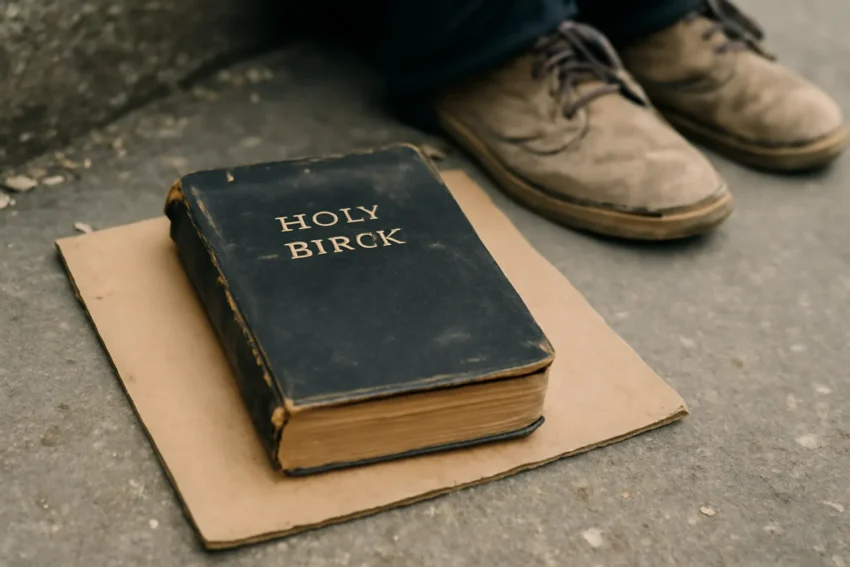
Across the world, people experiencing homelessness face daily trials that test patience, resilience, and faith. In times of cold nights, uncertainty about tomorrow, or moments of loneliness, many turn to sacred texts for comfort, hope, and strength. This article gathers a careful selection of Bible verses that speak directly to experiences of displacement, every verse presented with a short commentary and a practical note on how to apply it in daily life. All quotes in this article are drawn from the King James Version (KJV), a public-domain translation, and are offered here in a way that is accessible and meaningful for readers in challenging circumstances. The goal is not to prescribe belief, but to share timeless words that have sustained people through hardship for generations.
While the Bible contains a broad sweep of literature—poems, laws, history, prophecy, and letters—the passages highlighted below center on three enduring themes: comfort, hope, and strength. Each theme is paired with a set of verses that may be remembered, spoken aloud, or written on a small card or scrap of paper kept close at hand. The value of these verses is not only in reading them, but in letting their cadence, imagery, and promises anchor the heart when circumstances feel overwhelming.
When you are tired, cold, hungry, or unsure of where to turn, the Bible offers verses that describe God as a refuge, a shepherd, and a present help. These words are not a shield from reality, but a way to face reality with a sense of companionship and enduring care. The following selections emphasize comfort that is practical, hope-filled, and grounded in a God who notices every need.
Psalm 46:1 (KJV) — “God is our refuge and strength, a very present help in trouble.”
Quote: “God is our refuge and strength, a very present help in trouble.”
Variation/Reflection: This line offers a mental image of shelter and power that is immediately available. In moments of cold and fear, reciting or repeating this verse can create a sense of safety and a reminder that you are not alone. Think of refuge as a shelter of care and strength as steadfast endurance that doesn’t rely on circumstance but on the character of God. Practically, you might write this verse on a card and place it where you sleep, or repeat it aloud during a difficult night.
Psalm 34:18 (KJV) — “The LORD is nigh unto them that are of a broken heart, and saveth such as be of a contrite spirit.”
Quote: “The LORD is nigh unto them that are of a broken heart.”
Variation/Reflection: Even when your heart feels broken, the text says God draws near. This is not a promise that pain is instantly erased, but that you are not unseen and that tender mercy is available. Let this verse accompany a moment of quiet breath—inhale, exhale, and consider that you are held in care that is deeper than immediate circumstance. If possible, pair the verse with a brief prayer of honesty about your needs and a request for steady presence through the night.
Psalm 23:1 (KJV) — “The LORD is my shepherd; I shall not want.”
Quote: “The LORD is my shepherd; I shall not want.”
Variation/Reflection: The imagery of a shepherd caring for every need can translate into a sense of daily provision and guidance. In homelessness, “not wanting” does not mean every desire is fulfilled; it can mean that even when resources are scarce, you are guided, guarded, and valued. Consider keeping a small journal entry that lists one thing you experienced as a sign of care each day—an outdoor shelter, a friendly face, a moment of rest—and then remind yourself that you are under attentive leadership.
Isaiah 41:10 (KJV) — “Fear thou not; for I am with thee: be not dismayed; for I am thy God: I will strengthen thee; I will help thee.”
Quote: “Fear thou not; for I am with thee.”
Variation/Reflection: This brief line invites a choice: fear or faith in the presence of God. The promise of strength and help can be a steadying force when you face another day without guaranteed shelter or income. A practical exercise is to repeat the line during stressful moments—at a street corner, a shelter hall, or a bus stop—reminding yourself that divine companionship is not contingent on circumstances.
Psalm 9:18 (KJV) — “For the needy shall not always be forgotten: the expectation of the poor shall not perish forever.”
Quote: “For the needy shall not always be forgotten.”
Variation/Reflection: The verse asserts that times of need do not define a person’s story forever. It speaks to a future where justice and care persist beyond a single season of hardship. If possible, seek out local resources or community ministries that embody this hopeful thread—services that acknowledge dignity and walk with you toward a more stable future.
Psalm 9:18 (alternate emphasis) — “The poor shall not always be forsaken.”
Quote: “The poor shall not always be forsaken.”
Variation/Reflection: Short and punchy, this line reframes the experience of abandonment as a temporary condition, not a verdict. In daily life, this can translate into a mental check-in: “I am not forsaken right now. I am observed and cared for in some way.” Consider carrying a pocket-sized reminder with this phrase to recenter when despair begins to creep in.
Hope is the horizon that keeps people moving forward. It is not a simple wish; it is the conviction that God’s purposes extend beyond today’s trials and into a future where purpose, provision, and peace persevere. The following verses offer a roadmap from present hardship to a future shaped by God’s meticulous care and overarching plan. Each entry includes a concise direct quote and a reflective variation to help you think through how to hold onto hope in daily life.
Jeremiah 29:11 (KJV) — “For I know the thoughts that I think toward you, saith the LORD, thoughts of peace, and not of evil, to give you an expected end.”
Quote: “Thoughts of peace, and not of evil.”
Variation/Reflection: The verse envisions a future shaped by peace and a definite outcome that God has in mind. When current circumstances feel destabilizing, this can be a reminder that there is a trajectory to your life that includes care, even if not immediately visible. A practical practice is to write a brief personal goal or prayer on a card: what would peace look like for you in a week, a month, or a year? Revisit that card and adjust it as you observe small steps toward it.
Romans 15:13 (KJV) — “Now the God of hope fill you with all joy and peace in believing, that ye may abound in hope, through the power of the Holy Ghost.”
Quote: “Now the God of hope fill you with all joy and peace.”
Variation/Reflection: Hope is described as a filling—an ongoing process rather than a one-time event. Believing becomes a conduit for joy and peace, even in uncertainty. A simple disciplined practice is to pause once daily to acknowledge one small thing you still hope for. It could be a future meeting with a social service agency, a consistent meal source, or the comfort of a warm place to rest. Keeping focus on that hopeful indwelling can sustain you through tough days.
Isaiah 40:31 (KJV) — “But they that wait upon the LORD shall renew their strength; they shall mount up with wings as eagles; they shall run, and not be weary; and they shall walk, and not faint.”
Quote: “They that wait upon the LORD shall renew their strength.”
Variation/Reflection: The image of renewal—strength returning like wings—offers a tangible sense of progression. Waiting here is not passive resignation but a posture of trust that God is at work even when you cannot see results. In practical terms, you might set small spiritual practices (prayerful breathing, a brief scripture reading, a moment of stillness) that “renew strength” on a daily basis, turning the waiting season into a season of growth.
Romans 8:28 (KJV) — “And we know that all things work together for good to them that love God, to them who are the called according to his purpose.”
Quote: “All things work together for good.”
Variation/Reflection: This verse acknowledges that life is a tapestry of events—some painful, some hopeful. The promise is that God can weave the threads of your experiences toward a meaningful outcome. Think of one “thread” in your life today and consider how it might be used in a future, hopeful way. Keep a small note of gratitude for a seemingly ordinary moment that carried hidden value, and let that gratitude anchor your sense of future possibility.
2 Corinthians 4:17-18 (KJV) — “For our light affliction, which is but for a moment, worketh for us a far more exceeding and eternal weight of glory.”
Quote: “For our light affliction, which is but for a moment, worketh for us a far more exceeding and eternal weight of glory.”
Variation/Reflection: The phrase reframes present pain as a temporary phase that contributes to a larger, enduring good. When hardship presses in, this can encourage a patient hope: the current burden isn’t the end of your story, and even painful experiences can serve a greater purpose. In daily life, this might translate into a practice of naming one small hardship and identifying one future good that could come from it—an act of reframing that fosters endurance.
Endurance is not a fantasy; it is a daily commitment to move forward with the truth that you are held, guided, and enabled. The verses in this section speak to strength that endures beyond fatigue, covers vulnerability, and empowers steady steps toward a better day. These passages acknowledge the weight of hardship while inviting you to lean on a trustworthy source of power that does not fail.
Philippians 4:13 (KJV) — “I can do all things through Christ which strengtheneth me.”
Quote: “I can do all things through Christ which strengtheneth me.”
Variation/Reflection: This line emphasizes a capacious, inclusive strength that comes from Christ. It is not a guarantee of effortless success, but of the capacity to endure and persevere because a greater source of power is at work within you. A practical application is to pick a daily task that feels daunting (finding shelter, staying warm, seeking a meal) and approach it with this mindset: I will do it with Christ’s help. Repetition of the verse can build a posture of confidence, even when resources are slim.
Psalm 46:10 (KJV) — “Be still, and know that I am God.”
Quote: “Be still, and know that I am God.”
Variation/Reflection: Stillness is not withdrawal; it is a deliberate pause that acknowledges divine sovereignty. In the chaos of street life, moments of quiet contemplation may provide a reset for the mind and heart. A practical practice is to take 60 seconds of quiet breathing, aligning your thoughts with the awareness that the Creator is present—an active form of strength that steadies you for whatever lies ahead.
Deuteronomy 31:6 (KJV) — “Be strong and of a good courage, fear not, nor be afraid of them: for the LORD thy God, he it is that doth go with thee; he will not fail thee, nor forsake thee.”
Quote: “Be strong and of a good courage…”
Variation/Reflection: This is a charge to courage with the assurance of God’s companionship. The phrase suggests that fear can be faced when you know you are accompanied by a faithful presence. A practical takeaway is to recite these words before approaching a difficult situation—perhaps before approaching a shelter line, a social service office, or a difficult conversation—reminding yourself that you do not go alone.
1 Thessalonians 5:11 (KJV) — “Wherefore comfort yourselves together, and edify one another, even as ye do.”
Quote: “Comfort yourselves together, and edify one another.”
Variation/Reflection: Community matters for strength. Encouraging someone else, sharing a brief word of encouragement, or listening to another person’s story can strengthen both of you. The verse invites mutual support as a daily practice. In a setting where social isolation is common, small acts of encouragement become a source of shared resilience and a reminder that you are part of a larger community even when you feel alone.
Isaiah 43:2 (KJV) — “When thou passest through the waters, I will be with thee; and through the rivers, they shall not overflow thee: when thou walkest through the fire, thou shalt not be burned; neither shall the flame kindle upon thee.”
Quote: “When thou passest through the waters, I will be with thee.”
Variation/Reflection: This verse uses vivid imagery of danger to illustrate an unshakable promise: God’s presence through danger. For someone living with instability or exposure, this is a reassurance that you are not treated as expendable and that endurance is possible because of divine accompaniment. Practical application could be to reflect on this presence during times of cold exposure, rain, or fear of harm, turning fear into a reminder that you are watched over even in the most trying environments.
Joshua 1:9 (KJV) — “Have not I commanded thee? Be strong and of a good courage; be not afraid, neither be thou dismayed: for the LORD thy God is with thee whithersoever thou goest.”
Variation/Reflection: The call to courage is paired with a practical promise: God’s constant presence wherever you go. This can be especially meaningful for someone who moves between different shelters, streets, or service locations. A daily practice could be a short ritual of naming one place you will go that day and then affirming that God is with you there, providing steadiness and protection as you proceed.
Practical ways to use these verses on the go
Verses become particularly meaningful when they are not only read but also embedded into daily life. The following practical suggestions are designed to be simple, portable, and doable in the context of homelessness, where access to resources may be limited but access to a moment of stillness and reflection is often possible.
Carry small reminders: Write one verse on a small card or piece of paper and keep it in a pocket, shoe, or notebook. A few words can be read in a cold moment to steady the breath and focus the mind.
Recite aloud in brief moments: In line at a shelter, waiting in a clinic, or while resting, recite a chosen verse aloud. Hearing the words can anchor the heart and reduce the sense of isolation.
Journal a daily reflection: Use a pocket notebook to record a line of scripture and a one-sentence reflection about what it means for today. This builds a personal record of resilience and faith as circumstances change.
Memorization in small steps: Start with one verse per week. Build from there as confidence grows. The goal is not to memorize blindly but to have usable, meaningful lines at hand.
Share with others respectfully: When opportunity arises, offer a verse as a sign of care. A simple, non-intrusive sharing of a verse can be a source of mutual support and dignity.
Pair with practical action: Scripture is a source of inner strength, but pairing it with action—like seeking shelter, accessing social services, or reaching out to a faith community—often makes the promises more tangible.
Brief quick-reference guide (verses summarized for easy recall)
These compact notes provide quick references to the core ideas of each verse, suitable for mental recitation or quick notes when time is scarce. The aim is to keep the essential promise in mind during daily life.
Psalm 46:1 God is a shelter and source of power in trouble.
Psalm 34:18 God is near when the heart is broken and the spirit contrite.
Psalm 23:1 The Lord provides daily care and guidance; trust in provision.
Isaiah 41:10 Do not fear; God is with you, will strengthen and help you.
Jeremiah 29:11 God has a peaceful plan for your future; trust the process.
Romans 15:13 God of hope fills you with joy and peace as you hope.
Isaiah 40:31 Waiting on the Lord renews strength; resilience grows in perseverance.
Romans 8:28 All things work toward good for those who love God.
2 Corinthians 4:17 Present hardship is temporary and contributes to lasting glory.
Philippians 4:13 You can endure through Christ who strengthens you.
Psalm 46:10 Stillness and awareness of God’s sovereignty anchor you.
Deuteronomy 31:6 Be strong and courageous; God goes with you wherever you go.
1 Thessalonians 5:11 Comfort and build up one another in community.
A final note on navigating hardship with faith
The verses collected here are offered as companions for difficult days. They are not a magic solution to systemic hardship, but a resource for inner steadiness, a reminder that you are seen, valued, and cared for. Readers may find that these passages help cultivate a steady rhythm of hope, which in turn can sustain actions toward improvement—whether that means seeking shelter, accessing services, or building a tiny routine of prayer or reflection in the midst of uncertainty. The intention is to respect the dignity of every person, to acknowledge the reality of pain, and to hold up the possibility of comfort, hope, and strength that persists beyond today’s trials.
If you want to explore more, consider reaching out to local faith communities, shelters, and social services organizations. They often provide spaces for rest, meals, and conversation, and many offer ways to engage with scripture in a respectful, supportive environment. Remember that you are not alone; the texts above speak into your life with the deep, abiding assurance that you are known, loved, and kept by a steadfast presence.