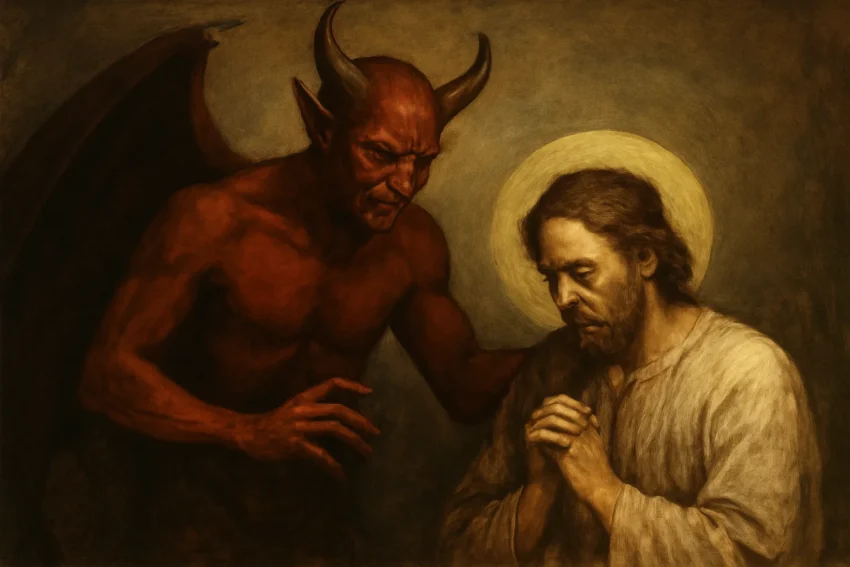
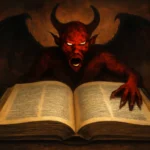
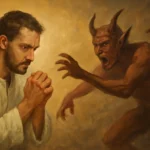
Demons in Christian belief and lore have long fascinated, alarmed, and inspired believers and nonbelievers alike. This article surveys what could be called demon Christianity—the study of demons within the Christian imagination, doctrine, and devotional life. In the broadest sense, the field is demonology: a spectrum of views about the origins, nature, hierarchy, and activities of demonic beings. Across Christian traditions, the demonic has been imagined as a real spiritual presence that opposes God, tempts humans, and sometimes cooperates with human sin. At the same time, Christians have developed practices, rituals, and disciplines aimed at recognizing, resisting, and overcoming such influences. This article traces these threads from scripture and early church reflection to medieval lore, to modern discussions of spiritual warfare and deliverance, and it notes common points of agreement as well as significant differences between churches and movements.
Within Christian discourse, the term demon is often used interchangeably with evil spirit, unclean spirit, or the demonic. A central anchor is the figure of Satan, sometimes described as a singular adversary and other times as a title for a rank of rebellious beings. The worldview commonly asserts that demons are spiritual beings who can influence, tempt, or oppress humans, while remaining distinct from God in their nature and intent.
Two broad categories recur in Christian thought: a cosmology that situates the demonic in a fallen order that opposes God, and a pastoral approach that emphasizes the practical struggle of human beings against sin and spiritual oppression. Across this spectrum, Christians have asked and answered questions such as: Where do demons come from? How do they operate in the world? What is the proper response to demonic activity? And what is the ultimate fate of these beings?
Canonical scriptures and the demonic: scriptural foundations
Old Testament foundations and continuity
In the Hebrew Bible, references to malevolent spiritual influence appear in nuanced ways, though explicit demonology is less developed than in later Christian writing. The figure of God’s authority over evil is clear, and any suggestion of malevolent beings is framed within God’s sovereignty. Some scholars point to passages describing hostile spiritual forces or corrupting influences as forerunners to later Christian demonology. The broader message is that evil cannot stand in opposition to the Creator, and human beings are called to fidelity and moral discernment in the face of such forces.
New Testament evidence and the teaching of Jesus and the apostles
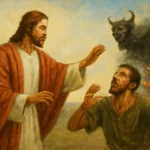
In the New Testament, demons figure prominently in the ministry of Jesus and in the early Christian communities. Temptation narratives, exorcisms, and the casting out of unclean spirits appear across the Gospels. Jesus repeatedly confronts demonic influence, demonstrating authority over evil in healing and liberation. Some key motifs include:
The exorcism of individuals possessed by unclean spirits, illustrating Christ’s authority over the demonic realm.
A depiction of the demonic as the source of sickness, torment, and moral brokenness, now confronted through faith and prayer.
References to eschatological powers—the ultimate defeat of evil in God’s coming kingdom.
In the Pauline letters and other early Christian writings, demons are described in broader terms as forces that rival the will of God but are destined to be judged and defeated. The language of spiritual warfare emerges in places like Paul’s letters, where Christians are urged to put on the armor of God to stand against the schemes of the devil and his hosts.
Demonology in Catholic tradition: rites, hierarchy, and devotion
The Catholic Church has a long and complex tradition of thinking about demons, combining scriptural interpretation, patristic writings, liturgical practice, and theological reflection. Catholic demonology tends to distinguish between the basic reality of demons, their power to tempt and oppress, and the means by which believers are protected and healed through grace and the sacraments.
Key concepts in Catholic demonology
Exorcism as a pastoral and sacramental act performed to liberate a person or place from demonic influence.
Recognition of the Devil as a real personal adversary, but subordinate to God’s ultimate sovereignty.
An understanding of spiritual warfare that emphasizes prayer, the sacraments, and fidelity to the Church’s teaching as the primary means of protection.
Exorcism: history, practice, and limits
Formal exorcism in the Catholic Church has a deliberate and measured process. The Rite of Exorcism (revised in the 20th century and still in use in some Latin Rite communities) outlines conditions under which an exorcist may proceed, often requiring the examination of medical and psychological conditions before any exorcism. The church emphasizes that exorcism is not a generic act of “driving out a demon” in every troubling circumstance; rather, it is a specialized ministry performed by a priest with explicit authorization from a bishop. The aim is to confirm the demonic oppression, discern if medical or psychological factors are present, and then invoke the grace of God to free the person from oppression.
Notable demonology within Catholic tradition
Historical texts of demon hierarchies and named entities often served as frameworks for understanding the types of temptations and spiritual attacks Christians might face.
Devotional literature often privileged the intercession of the Virgin Mary and the saints as powerful aids in resisting demonic pressure.
Within Catholic exorcism, the Jesus’ authority over unclean spirits is frequently presented as the model for the exorcist’s action.
Eastern Christian perspectives: Orthodoxy and the demonic
The Eastern Orthodox Church shares many scriptural assumptions with Catholicism about the reality of demons, but emphasizes different theological formulations and liturgical expressions. The Orthodox tradition emphasizes the harmony between God’s will and human freedom, and the demonic is seen as a distorted, fallen order that seeks to disrupt communion with God and neighbor.
Orthodox practice and theology
Prayer, fasting, and the sacraments as the primary means by which believers maintain spiritual resilience against demonic influence.
The role of priests and monastics who provide discernment, guidance, and pastoral care when concerns about demonic influence arise.
Liturgical language that frequently invokes the power of Christ’s victory over evil and the protection offered to the faithful.
In Orthodox practice, the focus is often less on a formal exorcism rite and more on spiritual counsel, healing, and the maintenance of a holy life that guards against temptation and possession, understood as a disruption of the soul’s union with God. The demonic is real, but the Orthodox insistence on the transfiguring power of grace shapes a path of repentance, humility, and communal support rather than anxiety about a catalog of demonic beings.
Protestant perspectives: diversity in the demonic narrative
Protestant traditions exhibit a wide variety of attitudes toward demons, exorcism, and spiritual warfare. Some emphasize the sufficiency of Christ’s cruciform victory and the sufficiency of Scripture to resist demonic influence, while others maintain ongoing practices of deliverance and healing through prayer. The spectrum includes cautious skepticism in some churches and open practice of deliverance ministries in others. A few representative threads are outlined below.
Core themes across Protestantism
The demonic is real and opposed to God, but believers are sustained by grace and the authority of Jesus over evil.
The primary tools against demonic influence are Scripture, prayer, and community, not magical rites or techniques.
Delivery or deliverance ministries appear in varied forms, from fervent prayer for liberation to structured care within local congregations.
Some denominations discourage or prohibit formal exorcism, preferring pastoral counsel, pastoral prayer, and discernment rather than ritual expulsions.
Other movements within Protestantism may employ prayer teams, spiritual warfare teaching, or healing services that explicitly address demonic oppression or possession in line with their theological commitments.
Historically, reformers such as Martin Luther and John Wesley spoke of the devil and spiritual battles, but often reframed dangerous spiritual claims within a Christ-centered gospel of grace rather than elaborate demonologies.
Demon lore in medieval and popular imagination: demon names and tales
A robust body of demon lore arose in medieval and early modern Europe that blended biblical material, apocryphal legends, theology, and popular culture. This tradition did not propose a single, unified system of demons; instead, it produced a mosaic of names, hierarchies, and roles that educators, preachers, and artists used to convey moral lessons and spiritual realities. The literature of demonology—both ecclesial and lay—shaped how Christians visualized and spoke about the demonic in daily life.
Prominent demon names in Christian lore
Beelzebub (often associated with pride and corruption; sometimes equated with Baal-Zebub, lord of the flies).
Asmodeus (linked to lust and temptation in some expansions of demonological thought).
Leviathan (a sea-creature emblem representing chaos and power; sometimes framed as a demonic force).
Mammon (personifying greed and material wealth as a demon opposing spiritual goods).
Belial (a term used for worthlessness or lawlessness in the biblical tradition, later mythologized as a demon).
Other named entities in later grimoires and folklore include Astaroth, Belphegor, Lilith (in some extra-biblical traditions as a demonic figure associated with night and seduction), and Baphomet (a symbol that roots in medieval and modern occult contexts rather than canonical Christian teaching).
These figures often served as didactic tools, offering concrete embodiments of abstract vices. They appeared in sermons, theater, and art as warnings about the consequences of sin and as tests of a believer’s faith and vigilance. While not all Christians accepted these lists as doctrinal truth, they reflect a long-standing instinct to imagine the spiritual forces that oppose righteousness and to equip believers with language to resist them.
Demons, possession, and exorcism in popular culture and literature
Beyond formal theology, demons in Christian imagination have permeated literature, film, and art. Works from early monastic visions to modern novels and cinema have dramatized encounters with the demonic in ways that raise questions about freedom, temptation, and redemption. The moral and ethical questions raised by demon-centered narratives often align with the spiritual concerns of a given era—temptation, power, oppression, and liberation under grace.
Literary and cultural motifs
Demons as tempters who exploit personal flaws, anxieties, and situations beyond one’s control.
Cosmic battle imagery in which good triumphs through faith, community, sacramental grace, and divine intervention.
Exorcistic scenes that dramatize the Church’s authority to liberate the oppressed, often framed as a pedagogy about discernment and moral growth.
Modern Christian thought on deliverance and spiritual warfare
In contemporary Christianity, the category of the demonic remains salient, though responses vary. The phrase spiritual warfare has gained prominence in many evangelical and charismatic communities, where believers actively engage in prayer and intercession aimed at resisting demonic influence in their own lives and communities. Deliverance ministries, prayer teams, and teaching series on spiritual warfare are common in many churches today. At the same time, many mainline traditions emphasize social justice, personal formation, and theological reflection as essential to addressing the broader moral and spiritual evils that believers confront.
Contemporary practices and concerns
Discernment: recognizing whether distress stems from personal sin, mental health issues, spiritual oppression, or a combination of factors.
The balance between grace and accountability: Christians are urged to lean on grace, while taking responsible steps to resist temptation and pursue sanctification.
Ethical caution: some communities avoid sensationalism, encouraging sober, biblical engagement with the topic and a focus on Christ’s redemptive work.
As with any broad and long-standing body of beliefs, several misconceptions about the demonic and demonology persist. Clarifying these helps provide a more accurate map of how Demon Christianity has been and can be understood.
Demons are everywhere and at every moment actively oppressing everyone. In many Christian teaching contexts, the demonic is a real possibility, but believers are called to daily fidelity through prayer, Scripture, and the sacraments. Not every hardship should be attributed to demon oppression.
Exorcism is the solution to all spiritual issues. Exorcism is a serious pastoral practice in some traditions, but most Christians rely on prayer, pastoral care, repentance, and grace as the ordinary means of spiritual healing.
There is one single “true” demonology for all Christians. Christian communities differ in emphasis and terminology. The Catholic, Orthodox, and various Protestant windows each offer distinct patterns of belief and practice about evil spirits and spiritual warfare.
Demons are primarily personifications of natural vices rather than real beings. While moral symbolism exists, many traditions insist on an ontological account of demonic beings—evil, personal, and intentionally opposed to God—while still affirming that God’s power is greater than any demonic force.
Ethical and pastoral implications: how belief in the demonic shapes daily life
Bearing the demonic in mind influences Christian life in a number of practical ways. It informs pastoral care, moral exhortation, and spiritual disciplines, reinforcing the conviction that life is lived in a contest between grace and corruption. When Christians reflect on the demonic, several themes recur across traditions:
Discernment and self-examination: believers are urged to examine their motives, seek forgiveness, and pursue holiness as means of resisting evil influences.
Community and accountability: supportive communities provide protection, instruction, and accountability that help individuals withstand temptations linked with the demonic or demonic-adjacent vices.
Hope grounded in Christ: ultimately, Christian teaching stresses the victory of Christ over every evil, including Satan and his hosts, offering hope and a future shaded by divine faithfulness.
Comparative reflections: how demonology varies across Christian traditions
When comparing the demonology of Christianity across traditions, several contrasts stand out:
Some traditions emphasize a formal, sacramental approach to demonic influence (notably Catholic and Orthodox contexts with exorcism and blessing rites), while others stress the sufficiency of Scripture and prayer as the primary means of protection from evil.
The emphasis on exorcism versus deliverance varies. Catholic and some Orthodox settings place more ritual structure around liberation from demonic oppression, whereas many Protestant groups emphasize personal faith and gospel-centered authority over evil.
Liturgical and devotional language differs: some communities speak of the demonic in clothed cosmic terms of battle against God’s reign, while others focus on the practical aspects of spiritual growth and moral transformation in concrete daily life.
Concluding reflections: the enduring map of demons in Christian belief
Across centuries and cultures, Demon Christianity has served as a lens to understand temptations, moral struggle, and the problem of evil. Whether through canonical texts, patristic commentaries, medieval lore, or modern spiritual discourse, the demonic has functioned as a provocative category that challenges believers to live with vigilance, repentance, and reliance on divine grace. Importantly, the conversation remains dynamic: new theological voices, cultural shifts, and pastoral needs continue to shape how Christians conceive of demonic beings, their influence, and the means by which God’s people are called to resist and overcome.
Glossary of terms and quick references
Demonology — the study of demons and demonic phenomena within a religious context.
The demonic — a broad term for evil spiritual forces or beings oppositional to God.
Satan — a central figure often depicted as the chief adversary of God and humanity.
Exorcism — a ritually performed act of liberation from demonic oppression by a recognized authority within a church.
Spiritual warfare — a devotional and theological framework emphasizing combating evil through faith, prayer, and discipline.
Possession — a contested term describing a condition in which a demonic presence is believed to inhabit or heavily influence a person, often distinguished from mental illness in traditional church teaching.
Deliverance — the act of being freed from demonic influence through divine power and pastoral care.