Demonic Scripture: Origins, Interpretations, and Key References
In scholarly discussions of religion and folklore, the phrase demonic scripture can refer to a broad spectrum of texts that either describe demonic beings, treat demonic figures as central or symbolic, or belong to traditions that have organized a body of demonology within their sacred or semi-sacred literature. This article surveys the origins, the major interpretive currents, and the most influential sources that scholars cite when tracing the arc of demonic scripture across cultures. The aim is to illuminate how different civilizations conceived demonic beings, how such beings were integrated into doctrinal systems, and how later readers have reinterpreted these ideas in light of new insights.
Throughout the discussion, you will encounter alternate terms and phrases that point to the same phenomenon with slightly different emphases: demonic literature, scriptures about demons, demonology texts, occult writings, and grimoires. Each variant signals a distinct scholarly or cultural approach, but all share a concern with how communities imagine and regulate evil, temptation, and supernatural authority.
Origins of Demonic Scripture
The origins of demonic scripture are not confined to a single geographic cradle. Instead, they emerge from a web of religious traditions that interacted over millennia. In this section, we trace some of the most influential precursor traditions that shaped how later generations would write about demonic beings.
Pre-Christian and Mesopotamian Precedents
Long before the term “demon” entered Western theological vocabulary, ancient Near Eastern texts featured malignant spirits and supernatural beings that resembled what later readers would designate as demons. In Mesopotamian lore, for example, figures such as Pazuzu and Lamashtu personified dangers to infants and households. Other beings—free-roaming utukku, degenerate spirits, or evil divinities—embodied illness, misfortune, and moral danger. These traditions offered a template in which demonic forces could be invoked, criticized, or exorcised, depending on the social and ritual context.
The broader Mesopotamian cosmos treated the world as a battleground between cosmic order and chaos, with demonic forces acting as agents of disruption. This frame traveled far beyond its borders and later inspired Jewish, Christian, and Islamic conceptions of personal and societal danger—an inheritance that would give rise to richer scriptures about demons in subsequent ages.
Jewish and Greco-Roman Contexts
Within ancient Israelite religion and later Rabbinic Judaism, demonic figures appear in semantically dense passages that blend ritual, law, and myth. Texts occasionally reference foreign deities or demons as temptations to idolatry or as personifications of moral danger. The evolving understanding of these beings was shaped by contact with surrounding cultures, including Greek philosophical thought and Hellenistic religious movements. In the intertestamental period, a wealth of demon-related literature circulated among Jewish communities—works that would exert a decisive influence on Christian demonology and on Western esotericism later in history.
In the Greco-Roman world, the idea of daimones and daimonic forces offered a flexible vocabulary for discussing partial powers that mediate between gods and humans. This environment encouraged reinterpretations of demonic beings as moral, psychological, or ethical embodiments, rather than merely as malevolent spirits. The result is a continuum in which demonic scripture becomes a living tradition—one that adapts to new intellectual climates while preserving a core set of questions about authority, transgression, and the boundaries of human agency.
Early Christian and Rabbinic Texts
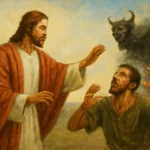
As the Hebrew Bible reached broader readership and as early Christian communities formed, the figure of the demon was recast in ways that would shape Western religious imagination for centuries. Some of the earliest New Testament materials present Jesus as a healer who confronts unclean spirits or demons, frequently described as inhabiting, afflicting, or obstructing human beings. The Gospels introduce a repertoire of exorcism, possession, and exorcistic authority that would become a central feature of Christian scriptural interpretation. The interplay between Jewish tradition and early Christian creativity produced a robust demonic vocabulary—terms like Satan, Beelzebub, and the concept of a personal adversary who operates within a moral universe.
Rabbinic literature, meanwhile, enriched the conversation with debates about the nature of spiritual beings, the limits of ritual purity, and the danger of idolatry. Scriptural demonology in this period is often framed as a defense of monotheism, a task that requires demythologizing harmful powers while retaining the sense that some forces operate beyond the human realm. The resulting synthesis—between myth, law, and liturgy—produces a corpus that later interpreters would call a demonic tradition with broad cultural resonance.
Interpretations and Theoretical Approaches to Demonic Scripture
Interpretation is where the study of demonic scripture becomes most varied. Across centuries and across cultures, readers have used these texts to articulate theology, ethics, political critique, and psychological insight. Below are several influential interpretive frameworks that scholars and religious communities have employed to understand the power and meaning of demonic beings in sacred literature.
Theological and Exegetical Readings
In the most traditional frames, demons are treated as real spiritual beings who operate in the world much as God does, albeit in rebellion or opposition. In these readings, demonic forces embody moral danger and are often used to illustrate the consequences of sin, the limits of human power, and the sovereignty of the divine plan. Exegetical methods—historical-critical, form-critical, and redaction-critical analyses—seek to uncover how and why demons appear in particular passages, what roles they play in the narrative, and what the authors hoped their audiences would believe or do as a result. In many cases, demonology serves to underscore themes of purification, divine justice, and the ultimate triumph of good over evil.
In Catholic and Orthodox traditions, exorcism narratives and liturgical formulas embody a sacramental imagination in which demonic forces can be confronted and reintegrated within a cosmic order governed by God. Protestant readers, meanwhile, often emphasize the moral and ethical dimensions of demonic interference, focusing on temptations and the interior battle for virtue. Across these streams, the term demonic scripture becomes a shorthand for texts that demand discernment: are the demons historical personalities, personifications of social sin, or psychological symbols representing inner conflicts?
Psychological and Sociocultural Readings
Modern scholarship frequently approaches demonic texts through the lens of psychology, sociology, and cultural studies. In these analyses, demons may function as:
Archetypes that organize collective fears and desires;
Projection of social anxieties onto a visible Other;
Metaphors for psychological states like guilt, rage, or despair;
Critiques of political power and religious authorities perceived as oppressive.
By foregrounding historical context, language, and audience reception, these readings treat demonic scripture not merely as a set of doctrines but as a living dialogue between communities and the threats they imagine in the moral universe. This approach helps explain why demonology persists in modern fiction, film, and popular culture, where demons often symbolize forces that threaten personal autonomy, social order, or existential meaning.
Hermeneutics of Oppression and Liberation
Some scholars use demonology as a tool to examine how religious communities resist or reproduce power hierarchies. In this frame, demonic figures can be read as symbols of oppression—temptations to violence, urges toward tyranny, or the seductive lure of idolatry. Conversely, demons may also symbolize liberation from oppressive structures, offering a narrative mechanism through which communities articulate moral agency, repentance, and renewal. The interpretive question then becomes: what do these texts authorize or condemn in the human community, and how do demon figures sharpen the contrast between evil and good within a given tradition?
Key References Across Traditions
To understand demonic scripture, it helps to survey representative texts and authors that have shaped the field. The following sections highlight major lines of reference—ranging from biblical to medieval to modern sources—while noting how scholars use these works to illuminate the concept of demons and their scriptural settings.
Canonical and Deuterocanonical Bible Passages
Across the Bible, demons are invoked as malevolent presences or as manifestations of spiritual danger. In the Hebrew Bible and its later Christian reception, readers encounter a spectrum of demon-like figures, including:
Satan as adversary or accuser in several books of the Hebrew Bible and into the New Testament;
Beelzebub or the lord of the demons, appearing in exchanges that aim to discredit rivals or to reveal spiritual authority;
Unclean spirits that afflict individuals and require acts of healing or exorcism;
References to demonic powers as conceptual categories within the broader moral cosmos.
Deuterocanonical and apocryphal materials—texts found in the wider Jewish and early Christian world outside the standard canon—offer richer portraitures of demonic life. They include elaborate stories of spiritual beings, their hierarchies, and their interactions with humans. These writings contributed to the later medieval and Renaissance imagination of a world inhabited by demonic forces that could be studied, combated, or invoked under tightly controlled ritual frameworks.
The intertestamental period (roughly the century between the Old and New Testaments) saw a flowering of demonology in Jewish literature, including accounts that explain the existence of evil through fallen angels or malevolent spirits. The legends of the Watcher angels, the binding of the asuras in some traditions, or the complex hierarchies of demons in pseudepigraphal works laid groundwork for later Christian exorcistic lore. Readers of these texts often note a shift from demon as a mere nuisance to demon as a structured class of beings with definable roles and ritual significance.
Medieval and Early Modern Grimoires
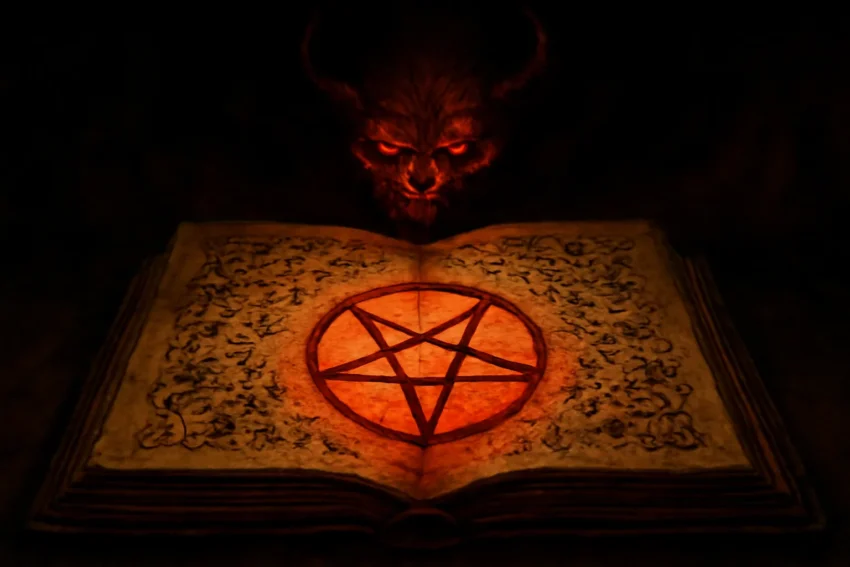
From the late medieval period onward, grimoires—handsome, ritualized manuals for magic, exorcism, and magical operation—became central repositories of demonic knowledge. Notable among these are works that catalog the names and ranks of demons, prescribe invocations and precautions, and claim to facilitate control over demons for various ends. The Lesser Key of Solomon (an English-translated title for a collection of material sometime attributed to Solomon) and the Ars Goetia are frequently cited as foundational texts in the Western magical tradition. The waxing and waning fortunes of these texts reveal how late medieval and early modern societies negotiated fear, curiosity, and the moral boundaries of knowledge. Critics insist that many such works reflect the anxieties of their own time—about religion, authority, and the dangers of attempting to master supernatural power outside legitimate religious channels.
Other influential manuals include the Malleus Maleficarum (The Hammer of Witches), which linked witchcraft, demonic collaboration, and gendered fears to a framework of social control; and the Abramelin the Mage, a treatise that blends ceremonial magic with spiritual discipline. While these texts are widely studied as occult literature, modern scholars often read them as historical artifacts that illuminate how societies imagined demonic rule and the potential for human beings to confront or be compromised by such powers.
Non-Biblical Demonologies Across Cultures
Beyond the Jewish-Christian- Greco-Roman frame, many cultures developed rich vocabularies of demonic beings that informed later Western conceptions. A few notable examples include:
Islamic jinn and shayatin, which inhabit a distinct ontological class alongside humans and angels, with stories about possession, temptation, and cunning;
Hindu and Buddhist traditions featuring asuras, rakshasas, pretas, and mara that embody cosmic and moral dilemmas, often serving as allegorical foils to virtuous action;
East Asian demonologies in which yokai or oni—powerful, sometimes malevolent spirits—appear in myth, folklore, and ritual practice that emphasize social harmony, ritual purification, and community memory;
African, Pacific, and Indigenous religious systems in which malevolent spirits, ancestral mischief, or sorcerous powers shape disease, misfortune, and conflict, while healing traditions seek to restore balance.
These global traditions have repeatedly informed cross-cultural exchanges, exchanges that produced a diverse body of demonic literature and a shared interest in how human communities confront the forces they fear most. The study of such texts underscores that demonic scripture is not a monolith; it is a family of traditions that speaks to universal concerns—moral choice, authority, fear, resilience, and the limits of human knowledge.
Demons in Culture: Interpretive Reflections
In addition to the textual sources themselves, the reception and interpretation of demonic scripture in culture are shaped by art, literature, music, and film. The demon, as a symbol, often does not merely represent a supernatural opponent but a mirror for the community’s own anxieties about power, sexuality, violence, and freedom. Below are some ways that cultural works engage with demonic beings and the textual traditions that describe them.
Literary Reinterpretations
Novelists and poets frequently reimagine demonic figures to interrogate personal conscience or social injustice. The demon becomes a vehicle for exploring temptation, guilt, or moral compromise. In many cases, writers draw on canonical motifs—possession, exorcism, or demonic bargains—while reframing them to address contemporary concerns such as oppression, addiction, or coercive authority. The effect is a dynamic conversation with the older demonic corpus, one that tests how ancient ideas about evil and temptation still resonate in modern life.
Film, Visual Arts, and Performance
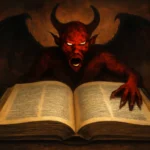
On the screen and stage, demons often appear as powerful visual metaphors. They can symbolize interior turmoil, social contagions, or political corruption. The cinematic portrayal of possession or exorcism typically draws on centuries of textual tradition, even as it updates the figures for contemporary audiences. Visual media frequently emphasizes the dramatic tension between the restrained authority of sacred power and the untamed lure of forbidden knowledge, a tension that lies at the heart of many demonic narratives.
Musicians and composers have long found demonic imagery fertile ground for exploring fear, ecstasy, rebellion, and transcendence. From choral settings that invoke unclean spirits to metal or ambient genres that dramatize inner struggle against dark forces, music often translates textual demonology into sonic experiences. In these works, the concept of demonic scripture extends beyond the printed page, becoming a living soundscape that evokes ritual, ritualized fear, and the ethics of power.
Contemporary Scholarship and Debates
Academic study of demonic scripture continues to evolve, fueled by interdisciplinary collaborations among theology, history, anthropology, folklore, and literary studies. Some of the major debates and directions include:
How to balance historical-critical inquiry with faith-based commitments in understanding demonology;
The extent to which demons are historical personalities versus symbolic constructs in a given text;
How demon narratives function in communities facing trauma, marginalization, or conflict;
Ethical considerations in studying texts that have historically been used to justify persecution or violence, and how modern readers can engagement with such material responsibly.
Advances in textual criticism, archaeology, and comparative religion have broadened the field. Scholars now pay closer attention to linguistic variation, manuscript transmission, and the social settings in which demonology gains or loses authority. Interdisciplinary methods—ranging from philology to cognitive science and cultural studies—allow a more nuanced understanding of how demonic figures function in human life and how communities negotiate danger, moral responsibility, and the possibility of transformation.
Practical and Ethical Considerations in Reading Demonic Scripture
Studying demonic scripture entails certain responsibilities. Because these texts have been used in the past to stigmatize groups or to legitimize coercive actions, modern readers are urged to approach them with historical awareness and ethical reflection. This means:
Recognizing the historical contexts in which demonologies arose and how they served communities in crisis;
Distinguishing between metaphorical demon figures and claims of real, present danger;
Being mindful of how demon imagery can reinforce or challenge social hierarchies and gendered stereotypes;
Engaging with diverse traditions to avoid a reductive or essentialist view of any single demonological system.
When presented responsibly, the study of demonic scripture can illuminate not only religious belief but also the human psychology of fear, temptation, and ethical decision-making. It offers a window into how communities understand power, how they regulate it through ritual or law, and how they imagine the possibility of moral repair in a world where dangers—both seen and unseen—abound.
Conclusion
Across continents and centuries, demonic scripture has served as a fulcrum for exploring the complex relationship between human beings, the unseen realm, and the moral order of communities. From ancient Mesopotamian rites to medieval grimoires, from rabbinic debates to modern novels and films, the figure of the demon provides a persistent frame for considering evil, temptation, and the struggle to maintain integrity in the face of compelling forces beyond ordinary human control.
What remains striking about the study of demonic scripture is its breadth and adaptability. Each tradition reframes demons to address the pressing questions of its time: What constitutes true authority? How should communities respond to corruption or violence? When is it appropriate to seek aid from the sacred, and when should one resist certain forms of power? These questions persist in every culture that records the presence of demonic beings, and they ensure that the conversation about demonic scripture remains lively, contested, and deeply human.
For readers curious about this topic, a productive approach is to track the terminology and the functions of demon figures across sources. Look for shifts in how demons are described (as purely malicious vs. morally ambiguous), in how power is exercised (through possession, through ritual binding, through command of legions), and in how communities interpret the presence of these beings within their own religious worldview. The result is a richer understanding of the ways in which demonic scripture has shaped, and continues to shape, religious imagination and ethical life.