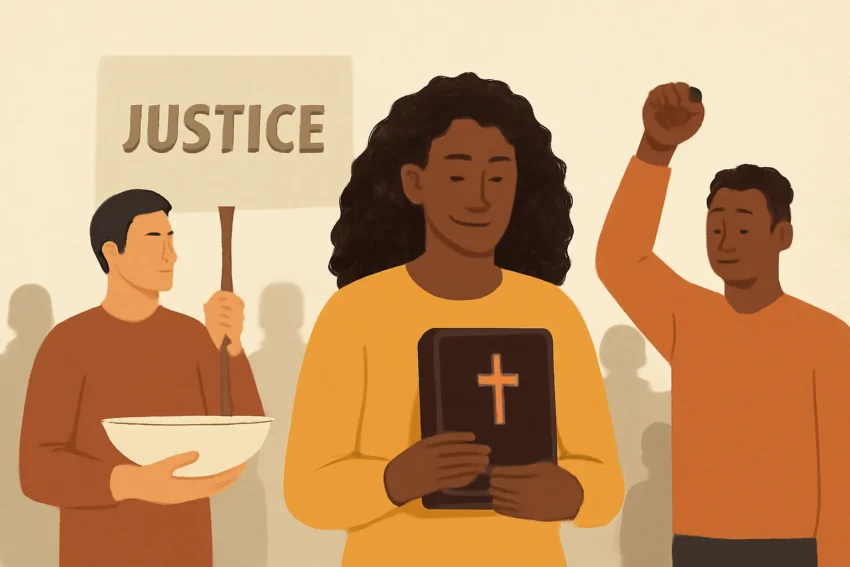
In a world where conversations about justice often focus on policy or politics, the Bible offers a distinctive and enduring perspective:justice is not merely a social program but a moral posture rooted in God’s character. Compassion, mercy, and righteous action are presented as inseparable in the life of faith. This article surveys a wide range of biblical verses about social justice, showing how Scripture guides believers toward a society where the vulnerable are protected, the powerful are held accountable, and mercy flows into tangible acts of care. We will explore verses from both the Old and New Testaments, observe how they interlock, and consider practical ways to embody these ancient truths today.
Foundations of Justice and Compassion in Scripture
Across the Bible, certain themes recur with striking clarity. These themes establish a biblical framework for understanding justice not merely as legality but as rightness in relationship, especially toward the marginalized. The following core ideas surface repeatedly and provide a roadmap for faithful living:
Defend the vulnerable and speak up for those who cannot defend themselves.
Love mercy alongside pursuing justice—mercy without justice can drift into sentiment; justice without mercy can become harsh.
Share generously and practice hospitality toward strangers, the poor, and the outsider.
Act with integrity in all economic and social relations—fair weights, fair wages, and fair treatment of workers.
Seek holistic well-being that addresses physical needs, social dignity, and spiritual truth.
Old Testament Foundations: Justice in Law, Covenant, and Prophecy
The Hebrew Bible grounds social justice in the law and in prophetic critique. It links righteousness with covenant faithfulness and imagines a community where God’s justice shapes everyday life.
Defend the oppressed and pursue righteousness
Isaiah 1:17: “Learn to do right; seek justice, admonish the oppressor, defend the fatherless, plead for the widow.”
Amos 5:24 (paraphrase): “Let justice roll on like a river, and righteousness like a never-failing stream.”
Micah 6:8 includes the famous summary: “to act justly and to love mercy and to walk humbly with your God.”
These refrains insist that right action is not a private sentiment but a public practice that exposes injustice and actively works to repair it. The prophets call God’s people to align social policy and communal life with the character of God—compassionate, inclusive, and just.
Care for widows, orphans, and strangers
Deuteronomy 10:18-19: God “defends the cause of the fatherless and the widow” and loves the foreigner, giving them food and clothing; therefore you are to love the foreigner, for you were foreigners in Egypt.
Deuteronomy 24:17-22: Addresses the rights of the vulnerable in legal proceedings and the obligation to leave gleanings for the poor and the stranger.
Leviticus 19:18 and 19:34 exalt love for neighbor and the inclusive care of the immigrant—principles that shape communal life and social welfare.
Proverbs 14:31: “Whoever oppresses the poor shows contempt for their Maker, but whoever is kind to the needy honors God.”
Proverbs 22:16 warns against enriching oneself at the expense of the poor; the text condemns exploitative wealth that harms others.
Proverbs 31:9: “Speak up and judge fairly; defend the rights of the poor and needy.”
The Living Word in the Gospels: Jesus and the Justice-Centered Life
In the New Testament, Jesus embodies and teaches justice as good news for the marginalized. His mission statement in Luke 4 and his parables invite readers into a life shaped by liberation, mercy, and concrete acts of love.
The Spirit-filled mission: Luke 4:18-19
Luke 4:18-19 presents Jesus announcing the anointed work: to proclaim good news to the poor, release for the captives, sight for the blind, freedom for the oppressed, and the year of the Lord’s favor. A robust vision of social renewal emerges, not merely personal piety.
Variations and paraphrases of this passage emphasize that the gospel includes economic relief, social liberation, and restorative justice for those on the margins.
Justice and mercy in action: Matthew 23:23
Matthew 23:23 rebukes those who are meticulous about tithing yet neglect “justice, mercy, and faithfulness.” The message is clear: religious life without justice is incomplete; the right practice must be joined with mercy and honesty in social dealings.
The parable of neighbor-love in action: Luke 10:25-37 (Good Samaritan) and beyond
The Good Samaritan story expands the circle of who counts as neighbor, urging readers to extend care beyond familiar boundaries to the vulnerable and powerless, even those we might view as outsiders.
In summary: mercy is not sentimental; it is a decisive, costly, practical way of loving one’s neighbor, especially when their need intersects with public life and policy.
Faith that shows up in deeds: James 2:14-17
James 2:14-17 asks, “What good is it, my brothers and sisters, if someone says they have faith but does not have works?” The passage condemns a faith that looks spiritual but remains mute in the face of poverty, hunger, and injustice.
Translations vary, but the core exhortation remains: faith must be accompanied by action—to feed the hungry, clothe the naked, and stand with the marginalized.
New Testament Ethics: Toward a Just Society
The epistles articulate a communal ethic shaped by Jesus’ life and the Spirit’s work. They call communities to practice justice within worship, economic life, and interpersonal relations.
Living out justice in community: Romans 12 and Galatians 6
Romans 12:15 instructs believers to rejoice with those who rejoice and to mourn with those who mourn—an exhortation to shared, empathetic justice that recognizes the varied circumstances of others.
Galatians 6:2 commands believers to “carry each other’s burdens,” a concrete call to mutual aid and social solidarity.
Love in practice: 1 John 3:17 and 2 Corinthians 9:7
1 John 3:17 challenges hoarded wealth by reminding us that love must be expressed in deeds and generosity toward those in need.
2 Corinthians 9:7 emphasizes cheerful giving as an act of worship and justice—“God loves a cheerful giver.”
Warning against oppression and exploitation: James 5
James 5:1-6 condemns those who hoard wealth and crush laborers under injustice. The passage calls for reform, accountability, and a reversal of power where the poor are exploited for private gain.
Putting It Into Practice: How to Live Bible-Based Social Justice
Biblical justice is not only a set of ideas; it is a way of life that shows up in conversations, decisions, and daily practices. Here are ways to translate these verses into action within families, churches, and communities.
Practical avenues for action
Advocacy and policy engagement: Speak up for reforms that protect workers, support the vulnerable, and promote fair access to resources. Engage with local organizations that provide education, legal aid, and social support.
Charitable giving and social welfare: Support missions, food banks, shelters, and organizations that address root causes—not only symptoms—of poverty. Give in ways that empower and partner with communities rather than creating dependency.
Volunteerism and service: Offer time and skills to assist families facing housing insecurity, mental health challenges, or financial precarity. Volunteer in schools, clinics, and community centers where need intersects with opportunity for dignity.
Economic justice in the workplace: advocate for fair wages, safe working conditions, and transparent management. Support businesses that treat workers justly and communities that benefit from equitable labor practices.
Hospitality and inclusion: Practice radical hospitality toward immigrants, refugees, and strangers. Build community spaces that honor diverse backgrounds and contribute to the common good.
Everyday practices that reflect biblical justice
Open your hand to the poor and avoid hoarding wealth that harms others (echoing Proverbs 22:16 and Proverbs 14:31).
Center decision-making on the dignity of every person, ensuring that policies and programs are accessible to those most in need.
Practice humility and self-critique, inviting honest accountability as communities seek justice and mercy together.
Frequently Encountered Questions about Biblical Justice
As readers explore biblical social justice, they often wrestle with questions about the relationship between faith, politics, and public life. Here are some helpful clarifications drawn from the text of Scripture and scholarly reflection.
Q: Is social justice a secular idea, or is it biblical?
A: The Bible presents justice as a theological imperative rooted in God’s character and covenantal love. While the language of social justice may be used in secular discourse, the Bible grounds it in divine revelation—justice is not human invention but God’s call to respond to the vulnerable with love, mercy, and integrity.
Q: How can we balance charity with justice in our communities?
A: Biblical justice integrates charity and advocacy. Charity meets immediate needs, while advocacy or structural reform addresses underlying causes of poverty and injustice. The two work together: mercy that moves toward systemic change, and systems that protect the vulnerable from needing perpetual aid.
Q: How should churches respond to injustice without becoming partisan?
A: Churches can proclaim God’s justice through preaching, teach biblical ethics, and engage in voluntary service and policy dialogue that advances the common good. The aim is not party loyalty but faithful witness to the Gospel in public life, modeled after Christ’s own example of mercy and truth.
When approaching passages about social justice, readers benefit from a few guiding principles that help maintain fidelity and humility in interpretation:
Context matters: Historical, cultural, and literary contexts shape how verses speak to contemporary situations.
Character of God: Justice is grounded in the character of God—holy, merciful, faithful, and just—so our readings should reflect the divine nature rather than human agendas.
Whole-Bible coherence: Scripture presents a coherent vision of justice that runs from Genesis to Revelation, not isolated fragments. Passages should be read in harmony with the broader biblical narrative.
Love as the organizing principle: Justice without love becomes judgment; love without justice can become sentimentality. The biblical ethic seeks a robust integration of both.
Selected Verses for Personal Meditation and Public Teaching
The following selection offers a spectrum of textual voices—laws, prophets, parables, and letters—that illuminate the Bible’s stance on social justice. Short quotes are provided to assist reflection, memory, and teaching, with attention to variations in wording across translations.
Isaiah 1:17 – Learn to do right; seek justice, defend the oppressed, plead for the widow and the fatherless.
Amos 5:24 – Let justice roll down like water, and righteousness like an ever-flowing stream.
Micah 6:8 – Do justice, love mercy, walk humbly with your God.
Luke 4:18-19 – The Spirit-anointed mission to proclaim good news to the poor, release for the captives, and favorable year of the Lord.
Matthew 25:35-40 – The Son of Man identifies with the hungry, the stranger, the naked, the sick, and the imprisoned; care for them is care for Christ himself.
Luke 10:25-37 – The Good Samaritan model, widening the circle of who is neighbor and what it means to show mercy.
James 2:14-17 – Faith without deeds is dead; show mercy through actions that meet real needs.
Romans 12:15 – Rejoice with those who rejoice; weep with those who weep—empathic solidarity as an ethical practice.
Galatians 6:2 – Carry each other’s burdens; fulfill the law of Christ through mutual support.
1 John 3:17 – If someone has material abundance but ignores the need of a brother or sister, love is not in them in practice.
Closing Thoughts: A Biblical Ethic for Today
The Bible’s teaching on social justice invites believers to embody a holistic justice that is both proclamation and practice. It calls communities to guard the vulnerable, to advocate for fair treatment in every area of life, and to do so with the humility of Christ and the boldness of prophetic witness. The biblical vision is not merely about reforming systems from the outside; it is about forming communities whose daily rhythms reflect God’s justice: generosity, mercy, honesty, and truth-telling in love.
If you want to anchor your reading, teaching, or church programs in a biblically grounded approach to social justice, consider the following practical steps:
Organize study groups around selected verses such as Isaiah 1:17, Micah 6:8, Luke 4:18-19, and James 2:14-17, inviting members to share personal experiences of justice and mercy.
Link worship and action by pairing sermons or songs with concrete service projects—feeding the hungry, supporting housing initiatives, or advocating for fair labor practices.
Develop partnerships with local organizations that focus on poverty alleviation, refugee support, and social services, ensuring that engagement is dignifying, collaborative, and sustained.