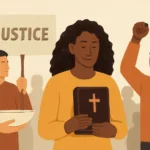
Bible Verse Poor: What the Bible Teaches About Poverty
Understanding biblical teaching on poverty begins with recognizing that the Bible presents poverty not merely as a demographic category but as a complex reality involving individuals, families, and communities. Across both Old Testament and New Testament scriptures, there is a persistent emphasis on compassion, justice, and responsible stewardship in relation to money, possessions, and social vulnerability. This article surveys the landscape of the “bible verse poor” and its variations—phrases like Bible verses about poverty, poverty verse, verses about the poor, and scripture on poverty—to help readers understand what the Bible says, what it does not say, and how these teachings can guide believers today.
Throughout this discussion we will use several recurring themes: care for the vulnerable, economic justice, generosity, and humility before God. We will also explore how these themes interact with everyday life—charity, work, family obligations, communal worship, and public policy—so that the message does not stay in the abstract but translates into concrete action.
Defining poverty in a biblical frame: who are the poor?
In biblical terms, poverty goes beyond a temporary lack of money. It often includes lack of access to resources, food, shelter, healthcare, and justice. The bible verse poor can refer to many who are on the margins: orphans, widows, foreigners, laborers with inadequate wages, debtors, and the materially vulnerable in a patriarchal household economy. Yet the Bible also names individuals who, despite wealth, must guard against arrogance, idolatry, and exploitation of others.
Material vulnerability: those who lack daily bread, shelter, or basic security.
Social vulnerability: those who are marginalized due to gender, age, disability, ethnicity, or status.
Economic vulnerability: the poor who are squeezed by debt, high interest, or exploitative labor conditions.
Moral and spiritual vulnerabilities: those tempted toward self-sufficiency or neglect of God in prosperity.
Because poverty appears in many forms, the biblical responses are likewise multi-faceted. Some verses emphasize charity and almsgiving, others stress social justice and structural reform, and still others call for personal generosity that reshapes character and community life. In considering these passages, readers should keep in mind the historical and cultural contexts—agrarian economies, Jubilee legislations, and communal sharing practices—that shape how poverty is described and addressed in Scripture.
The Bible does not present poverty as a sin of the person who lacks resources, nor wealth as a virtue that guarantees righteousness. Instead, it treats wealth and poverty as realities that can either lead to spiritual danger or be used for good. The long arc moves from ancient Israel’s covenantal laws aimed at fairness and mercy to the gospel’s call to trust in God, generosity, and justice for every neighbor.
The Old Testament arc centers on covenant fidelity, the social laws that protect the vulnerable (landowners leaving gleanings for the poor, debt relief, honest weights and measures), and the prophetic critique of greed and injustice.
The New Testament arc emphasizes Jesus’ mission to proclaim good news to the poor, the primacy of love and mercy, and the practice of generosity as a mark of following Christ.
Key questions the biblical writers address include: How should a community structure its economy so that the vulnerable are not crushed by systems of power? How should individuals relate to wealth—in gratitude, generosity, and justice? How should strangers, foreigners, or the marginalized be treated within the economy of the faith community? The combined witness of both Testaments invites readers into a holistic ethical framework rather than a simple set of rules about giving or hoarding.
Core verses about the poor: Old Testament foundations
The bible verse poor passages from the Old Testament establish a baseline for care, fairness, and generosity as expressions of righteousness within the covenant community. They also challenge readers to think about the social and economic structures that enable or hinder thriving for all people.
Several passages articulate a social practice in which the landowner’s field is left partially unharvested or the edges of fields are left unpicked so that the poor may gather food. This is not merely a charitable exception but a normative social custom tied to justice and community welfare.
Leviticus 19:9-10 describes leaving the harvest fresh for the poor: the harvesters should not strip the fields and must leave behind what falls.
Deuteronomy 24:19-22 expands on the practice, insisting that the crops left behind shall be for the foreigner, the fatherless, and the widow, reinforcing a system of social safety within the land.
Justice, mercy, and the prohibition of exploitation
Biblical wisdom on wealth often condemns exploitation of the vulnerable and commands fair treatment of workers and debtors. The bible verse poor discourse here is less about rich versus poor and more about the moral uses of wealth and the responsibility to ensure justice for those without power.
Proverbs 14:21 emphasizes that helping the poor is a moral good, while ignoring them invites judgment.
Proverbs 19:17 links generosity to God’s blessing, noting that lending to the needy is essentially lending to the Lord.
Psalm 82:3-4 calls leaders and the community to defend the cause of the weak and the fatherless and to rescue the poor from oppression.
Prophetic voices and the critique of idle wealth
The prophets repeatedly critique social and economic practices that accumulate wealth at the expense of the vulnerable, urging a return to justice and righteousness as the true worship of God.
Isaiah 1:17 commands learning to do good, seeking justice, correcting oppression, bringing justice to the fatherless, and pleading the case of the widow.
Amos 5:24 declares that justice must roll down like waters and righteousness like an ever-flowing stream, linking social policy to worship.
Micah 6:8 summarizes the divine will: act justly, love mercy, and walk humbly with God—an ethical blueprint for life that includes how one treats the poor.
In the bible verse poor conversations of the New Testament, the ministry of Jesus reframes poverty in light of the kingdom of God and models a life of radical generosity, hospitality, and trust in a Father who cares for even the smallest need.
Jesus and the poor: proclamation and blessing
Luke 4:18 places Jesus’ ministry in the tradition of Isaiah, proclaiming good news to the poor and freedom for the oppressed, highlighting a mission that centers the vulnerable.
Luke 6:20-21 presents the Beatitudes with a focus on the poor, hungry, and sorrowful as recipients of God’s blessing and promise.
Luke 12:33-34 encourages seekers to sell possessions and give to the needy, linking earthly generosity with heavenly treasure.
Practical love: acts of mercy and communal sharing
Matthew 25:35-40 frames acts of mercy toward the hungry, thirsty, stranger, naked, sick, and imprisoned as service to Christ Himself; caring for the poor is a direct encounter with Jesus.
Acts 4:34-35 describes the early Christian community as sharing their possessions so that no one among them was in need, illustrating an ideal of communal generosity and accountability.
Romans 15:26-27 speaks of Gentile generosity to the poor in Jerusalem, highlighting how wealth and resources can be channeled across communities for shared good.
Faith, works, and the poor: ethical exhortations
James 2:5-7 emphasizes that God chose the poor in the world to be rich in faith and heirs of the kingdom, while warning against showing favoritism and exploiting the vulnerable.
James 2:14-17 underscores that faith without works—especially care for the needy—is dead; generosity is a natural expression of genuine faith.
1 Timothy 6:17-19 instructs the wealthy to practice generosity, to be rich in good works, and to store up treasure in God’s age rather than in earthly wealth.
The biblical ethic does not dismiss wealth as inherently evil nor advocate a simplistic form of poverty as spiritual perfection. Instead, it invites a nuanced stance: wealth is a resource to be stewarded for the good of all, and poverty is a condition that obligates compassionate, just, and practical responses. Several intersecting themes emerge across the scriptural witness:
Stewardship: God owns all things, and humans are stewards who must use wealth for justice, mercy, and the flourishing of neighbors.
Hospitality: Opening one’s home and resources to strangers, foreigners, and the needy is a consistent biblical motif that embodies trust in God’s provision.
Communal responsibility: The health of the community is tied to how it treats the vulnerable; neglect of the poor damages society as a whole.
Critique of greed: Wealth accumulation that harms others is a recurring concern, while generosity is celebrated as a sign of divine wisdom.
Justice and policy: Scriptural ethics often extends beyond individual acts to call for fair laws, just wages, fair debt practices, and protection for the vulnerable in the economic order.
Reading the bible verse poor passages in a way that translates into real-life action involves discernment, humility, and sustained practice. Below are practical avenues for applying biblical teachings on poverty in contemporary life.
Personal generosity: cultivate a habit of cheerful giving, tithing, or offering resources to support the needy, while avoiding paternalism or unconditional gates that dehumanize the recipient.
Support for vulnerable families: assist widows, orphans, refugees, and the elderly through mentorship, shelter, clothing, and financial relief when needed.
Ethical consumption and investment: consider how purchases and investments affect workers and suppliers, choosing options that align with justice and fair labor practices.
Debt relief and financial education: promote or participate in programs that help people manage debt ethically, encourage savings, and build sustainable households.
Advocacy for just systems: engage with public policy and community programs aimed at reducing poverty, expanding access to education, healthcare, housing, and fair wages.
Community worship and service: design church or faith-based initiatives that combine worship with service, learning about poverty, and collaborative problem-solving.
Hospitality as mission: practice hospitality not as charity alone but as a form of deep relationship that dignifies others and builds mutual trust.
Because the Bible addresses poverty in diverse contexts, readers should approach these texts with careful hermeneutics to avoid misapplication or harm. Some helpful guiding questions include:
What is the historical and cultural context? How would people in the ancient near eastern or Greco-Roman world have understood those passages?
What is the nature of the obligation? Is the text prescribing a charitable act, a social policy, a spiritual discipline, or a structural remedy?
Who is the recipient? Are we thinking about the vulnerable in our own era (the homeless, the unemployed, the child in poverty, the immigrant, etc.) and how can we love them without exploiting or stereotyping?
How does the broader scriptural witness shape interpretation? Look at the harmony or tension between personal piety and communal justice across Scripture.
It is also wise to distinguish between biblical prescriptions and cultural practices. For instance, gleaning laws in the Old Testament reflect an agrarian society’s way to ensure food security for the vulnerable. Modern readers may not have fields to glean, but they can emulate the principle of ensuring access to resources and opportunities for those without means.
Below are frequently asked questions along with concise answers that reflect the broader biblical witness.
Is poverty condemned in the Bible?
Not inherently. The Bible does not condemn people for poverty as a moral failure; rather, it condemns the exploitation of the poor, the neglect of justice, and the worship of wealth apart from God. The calls to care for the poor and to act justly are consistent themes across both Testaments.
Most mainstream biblical interpretation rejects the idea that poverty is always a sign of moral failing or that wealth indicates divine favor in a simple cause-and-effect way. The biblical witness is more nuanced, recognizing that wealth can be a tool for blessing or a source of temptation, and that God’s ultimate assurance is found in faithful relationship with Him, not in material abundance.
What should a church do with verses about the poor?
Churches can use these texts to inform both piety and practice: teach about generosity and justice; establish ministries for food, shelter, and crisis relief; advocate for fair policies; and cultivate a community where wealth is stewarded for the common good while honoring the dignity of every person.
For faith communities seeking to embody the teachings about poverty found in the Bible, a structured approach can help turn Scripture into concrete action. Consider these steps:
Audit local needs: partner with local nonprofits to identify the most pressing needs—food insecurity, housing instability, workforce development—and design programs accordingly.
Establish sustainable giving: create a system of ongoing generosity—regular church offerings, community fund, or collaborative giving circles that support long-term solutions rather than just one-off gifts.
Advance justice beyond charity: advocate for living wages, affordable housing, accessible healthcare, and equitable education to address structural causes of poverty.
Foster dignity and agency: ensure programs involve the voices of the poor themselves, empowering them to participate in decisions that affect their lives.
Teach biblical generosity: offer classes that explore biblical perspectives on money, wealth, stewardship, and mission, helping believers align their finances with their faith.
Practice hospitality: cultivate a culture of welcome that dignifies guests and seekers, not a quick-fix charity that treats people as mere recipients.
The topic of poverty in Scripture invites readers to a holistic ethic that joins personal virtue with communal responsibility. The bible verse poor passages remind us that God cares deeply for the vulnerable and that the life of faith cannot be separated from how we treat the least among us. Whether through acts of personal generosity, the creation of just systems, or the courage to address structural inequities, the biblical call to respond to poverty remains a central measure of discipleship. By listening to both Old Testament justice and New Testament mercy, communities of faith can craft a robust, compassionate, and practical response that honors God and serves our neighbors—especially the poor and the marginalized.
In the end, the Bible’s teaching about poverty invites us into a hopeful vision: a world where resources are used to heal, sustain, and dignify every person, not to exalt one at the expense of another. As we explore the many bible verse poor verses and their variations—whether we call them Bible verses about poverty, poverty verse, or scripture on poverty—we discover a shared calling: to love mercy, do justice, and walk humbly with God in the everyday work of caring for the vulnerable and building communities where abundance is shared rather than hoarded. This is the lasting legacy of biblical instruction on poverty: a life transformed by generosity, shaped by justice, and rooted in God’s steadfast care for all people.