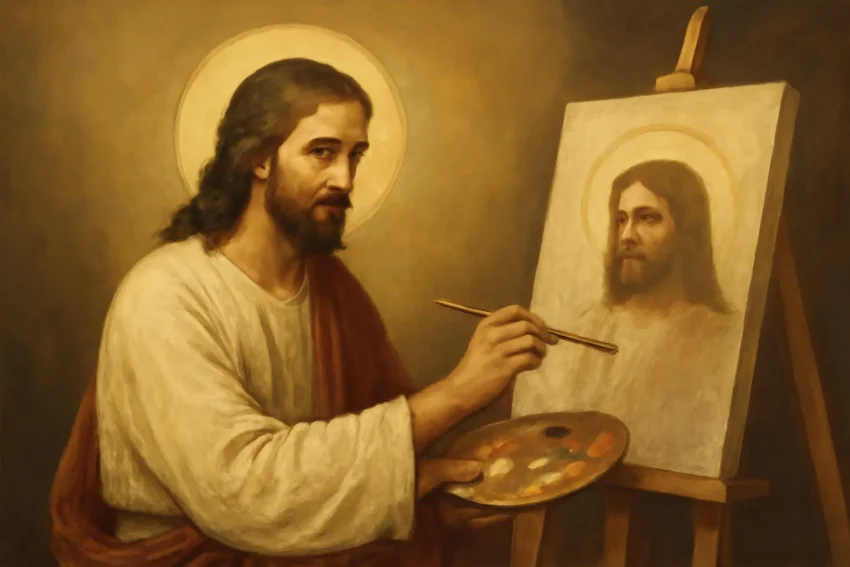
Christ Artists—also described as Christian artists, Christ-centered creators, or Christ-inspired visual artists—represent a broad spectrum of figures whose work engages Christian faith, biblical narratives, liturgical life, or spiritual inquiry. This guide offers a definitive tour through painters, musicians, and visual artists whose careers illuminate how faith can inform technique, style, and purpose. From the vaulted frescoes of the Renaissance to the immersive video installations of the contemporary era, these artists demonstrate that art and devotion can intersect in ways that educate, challenge, comfort, and provoke.
Defining a Christ artist is not the same as naming someone who merely paints religious subjects. It usually refers to creators for whom faith—whether explicitly confessional or broadly spiritual—shapes their choices, themes, and audience expectations. Some artists work within established Christian traditions—Catholic, Protestant, Orthodox—while others explore transcendence, moral questions, or redemptive meanings that resonate with Christian ethics. In many cases the artist’s practice grows out of a personal narrative of faith, a communal liturgical life, or a social calling inspired by Christian ideals such as mercy, justice, and compassion.
In practice, you will encounter a spectrum across centuries: from medieval and Renaissance masters whose biblical storytelling defined European art to modern and contemporary painters who embed spiritual questions in abstract color, symbolic form, or groundbreaking media. Musicians—ranging from composers writing sacred works in the Baroque era to worship leaders and singer‑songwriters shaping popular Christian music—offer another axis where faith is a source of meaning and creativity. Finally, the realm of visual art in the Christian imagination encompasses photographers, sculptors, installation artists, and multimedia makers who press into questions of faith, doubt, grace, and human flourishing.
Historical lineage: from medieval prayer to Renaissance optics
Medieval and early Christian iconography
Giotto di Bondone (c. 1267–1337) helped shift sacred imagery toward naturalism in fresco cycles for churches such as the Arena Chapel in Padua, where scenes from the life of Christ invite viewer participation in a devotional story.
Cimabue (c. 1240–1302) and Duccio di Buoninsegna (c. 1255–1319) produced altarpieces and icons that anchored Marian devotion and gospel narratives within a pictorial language students could read in churches across Italy.
Fra Angelico (c. 1395–1455), a Dominican friar, integrated contemplation with painting, turning studio work into a form of prayer in works such as The Annunciation.
Renaissance masters and the Catholic Counter-Reformation
In the Renaissance, Christian art became a global conversation about beauty, doctrine, and devotion. Some figures used art to teach doctrine to a broad audience, while others created psychologically powerful images that invite personal contemplation.
Leonardo da Vinci (c. 1452–1519) offered sacred narratives with extraordinary psychological depth—The Last Supper as a study in human response to spiritual revelation; the Virgin of the Rocks as an exploration of divine tenderness and mystery.
Michelangelo (1475–1564) painted the Sistine Chapel ceiling and contributed sculpture and architecture to the Christian imagination, with the Creation of Adam and other scenes standing as enduring theological and artistic milestones.
Raphael (1483–1520) blended grace with theology in altarpieces and frescoes such as the Disputation of the Holy Sacrament and the Transfiguration, shaping how sacred events could be depicted with clarity and humanity.
Caravaggio (1571–1610) introduced dramatic chiaroscuro and immediacy to biblical scenes—works like The Calling of Saint Matthew and David with the Head of Goliath testifying to a lived, present gospel conflict.
El Greco (1541–1614) extended the spiritual intensity of the Christian mystery through elongated figures and luminous color, as in The Burial of the Count of Orgaz.
Dutch and northern European painters: reform, piety, and biblical vision
During the Dutch Golden Age and related movements, biblical scenes and moral inquiry remained central to artistic practice, often interwoven with secular life and theological debate.
Rembrandt van Rijn (1606–1669) produced some of the most psychologically resonant biblical scenes in Western art, with masterpieces such as The Return of the Prodigal Son and numerous prints that probe mercy, judgment, and grace.
Albrecht Dürer (1471–1528) created evangelically infused engravings and panel paintings, including The Apocalypse series and didactic altarpieces that circulated widely in Protestant and Catholic circles alike.
Pieter Paul Rubens (1577–1640) and Anthony van Dyck (1599–1641) produced altarpieces and religious scenes that combined baroque drama with Catholic devotion and moral exhortation.
Georges de La Tour (c. 1593–1652) specialized in lamp-lit genre scenes and devout subjects, emphasizing quiet, contemplative spiritual presence in everyday life.
Romanticism to modernity: spiritual seeking in paint
As art movements expanded, Christian imagery and questions persisted but manifested in more personal or abstract forms. Some artists pursued interior landscapes, mysticism, and social conscience informed by faith.
Caspar David Friedrich (1774–1840) expressed the Romantic itch for the infinite and the sublime through horizon lines, ruined chapels, and moonlit altars—an overtly spiritual dimension that many viewers read as Christian-inflected longing and faith in transcendence.
William Blake (1757–1827) fused poetry, painting, and a prophetic imagination with deeply Christian mysticism, creating images like The Ancient of Days and The Great Red Dragon that continue to invite spiritual interpretation.
Francisco de Zurbarán (1598–1664) and Diego Velázquez (1599–1660) contributed Baroque sacred works that emphasize piety, sacrifice, and devotion within a visual language of chiaroscuro and symbolism.
Contemporary Christ-centered painters and visual artists
In the 20th and 21st centuries, Christians who practice visual art frequently engage with questions of faith in a plural, secular world. Their media include painting, sculpture, photography, and multimedia installations that interrogate memory, grace, justice, and human dignity.
William Blake remains a touchstone for many modern Christian artists, cited here as a bridge between early modern mysticism and contemporary spiritual inquiry.
Makoto Fujimura (b. 1960) has become a leading voice for faith and culture in contemporary art. Working in a contemporary nihonga (Japanese‑inspired) idiom, he uses mineral pigments and layered textures to evoke spiritual narratives and biblical themes in a globally resonant language. He also founded cultural‑engagement initiatives that encourage faith-based art discourse and cross-cultural dialogue.
Bill Viola (b. 1951) is a pioneer in video installation whose work investigates birth, life, death, and transcendence. Though not defined by a single confession, Viola’s immersive pieces have deep resonance for Christian viewers who encounter sacramental experiences in art—moments of grace, suffering, and presence in time.
Diego Rivera (1886–1957) integrated Catholic iconography, social justice, and Mexican identity in monumental murals. His work testifies to how faith can intersect with public life, political history, and national memory in public art.
Christ‑themed music: from sacred chorales to contemporary worship
Classical composers with Christian faith
Many composers created works that were explicitly liturgical or that sprang from a deeply held faith tradition. Their sacred music became a framework for worship and meditation, reaching audiences beyond the pews.
Johann Sebastian Bach (1685–1750) wrote a vast canon of sacred music, including the Mass in B minor, the St. Matthew Passion, and cantatas that articulate theology through musical form, chorale textures, and choral architecture.
Antonio Vivaldi (1678–1741) composed sacred works as a priest, including sacred concertos and oratorios that blend luminous melody with spiritual intensity.
Gian Lorenzo Bernini is a sculptor/architect, not a composer, but his era’s sacred spaces shaped how music and architecture coalesce in liturgical settings; his contemporary equivalents in composition include Palestrina (Roman Catholic tradition) and Johann Pachelbel, whose canon and sacred choral traditions informed worship across Europe.
Olivier Messiaen (1908–1992) was a devout Catholic who embedded faith into a modernist language, composing organ works, chamber music, and the monumental Quartet for the End of Time in a context of war, contemplation, and divine mystery.
Arvo Pärt (b. 1935) is a Baltic composer whose minimalist sacred works—especially his Tintinnabuli style—carry a sense of liturgical ritual and spiritual stillness that many listeners associate with Christian devotion.
Contemporary Christian musicians and worship leaders
In more recent decades, the Christian music industry has produced a broad ecosystem of artists that accompany personal devotion and congregational singing. These works often travel beyond church walls into mainstream media, tourism of faith, and digital communities.
Amy Grant and Michael W. Smith helped pioneer contemporary Christian music in the 1980s–1990s, shaping how faith narratives are communicated through pop melodies and accessible lyrics.
Chris Tomlin, Hillsong United, and Casting Crowns have become fixtures of modern worship, offering singable hymns that function in church contexts as well as on tour and in media.
Lecrae and other Christian hip‑hop artists expand the genre’s reach, weaving gospel themes, social critique, and personal testimony into contemporary urban soundscapes.
Sufjan Stevens has produced intimate, genre‑blending albums with overt Christian symbolism and biblical storytelling, inviting listeners to explore faith through personal vulnerability and narrative risk.
Johnny Cash and Aretha Franklin — among others in gospel and sacred crossover work — demonstrated how faith shapes performance across popular music genres and audiences.
Christian visual artists today: approaches, media, and impact
Contemporary Christ-focused visual artists work across a spectrum of media—painting, sculpture, photography, digital media, and installation—often insisting that art is a form of moral and spiritual inquiry as well as beauty. Their work invites non-art audiences into a conversation about faith, doubt, justice, and compassion.
Makoto Fujimura emphasizes the dialog between faith and culture, arguing that art can be a vehicle for cultural renewal. His layered nihonga paintings fuse traditional Japanese techniques with Christian symbolism and biblical narratives, inviting viewers into contemplative spaces where grace can be encountered in texture and color.
William Blake has a continuing afterlife in modern visual culture as a paradigmatic Christian visionary artist—the fusion of poetry, engraving, and mysticism that remains a beacon for those exploring spiritual imagination in a plural world.
Bill Viola uses video installation to stage experiences of birth, suffering, and transcendence. His immersive environments often evoke sacramental dimensions—moments of grace and fragility that resonate with Christian sensibilities—even as they address universal questions of existence.
Diego Rivera and other muralists of the 20th century integrated Catholic iconography, social justice, and public pedagogy. Rivera’s public art demonstrates how faith can inform collective memory, national identity, and political discourse through large‑scale form.
Contemporary photographers and mixed‑media artists increasingly address Christian ethics—care for the poor, environmental stewardship, and human dignity—using documentary and artistic strategies to foster dialogue across communities.
How to study Christ-inspired art: a practical guide
Engaging with art that centers faith requires a combination of historical awareness, spiritual openness, and visual literacy. Here are practical steps to deepen your encounter with Christ‑informed art across media:
Learn the iconography of Christian art: understand motifs like the Annunciation, Nativity, Crucifixion, Resurrection, and parables that recur in different cultures and periods.
Read the context in which a work was created: patronage, liturgical function, or public messaging may reveal why a piece looks the way it does and what it sought to teach viewers.
Experience the media on its own terms—paintings, sculpture, music, film, and installation each demand a different kind of attention. Listen for musical timing, observe frieze lines, or watch the cadence of a video work to unlock meaning.
Compare different eras—consider how a biblical scene is rendered in a medieval chapel versus a contemporary gallery. Notice changes in technique, color, and scale that reflect shifting theological emphases or cultural sensibilities.
Explore curatorial conversations and scholarly writing about Christian art. Museum catalogs, exhibition essays, and artist statements help situate a work within a larger conversation about faith and culture.
Across centuries, certain works and artists illuminate enduring themes in Christ‑inspired art. While this list is not exhaustive, these entries provide entry points for learning and reflection.
The Last Supper (Leonardo da Vinci) as a study of human response to divine invitation and the tension between allegiance and ambiguity in faith communities.
The Annunciation (Fra Angelico) as a model of contemplative painting where devotion becomes visible through light, space, and quiet composition.
The Creation of Adam (Michelangelo) as a landmark of divine presence expressed through the language of the human form and intimate contact.
The Adoration of the Magi (Georges de La Tour) for its restrained light and contemplative mood, inviting viewers into reverence and stillness.
The Return of the Prodigal Son (Rembrandt) for its merciful theology rendered through intimate gesture and emotional nuance.
The Quartets for the End of Time (Messiaen) and St. Matthew Passion (Bach) for how sacred music can become a spiritual text in itself, inviting contemplation through sound.
Makoto Fujimura’s paintings as a blueprint for integrating tradition and faith in the contemporary global context.
Bill Viola’s video installations as a modern sacramental practice—art that asks audiences to pause, witness, and consider the mysteries of existence.
To navigate conversations about Christ‑inspired art, here are concise definitions you may encounter:
Iconography — the study of symbols, imagery, and motifs used to convey religious meaning in art.
Liturgical art — art that serves a church’s worship life, often integrated into rituals and sacraments.
Sacred narrative — stories from scripture depicted in visual form to teach or memorialize them.
Iconostasis — a screen or partition in Orthodox churches separating the nave from the sanctuary, frequently adorned with icons; a model for understanding visual storytelling in sacred spaces.
Contemplative practice — an intentional, quiet, reflective engagement with art as a form of prayer or spiritual discipline.
To deepen your study of Christ‑inspired art, consider engaging with the following types of sources and institutions:
Museum collections featuring major religious artworks (national galleries, historic churches, and university museums).
Monographs and exhibition catalogs dedicated to artists like Fra Angelico, Rembrandt, Rubens, and contemporary practitioners such as Makoto Fujimura and Bill Viola.
Texts on iconography, liturgical aesthetics, and the theology of art by scholars in art history and theology departments.
Artist statements, interviews, and lectures that reveal how faith informs technique and subject matter.
Programs and communities dedicated to faith and culture—universities, museums, and churches that host artist residencies, talks, and collaborative installations.
This definitive guide to Christ artists demonstrates that the relationship between faith and art is not a simple passport to easy storytelling. Rather, the best Christian artists—whether in the studio, on the stage, or behind the camera—use their craft to bear witness, ask difficult questions, and invite others into moments of reflection. From the quiet litany of a medieval altarpiece to the immersive atmosphere of a contemporary installation, the work of these artists—Christ-centered painters, Christian musicians, and visual artists—continues to shape how communities imagine the sacred, confront mortality, celebrate grace, and imagine a more humane world. The search for meaning through art is, in and of itself, a form of devotion, and for those who seek it, Christ‑inspired art offers a luminous path through history into present‑day culture and beyond.