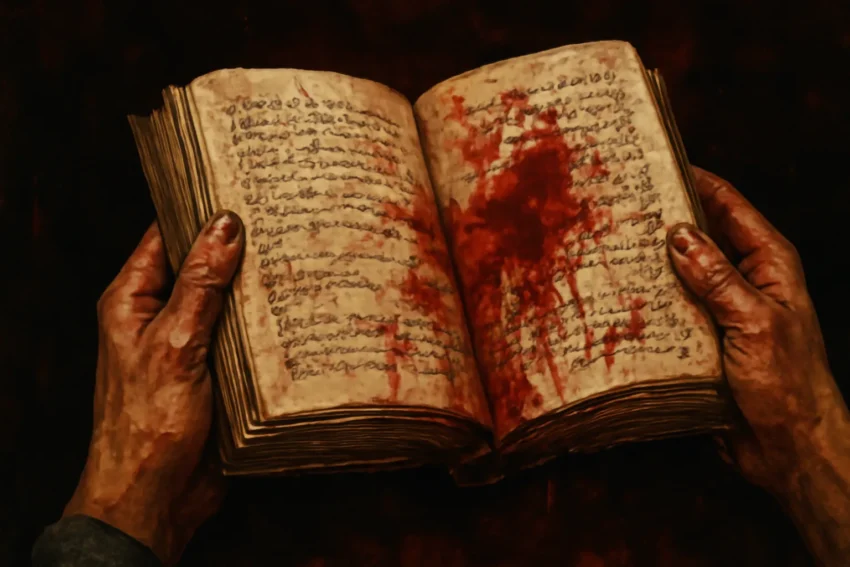
Blood Psalms is a phrase used across literary criticism, theology, and cultural studies to describe a family of works and ideas in which the visceral imagery of blood is braided with the musical, prayerful cadence of psalms or psalm-like poetry. This conceptual braid can function as a lens to read memory, ritual, justice, and identity. In this comprehensive exploration, we will trace the meaning, symbolism, and origins of blood psalms, showing how variations of the term appear in religious texts, secular literature, and contemporary art. The goal is to map how this combination of bodily blood and sacred song has traveled across time and cultures, shaping how communities remember and imagine themselves.
Defining Blood Psalms: What the phrase encompasses
To speak of blood psalms is to speak of a dynamic juxtaposition. On one side lies blood—a symbol that carries life, vulnerability, violence, kinship, and ritual significance. On the other side stands psalms—the form of liturgical, lyric, and communal singing that has historically carried praise, lament, protest, and covenant language. When these two elements come together, the result is a mode of expression that seeks to make sense of suffering through a form that blesses, binds, or rebukes.
Scholars and creators may use the phrase in slightly different ways. Some employ it as a methodological label for reading texts that mix corporeal imagery with liturgical cadence. Others use it as a title or thematic axis in novels, poetry collections, theatre, or visual art to signal a meditation on ancestry, sacrifice, and memory. In any case, the core impulse is to read the body and the book as intertwined sites of meaning.
Variations of the term abound. In practice you may encounter formulations such as blood-lit psalms, hematic psalms, psalmic blood imagery, or blood-soaked psalmody. Each variation signals a slightly different emphasis—whether the emphasis is on imagery, form, ritual function, or political critique—but all share the underlying conviction that blood and psalms can illuminate one another in illuminating ways.
Origins and historical contexts: where this idea comes from
Ancient covenant, purification, and sacrifice
In the ancient Near East, blood carried a primal significance in ritual life: it was associated with life itself, a boundary marker between the sacred and the ordinary, and a key element in covenants and feasts. While the exact phrase blood psalms is modern, the logic behind it rests on longstanding traditions in which blood rituals seal agreements, cleanse impurity, and consecrate offerings.
Within the Hebrew Bible, the language of blood is tied to life and atonement. Passages such as “the life of the flesh is in the blood” (Leviticus 17:11) articulate a worldview in which blood is life-force and a powerful medium for ritual action. Although not a psalm in itself, the biblical emphasis on blood helps explain why later readers and writers would pair blood imagery with psalm-like forms of lament and praise.
The concept of a covenant sealed by blood—a binding oath that unites participants through a sacramental sign—provides a crucial link. In later Christian and Jewish literatures, the idea of “blood” as the seal of divine and human promises becomes a potent metaphor for loyalty, guilt, and renewal. When modern writers speak of blood psalms, they often invoke this covenantal resonance to connect personal suffering to communal obligation.
Literary and linguistic roots: psalms as form, blood as propulsion
The psalter tradition—a collection of psalms used in Jewish and Christian worship—offers a form that combines lyric praise with lament, petition, and protest. The psalms model how to voice pain and hope in a public, musical register. The idea of blood-tinged psalms takes this public, performative mode and infuses it with corporeal imagery—so that even a poem or song can carry the weight of a body’s vulnerability and strength.
From a linguistic perspective, “psalm” comes from the Greek psalmos, meaning “a musical song or stanza,” while “blood” anchors the text in material reality. The juxtaposition is thus a deliberate tension between the sacred (song) and the mortal (body, blood). Critics use this tension to analyze how communities narrate trauma, lineage, and resilience.
In modern literature and poetry, writers frequently adopt psalmodic rhythm—refrains, antiphonal effects, and penitential cadences—while layering blood imagery to convey upheaval, sacrifice, or healing. In this way, blood-psalm aesthetics become a shorthand for a larger project: to give voice to communities that carry both memory and pain in their bodies.
Cross-cultural convergences: global echoes of a shared motive
In many cultures, blood is a symbol of ancestry and belonging. Diasporic literatures often deploy blood-ties and psalm-like songs to imagine a sense of homeland that persists despite forced displacement. The blood-memory concept—though not unique to one tradition—appears repeatedly as a way to describe how past sufferings and ancestral stories persist in present speech and song.
Non-Western and postcolonial readings frequently recast the psalm as a form of communal testimony. In these readings, blood becomes a visible sign of ethical obligation, collective memory, and political resistance. The resulting blood-psalm hybrid can function as an act of witness, a ritual of mourning, or a call to action.
In African, Caribbean, and Latin American literatures, artists sometimes braid blood imagery with prayerful or chant-like forms to articulate trauma and resilience in the face of violence, marginalization, and memory. These works are often described as blood-psalmic in their capacity to transform pain into ritualized expression and communal solace.
Symbolism at the heart of blood psalms
Blood is a dense symbol with multiple layers. When it appears in psalmic language, it tends to carry several interconnected meanings. The following list highlights some of the core symbolic strands you are likely to encounter in discussions of blood psalms and related works.
Life and vitality: Blood is a universal symbol for life force. In psalms of life or psalms for life, blood imagery can foreground the preciousness of life and the fragility of mortal existence.
Sacrifice and atonement: Blood marks sacrifice in many religious systems. A blood-psalm can present sacrifice as a channel for reconciliation, forgiveness, or a critique of violence in ritual contexts.
Covenant and oath: Because blood historically mediates bonds and treaties, blood psalms often explore the ethics of obligation—community promises, intergenerational duty, and the shape of collective commitments.
Wounding and healing: The body’s wounds, expressed through blood, can become sites of healing—physical, spiritual, or communal. In literature, such imagery may chart a journey from injury to renewal.
Memory and lineage: Blood ties link individuals to families and nations. Blood psalms frequently use these ties to reflect on inherited traumas, rituals, and memories carried across generations.
Violence and justice: Blood imagery can be a blunt reminder of violence, but it can also propel moral reckoning, calls for justice, or the healing of a divided community.
Identity and belonging: In diaspora or persecuted communities, blood and song together express a longing to remain recognizable to oneself and to others—an assertion of belonging that persists despite rupture.
Blood psalms in practice: how they appear in texts and arts
Religious liturgy and sacred performance
Within religious communities, the language of blood can enter worship indirectly through imagery in prayers, liturgies, or hymns that echo psalm-like structures. In such contexts, psalmody becomes a vehicle for illuminating the body’s vulnerability, the cost of forgiveness, and the beauty of renewal. When scholars refer to blood-tinged liturgies, they are often pointing to a ritual repertoire whose poetry acknowledges mortality while elevating life and covenantal faith.
Contemporary poetry and narrative
In contemporary poetry, writers may invoke blood imagery as part of a psalmic cadence that seeks to translate communal trauma into intimate, musical lines.
In novels and short stories, the phrase blood psalms can serve as a thematic axis around which family histories, wars, or migrations are narrated in a lyrical, sometimes incantatory voice.
In theatre and performance art, artists may stage blood-psalmic rituals—chant-like sequences punctuated by symbolic actions—to dramatize collective memory and moral awakening.
Contemporary perspectives: ethics, trauma, and resilience
Memory, trauma, and the body
One of the most compelling aspects of the blood psalms concept is how it foregrounds the body as a site of memory. Trauma is not only stored in the mind but inscribed on the body and in the stories communities retell. In this sense, blood becomes a mnemonic device, while the psalm form provides a ritual structure for endurance and healing.
Political ecologies and justice
Blood imagery in psalmic forms often functions as a critique of violence and a demand for justice. In postcolonial and justice-oriented readings, blood psalms can articulate the cost of oppression and the enduring demand for accountability. They can also model ethical callings—how communities should respond to harm, care for the wounded, and pursue restitution without erasing memory.
Identity, diaspora, and belonging
For communities living between borders—whether geographic, cultural, or linguistic—the fusion of blood and psalms can offer a language of belonging that persists despite rupture. In this mode, blood psalms become acts of cultural preservation, a way to keep ancestral ties alive while translating them into modern forms of expression.
Readers and analysts may use the following strategies to engage with texts or works described as blood psalms.
Identify the cadence: Look for psalm-like rhythms—refrains, parallelism, antiphonal dialogue, or invocations that mirror liturgical forms.
Trace the blood imagery: Note how bodily blood, wounds, or life-force language are deployed. Are they used to signify vulnerability, sacrifice, solidarity, or resistance?
Map the ethical stakes: Consider whether the blood imagery serves to heal, condemn wrongdoing, call for justice, or commemorate ancestors.
Contextualize cross-cultural borrowings: When a work borrows psalmic form from a particular tradition, observe how it adapts that form to address local histories of violence, memory, or migration.
Read for ritual resonance: Look for scenes that resemble rite, covenant, or sacrament, and consider what these rituals promise or demand from the community.
Consider audience and purpose: Is the text meant to console, to indict, to mobilize, or to invite reflection? How does the blood-psalm structure support that purpose?
The concept of blood psalms travels across disciplines and disciplines’ vocabularies. Here are some of the key variants you may encounter:
Blood-psalm poetry: A poetic practice that merges blood symbolism with psalm-like lyric forms, often in a contemporary or experimental register.
Hematic liturgy: Liturgy that foregrounds blood imagery as part of a ritual language, sometimes with a focus on healing or communal memory.
Blood-memory psalms: A framing that emphasizes how ancestral trauma and lineage are remembered through song and embodied memory.
Sacramental blood imagery: A theologically inflected usage that treats blood as a sign of grace, forgiveness, or renewal within a psalm-like spiritual practice.
Violence and atonement psalms: Texts that interrogate violence—its causes, consequences, and remedies—through liturgical or song-like forms.
Beyond aesthetic considerations, blood psalms raise important questions about memory, justice, and care. They invite readers to confront painful histories without erasing them, to honor the bodies of those who suffered, and to imagine forms of solidarity that hinge on memory and accountability. In diverse cultural contexts, blood psalms can function as:
Avenues for intergenerational dialogue: By speaking across generations, blood psalms help communities transmit painful memories in ways that are accessible, shareable, and dignified.
Sites of healing: When rituals or songs acknowledge wounds and mourn losses, they can create spaces for collective healing and resilience.
Political language: Blood psalms may articulate demands for justice, reparations, and structural change, using the language of oath and covenant to legitimize political action.
Ethical testing grounds: As a form, they can test moral assumptions about sacrifice, duty, and the value of human life, encouraging readers to reflect on where responsibility lies.
Psalms: Sacred songs or lyrical prayers, traditionally part of a religious psalter, characterized by varied tones of praise, lament, and petition.
Blood imagery: Symbolic language that uses blood to signify life, vulnerability, violence, or kinship.
Covenant: A solemn agreement or pact, often imagined as sealed by an oath or ritual, sometimes symbolically linked to blood.
Atonement: The process of reconciliation with the divine or with a community, frequently associated with sacrifice or ritual purification in many traditions.
Memory: The retention of past events within individuals or communities, which can be embodied in bodies, songs, and artifacts.
Diaspora: The dispersion of people from their homeland, accompanied by a reimagining of identity, belonging, and memory across borders.
Hematic: Relating to blood; used here to describe imagery or motifs that foreground blood as a symbolic resource.
In our moment of rapid cultural exchange and increased attention to inherited memory, the idea of blood psalms offers a robust framework for reading how communities narrate their deepest convictions under the pressure of history. By pairing the primal signifier of blood with the reverent, communal, and musical form of psalms, writers and thinkers can explore questions of life, mortality, duty, and renewal in ways that are both intimate and expansive. The blood-psalm approach invites readers to listen for the cadence of witness and to attend to the ways in which bodies, songs, and histories become inseparable parts of a shared human project: to remember, to mourn, to heal, and to hope.
If you want to explore the topic further, consider the following avenues:
Study the psalter traditions in their original religious contexts to better understand how psalms diffuse into modern languages and forms.
Read contemporary poetry and novels that explicitly frame their work as blood psalms or use heavy blood imagery within psalm-like structures to interrogate trauma, resilience, and justice.
Explore cross-cultural readings of memory and ritual that connect bodily signs (like blood) with songs of community and covenant.
Examine how perfervid sites of ritual—covenantal ceremonies, purification rites, or memorial services—employ blood symbolism to move groups from lament to solidarity.
In essence, Blood Psalms: Meaning, Symbolism, and Origins Explained invites readers to recognize how the body, the song, and the past intertwine. Whether in sacred worship, in the pages of a poem, or on the stage of a theatre piece, the blend of blood and psalms challenges us to consider how a community remembers its living truth: that life, memory, and justice are bound together in a language that can still be sung, even when it is painful to hear.