Introduction: Baptism Waters and Their Significance
In many Christian communities, the rite of baptism is inseparable from the imagery of baptismal waters. Whether spoken of as the waters of baptism, holy waters, or simply sacred waters, this element carries
a symbolic weight that transcends the moment of immersion or pouring. This article invites
readers to explore the symbolism, rituals, and practical preparation surrounding
baptism waters across traditions. It is designed for families preparing for baptism, sponsors
supporting the candidate, catechists guiding adults, and anyone seeking a deeper
understanding of what these waters signify in faith, memory, and community life.
While the core meaning of baptism remains consistent—initiating a person into the life of
faith—the way water is used, blessed, and understood can vary. By examining baptismal waters from historical, theological, and practical angles, one can gain
a richer appreciation for how a single, tangible element becomes a living sign of grace,
belonging, and transformation.
The Meaning of Baptism Waters
The waters of baptism function as a visible sign of an invisible grace. Across Christian
traditions, the following meanings are commonly affirmed:
Cleansing and renewal: The act of washing signifies forgiveness of sin and the
beginning of a new life in Christ. The water, in this view, represents a cleansing of
the old self and the emergence of a new creation.
Participation in the death and resurrection of Christ: Submersion or contact with
water is often understood as a symbolic burial of the old self and a rising to new life with
Christ, echoing the biblical language of dying and living again.
Entrance into the covenant community: The ritual takes place within the church’s
life, marking a person’s formal entry into the Body of Christ and the fellowship of believers.
Spiritual birth and identity: Baptism waters symbolize a new birth, an adoption as
child of God, and a public confession of faith for many believers and families.
Blessing, protection, and grace: In some traditions, holy water is kept in homes,
fonts, or chalices as a reminder of blessing and the ongoing presence of grace in the believer’s life.
Historical and Doctrinal Foundations
The meaning and use of baptismal waters arise from a long historical and theological
arc. The following subsections outline foundational milestones that shape contemporary practice.
Biblical Roots
The Bible presents water as a primary sign of God’s action in salvation history. In the
New Testament, the Jordan River becomes a pivotal symbol: John the Baptist calls people to
repentance and baptism, signaling readiness for the Messiah. Jesus himself is baptized in the
Jordan, and this event anchors the Christian understanding of baptism as a participation
in the life, death, and resurrection of Christ.
Early Church Practices
In the earliest centuries, baptism often involved full immersion in living or blessed water.
As the church grew and communities formed across cultures, various modes emerged to accommodate
infants, adults, and diverse liturgical contexts. Baptismal waters were typically
blessed by a bishop or priest, then used in the rite with accompanying prayers, anointings,
and the liturgical washing of the candidate.
Development in Sacramental Theology
Over time, theologians reflected on the symbolic significance of water in conjunction with
grace, faith, and the church’s mission. Some traditions emphasize infant baptism as a
sign of God’s covenant with families, while others stress believer’s baptism as a public
profession of faith. Across these variations, the central idea remains: water is not a mere
physical substance but a sign that points to grace, transformation, and belonging.
Symbolism Across Traditions
Different Christian communities interpret baptismal waters in distinctive but overlapping ways.
The following brief overview highlights some common threads and notable differences.
In Roman Catholic practice, immersion or pouring may be used, especially for
infants. The water is typically blessed by a priest, and the sacrament is a channel of grace that imparts cleansing of original sin and incorporation into
the Church. The accompanying oil (chrism) and the white garment emphasize identity as a
baptized Christian with responsibilities before God and the community.
Eastern Orthodox Tradition
The Orthodox Church often uses immersion in a dip or full submersion in the baptismal font,
called the holy baptism. The ritual is deeply liturgical, with multiple
exorcisms, the anointing with holy oils, and a shared experience that includes chrismation (confirmation) and communion soon after baptism. The sacred
waters symbolize the death of the old life and the birth of the new life in Christ within the
Body of Christ, the Church.
Protestant and Anglican Perspectives
Among many Protestant and Anglican communities, there is a strong emphasis on believer’s baptism or infant baptism joined with catechesis. The role of the baptismal waters
is to signify repentance, faith, and entrance into a covenant community. Modes vary from
immersion to pouring or sprinkling, with the theological aim remaining consistent: the grace
of God is imparted through faith in Christ, and water acts as a sign of that grace.
Baptist and Pentecostal Traditions
In Baptist communities, baptismal waters are usually a public declaration of faith by
a professing believer, typically by full immersion. In Pentecostal settings, baptism in water
often accompanies a broader experience of conversion and spiritual renewal, with the emphasis
on obedience to Christ’s command and the active work of the Holy Spirit in the believer’s life.
Other Denominational Nuances
Even within the broad spectrum of Christianity, the precise meaning of water, its blessing,
and its place in the liturgy can differ. Some traditions reserve the sacramental language for
baptism alone, while others are more flexible about whether the water must be physically blessed
in a specific way. In all cases, the waters of baptism function as a living sign
pointing toward faithfulness, grace, and the community’s call to love and serve.
Ritual Practices Involving Water
The way baptism waters are used in worship and ritual depends on tradition, locale, and
the age of the candidate. The following sections describe common practices and their practical
expressions.
Modes of Baptism
There are several traditional modes for engaging with the waters of baptism during the ceremony:
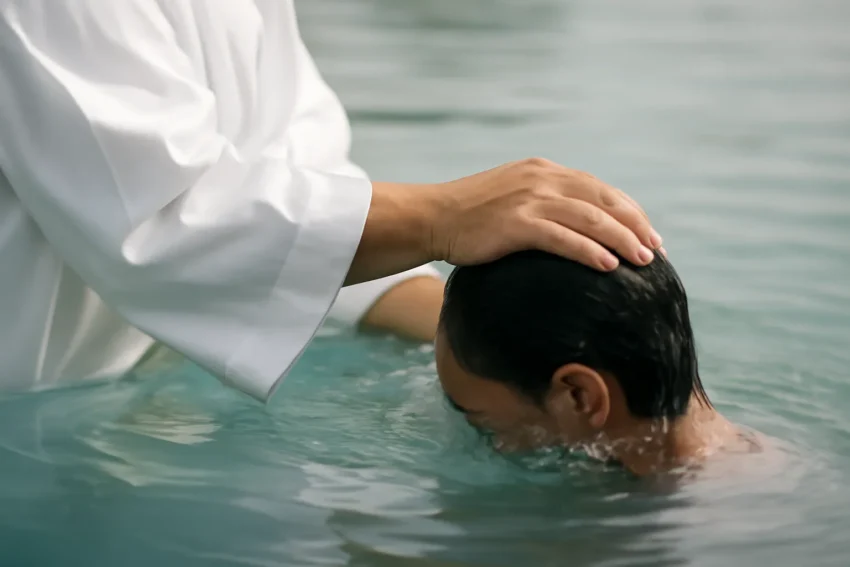
Immersion: The candidate is fully or partially immersed in water. This mode emphasizes
identification with Christ’s death and resurrection and is favored in communities emphasizing
a strong experiential sign.
Affusion: Water is poured over the candidate’s head, typically three times. This mode is
practical for many churches and is symbolic of a cleansing flow from above.
Aspersion: Water is sprinkled on the candidate’s head. This is common for infant baptism
and for those with health or mobility concerns, while still maintaining the symbolic act of cleansing.
The Baptismal Font, Basin, or Pool
The physical container for the baptismal waters can take various forms:
Font: A permanent basin in the worship space, often with a fixed stand or installed
plumbing for immersion or pouring.
Baptismal pool: A larger basin or pool used when multiple candidates are expected
or when immersion is practiced in a setting that resembles a small baptismal site.
Water blessing and storage: In some parishes, water may be blessed in a common
container and then used for multiple baptisms, particularly in pastoral contexts or when
logistical considerations apply.
Liturgical Use of Water
The liturgy surrounding baptism often includes prayers, scripture readings, and anointing with
oil. The baptismal waters are blessed or consecrated (as appropriate to tradition),
and the rite may be accompanied by the use of a white garment, a candle, and a sign of the cross.
The ritual may also feature a communal renewal of baptismal vows, calling the congregation to live
out its identity in Christ.
Preparation is essential to make the baptism meaningful for the candidate and the community.
The preparation period varies by tradition but is generally characterized by study, prayer,
and practical planning. The following are common elements of preparation.
For Adults: Catechesis and Reflection
For adults preparing for baptism, a period of catechesis helps articulate faith, understand
the meaning of the sacrament, and commit to a life in the Christian community. Topics often
include the life of Jesus, the plan of salvation, the church’s mission, and the responsibilities
that come with baptism. The water used in this context is not merely symbolic; it is the symbol
of a journey into mature faith and ongoing spiritual formation.
For Infants and Young Children: Parents and Godparents
When infants or young children are baptized, parents and godparents undertake a spiritual pledge
to guide the child in the Christian life. This arrangement requires ongoing instruction, community
involvement, and a commitment to nurture the child in prayer, worship, and service. The baptismal waters
serve as a sign of God’s covenant with the family and the child, repeated and witnessed in the life of the church.
Catechesis, Preparation, and Scheduling
Practical preparation often includes:
Completing a baptismal invitation or intake form that captures family details and the candidate’s
intentions.
Meeting with a clergy member or catechist to review the meaning of the rite and the practical steps
of the service.
Choosing the mode of baptism (immersion, pouring, or sprinkling) in line with tradition and feasibility.
Arranging for required sponsors or godparents who will accompany the candidate on their faith journey.
Preparing a reflection or testimony, especially for adult Baptisms, to share in the liturgy.
Practical Guidance for Families and Sponsors
Beyond the theological meaning, practical planning ensures the baptism day is heartfelt, respectful,
and memorable. Here are several considerations to help families and sponsors.
Choosing the Setting and Time
Many parishes offer a dedicated baptismal service slot or a portion of a Sunday service for the rite.
When possible, select a time that allows extended participation from family members and godparents.
Consider parish norms about seating, accessibility, and the presence of cameras or photographs during
the ceremony.
Attire and Symbolic Elements
Baptismal attire is often white to symbolize purity and new life. Some families also bring a
baptism candle, a baptismal garment, or a family Bible to present during the rite. The baptismal waters
are the centerpiece, but accompanying elements—such as the hymn, prayers, and readings—support the
spiritual meaning of the day.
Documentation and Aftercare
After the ceremony, ensure proper documentation, including the baptism certificate and
the recording in the parish register. Families may wish to schedule follow-up instructions
for catechesis, faith formation activities, or church membership procedures, as applicable
to their tradition.
Caring for the Waters: Sanctity and Use
The handling and care of baptism waters reflect reverence for what they signify.
Practices vary, but some common guidelines include:
Blessed water should be kept in a clean container when not in use and stored safely
according to parish norms. For infants and elderly participants, ensure accessibility and safety.
After use, some traditions dispose of remaining water in a dignified manner, often by pouring it
in a respectful place or returning it to the earth, in keeping with local liturgical guidance.
In parish settings, it is common to reuse holy water for blessing homes, doors, or fonts, preserving
a sense of ongoing grace, unless a tradition prohibits reuse for hygienic or liturgical reasons.
Maintaining Reverence in the Home
Families may receive a small bottle of holy water or a relic of blessing to remind them of
the baptismal vow. It is helpful to teach children about the meaning of the water as a sign of God’s
presence and a call to live in kindness, justice, and faithfulness.
Common Questions About Baptismal Water
If you are new to the subject, you might have questions about how the water works in practice.
The following answers address frequent uncertainties while respecting diverse traditions.
Water is central as a sign of cleansing and new birth, but most traditions pair it with faith in
Christ, the proclamation of the gospel, and the community’s witness. In some traditions, the
sacramental seal is believed to convey grace in a definitive way; in others, it marks a participant’s
commitment to a journey of faith that continues beyond the rite.
Can baptism waters be used for adults and children in the same ceremony?
Yes. In many churches, baptism for adults is performed in a more extended catechetical context, while
infant baptism may be integrated into a broader liturgical service. The baptismal waters
remain the same sign of grace, whether the candidate is an adult seeking faith or a child receiving
the ceremony through parents and sponsors.
What happens if someone is unable to be baptized due to illness?
In cases of illness or danger of death, some traditions provide for a form of emergency baptism or a
baptismal rite at the bedside. The goal is to offer the elements of grace and belonging even in
challenging circumstances, while respecting the community’s liturgical norms.
How should families handle bouquets, photography, and reception?
Many communities welcome photographs and small celebrations after the rite, while remaining mindful
of reverence for the moment. If the ceremony occurs during a service, ensure that photo-taking does not
disrupt worship. The focus remains on the transformative meaning of baptismal waters.
Denominational Variations: A Quick Guide to the Waters and Rites
The way baptismal waters are understood and used varies, but the central purpose remains consistent:
to welcome the candidate into a life shaped by faith and community. Here is a concise guide to
some common approaches.
Catholic and Orthodox: Emphasize sacramental grace and the church’s apostolic continuity; water
may be applied through immersion, pouring, or sprinkling, depending on tradition and context.
Lutheran and Anglican: Often include catechesis for infants and adults; the water’s sign
conveys forgiveness, new birth, and incorporation into the church family.
Reformed and Anabaptist traditions: Emphasize baptism as a confession of faith and moral commitment,
with emphasis on believer’s baptism in some groups and infant baptism in others.
Baptist practice: Tends toward adult profession of faith with full immersion as a primary mode,
highlighting personal decision and public testimony.
Pentecostal and Charismatic communities: May associate baptism with a powerful encounter with God
and the ongoing work of the Holy Spirit, sometimes pairing water baptism with subsequent spiritual renewal.
Regardless of tradition, the baptismal waters act as a universal sign that calls the community to be
witnesses, to teach the faith, and to support the candidate in a life of repentance, love, and service.
The baptismal waters stand at the intersection of a person’s life, the church’s history, and
God’s ongoing work in the world. They symbolize cleansing, covenant, and new life, yet their deepest
meaning is realized in the faith of the community that receives the candidate, prays for them, and walks
with them on the path of discipleship. Whether your tradition practices immersion, pouring, or sprinkling,
the waters remain a powerful reminder that grace is tangible, present, and meant to be shared in
community.
As you prepare for baptism—or accompany someone else on the journey—consider how the rituals surrounding
the baptism waters can anchor meaning, nurture memory, and invite ongoing conversion. In every
setting, the ultimate aim is not only the rite itself but the ongoing life of faith that the water signifies:
a life turned toward God, united with the Body of Christ, and committed to love in the world.
May your exploration of baptismal waters be fruitful, reverent, and hope-filled as you walk with
families, sponsors, and faith communities toward the transformative gift that baptism offers to every
seeker.